Asset Rich, Cash Poor at 28
Having money in stocks and Bitcoin but no usable cash can create real anxiety. The issue is not only net worth; it is liquidity, cash flow, and the ability to survive volatility without selling at the wrong time.
50 articles · ← All tags
Having money in stocks and Bitcoin but no usable cash can create real anxiety. The issue is not only net worth; it is liquidity, cash flow, and the ability to survive volatility without selling at the wrong time.
You saved for three years to scrape together a down payment and walked out of the closing room thinking you finally did the adult thing. But with Taipei's price-to-income ratio near 15x, more than 70% of Taiwanese households' net worth locked in real estate, and a total fertility rate that has collapsed to 0.87, what was once called "the safest investment" is quietly turning into a 30-year fragility you signed without reading.
Same paycheck, a NT$5.6 million gap. Taiwan's salaried class has three hidden wealth levers built right into the system: voluntary pension contributions, high-yield digital savings, and free corporate perks like ESOP and group insurance. Here's the 4-step automated salary-splitting system to pull every dollar into the right slot.
Why do you have 1,000 contacts but no one to call in a crisis? This article breaks down the hidden NT$50,000 annual relationship tax that the poor pay each year, exposing three types of fake friends who silently empty your wallet. Learn why the wealthy become more aloof, and how to redirect your social budget into real compound-interest assets.
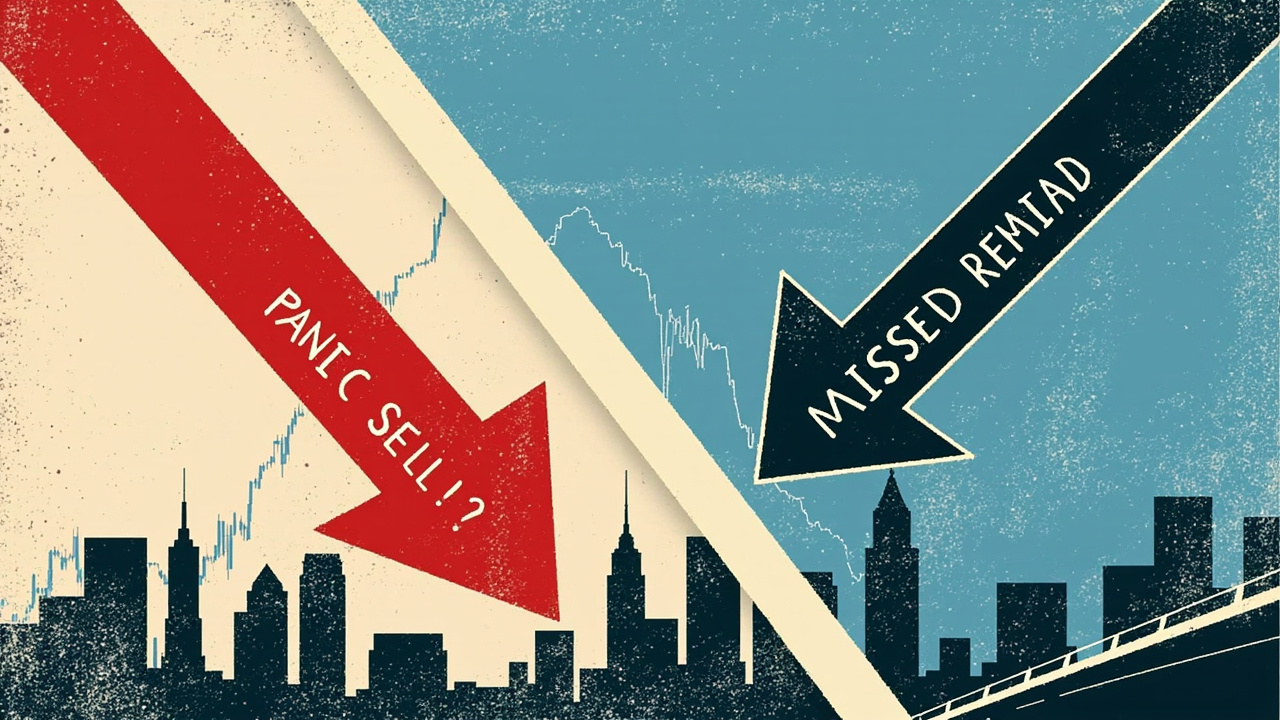
Why is the NT$10K you save every month slowly dying in your bank account? This article tears apart the minimalist DCA formula that turns a small monthly contribution into NT$20M: index ETFs, the discipline of compounding, the smile curve, an emergency cushion, and pay-yourself-first. We expose the high-dividend trap, the panic-selling curse, and the greed of bull markets — so you can build a retirement system that does not depend on luck.
A NT$80K salary, an imported sedan, and a NT$20 million pre-sale apartment look like a life of success — yet a single layoff notice can wipe it all out. This piece rips open the three deadly traps of the fake middle class, exposes the brutal truth behind the age-35 career cliff, and shows you how to build three life-saving funds (survival, risk-transfer, and reversal capital) while killing your latte factor and building a side hustle.
The hidden playbook rich people use to quietly compound wealth: borrow at a 2.2% mortgage rate, deploy the cash into index assets returning 7 to 10% a year, and let the spread do the work for two decades. We break down the lending logic banks never explain, three core rules, four guardrails, and how to survive a 2008-style crash without being forced to sell at the bottom.
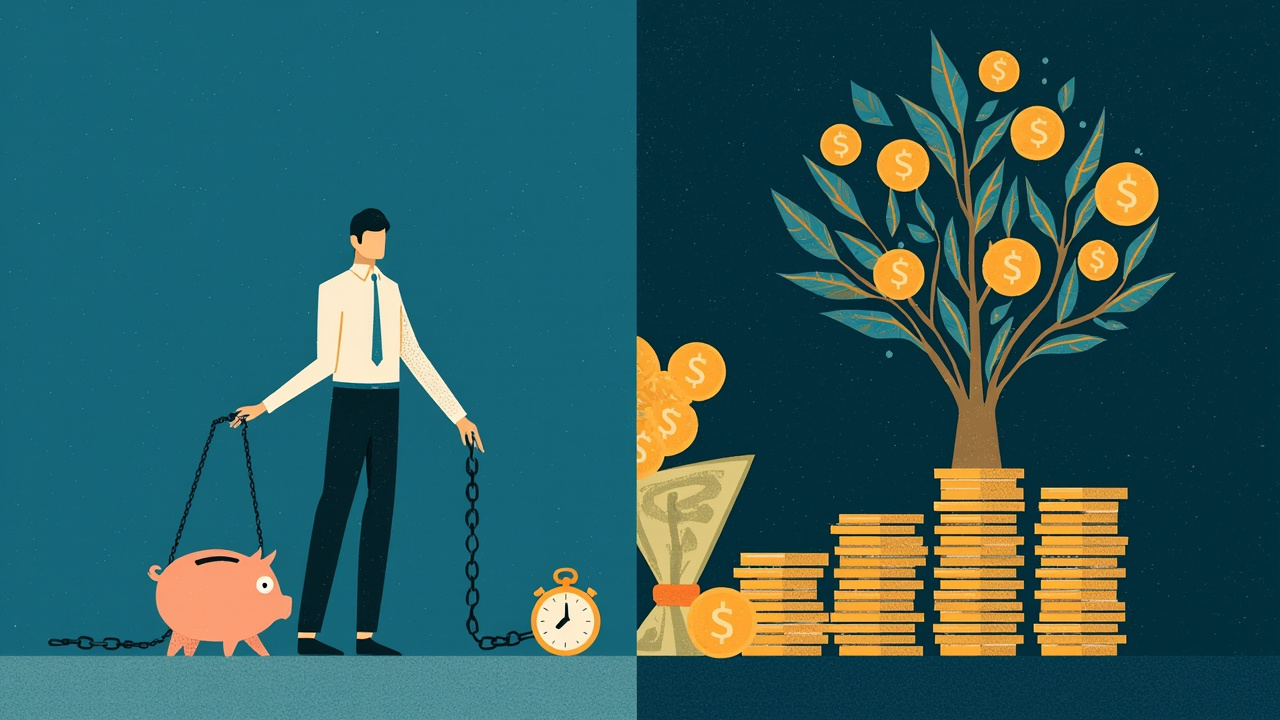
You think parking your money in a fixed deposit is the safest move? It's actually a decades-long slow-boil. While you collect a pathetic 1.5% interest, banks are busy arbitraging your blood money against 4%+ real inflation. This piece rips open the dirty logic of bank profiteering, the invisible killer risk hiding inside every fixed deposit, and the exact playbook ordinary people use to wake up and turn idle cash into assets that work as hard as they do.
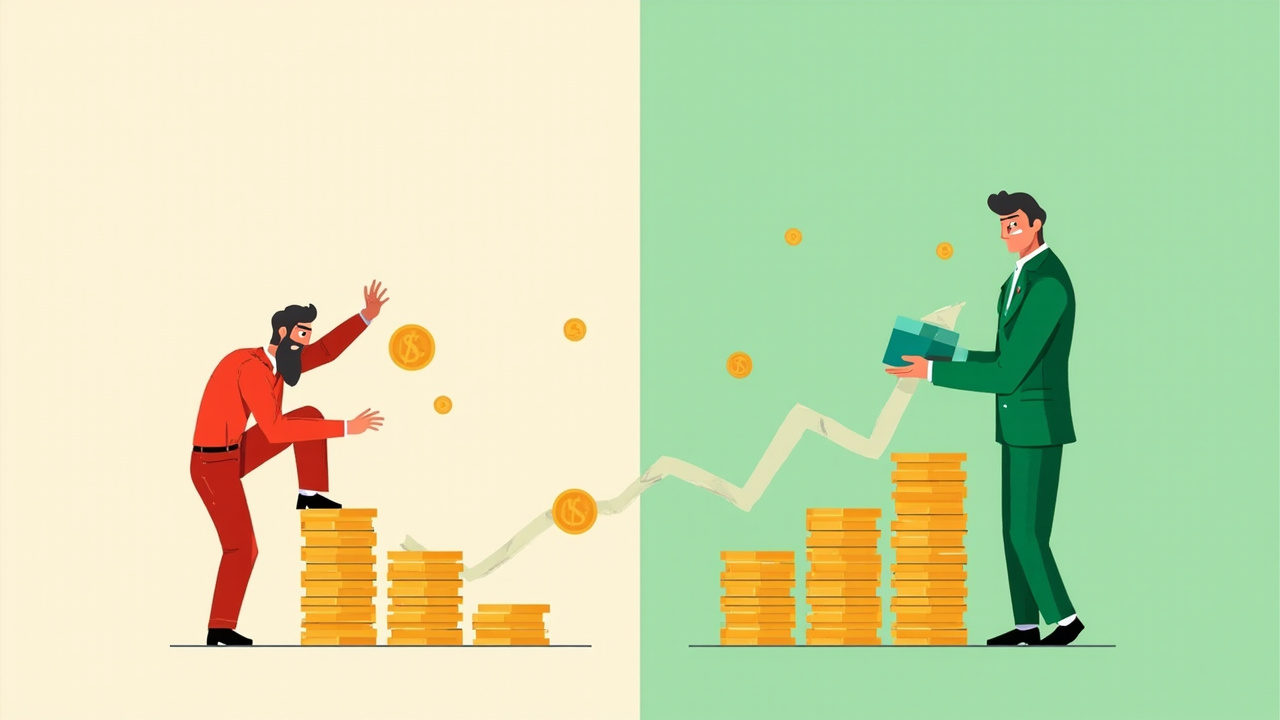
Same ETF, same decade — but a NT$2.6 million gap separates two investors. It is not luck; it is behavior. Dalbar research shows retail investors earn just 3.6% annually versus the S&P 500’s 10%. Here is the brutal math behind stop-buying, profit-taking, and hidden costs — and the four actions you can take today.
You think refusing to marry and have kids lets you dodge the system and live carefree? Brutal reality: single renters face discrimination, NT$5M long-term care burns out in 4 years, banks approve less than 50% on reverse mortgages. We expose the three fatal traps — single premium illusion, inflation time bomb, and long-term care tragedy — and show you how to build a wealth moat and legal firewall so you can stand tall alone.
Earning NT$60,000 a month but saving nothing? The culprit isn't latte inflation — it's the open-ended filial duty payment draining your family of origin. We dissect two real cases (an NT$40,000/month transfer to a face-obsessed father, and a daughter forced to take out a NT$2M loan for her brother) and run the math: NT$20,000/month for 30 years at 7% compound return is NT$24 million in lost wealth. Four concrete steps to set financial boundaries and reclaim your future.
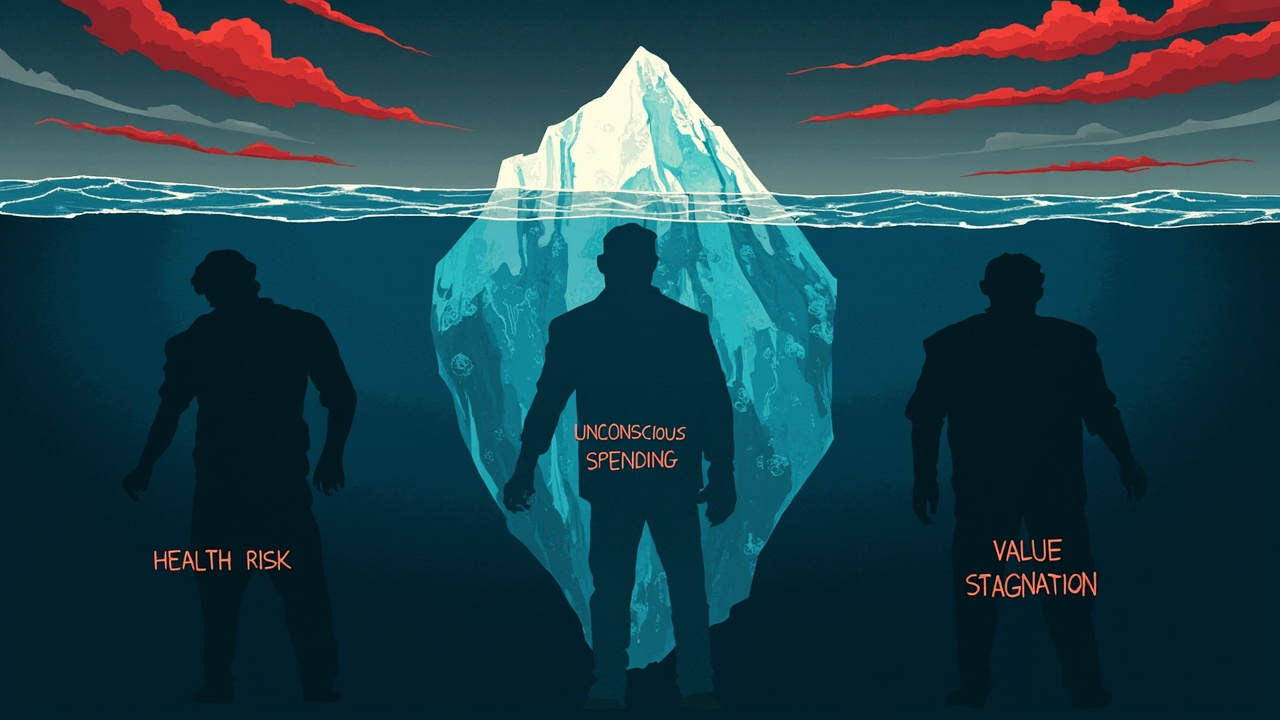
Old Wang gave up his latte, his gym membership, his family vacation—and three months later his account balance hadn't budged, while the hollow feeling inside only got worse. In a downturn, the things that truly devour wealth are never the visible expenses—they're three killers hidden under the iceberg: a sudden health shock, the steady bleeding of unconscious spending, and the stagnation of personal value perception. This article provides 7 concrete actions—almost free—that build a personal financial firewall. Start with a 30-minute walk each day.
Why does saving hard every month take you further from financial freedom? Not because you aren't trying—it's that the logic of "diligence equals wealth" that held for the past 30 years has stopped working. In 2026, sandwiched between inflation and the AI wave, you need a foundational framework that Wall Street has used for half a century and that family offices managing billions have adopted—the "Three-Bucket Money Method." Three buckets carry three missions: rescue, growth, and legacy. From 1 to 2 years of emergency reserves, to a long-term investment bucket that beats inflation—ensuring that no matter how the market swings, you have a steady passive cash flow arriving on time each month.
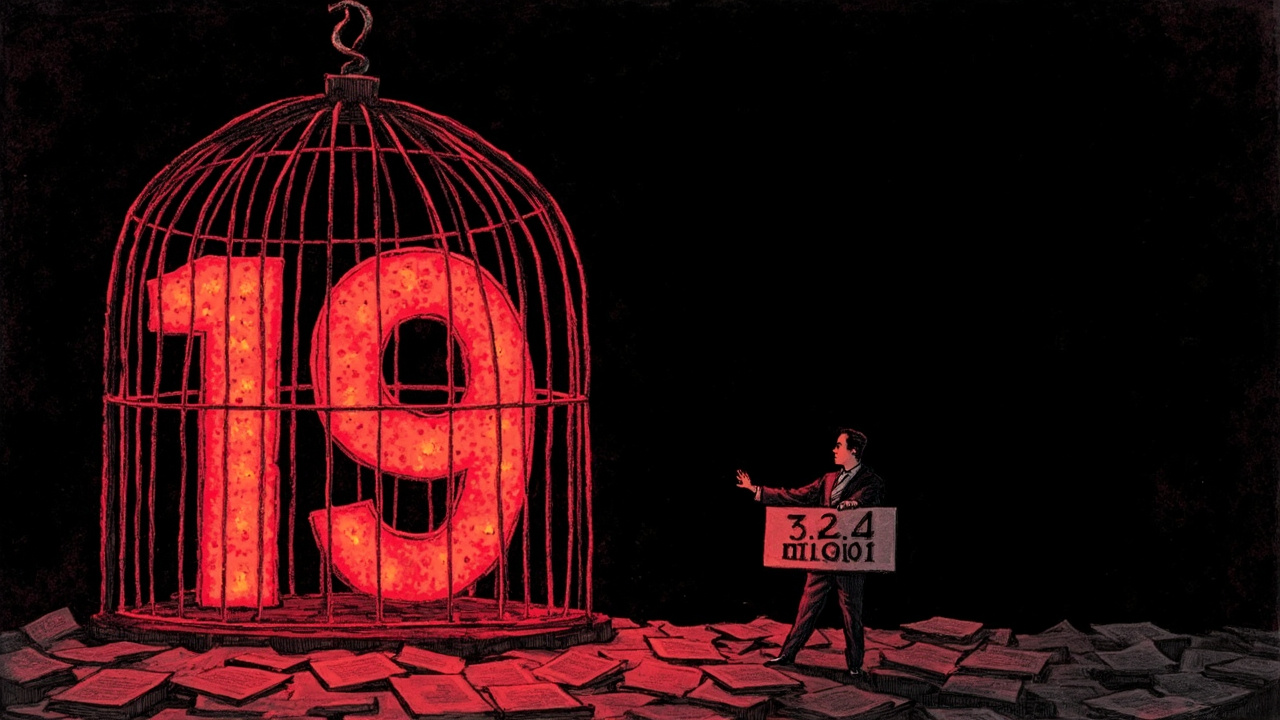
For ordinary people, the thing that crushes them financially is rarely an accident or sudden job loss—it's that single moment at 25, earning just over NT$30,000 a month, when they didn't even realize they were making a choice. As society is saturated with a collective anxiety of "if you don't buy now you'll miss out," and a bank officer uses a "personal loan to top up your down payment" to crunch a seemingly clever number—you think you're fighting inflation, but you're actually chaining yourself into a 30-year financial cage. This article breaks down the real cost of that pivotal choice at 25, and another path you could take.
40 is not the end of your youth — it is the real starting point of your life. At work you're the cookie sandwiched between KPIs from above and your team below; at home you're the slice of meat in the middle of the sandwich, where problems don't slowly get worse — they suddenly collapse. This article delivers five "phone background restart" switches — alcohol, body, relationships, money, mind — plus a complete 40-year-old action framework built around the dumbbell strategy, emergency reserves, muscle savings, sleep recovery, cross-age friendships, and the regret of inaction.
If you're 40 this year and your account balance is close to zero, congratulations — you're standing on the edge of life's financial cliff. The past twenty years were when your "life economic machine" should have been piling up profits, but you ran hard every day and kept zero net profit. This article punctures the most universal excuse — "I earn too little" — and gives you four brutal but real financial truths: consumerism, the lie of "live in the moment," emergency fund, and the time value of compounding. After reading, you'll know how to play the second half.
Imagine two buttons in front of you: press red and you instantly receive NT$1 million; press green and you have a 50% chance of receiving NT$100 million. Which would you press? Most people would choose red, but the people who actually keep money and make it work for them would dismantle the green button and package it up to sell to someone else. The line between poor and rich has never been how much is in your pocket — it's what price tag you've put on pain and uncertainty. This article delivers a concrete playbook for closing the pain switch: emotional-spending cuts, strategic waste, pain-tolerance training, and system design over willpower.
Open your phone, see someone else's investment statement showing a 30% annual return, tap in for three seconds, then quietly close it. Open the brokerage app, see ETFs, dollar-cost averaging, digital accounts—an avalanche of jargon—swipe a few times and decide it's all too much, then close it. You're not lazy—you're overwhelmed. If your savings are under NT$1.5 million, today we're cutting the fluff and skipping the theory: we'll tell you exactly where the money should sit first, what to buy first, and why. You don't have to be brilliant. You only have to do one thing: treat yourself like a smart ordinary person.
Salary not going up, prices rocketing, and your account balance just spinning its wheels? You know compounding is powerful, but one million feels like a distant planet. The truth is, the hardest part of personal finance isn't the lack of money—it's the lack of a roadmap. This article breaks the zero-to-one-million journey into three executable stages: stop the bleeding, build the pool, roll the snowball. Kill the subscription vampires, park your spare cash in a high-interest account, then start compounding with just NT$3,000 a month. Three deceptively simple moves that double and redouble your snowball over 30 years.
The TWSE is at 40,000 but your account is still losing money. This is not a joke, it is happening right now. The index hitting a new high and your account making money are two completely different things, and that is the biggest cognitive blind spot for 90% of Taiwan retail investors. This article uses the real recovery cycles of the 2008 financial crisis (TWSE fell nearly 60%, recovery over five years), the 2020 COVID crash (nearly 30% in a single month), and the 2022 rate-hike cycle (close to 32% drawdown) to show how the wrong capital allocation can lock your losses in. It also breaks down the cost gap between active funds charging 1.5% to 2.5% in annual management fees versus index ETFs like 0050 under 0.4%, and the hidden transaction-cost bill that can exceed NT$10,000 a year for an active retail trader. It then walks through four principles to protect your principal in a TWSE-40,000 high market: building a capital firewall, replacing lump-sum entry with dollar-cost averaging, setting written stop-loss and take-profit rules before entry, and rebalancing annually. It closes with four veto iron rules to keep you from adding at the worst possible moment.
You got your first paycheck at 22, and three months later your savings are still zero. People around you say your 20s are your golden years and you should charge ahead, but you charge for ten years and look back to find your savings are as thin as tissue paper. The truth is, your 20s are not your golden years. They are the financially most harvest-prone decade of your life. Every dollar you lock up, every savings policy you are persuaded to buy, and every investment you enter without an emergency reserve, carries a 3-to-5x future compounding cost behind it. This article uses a NT$3 million gap between starting at 25 versus starting at 35, the real cost of surrendering a savings insurance policy, and the legal tax break of voluntarily contributing 6% to your Labor Pension to give you a complete action checklist you can start using today. It also breaks down two Taiwan-specific high-leverage tax-saving tools, gives precise action guidance by life stage from fresh graduate to pre-retiree, and closes with four veto iron rules that apply to everyone in their 20s.
Your salary goes up a little every year, but your savings number never seems to move. This is not your imagination. It is a systematic wealth-erosion mechanism that Taiwan's 20-to-30-year-olds are living through right now. Real wage growth is being eaten by CPI, the lifestyle ratchet effect upgrades every raise into consumption, savings-type insurance locks up your most compounding-age capital, and asymmetric inflation only erodes those without assets. This article breaks down three underlying rules: why nominal salary growth does not equal real wealth accumulation when Taipei's rent rose more than 20% from 2019 to 2024 while food CPI rose more than 15%, why the financial tools pushed to young people are often misaligned with their actual life-stage liquidity needs, and why asymmetric inflation only hurts those without assets. It then runs a real 5-year comparison of NT$480,000 placed in demand deposits versus an ETF allocation, including the black swan scenario where you would need more than three years to recover. It closes with the three-layer capital defense framework, four veto iron rules, and a four-step action plan to keep your most valuable time and money in your 20s in the right tools.
In April 2025, the TWSE plunged more than 2,700 points in just a few trading days, with market capitalization evaporating an estimated NT$9 trillion—equivalent to five full months of Taiwan's entire productive output. NT$9 trillion did not vanish into thin air; it simply moved from one pocket to another. This article does not tell you which stock to buy, nor does it try to forecast where the TWSE bottom is. Instead, it lays out the underlying logic of how retail investors get harvested: three market mechanics (structural information asymmetry, retail always being last in and last out, conflicts of interest in financial institutions), three sets of sobering accountings (including a NT$3.05 million hidden-cost gap over 30 years), a four-question decision framework, four iron rules, and two Taiwan-specific traps (ETF ex-dividend pitfalls and liquidity risk). The core lesson: in an information-asymmetric market, emotion is the retail investor's most expensive cost, and discipline is the only edge retail investors can actually control.
With the Taiwan Stock Exchange (TWSE) at 43,500 and the US S&P 500 at record highs, group chats are filled with people shouting "this time is different." But the playbook that played out in 2000, 2008, and 2022 keeps repeating: the final leg of every major bull market is exactly when the most retail investors pile in fully invested and the most people get trapped at the top. This article breaks down three warning signs that are unfolding right now but 90% of retail investors cannot read: retail margin balance hitting record highs, P/E ratios deviating sharply from historical averages, and volatility indices collapsing. It then runs three side-by-side accountings of fully leveraged margin versus phased allocation, closes with four iron rules, a four-step action plan, and two Taiwan-specific traps most people overlook (ETF premium/discount mechanics and dividend tax plus Second-Generation National Health Insurance supplementary premium). The most expensive thing at the end of a bull market is not the stocks themselves; it is your indifference to risk.
Taiwan stocks have broken 40,000 points, but your account has not gained a single extra dollar. That is the brutal fact. Taiwanese retail investors are actually the losers in a bull market—the reason is not poor stock-picking, but behavioral bias on entry and exit timing: buying when they shouldn't, selling when they shouldn't, and stubbornly holding when they most need to sell. According to the Taiwan Academy of Banking and Finance, Taiwan retail investors' actual returns in bull markets have significantly lagged the broader market index over the long term. This article breaks down 4 exit discipline iron rules (loss tolerance, time-bound money exclusion, target-return trigger, and the age-plus-stock-ratio 120 rule), 4 practical action steps including age-based target allocations, and 2 Taiwan-specific traps (the high-dividend ETF ex-dividend fill trap, and the TSMC concentration risk making up 30% of the weighted index). It closes with a 30%+ crash emergency plan and the 3-question buy framework. Core line: paper numbers are an illusion handed to you; money in the pocket is your real wealth.
Taiwan stocks have broken 40,000 points. You open your phone, look at your account, and wonder whether to add to the bottom—then a year later you are down NT$300,000. Taiwanese retail investors lose money not because they pick the wrong stocks or lack inside information, but because their understanding of bottom-fishing is fundamentally wrong from the start. This article breaks down 3 underlying rules (using the wrong timing cancels time compounding, Taiwan stock volatility exceeds psychological capacity, and the structural interest alignment of Taiwan's financial institutions), 3 sweat-inducing account scenarios (including a 20-year gap of NT$2.86M), a 4-question decision framework, 4 veto rules, 4 practical action steps, 2 overlooked Taiwan-specific traps (after-tax dividend income yield, and leveraged ETF daily reset decay), and an emergency plan for extreme markets. Core line: in Taiwan stocks, what makes you lose money is never the market, it is your misjudgment of yourself. Action hint: before your next impulse buy, run the 4 questions and check the veto rules.
The Taiwan Weighted Index surged from a 2020 COVID low of roughly 8,000 points to over 20,000 points in 2024, a gain of more than 150% in four years. Yet according to the Securities Investment Trust and Consulting Association (SITCA), the proportion of Taiwanese retail investors who achieve stable long-term profits is far lower than you imagine. The index rises, but you lose to your own psychology. This article breaks down 6 common retail mistakes, 3 real-account scenarios (including the gap between single-stock picks and broad-market ETFs in 2022), 4 ironclad veto rules, 4 actionable steps, and 2 overlooked Taiwan-specific traps (ETF distribution tax mechanics, and the incentive logic behind relationship-manager recommendations). It also includes a panic playbook for sudden drops of more than 20%. The core line: the index rises, but you lose to your own humanity. Action hint: today, audit every position against the 4 veto rules and rebalance before the next session opens.
You open your phone, glance at your account balance, and quietly turn the screen off. How many times have you done this? The question Taiwanese people fear most is not how much the stock market has cost them, but how much their peers have saved compared to themselves. The truth is, account balance alone cannot tell you whether you have enough. What really matters is three things: your emergency reserve, your liquid assets, and the structure of your real monthly cash flow. This article uses median data from the Directorate-General of Budget, Accounting and Statistics (DGBAS) and the FSC (Financial Supervisory Commission), a 20-year comparison between saving NT$5,000 per month in a regular savings account versus an index fund, and a retirement gap estimate of NT$4.5M to NT$7.5M to give you precise savings targets at ages 25, 30, and 40. If you have been avoiding the numbers, today is the day you face them. Pain point: most people compare account balances, not the structure behind them. Promise: a precise, data-backed target for your current age with an action plan you can start today.
The S&P 500 index itself is fine; the problem is in how you buy it. Taiwanese investors holding it through mutual funds and bank-wrapped products face an average total expense ratio of 1.2% to 1.8%, but direct VOO is only 0.03% to 0.07%. On NT$1M over 20 years, that fee gap produces a final-asset difference of over NT$2M. This article breaks down the true cost of four packaging methods, four iron rules of investing, four action steps, and the US estate tax trap that 99% of Taiwanese investors don't know about. For a Taiwan worker earning NT$45K/month contributing NT$8,000 over 20 years: a 1.5% management fee offshore fund yields about NT$4.88M; direct VOO via sub-brokerage yields about NT$5.67M — an NT$800K gap just from fees. Add behavioral mistakes (stopping DCA during 2008, 2020, 2022 crashes) and the gap to NT$5.67M exceeds NT$2M. The US imposes up to 40% estate tax on US-listed ETF holdings above US$60,000 for non-US residents, and Taiwan has no estate tax treaty with the US. Possible alternatives include Irish-domiciled UCITS ETFs or Taiwan-listed S&P 500 ETFs. Includes specific packaging comparison: Yuanta S&P 500 (00646), Fubon S&P 500 (00650), VOO/IVV, mutual funds, and structured products.
You hand over NT$50 for a scratch card and lose more than NT$50. Taiwan Lottery Corporation public data shows the overall payout ratio is about 60–70%, meaning you lose NT$30–40 in expected value for every NT$100 spent — this is not bad luck, this is a certain loss. According to the Directorate-General of Budget, Accounting and Statistics (DGBAS) Household Income and Expenditure Survey, low-income households spend a much higher share of disposable income on gambling than high-income households. This article breaks down three底层 rules of scratch cards (certain loss, near-miss effect, opportunity cost), two Taiwan-specific advanced traps (information asymmetry in prize announcements, house money effect), an expected-value filter decision framework, 4 iron rules, and 4 action steps. Finally, we run the numbers: spending NT$500 per month on scratch cards for 20 years carries an opportunity cost of roughly NT$270,000–NT$300,000. Most dangerous is the lottery design itself, where small frequent prizes reinforce purchasing behavior rather than provide profit. Get out of this negative-expected-value death loop and start building real wealth instead.
In Taiwan, your salary sets your ceiling, but asset allocation decides whether you break through it. This article dissects the fundamental gap between Taiwan's top 3.5% wealthy and ordinary office workers, not return rates, but three底层 logics: making assets work for you, controlling true total cost, and building an emotion-free financial system. From the 100-minus-age stock-bond formula, savings insurance with 15-20% loading fees, ETF dividend traps, to Second Generation NHI supplemental premium tax tricks, you get an actionable plan to start today. Most Taiwanese salary earners lose 2-3% purchasing power annually to inflation by parking money in low-interest checking accounts. The Taiwan Securities Investment Trust and Consulting Association data shows the average DCA holding period is less than two years. This piece delivers a four-step action plan with four iron rules, two local hidden traps (Second Generation NHI 2.11% levy and dividend-from-capital ETF schemes), and emergency scenario playbooks, helping you build the system that separates the top 3.5% from everyone else.
Your mom says if you don't buy now it's too late, and your LINE group is buzzing about a classmate's home purchase. But have you really thought about whether that NT$29,547 monthly mortgage, the NT$2 million down-payment opportunity cost, and the 40-year-old apartment it becomes after 30 years is a good deal? A real breakdown of a NT$10 million New Taipei old apartment shows the 30-year total cost approaches NT$19 million — NT$10.63 million in principal and interest, plus NT$2.86 million in lost investment opportunity on the down payment, plus taxes, insurance, management fees, renovation, and selling costs. Meanwhile the renter who invests the NT$9,547 monthly savings difference plus the NT$2 million down payment at 3% ends with NT$9.26 million in assets after 30 years — actually coming out ahead by over NT$2 million. Taipei price-to-income ratios have hit 16x and New Taipei 13x, triple the 6 to 8x of the 1990s. You'll get four veto-proof iron rules including the one-third mortgage-to-income limit and the 10-year minimum holding period so you can make a housing decision no longer held hostage by family pressure.
You tap hearts on friends' omakase posts, then open your banking app and see NT$2,300 left. This isn't an isolated case — it's the lived reality of over a million young Taiwanese office workers. According to the Taiwan Financial Wisdom Education Promotion Association, the 25–35 age group has an average savings rate of just single digits, with nearly 40% unable to save anything each month, while over 60% still travel abroad every year. This article dissects the structural trap behind that behavior and the 15% credit card revolving interest that bleeds many of them dry, using a 30-year simulation of an extra NT$8,000 per month to show how 800 cups of coffee can become NT$8 million in retirement — or vanish entirely. You'll get 4 self-rescue rules including the 30-second and 72-hour spending tests, a 4-step action plan starting with a 20% auto-transfer on payday, and a framework for reclassifying spending into true experiences, daily small happiness, and impulse fancy poverty that must be cut entirely.
NT$500,000 isn't a number — it's the first time an ordinary person can say no to a bad job, an abusive client, or an exhausting relationship. 90% of Taiwan office workers save for five or ten years and still don't have NT$500,000, not because their salary is too low, but because they got the order wrong, the insurance premiums are too heavy, and they never turned on Labor Pension voluntary contribution. This article breaks down three underlying rules, three calculation sets showing the wrong/right/20-year gap, four veto iron rules, four action steps, and differentiated strategies for fresh grads, working families, midlife parents, and pre-retirees — to help you walk from zero to your first NT$500,000. Using 2023 Ministry of Labor data (average monthly wage NT$45,000), DGBAS inflation (CPI 3.05% in 2022, 2%+ in 2023, 100万 in 30 years shrinks to NT$550,000 in real terms), and the fact that 2.11% second-generation NHI premiums quietly drain high-dividend ETF income, you will see why paying yourself first beats spending yourself broke. The article also shows how to consolidate multiple savings-insurance policies (NT$7,000/month of which is illiquid savings) into a low-cost index ETF (0.5% expense ratio, 7% annualized) to gain over NT$1.8 million over 20 years, while keeping your emergency reserve intact. By the end you will have a step-by-step roadmap to build the financial backbone that gives you the right to say no — starting with opening that separate account today.

You have NT$500,000 in a savings account earning NT$4,000 a year in interest, but inflation eats NT$10,000 of purchasing power annually. Split the money into four layers — high-dividend ETFs (0056 or 00878), U.S. Treasury bond ETFs (00687B), inverse-hedge tools, and an emergency reserve — combine that with dividend reinvestment and disciplined monthly saving, and within three years your passive income can exceed your monthly salary. This article breaks down the actual allocation ratios, year-by-year compounding projections from year one to year three, and explains why banks, RMs, and investment-guru teachers will never teach you this playbook. You will see how 0056/00878 high-dividend ETFs at 6–7% yield and 00687B U.S. Treasury bond ETFs at 4–5% generate a baseline NT$1,500–1,800 of monthly passive income in year one, growing to NT$3,000+ in year three and over NT$60,000/year in year five. The article also covers the structural fee and interest-spread game banks play, the 2.11% second-generation NHI surcharge on dividends above NT$20,000, and why daily-rebalancing inverse ETFs erode over time and should only be used as short-term hedges. By the end you will have a concrete, executable NT$500K-to-financial-freedom plan that takes the next 1,095 days to unfold.
Many 40-year-old office workers assume their salary has peaked, expenses bottomed out, and it's too late to save. But the real enemies were never low income — they are inflation quietly dissolving purchasing power, fee compounding devouring returns, and emergencies forcing you to exit at the worst possible moment. This article lays out three underlying rules (fight inflation, suppress fees, execute with discipline), pairs them with practical moves (Labor Pension voluntary contribution at 6%, annual rebalancing), and compares the real gap between parking NT$1 million in a time deposit versus phased investment in a Taiwan-listed low-cost index ETF (0050 or global equivalents) over 20 years. Using Taiwan's public data — weighted index total return annualized 7–9% from 2003–2023, SITCA's fee-and-holding-period research, and Ministry of Labor Labor Pension returns — the article shows that 0.5% versus 2% expense ratio over 20 years can carve out nearly NT$900,000 of retirement corpus. You will also see why Taiwan's three local blind spots catch 1st-year, 1-to-3-year, and 5-plus-year investors differently, and how 2008-style drawdowns of 50%+ require an emergency reserve cushion before any investing begins. The closing four-step plan can be executed today, before your last turnaround window closes.
You earn NT$70,000 a month in Taiwan, outpacing 60% of earners, yet your bank balance hovers at four digits. You drive a financed import car, carry a 30-year mortgage, and finance branded goods on installment — a so-called middle-class professional who is, in reality, a debt specialist dressed up as success. This article breaks down the three harvesting rules — installment trap, social-pressure consumption, and pseudo-assets — that quietly drain your wealth, then lays out four iron rules and a four-step turnaround plan. Using real math on a NT$1.5 million import car and a NT$15 million apartment, you will see exactly how monthly cash flow leaks NT$24,000 per month on the car alone while you sleep. You will also learn how to consolidate high-interest revolving credit, build a six-month emergency reserve, and start disciplined ETF dollar-cost averaging with as little as NT$5,000 per month. The piece closes with a stark contrast: those who look rich and those who actually are. By the end you will understand why fake richness is more dangerous than honest poverty and how to start your ten-year real turnaround today.

You dutifully stash your savings in time deposits every month, and twenty years later you realize your money hasn't grown — it has only gotten thinner. With Taiwan deposit rates hovering around 1.5–2% and CPI running above 2% (sometimes over 3%), keeping cash in the bank quietly destroys purchasing power year after year. So can NT$10,000/month for 30 years really compound into NT$20 million? The answer is yes — but only if you avoid the fatal mistakes. This article uses Taiwan's published historical data (Taiwan weighted index total-return annualized 7–9% since the 1990s, 0050 8–10% since 2003) to break down three projection sets: time deposit versus 0050 DCA versus active funds over 30 years, including fees, tax, and real purchasing power. You will see that 0050's total expense ratio sits at roughly 0.43–0.46% while active funds charge 1–3% upfront plus 1.5% management fees — a 30-year gap that can reach NT$3 million. The article closes with the dual-track Labor Pension voluntary contribution strategy (6% tax shield plus ETF DCA), four iron rules, four action steps, and tailored positioning for every life stage. By the end you will know whether your money is working for you or quietly working against you, and the three habits that separate the disciplined few from the rest.
You enter a day-trade 5 minutes before the open and end the day down NT$30,000. This isn't bad luck — it is a systematic trap that no one told you about, harvesting hundreds of thousands of Taiwan retail investors every day. This article dissects the day-trading harvesting structure in three layers — the cost hell, retail's structural disadvantage against institutional and algorithmic trading, and the antagonistic nature of the broker's business model. Also included: three real calculations, two advanced traps (misunderstanding the tax rate, settlement default legal risk), four iron rules, and a four-step action plan, ending with a contingency plan for extreme losses. Day-trading is not a zero-capital business — it is a system that uses your time, capital, and emotions to subsidize the profits of brokers and market makers. TWSE data shows that the share of consistently profitable day-traders among Taiwan retail is extremely low, and the share of algorithmic trading continues to climb into double digits.
In March 2020 the TAIEX collapsed from 12,197 to 8,523, retail investors net-sold more than NT$200 billion, the market rallied back to a new high within six months — so who took that NT$200 billion? Drawing on behavioral finance and loss aversion, this article breaks down the three underlying rules for crashes, four investment iron rules, and a four-step action plan, with real calculations for retail investors from 2008 to the present. You will learn why the saying 'the master knows when to sell' has killed more people than any other, and how Kahneman and Tversky's research on asymmetric loss-pain proves that your brain's wiring is exactly what strong money is betting against. TWSE data shows that for holding periods of more than one year from 2001 to 2023, the probability of a positive return exceeds 70% — but most retail investors still underperform the index because they sell at the bottom and chase at the top.
Taiwan's CPI has averaged more than 2% annual growth over the past 5 years, but regular bank savings rates are below 0.5% and the best time deposits only reach 1.6% — you think you're preserving capital, but you're actually losing money every year. This article uses DGBAS real wage data, a 30-year time-deposit vs ETF simulation, and the historical record of the 2008 and 2022 Taiwan stock drawdowns to break down the core-satellite allocation method for small capital, four non-negotiable iron rules, an annual rebalancing SOP, and the hidden tax bonus of the 6% voluntary labor pension contribution. Finally, a 4-step low-barrier action plan means you can start rolling your retirement with just NT$2,000 from today. The Taiwan Financial Services Institute has made it clear: asset allocation contributes more to long-term portfolio returns than stock picking or market timing — how you 'allocate' matters more than what you buy.

When a stock goes up 20%, you press sell immediately — and then you miss the next 40% to 60% of the move. This article breaks down the three most fatal rules Taiwan retail investors ignore (the compounding time axis, the real meaning of profit-taking, and asset allocation) using a side-by-side 10-year comparison of a NT$300,000 position held with annual 20% profit-taking versus held untouched. You will see the true cost of constant trading. Also included: four operational iron rules, blind spots in labor pension allocation, and a dividend tax calculator. Taiwan's TWSE historical data and academic research show the average retail investor's annualized return persistently lags the broad market, and most are even in the red — the reason is not bad stock picking, it is the constant trading-in, trading-out, and the act of cutting the compounding time axis yourself.
The salesman says the monthly payment of NT$25,000 is affordable, but once you add maintenance, parking, fuel, and insurance, your real monthly burn is NT$35,000 — and with only NT$15,000 left, how do you ever get ahead? This article uses the real 5-year account of a NT$1.5 million import car loan, the 10-year NT$5 million opportunity cost, and the gap between a 25-year-old and a 35-year-old's two choices to expose the underlying rules of how the poor buy cars versus how the rich buy cars. It also gives you four non-negotiable iron rules to help you judge whether you currently have any business touching a car loan at all. If you earn a paycheck in Taiwan and feel the showroom glow pulling you in, these numbers will change the way you think about that decision for the rest of your life.
Most people in Taiwan earning NT$45,000–50,000 per month blame their income for not being able to save, but the real culprit is three invisible financial leaks happening every single day. Official data shows Taiwan's CPI has risen more than 30% since 2000, while real wages have barely grown — your cash in a savings account earning near 0% is silently losing purchasing power to a hidden inflation tax. The Taiwan Financial Services Institute (TFTI) found that the average consumer holds 3–5 subscriptions, at least 2 of which are barely used, while FSC's 2022 financial literacy survey revealed that over 60% of adults have no fixed savings plan and save only what is left at month end. This article dissects the subscription black hole, the nominal vs real wage trap, and the fatal 'spend first, save later' logic taught by Taiwan's financial institutions. It also exposes investment-linked insurance policies with first-year add-on fees as high as 150%, and delivers a three-layer financial structure, four iron rules, and four steps you can start tonight when you get home from work.
You hold NT$500,000 in pure fixed deposit earning 1%-plus a year — about NT$6,000 in interest. Meanwhile, your neighbor just borrowed NT$5 million from the bank at 2% to invest in an 8% project, and a year later he earned NT$300,000. This article breaks down three underlying rules behind why the poor save money while the rich accumulate assets, and runs two outcome comparisons: NT$10,000/month saved from age 25 for 40 years (NT$6.5 million vs NT$34.9 million) and buying versus renting and investing over 30 years (a NT$26 million gap). It also gives you the four prerequisites for a leverage mindset plus a self-assessment checklist so you can tell whether borrowing-to-invest is a tool or a trap for you.
Many people treat NT$10 million and the 4% rule as the standard retirement answer, but that formula was born from William Bengen's 1994 U.S. research and assumes a 60/40 stock-bond mix, a 30-year horizon, and the U.S. market. Drop it into Taiwan with a 35-year horizon and a Taiwan Weighted Index that trails U.S. equities, and the success rate collapses fast. This article breaks down the three premise gaps that break the 4% rule, the sequence-of-returns risk, the structural gap in Taiwan's labor pension and labor insurance system, and how to build a cash buffer pool in the 5 years before retirement. It closes with four steps you can take today — Bureau of Labor Insurance calculator, voluntary labor pension contributions, asset allocation by horizon, and an annual review date — to convert the 4% rule from a slogan into a workable Taiwan plan.
You park NT$300,000 in a bank demand deposit and earn less than one hot-pot meal in interest every year. This is not an insult — it is a fact published by Taiwan's central bank. In 2024, Taiwan demand-deposit rates sat at 0.2% to 0.3%, giving you at most NT$600 to NT$900 after-tax interest on NT$300,000 over a full year. In the same year Taiwan's CPI rose more than 2%, meaning your NT$300,000 lost more than NT$6,000 in real purchasing power. You are not saving — you are handing your wealth over, at the slowest possible speed. This article uses 20-year projections of pure savings versus NT$240,000 in low-cost ETFs, the three-layer capital allocation method, and four veto-power iron rules to give ordinary Taiwanese working professionals a plan they can execute starting today.
You dump your salary into a post-office passbook and earn a meager one-something percent interest each year, while inflation quietly eats three times that in purchasing power. This is not investing — it is working for the bank with your own sweat. Taiwan's CPI hit 3.08% in 2022, a 14-year high, and stayed near 2.5% in 2023, while post-office demand deposits pay only 0.2%. This article uses official data from the Directorate-General of Budget, Accounting and Statistics, the Ministry of Labor, and the Securities Investment Trust & Consulting Association to expose inflation's true damage on NT$100,000, the brutal fact that fewer than 50% of Taiwan's active funds beat the index over the long term, and the left-hand-pays-right-hand trap inside dividend funds. You will get the three-bucket capital check, four iron rules, and a four-step action plan — a complete decision framework you can use today and for the rest of your investing life.
New Fed Chair Warsh's first meeting was more hawkish than expected: rates held, but the dot plot flipped from a cut to a hike and the Dow plunged 500+ points. Here are the 4 signals and how to stand firm.
You read a headline about the central bank and 10-year Treasury yields and every word looks familiar, but strung together it reads like hieroglyphics. The bond market is the invisible giant that moves your mortgage, your salary, and your stock returns every day. This article demystifies bonds in 15 minutes and gives you a 3-bucket money system you can implement tonight.