
Do you find yourself saving hard every month, yet the gap to financial freedom keeps widening? You look at today’s market levels and they’re so high they make your heart race—afraid to jump in and get harvested, but watching helplessly as inflation eats your deposits—what should you actually do? Recently the inbox has been flooded with anxious private messages: it’s 2026, we’re at an extremely contradictory, even suffocating, turning point. Technology is advancing at breakneck speed; AI is threatening jobs in every industry almost daily; at the same time, the cost of living has rocketed.
The root of much anxiety is a vague sense that the diligence-equals-wealth logic that was taken for granted for the past 30 years is breaking down. In the past, all you had to do was work hard, save frugally, and combine bank interest with steady career advancement, and you could lay out a respectable road for your later years. But in 2026, every dollar you save is like an ice cube in the blazing sun, being gnawed away by an invisible beast—hidden inflation and the slow erosion of the currency’s purchasing power.
Have you ever noticed why some people around you, even when the market is shaky and the economy is down, can still calmly sip their coffee and take their families abroad? Is it really that they’re luckier, or do they have some inside information ordinary people don’t know? Neither—it’s a system at work. There’s a century-old saying in the investment world: we cannot predict when a storm will come, but we can build with our own hands a ship that can weather any storm.
The system I’m sharing today is called the “Three-Bucket Money Method.” It has been popular on Wall Street for half a century, and is the underlying framework used by countless top financial masters and even family offices managing billions.
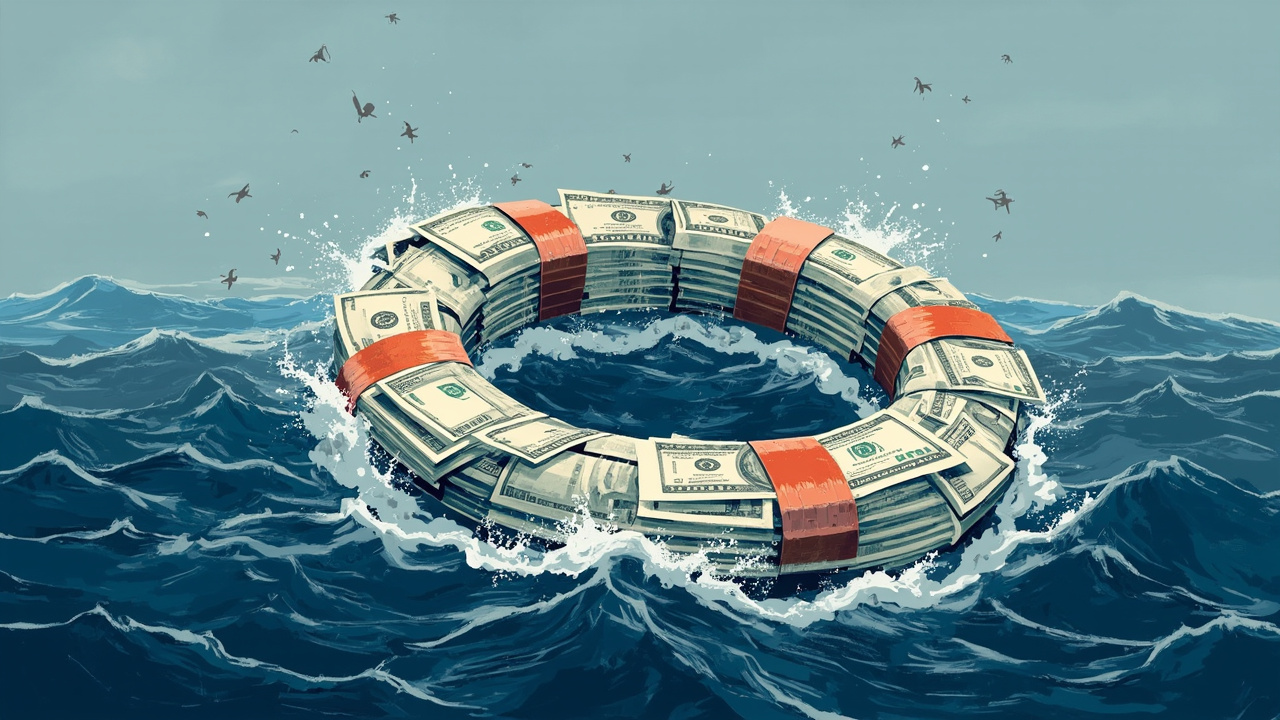
1. The First Bucket: Emergency Reserve—The Liquidity Lifebuoy
Let’s start with the first bucket: the emergency reserve bucket. Many people hear “emergency reserve” and shrug, thinking what’s there to talk about. But most people either have an empty first bucket, or have it stuffed too full. Those who stuff it too full watch helplessly as millions sit in a bank account gathering dust, silently losing to inflation every single day. Those whose bucket is empty are walking an extremely dangerous financial tightrope—one small thing at home and the entire financial structure collapses.
The sole mission of the first bucket isn’t to make money—it’s extreme liquidity. What goes in here is all your living expenses for the next one to two years. Why exactly one to two years? It’s not a number picked out of thin air: across 100 years of global financial history—whether the 2000 dot-com bubble, the 2008 financial tsunami, or the 2020 pandemic crash—the average recovery period after a major shock has hovered between 12 and 24 months.
Many will say: “My job is stable, I don’t need an emergency reserve.” Really? How many so-called “iron rice bowls” disappeared overnight during the 2020 pandemic? The money in this bucket isn’t an investment—it’s insurance that guarantees you won’t be forced to sell assets at the market bottom.
2. The Second Bucket: The Anti-Inflation Long-Term Investment Bucket—Let Assets Outrun Prices
The second bucket is the long-term investment bucket, with only one core mission: beat inflation. If you put all your assets in the first bucket, you’ll be safe but inflation will slowly erode your purchasing power; if you put everything into high-risk investments, you won’t be able to sleep. The second bucket is the bridge between the two.
What should the long-term bucket hold? The classic three-bucket answer is a balanced mix of 60% equities + 40% bonds, but the ratio must adjust with age. A 30-year-old can do 80/20 stocks/bonds; a 50-year-old should be at 50/50; close to retirement, the ratio should reverse.
Equities’ job is “growth,” sharing the fruits of economic expansion through index ETFs or large blue-chips; bonds’ job is “stability,” providing cash flow through investment-grade bonds and lowering overall volatility. The money in this bucket is the engine that “makes money move on its own”—you don’t need to watch the screens every day, because you believe in the long-term upward trajectory of the economy and the profitability of businesses.

The key principle: once you put the money in this bucket, don’t look at it, don’t touch it, and don’t panic-sell because of short-term dips. Short-term swings are noise in this bucket, not signals.
3. The Third Bucket: Dreams and Legacy—Giving Your Life Goals Worth Looking Forward To
The third bucket carries not just money, but the meaning and goals of life. It can be split into two sub-buckets: the dreams bucket (things you want to complete in 1 to 5 years) and the legacy bucket (long-term, 10+ years, like children’s education funds or assets to pass on after retirement).
The dreams bucket is for the goals you want to achieve in the next 5 years: a new car, paying the down payment on a home, taking the family to Europe. This bucket’s money can tolerate medium risk—for example, allocated to short-term bonds, balanced funds, or savings insurance—what matters is “clear goals and disciplined execution.”
The legacy bucket holds assets meant for the next generation, or for giving yourself confidence after retirement. The money in this bucket can use a more aggressive strategy, because time is on your side—10, 20 years of compounding can turn a tiny seed into a great tree.

Conclusion: The Three Buckets Aren’t Theory, They’re the Rebar of Your Financial Structure
The real power of the three-bucket method isn’t that it makes you the most money—it’s that it lets you sleep at night no matter how the market swings. Because you know: the first bucket guarantees you won’t be forced to sell at the bottom; the second bucket lets your assets beat inflation over the long run; the third bucket gives your life concrete goals to chase.
This isn’t teaching you to get rich overnight with a vengeance—it’s helping you build an earthquake-resistant building inside your heart, so that no matter how the market swings in the future, you’ll have a passive ATM paying out on time each month. While the people around you are still anxious over next month’s bills, you’ll be calmly sipping coffee and planning your next dream.
Starting today, take out paper and pen, and divide your current assets into three piles: emergency reserve (1 to 2 years’ expenses), long-term investments (anti-inflation portfolio), dreams and legacy (concrete goals). Then start adjusting the proportions, so that each of the three buckets reaches the right water level.
This article shares general financial concepts and does not constitute any investment advice. The specific allocations, instruments, and returns of the three buckets change constantly. Please make independent judgments based on your own risk tolerance, age, and family situation, and consult a qualified professional financial advisor when necessary.
Disclaimer: This article shares investment concepts and compiled reference material. It does not constitute any specific investment, tax, or legal advice. Markets carry risk and investing requires caution; please make independent judgments based on your own risk tolerance and consult a professional advisor.
Tags
三桶理財法, Emergency Reserve, Retirement Planning, Asset Allocation, 財務覺醒, Risk Management, Long-Term Investing, Inflation Hedge, Passive Income, 平凡人理財, Pension, Portfolio
Comments