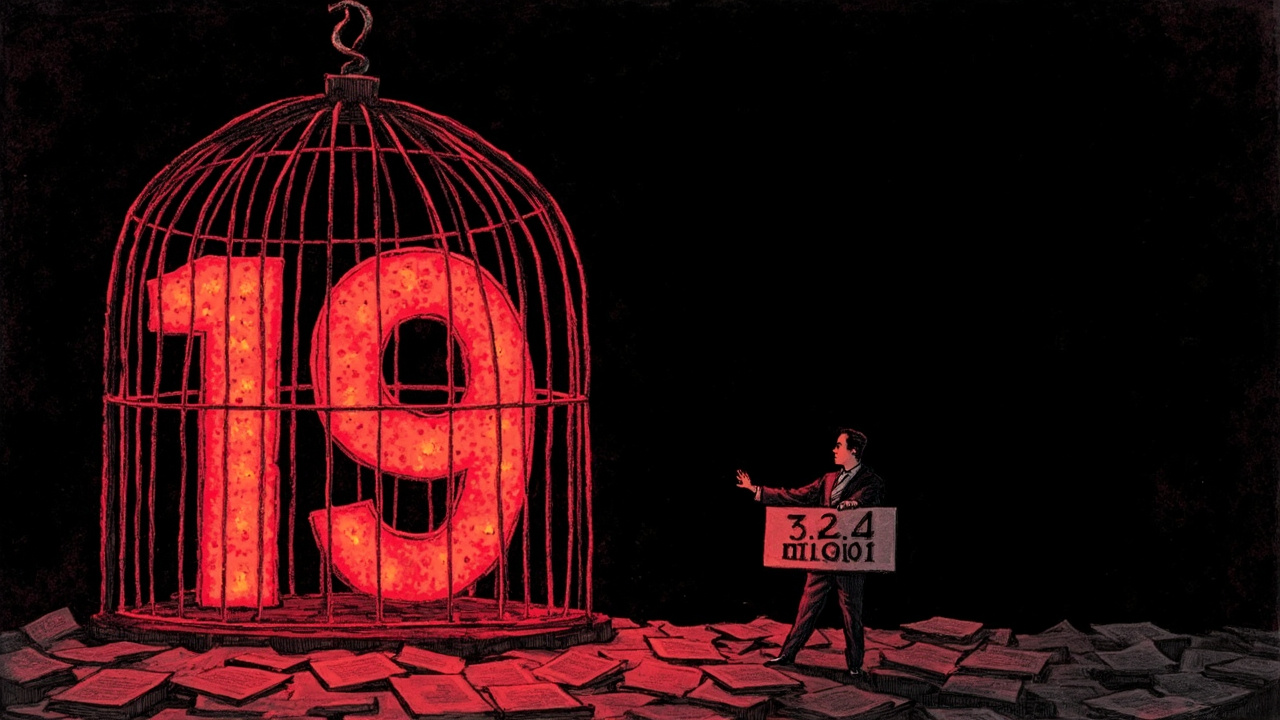
The Mortgage Trap: You’re Not Buying a House, You’re Buying a 30-Year Cage
You stand at the real estate agent’s door, looking at property photos pasted across the floor-to-ceiling windows, while your phone’s LINE group chats go wild with your high school classmate’s home-buying news — photos of keys and a new living room, with a flood of “congrats” and “so nice” comments. This morning your mom called again: “Your auntie’s son already bought a three-bedroom in New Taipei, and you’re still renting and wasting money. The landlord can kick you out anytime. What about when you’re old?” You look at the down payment you’ve saved for five years, your heart pounding, wondering if you should just go for it? If you don’t buy now, prices will rise again, and rent money is poured down the drain — at least a mortgage payment gives you ownership.
But a voice in your head keeps shouting: wait, 30 years, 10,000+ days locked up — is it really worth it? Why is it that every friend carrying a mortgage moans on payday, doesn’t dare go out on weekends, can’t switch jobs, can’t travel, can’t have kids — living like prisoners in a glass jail?
Every time the buy-vs-rent debate comes up, the only math anyone gives you is this: NT7.2 million, then they say “see, put that into a mortgage and the house is yours — what a deal.” Sounds super logical, right? But this is Taiwan’s biggest mathematical scam. They deliberately hide all the other hidden costs that will eat your life, because once you calculate clearly, you’ll find buying a house isn’t a guaranteed-profit investment — it’s a 30-year gamble.
The Real Math on a NT$10 Million New Taipei Old Apartment
Suppose you’re buying a NT2 million, NT29,547**. Hold that number — over 30 years of principal and interest you repay a total of **NT2.63 million in interest over principal. But that’s just the start.
- NT2 million? Eight years of saving, scrimping on living. Setting aside the sacrificed quality of life, if that NT4.86 million. The moment you sank it into the down payment, that opportunity cost disappeared.
- House tax and land tax: a NT20,000 per year is NT$600,000 over 30 years.
- Management fees: NT720,000** over 30 years.
- Fire and earthquake insurance: NT300,000** over 30 years.
- Renovation: you need it — kitchen, bath, furniture, appliances. Conservative estimate NT$1 million.
- Plumbing/electrical renovation after 10 years: NT100,000.
- Selling costs: if you sell after 30 years, agency fee NT300,000**.
Total: down payment NT10.63 million + tax/insurance/management NT1.6 million + selling costs NT16.35 million. That doesn’t even include the lost down-payment investment opportunity cost of NT19 million**.
You spend NT$19 million buying a house that becomes 40 years old after 30 years, and you have a sense of what it’ll sell for then.
The Real Math on Renting for 30 Years
Same neighborhood, similar two-bedroom, NT7.2 million over 30 years total. The NT29,547 mortgage and the NT4.4 million** in 30 years.
Your NT4.86 million**.
These two alone total NT7.2 million in rent, but you still have NT2.06 million on housing. You didn’t actually spend anything — you came out ahead.
Now tell me: who’s the fool? The person who rented for 30 years and has over NT19 million on a 40-year-old apartment?
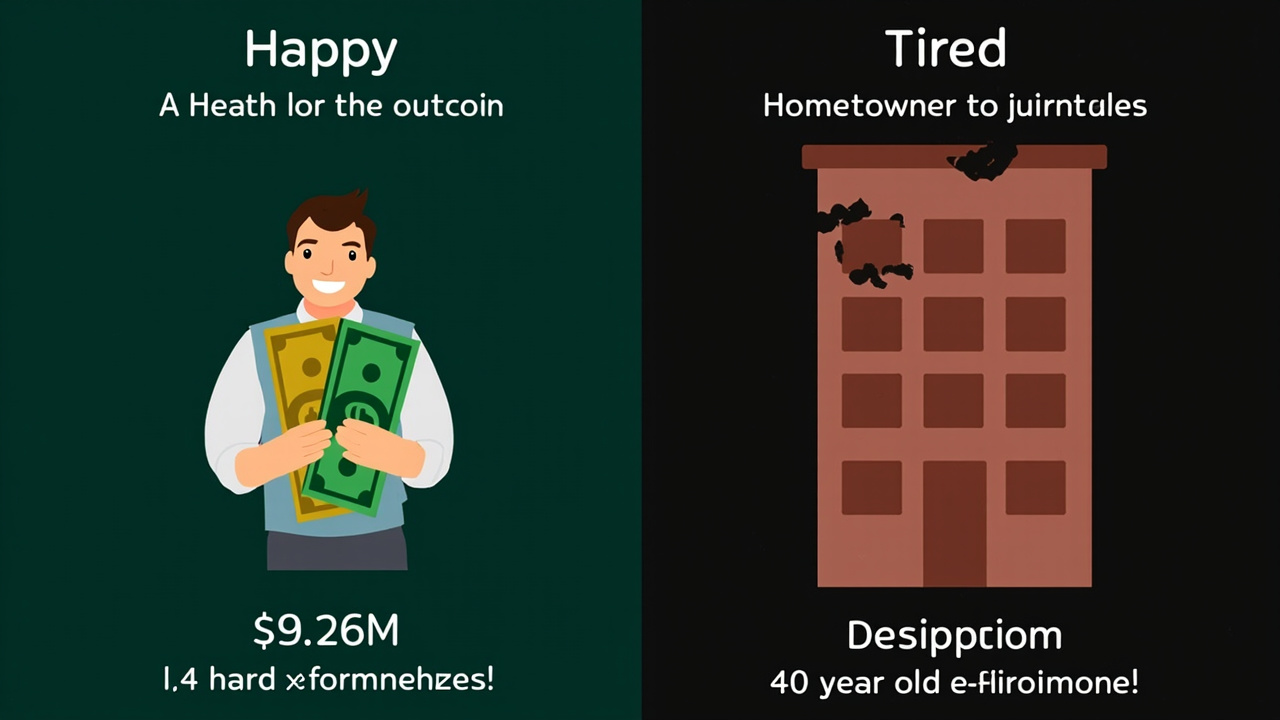
How Much Must Prices Rise for You Not to Lose?
I know what you’re thinking: house prices will rise — in 30 years that NT20 million. OK, so how much must it rise for you to break even?
Your total cost is NT19 million in 30 years to break even, right? But don’t forget inflation. At 2% annual inflation, the NT10.48 million**. In other words, you need your house to sell for NT10.48 million in purchasing power — and that’s not even a profit, that’s just not losing.
What about beating the renter? They have NT5.1 million, plus NT9.07 million**. Your house must sell for at least NT$35 million in 30 years to actually beat the renter in real purchasing power.
A New Taipei old apartment going from NT35 million requires an annualized return of 4.2%. Possible? In 30 years that house will be 40 years old, with peeling exterior walls, aging plumbing, broken elevator, and elderly neighbors — who will you sell it to?
Why Your Elders’ Buy-a-House Logic Will Kill You
Have you ever wondered why older people love pressuring you to buy? Because in their era, buying actually made money. Your parents’ generation bought in the 1990s — Taipei at NT$100,000+ per ping, easy to buy, easy to profit, tripled in a decade was normal. Salaries were rising, house prices were rising, mortgage rates were high but inflation was higher — the money you owed the bank got diluted by inflation, effectively the bank was paying for you. More importantly, price-to-income ratios were reasonable back then, around 6 to 8 in Taipei — a family could buy a home in 6 to 8 years of saving everything.
But now? Taipei price-to-income ratio is 16x, New Taipei is 13x. That means a family needs 13 to 16 years of saving every penny to afford a home. Salaries haven’t risen in 20 years, but house prices have tripled. Rates are lower but inflation is lower too — the money you owe won’t get diluted; it just gets heavier.
Worse, the demographic structure has completely reversed. Taiwan has the world’s lowest birth rate; the childless tsunami is already here. In the future it’ll be houses looking for people, not people looking for houses — a market of oversupply. Do you really think prices will keep rising? Your parents pressuring you to buy with their era’s experience is like handing you a stock tip from 30 years ago and telling you to enter the market now. The times have changed, the rules of the game are completely different, but everyone’s still reciting the old script.
Three Underlying Rules Designed to Harvest Your Life
Rule 1: Debt as Freedom Hostage
Banks and developers’ favorite line is “look at how low mortgage rates are — if you don’t buy now, you won’t be able to afford it later.” But they won’t tell you that low rates are a trap, not a benefit. The moment you take on a 30-year mortgage, your life is locked down: you can’t quit your job because going broke breaks your payments; you can’t start a business because income is unstable and the bank pulls the credit line; you can’t get sick because there’s no buffer; you can’t pursue dreams because the NT$30,000 monthly mortgage forces you to stay at the company you hate doing work you don’t want.
Do you know what this is called? Modern slavery. You think you bought an asset, but actually the asset bought you. Banks lure you aboard with low rates, then lock you on the boat with a 30-year contract; you pay on time every month while they collect interest steadily. Your time, your health, your dreams all become numbers on the bank’s balance sheet. Even more brutal: after 10 or 20 years of paying, you find you can’t go back, because the sunk cost is too high and you refuse to admit the loss, so you grit your teeth and pay until you die. That’s debt as hostage — using your own money and time to lock yourself in a prison and making you thank the prison for the sense of security it provides.
Rule 2: Face Tax
Taiwanese people love face — no house means loser, failure, no capability. Who灌输d this value in you? Developers and real estate agents spent decades of marketing budget drilling “having a home equals success” into everyone’s head. They sponsor media outlets hyping up home price news, they buy ads showing successful people in luxury homes, they hire influencers and bloggers to share home-buying joy, they even渗透ate your family gatherings, turning your aunt and your auntie into their free salespeople who nag you every time they see you about why you still haven’t bought.
All of this is about creating anxiety, making you feel like not buying a house is a life failure, so you willingly hand over all your savings and sign a 30-year indenture just to keep face and not be looked down on. Do you know what this is called? It’s called a face tax. The price you pay for face in front of relatives and friends is 30 years of freedom and over NT$10 million in real cash.
Rule 3: Information Asymmetry Slaughter
When you go look at a property, what does the agent tell you? They’ll say the location is great, the MRT is coming, the rezoning is being developed, the future appreciation is unlimited — then they pull out a bunch of transaction comparables and say “see, the next-door unit sold last month for NT10 million, super cheap.” But they won’t tell you how many of those comparables are fake, that developers and agents collude to inflate transaction prices to create a hot-selling illusion, that the MRT station may not be built for another decade — by then your home is already ancient, that there’s an incinerator nearby with negative externalities or flood records, that the community management committee has disputes, or that the upstairs neighbor is a terror.
They hold all the information but only tell you the part they want you to know. That’s information asymmetry. You make the biggest decision of your life with money but you may have less than 30% of the information — the other 70% is hidden or distorted. Even worse, even if you later discover you were scammed, the contract is signed and the loan is funded — there’s no way back.
Four Veto-Proof Iron Rules
Rule 1: After paying the down payment, your savings must still hold at least 1 year of living expenses
That’s the emergency fund. If you lose your job, get sick, or face a sudden crisis, you still have a buffer and won’t immediately default and face foreclosure. If you emptied all your savings to cobble together the down payment, you’re dancing on a tightrope — one gust of wind will send you falling.
Rule 2: Monthly mortgage principal+interest plus management fee plus utilities cannot exceed one-third of household net income
Above one-third your quality of life drops noticeably; above one-half you’re basically working for the house with no quality of life left. The bank will tell you they can lend up to two-thirds of monthly income — that’s the squeeze-everything-out-of-you pace, don’t believe it.
Rule 3: You cannot have any expectation of future appreciation for this property
Treat home buying as consumption, not investment, just like buying a car — it starts depreciating the moment it touches the ground. If you’re buying expecting future appreciation to make money, you’re gambling, not home-buying — and the odds are heavily stacked against you.
Rule 4: You must live in this house for at least 10 years
Because real estate transaction costs are too high — agency, taxes, scrivener fees, renovation costs add up to at least 10% to 15%. If you sell within 10 years, the transaction costs alone will eat all potential appreciation. Short-term real estate flipping basically means handing money to the agent and the scrivener.
How to Decide Whether You Should Buy
I’m not saying buying a house is always wrong — I’m saying you need to figure out why you’re buying.
If you’re buying because you genuinely need a stable place to live — you have kids who need a school district, you have elderly to live with, your job won’t change cities in the next 10 or 20 years, your financial situation is very healthy (after the down payment you still have at least one year of emergency fund, monthly mortgage doesn’t exceed one-third of household income), you have zero expectation of future appreciation and treat it purely as a living expense — then you may consider buying. Note I said “consider,” not “should” — because even when these conditions are met, renting may still be the better choice.
But if you’re buying because you’re being pressured — because friends all bought, because you fear prices will rise, because renting feels like throwing money away, because you want investment appreciation, because your partner requires it for marriage — then don’t buy, because none of those reasons is actually for your good; they all serve other people’s expectations or market panic.
Even worse, if you emptied all your savings to buy, then the monthly mortgage pressure is so heavy you can’t sleep, quality of life plummets, you don’t dare spend anything — then your house isn’t an asset, it’s a liability, a vampire that bleeds you every month.
What’s the truly good situation? You can both afford to buy and afford to rent — you have the option. You can choose to buy because after evaluation it better fits your life plan; you can choose to rent because you want flexibility and mobility. The choice is in your hands, not forced by circumstances — that is financial freedom. The bad situation? You can’t afford to buy at all, but force yourself to buy — the down payment is borrowed or you’ve emptied every last dollar of savings, the mortgage leaves you with nothing after each payment, and you live like a walking corpse. That’s financial suicide, not home-buying.
Disclaimer: The mortgage calculations, rent comparisons, and house-price forecasts in this article are scenario simulations for conceptual illustration only. Actual mortgage rates, down payments, taxes, management fees, and rent levels vary by location, property, and loan conditions; past price trends do not guarantee future performance. For major housing decisions please assess based on your own income, assets, and family situation, and when necessary consult a licensed real-estate appraiser or financial advisor.
Tags
Mortgage Traps, Rent vs Buy, 30-Year Mortgage, Price-to-Income Ratio, Down Payment Opportunity Cost, Mortgage Payment Ratio, Taiwan Low Birthrate, Realtor Tactics, Emergency Reserve, Mortgage Calculator, Asset Allocation, Financial Freedom
Comments