
Have you ever felt this? You open your phone and see someone else’s investment statement showing a 30% annual return, tap in for three seconds, then quietly close it. You tell yourself, “I should really start managing my money,” then you open the brokerage app—ETFs, dollar-cost averaging, digital accounts, 0050, 006208, VTI—a wall of jargon jumps out. You swipe a few times, decide it’s all too much, and close it.
You’re not lazy—you’re overwhelmed.
For anyone with savings under NT$1.5 million, listen—you’re not alone. No fluff today, no theory—just where your money should sit first, what to buy first, and why. You don’t have to be brilliant, you don’t need to read financial statements, you don’t even need to watch the market every day. You only have to do one thing: treat yourself like a smart ordinary person, not a failed stock-market god.
1. The First Step in Personal Finance Isn’t Investing—It’s Hiding Your Money Safely
Many people think the first step in personal finance is investing. Wrong. The first step in personal finance is hiding your money safely.
What does “safely” mean? It means putting it somewhere secure, stable, and unlikely to keep you up at night. Why? Because if you don’t have a pool of money that lets you sleep soundly, all of your investing will warp out of shape. You’ll lose sleep over a 3% drop; you’ll panic-sell when a coworker says “the market’s about to crash”; you’ll freeze up when your wife says she wants to replace the refrigerator.
So step one isn’t about chasing high returns—it’s about being able to sleep at night.
So where should the money sit? A regular bank checking account? What’s the interest rate on a regular bank checking account? A fraction of a percent. NT2,000 in interest—enough for a few hotpot dinners. But inflation? Prices rise 2–3% a year, so your money is actually shrinking in real terms.
So there’s one thing you should do: think relocation—not moving houses, but moving your deposits. Plenty of Taiwanese banks now offer digital accounts with rates higher than traditional checking. Taishin Richart, Next Bank, Sinopac DaWoo, Union New Bank—we’re not telling you to open all of them. You could open two or three, parking NT200,000, or NT$300,000 in each, harvesting their high-interest quotas separately. This is the digital-account relocation method, and plenty of small-capital investors are already using it.
You might think, isn’t that a hassle? Let me tell you: it’s a one-time hassle, and you earn a few thousand extra in interest every year. A few thousand is still real money, and the point of this money isn’t to get rich—it’s to let you sleep at night. Sleep brings surplus; surplus brings better decisions.

2. Cash Is Sorted—Now How Do You Handle the 50% That Goes to Investing?
Once you’ve built an emergency fund covering six months of living expenses, what do you do with the rest? If you’re a complete beginner, the only thing I’ll recommend is: buy a market-cap-weighted ETF. Stay away from individual stocks for now.
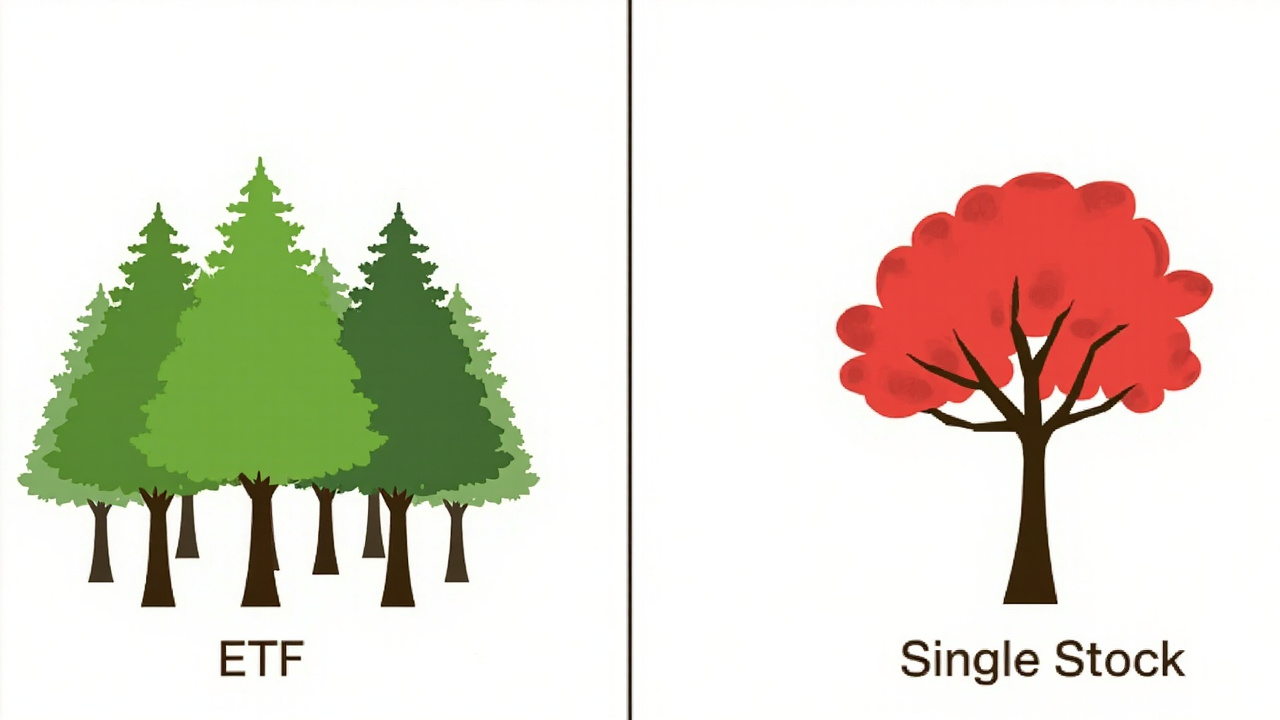
Why not individual stocks right off the bat? Because single-stock risk is too concentrated. You think TSMC is great today, you buy it—then next month some news you completely didn’t foresee hits, the stock drops 20%, you panic, you sell, you lose. This isn’t your fault; it’s the nature of single-stock investing. Even the best company can hit an unexpected event. You’re not an analyst, you don’t have time to dig through financial reports every day, you have your own job to handle.
But ETFs are different. An ETF bundles many companies together—0050 holds TSMC, Hon Hai, MediaTek, Chunghwa Telecom. It doesn’t promise not to drop, but it keeps you from putting all your risk on one company. You don’t need to pick stocks, don’t need to stare at screens, don’t need to time entries—you’re buying a basket of large Taiwanese companies’ performance.
With so many ETFs, which one should you buy? Two choices: 0050 or 006208. What’s the difference? Mainly the expense ratio. 006208 has historically been considered cheaper, but don’t get stuck on that—pick either one at random and you won’t be off by much. What matters is “starting to buy,” not “picking the right one.”
3. The Real Power of Dollar-Cost Averaging Isn’t Return—It’s Counter-Human-Nature
How you buy an ETF matters more than which one you pick. The most recommended approach is dollar-cost averaging (DCA). Why? Because the magic of DCA was never about “the highest return”—it’s about forcing you to buy more at the lows and less at the highs.
When the market tanks and your account is down 20%, the average person wants to cut their loss and run. But a DCA investor keeps the auto-debit going—because they’re not watching the price, they’re executing discipline. That discipline lets them accumulate more units at the lows, and when the market rebounds, they end up making far more than all the “smart market-timers” put together.
Conversely, when the market rips and your account is up 30%, the average person wants to pile in. But the DCA investor sticks to the plan—no more, no less. It looks “dumb,” but it’s actually locking in your gains and stopping you from going all-in at the top.
That’s why statistically, after 10 years DCA investors typically beat 80% of the people who try to time entries. It’s not that DCA is magical—it’s that it removes the emotional variable entirely and leaves only the constant of “discipline.”
4. The Real Power of Compounding: The Gap Between Year 10 and Year 30
Suppose you start at 25, invest NT920,000.** Looks okay, right?
But stretch it to 20 years. By year 20 you’re at NT7.45 million.
Do you see it now? From year 10 to year 20, your assets grew by NT4.5 million. This is the avalanche effect of compounding—slow at the front, ferocious at the back, ferocious enough to shock even yourself.
That’s why Buffett said: “Life is like a snowball. The important thing is finding wet snow and a really long hill.” The snow is your principal and your return rate; the hill is time. The earlier you start, the longer the hill, the bigger the snowball. Starting at 25 versus starting at 35 means the difference between NT2.95 million at year 30—a gap of NT$4.5 million.

5. Conclusion: You Don’t Have to Beat 80%—You Just Have to Stop Making Mistakes
This article isn’t here to teach you how to become an investing genius; it’s here to teach you how to be a smart ordinary person. Smart ordinary people don’t stare at screens all day, don’t chase moonshots, don’t load up on margin. They only do three things:
- Park the emergency fund in a high-interest digital account in exchange for peace of mind.
- Put the rest into a market-cap-weighted ETF via DCA, no market-timing.
- Give it at least 10 years and let compounding do the rest of the work.
How hard are these three things together? Not hard at all. The hard part is whether you can accept “boring.” Every day there are moonshot headlines, every day there are hot tips, every day there’s a “this time is different” story—but for 99% of people, those things aren’t opportunities; they’re traps.
Beating 80% of investors while lying flat isn’t because you’re smarter—it’s because they keep “operating,” and you keep “not operating.” The time you don’t spend operating eventually becomes your compounding.
Starting today, don’t be intimidated by the jargon. If you can open a digital account, if you can set up a DCA plan, if you can let time do the work for you, you’ve already beaten 80% of the people out there.
The remaining 20%? That’s a game for the pros—you don’t need to play it yet.
The content above reflects the author’s personal views on personal finance and does not constitute investment advice. Dollar-cost averaging cannot guarantee profits; past returns do not guarantee future performance. Investing involves market risk; please carefully assess your own risk tolerance and consult a qualified financial advisor before making any decision.
Disclaimer: This article shares investment and financial concepts and reference information. It does not constitute any specific investment, tax, or legal advice. Markets involve risk; invest with caution. Please make independent judgments based on your own risk tolerance and consult a professional advisor.
Tags
複利投資, 數位帳戶, 高利率活存, ETF Investing, 0050, 006208, Asset Allocation, 懶人投資, 小資族, DCA, Cash Flow, Investing Beginners, Emergency Reserve
Comments