
You dump your salary into a post-office passbook and earn a meager one-something percent interest each year, while inflation quietly eats three times that in purchasing power — this is not investing; this is working for the bank with your own sweat.
Taiwan’s CPI surged to 3.08% in 2022 (a 14-year high) and stayed around 2.5% in 2023. What does your post-office demand deposit give you? 0.2%. You think you are saving money, but you are actually losing it — quietly, in a way you cannot feel.
The cruelest cut is not buying the wrong thing; it is losing without ever doing anything at all.
Mental Flip: Small Savings Does Not Disqualify You
Many people believe “you cannot invest until you have enough savings” — this idea was drilled into you by financial institutions. Many of their products have minimums from tens of thousands to millions of NTD. The higher the threshold, the more qualified the customer and the lower the management cost. The price is that ordinary people like you get locked out — and you actually start believing you do not qualify.
The truth: SITCA data shows the minimum monthly threshold for fund DCA in Taiwan has long been lowered to NT100. Investor education promoted by the Taiwan Stock Exchange also makes clear that small investors can participate in the market through index funds. The problem was never whether you had enough money; it was that you had not started.
Run the numbers: assume you save NT770,000; if you wait 5 years to start with the same plan, you end up with only about NT350,000 gap — that is the cost of hesitation. “Wait until I have more” is the most expensive decision you can make.

Rule One: The Real Damage of Inflation
Inflation is not a number on the news; it is what you feel every time you shop at PX Mart. According to long-run DGBAS data, Taiwan’s average inflation over the past 20 years has been about 1–1.5%, but food and rent have risen far above that average, so your real cost of living is growing faster than the official CPI suggests.
Put NT100,200 — looks like no loss. But if inflation was 2%, the real purchasing power of that NT98,200**, meaning nearly NT$2,000 of purchasing power silently evaporated over the year.
The harsher part: Ministry of Labor wage statistics show that real wage growth in Taiwan has been very limited over the past decade-plus, with some years actually negative. You work hard and your salary barely grows, yet what your money can buy shrinks every year. This is exactly why, when your savings are small, you cannot rely on pure saving alone — chasing inflation through savings alone is a race you are destined to lose.
To be clear, though: this does not mean you should throw all your money into high-risk investments. What it means is that you need to put at least a portion of your assets in a position to outrun inflation, instead of continuing to feed every dollar to inflation.

Rule Two: How the Taiwan Stock Market Actually Works
The moment people hear “invest in the stock market,” what pops into their heads is watching screens, picking stocks, and predicting rises and falls — that image was drilled into you by finance TV shows and LINE investment groups, because picking stocks, watching screens, and quick trading generate the most trading volume, and trading volume drives brokerage fees.
But the reality? The fund performance statistics published every year by SITCA show that, over the long run, the share of active equity funds that consistently beat the Taiwan Weighted Stock Index has been below 50% in most measurement windows, and even lower in some. In other words, you spend time picking stocks and pay more for active management, and you are still less likely to do better than just buying an index-tracking fund — while paying higher fees and taking on more single-stock risk.
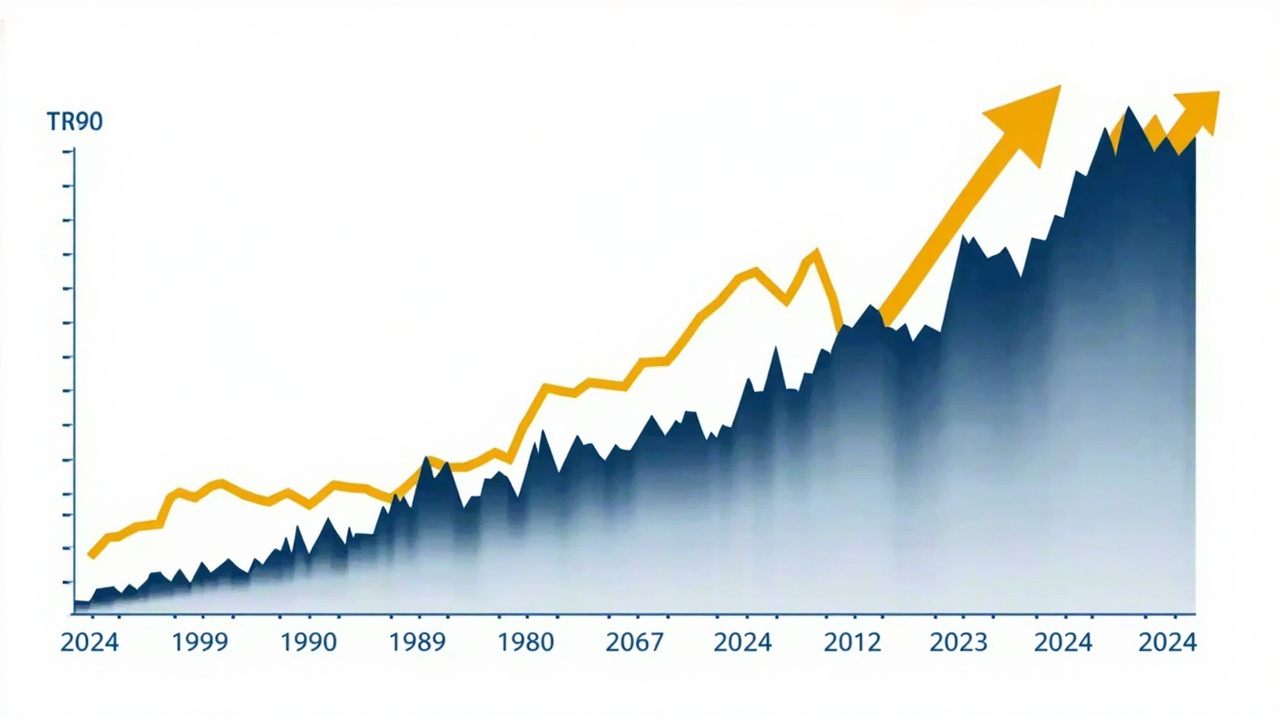
The Taiwan Weighted Index has gone through multiple crashes since the 1990s (the 2000 tech bubble, the 2008 financial crisis, the 2020 COVID shock), and each one was brutal — but over a longer horizon, the index still climbed from the thousands to well past ten thousand. This is not a guarantee that the future will be the same, but it is the historical evidence that underwrites the long-term investing logic.
The most suitable tool for ordinary people in Taiwan is an index ETF tracking the Taiwan Weighted Index, such as the Taiwan 50 (0050 ETF, Taiwan’s largest ETF). It works by holding the 50 largest Taiwanese companies by market cap, diversifying single-stock risk, with management fees much lower than active funds. It matches the basic logic of “diversified, low-cost, long-term holding” and is one of the most effective ways for ordinary people to outrun inflation — provided you can survive the big drops along the way.
Rule Three: The Sales Logic of Banks and Financial Institutions
You walk into a bank to open an account, and the relationship manager smiles and recommends “the latest structured note” or “an offshore fund with beautiful dividends” — you think they are helping you, but what you do not know is that the FSC (Financial Supervisory Commission) has issued multiple sets of rules governing the suitability of products sold through bank channels, because too many cases have pushed unsuitable products to unsuitable customers.
This does not mean every relationship manager is a bad person; the entire performance-review mechanism forces them to sell you something. High-dividend funds are the most classic example — the dividend looks beautiful, but part of the distribution from some dividend funds comes from return of capital, meaning a portion of what you receive is your own money being paid back to you, while your principal declines. The FSC does require disclosure, but whether you were clearly told during the sales process is another question.
Deposit-linked products and principal-protected structured products follow a similar logic — the principal protection usually comes with many conditions (held to maturity to keep the guarantee, early termination not protected), and the protection is calculated on the nominal principal, so during inflationary periods your locked-up money still loses real purchasing power.
Three Scenarios: Wrong, Right, and Worst Case
Scenario 1 (the real cost of NT102,000; if inflation was 2%, real purchasing power is only about NT1,800 in purchasing power over a year. This happens while you do nothing.
**Scenario 2 (NT180,000 grows to a bit over NT210,000. But if a 2008-style crash hits right after entry (Taiwan’s market dropped more than 50% at that time), the account could halve in the short term — the key is whether you can hold on and keep DCA-ing. Historically there has always been a chance to recover (the 2008 high was reclaimed around 2017, but that required enduring 9 years). Stopping contributions or redeeming at a loss is what truly locks in the damage.
**Scenario 3 (the 20-year gap from NT600,000+ by age 45. But the assumption is 20 uninterrupted years, no panic-selling at bottoms, no mid-course withdrawal — an enormous psychological challenge for ordinary people.
Four Veto-Power Iron Rules
- An emergency reserve covering at least 3–6 months of living expenses, held in a demand deposit or Taiwan’s high-interest savings account. Its job is to be available at any time — this money must never enter the investment market. Without this rule, no investment should start — because the moment an emergency hits and you have no reserve, you will be forced to redeem at the worst possible moment.
- Every dollar put into the market must be idle money you will not need for at least 5 years. Money for a down payment in 3 years or a child’s university in 5 years should not all go into high-volatility assets.
- The monthly contribution must not affect your daily living standard or financial flexibility — the biggest enemy of DCA is not a falling market, but being forced to stop contributing at the bottom because your cash is tight. NT10,000 a month that you cannot sustain for 3 years.
- You must understand what you are buying — at minimum the cost structure, key risks, and redemption rules. SITCA and the FSC’s investor education pages both provide free material. Reading and understanding before you enter is the most basic form of self-protection.

Four Action Steps You Can Start Today
Step 1: Split your money into three buckets. Bucket one is the emergency reserve (fixed expenses × 3–6), kept in a high-interest savings account and not touched. Bucket two is near-term goal money (concrete purposes within 3 years), which can sit in time deposits and is not suited for high-volatility assets. Bucket three is your real investment ammunition (idle money you will not need for at least 5 years).
Step 2: Use DCA instead of entering all at once. Because you do not know whether the entry point is high or low, DCA spreads your cost across different times and reduces the risk of piling in at the top. Pick a monthly amount that is “completely painless,” starting from NT$1,000 — what matters is building the habit and continuity. You can always raise the amount later.
Step 3: Match the tool to your role. Fresh graduates just entering the workforce: Taiwan index ETFs (such as the 0050 ETF) — the simplest and lowest barrier. Young families with financial responsibilities: combine the 0050 ETF with bond ETFs to lower volatility through a stock-bond portfolio. Pre-retirees: increase the bond allocation; the core mission is capital preservation, not growth.
Step 4: Set up an annual health check. Once a year, look at the overall allocation. After big market swings the stock-bond ratio drifts on its own, so rebalance back to target once a year — the only active thing you actually need to do. At the same time, confirm whether the emergency reserve has shrunk because of higher spending and adjust dynamically. Plan your exits deliberately: when a financial goal is reached or the money is needed, exit in batches to reduce timing risk.

How to Really Respond to a Crash
When the market crashes, your decision is not to time the rebound. First confirm two things: Is the emergency reserve enough? Is the invested money truly something you will not need for 5 years? If both answers are yes, keep DCA-ing.
A market low is your opportunity to buy at cheaper prices through DCA — it should never be your reason to stop. If you have no emergency reserve, you will be forced out during the crash — which is the real reason rule one is non-negotiable.
The Three-Bucket Check: A Decision Framework for Life
Before any money decision, ask yourself three questions:
- Which bucket does this money come from? Emergency reserve, near-term goal, or long-term investment ammunition?
- Does this decision match the bucket’s original mission?
- Does this move make the overall financial structure more stable, or more fragile?
Only take action when you can answer all three with a confident yes. This framework is not just for today’s tool — it is the underlying logic you can apply to any financial decision for the rest of your life.
All content in this article is for financial education only and does not constitute any investment advice or solicitation. All investing carries risk; past performance is no guarantee of future results, and markets may fall and stay down for long periods. For any financial instruments, data, or strategies mentioned, viewers should personally evaluate their own financial situation and risk tolerance, and consult a Taiwan-licensed financial advisor and tax professional before making any investment decision.
Disclaimer: This article shares investing concepts and compiled reference material. It does not constitute any specific investment, tax, or legal advice. Markets carry risk and investing requires caution; please make independent judgments based on your own risk tolerance and consult a professional advisor.
Tags
Small Capital Money, 100K Turnaround, ETF DCA, Inflation Real Purchasing Power, Emergency Reserve, Three-Bucket Money Method, Rebalancing, Distribution Fund Trap, DGBAS CPI, 0050 DCA, Investment Threshold, Risk Management, Wage Stagnation, Retirement Starting
Comments