
You dutifully put your money into time deposits every month, and twenty years later you realize your money hasn’t gotten bigger — it’s just gotten thinner.
Taiwan’s time deposit rates have hovered around 1.5–2% in recent years, but Taiwan’s Consumer Price Index (CPI) has averaged over 2% in recent years and has even spiked above 3% in some years. By keeping your money in the bank, your real purchasing power is losing money every year — you think you’re saving, but you’re actually slowly handing your wealth to inflation.
Can NT20 million after 30 years? The answer is yes — but only if you don’t make those fatal mistakes.
Time is the only weapon ordinary people can use to beat the rich — but only if you don’t aim that weapon in the wrong direction.
Busting Your Biggest Mental Block
Many people hear “ETF dollar-cost averaging” and immediately think: “That’s just lazy investing, right? Just buy a fixed amount every month and let time do the work.” If that’s your view, I have to tell you — you got half right, and the half you got wrong can cost you hundreds of thousands or even lead to outright losses.
The formal definition of DCA is: an investment strategy where the investor buys the same financial product at fixed intervals with a fixed amount, aiming to reduce market-timing risk by spreading purchases over time — the so-called averaging-cost method. The core value of this strategy lies in discipline, not in passively ignoring the markets.
According to the Securities Investment Trust & Consulting Association (SITCA), the number of ETF beneficiaries in Taiwan has grown rapidly in recent years, but at the same time a large number of investors stop their DCA or redeem when the market drops — that is the most classic misuse. You skip buying at lows, chase at highs, then say DCA doesn’t work. That’s not DCA’s fault — that’s you using it wrong.
First Underlying Rule: What You’re Really Buying Is Time’s Compounding
Many think investing means buying stocks or ETFs, but what you’re really buying is time.
Taiwan’s weighted stock price index from the 1990s to today has survived multiple major crashes, yet its long-term annualized total return (with dividends reinvested) sits around 7–9%. 0050’s annualized total return since its 2003 launch has been about 8–10% — historical figures publicly available from the Taiwan Stock Exchange and trust companies.
Let’s do the math: same NT$10,000 per month —
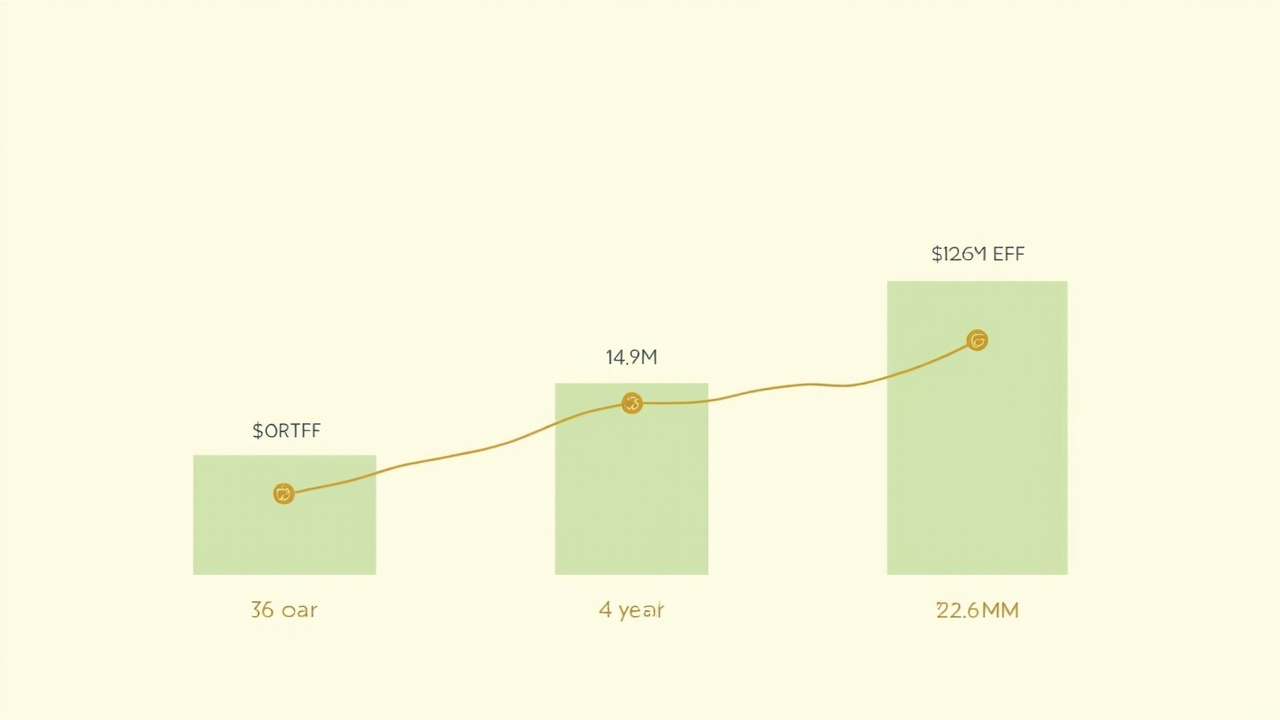
- Bank time deposit (2% annual rate): 30-year total approximately NT$4.9 million
- 0050 DCA (8% annualized): 30-year total approximately NT$14.9 million
- 0050 DCA (10% annualized): 30-year total approximately NT$22.6 million
This is the math behind the headline — “NT20 million” — it’s not a scam, but it has one ironclad precondition: you must stay the course for 30 years, never stop or redeem during market downturns, and the ETF you choose must be a stable, broad-market index product over the long term. Without any one of those conditions, this number shrinks dramatically.
Second Underlying Rule: Invisible Hidden Costs Are Quietly Eating Your Returns
What costs will you face buying ETFs in Taiwan?
1. Brokerage commissions: most brokers charge 0.1425% of transaction value; many brokers now offer discounts down to roughly 30% of that or even lower, so actual rates run between 0.043% and 0.1425%.
2. ETF management and custody fees: Taiwan-domiciled ETFs like 0050 have a total expense ratio of about 0.43–0.46% — this is deducted directly from fund NAV. You won’t see a separate fee line, but it’s quietly deducted every year.
3. Dividend income tax: if ETF distributions are cash dividends, they count as part of your comprehensive income for tax filing. If you earn over NT$1 million a year and sit in the 30% or even 40% marginal bracket, the annual tax cost on distributions is significant.
4. Inflation tax: the NT20 million today. Assume Taiwan’s average inflation over the next 30 years stays at 2%; today’s NT0.55 in 30 years — so your NT11 million in today’s purchasing power.
Truly smart investors don’t count nominal returns — they count real returns after inflation, tax, and fees.
Third Underlying Rule: What Financial Institutions Push Isn’t Necessarily Best for You
Taiwan’s banks and investment trusts are legitimate institutions supervised by the FSC (Financial Supervisory Commission), but understand this: relationship managers (RMs) are evaluated on how much product they sell, not how much money you make.
Active funds typically charge 1–3% upfront sales fees plus 1.5%+ annual management fees, far above the transaction costs of passive ETFs. So when you walk into a bank and say “I want to start investing,” the RM will most likely recommend not a low-cost passive ETF like 0050 or 006208, but an active fund (3% upfront + 1.5% annual management).
Do the math: same NT$10,000/month DCA, 30 years, market annualized 8% —
- Active fund: after upfront and management fees, assume total expense ratio of 2%, actual annualized drops to 6%, 30-year total about NT$10 million
- Passive ETF: total expense ratio 0.5%, actual annualized 7.5%, 30-year total about NT$13 million
That’s a gap of NT$3 million — and this still assumes the active fund matches the index. But according to SITCA and multiple academic studies, most active funds do not beat the index over the long run.
Fees aren’t a small thing — fees are the most certain cost in long-term investing, and they’re the variable you can most control.
Three Head-to-Head Scenarios: Wrong, Right, and the 20-Year Gap
Scenario 1 (Wrong Approach): Taipei office worker earning NT10,000/month —
- Demand savings (0.3% annual rate): about NT$2.45 million after 20 years
- Time deposit (2% annual rate): about NT$2.92 million after 20 years
- Taiwan’s average inflation over those 20 years has shrunk your purchasing power by nearly 35% — 20 years of disciplined saving leaves you with about NT$1.9 million in real purchasing power
This is the real cost of the wrong approach — not loss, but slow erosion by inflation.
Scenario 2 (Right Approach: 0050 / 006208 DCA): Same NT$10,000/month —
- Optimistic (market annualized 9%): about NT14.9 million after 30 years
- Neutral (market annualized 6%): about NT10 million after 30 years
- Pessimistic extreme: during the 2008 financial crisis the Taiwan weighted index fell over 50% from its peak, and 0050’s maximum drawdown also exceeded 50%. If you started DCA at end of 2007, by end of 2008 your account would have looked brutal, with enormous psychological pressure — but if you held through without stopping, you would have been back in profit by around 2011, with the maximum drawdown over 50% and the longest break-even cycle around 3–4 years.
Scenario 3 (20-Year Final Comparison):
- NT1.9 million**
- NT4.62 million, but after tax and fees possibly only about NT$4 million
- NT5.45 million** — lower fees, optimizable taxes, better real outcome
The gap is not small — it’s hundreds of thousands in real money.
Two Taiwan-Specific Advanced Moves
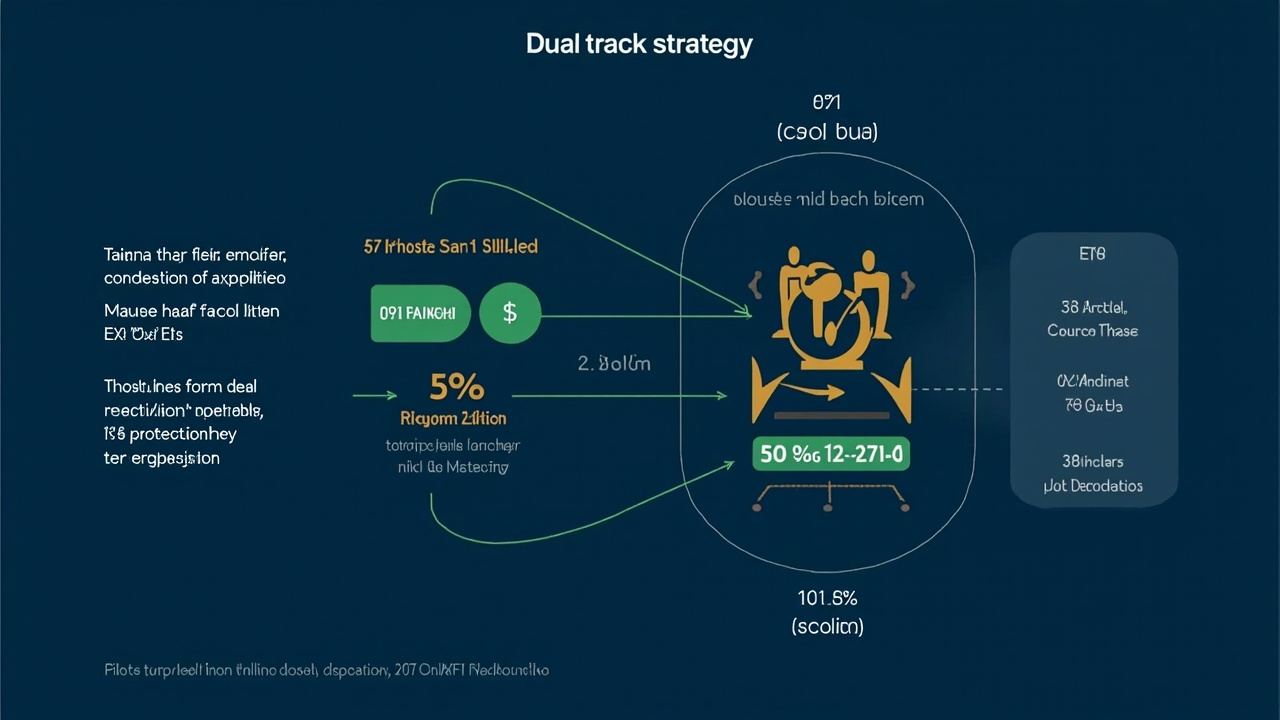
Advanced Move 1: The Dual-Track Strategy of Labor Pension Voluntary Contribution 6% + ETF DCA. Under Taiwan’s Labor Pension Act, employees can voluntarily contribute up to an additional 6% of salary into their individual Labor Pension account beyond the employer’s contribution, and this voluntary contribution is fully deductible from current-year personal comprehensive income — meaning the money you contribute goes directly into your retirement account without paying income tax first.
Example: monthly salary NT2,700), **that NT3,888 in tax per year. Meanwhile the Labor Pension fund, managed by professional institutions commissioned by the Ministry of Labor, has returned an annualized 4–6% in recent years. It’s not as high as direct ETF investing, but it carries a government-guaranteed minimum return and lower risk.
The right dual-track strategy is: first max your Labor Pension voluntary contribution to 6% for the tax shield, then deploy remaining idle funds into ETF DCA — this way you simultaneously optimize for taxes and market returns, the most under-utilized retirement planning combo for Taiwan office workers.
Advanced Move 2: Tax Differentiation Between Dividend Reinvestment and Cash Distributions. If you’re in a high marginal bracket (30%+), distributing ETFs work against you — every distribution is a taxable event, breaking the compounding chain. For high earners, choose NAV-type (low- or zero-distribution) market-cap ETFs, where all returns accumulate as NAV growth. Under Taiwan’s current capital-gains-tax exemption for individuals, tax efficiency is far higher than with high-distribution ETFs. This isn’t telling you to abandon distributions entirely, but to pick the right tool for your income bracket.
4 Veto Rules
- You must have 3–6 months of emergency reserves before starting DCA. This money must sit somewhere immediately accessible (such as a high-interest demand-deposit account or money-market fund), not in your ETF. If you start investing without emergency reserves, an emergency will force you to sell at the worst possible moment, turning paper losses into realized losses.
- Your monthly DCA amount must be idle funds you’re certain you won’t touch — not this month’s living expenses, not borrowed money, not credit-card limit. Leveraged DCA is too risky for ordinary office workers.
- You must choose ETFs with sufficient size and liquidity. Small ETFs carry liquidation risk (FSC rules can trigger forced liquidation when assets fall below a threshold). Prefer mainstream broad-market ETFs with assets over NT$10 billion (such as 0050, 006208), whose liquidity and stability have been thoroughly tested by the market.
- Before you start, set a psychological floor for “under what conditions I will not stop my DCA” — don’t decide after the market drops. When the market falls 30% or 50%, your paper losses will look terrible, but those are the most valuable moments of DCA because you’re buying more units with the same money. Without mental preparation in advance, you’ll quit at the moment you most need to hold.
4 Practical Action Steps
Step 1: Open an account with the right platform and minimize commissions. Search the App Store or Google Play for Taiwanese brokers (Yuanta, Fubon, Cathay KGI, Sinopac, etc.), open an account online, no branch visit required. After opening, check your DCA commission discount — many brokers now offer zero-commission or ultra-low DCA packages. This action can be done in 30 minutes today.
Step 2: Pick the product using the simplest logic. If you’re a complete beginner, start with 0050 or 006208; don’t start by researching thematic, leveraged, or overseas ETFs. 0050 tracks the Taiwan 50 Index (holding Taiwan’s 50 largest market-cap companies); 006208 tracks the FTSE Taiwan 50 Index constituents and is highly overlapping with 0050 but with lower management fees. Picking one or splitting 50/50 between them is a reasonable starting point. This choice shouldn’t take more than an hour.
Step 3: Set your amount and activate DCA. Find the DCA feature in your chosen broker’s app, set your monthly debit date, ideally 1–3 days after payday — this way you invest first and live off the rest, so you won’t have to skip a contribution at month’s end because of cash constraints. Amount-setting principle: 50–80% of your monthly idle funds, keeping some aside to top up your emergency reserve. Students or fresh graduates starting at NT$3,000–5,000/month is fine — what matters is starting, not the amount.
Step 4: Set up an annual health check, not daily screen-watching. Pick a fixed time each year (such as January or after Lunar New Year) and review your account once — confirm DCA is being executed continuously, confirm ETF size and expense ratio haven’t changed materially, confirm your financial situation allows raising the DCA amount. If your salary goes up, raise DCA proportionally so your investing grows with your income. This completes the full cycle — not buy-and-forget, but disciplined management, instead of anxious daily monitoring.

Extreme-Market Contingency Plan
If the market suddenly crashes (such as 2008 magnitude), paper losses could exceed 50% —
- Confirm your emergency reserve is intact and your life is unaffected
- Continue executing DCA — don’t stop contributions
- If you have additional idle funds, consider adding modestly after a sharp drop — this isn’t required, and it’s not about catching the bottom, but increasing purchase frequency in long-term undervalued zones
- Absolutely do not panic-sell all your holdings (unless you have a clear financial emergency)
History tells you: after the 2008 financial crisis the Taiwan stock market took about 3–4 years to recover from its low to its prior peak; after the 2020 pandemic crash, less than half a year. No one knows when the next crash will come or how long recovery will take, but long-term investors in diversified broad-market products have historically made it through — that’s not a guarantee, that’s a historical record.
Tailored Positioning by Life Stage
Students / fresh graduates: Your biggest advantage is time; your weakness is capital. Start at NT$3,000/month with 0050 or 006208; building the habit matters more than the amount — don’t rush into complex strategies. Building the DCA habit is the most important thing at this stage.
Working families with limited budgets (NT$30–50K/month): You face mortgage, kids, and parents simultaneously. First secure emergency reserves, then max your Labor Pension voluntary contribution to 6%, then deploy remaining idle funds into ETF DCA — don’t sacrifice quality of life for investing, because you won’t sustain it.
Middle-aged with children: Your time horizon is shrinking; you must juggle education funding and your own retirement planning. Keep ETF DCA within a volatility range you can tolerate; don’t put your entire retirement in high-volatility equity ETFs — combine with some bond ETFs for asset allocation and lower overall volatility.
Near-retirees (within 10 years of retirement): Your strategy must shift from wealth accumulation to wealth preservation. Don’t park large capital in high-volatility equity ETFs; gradually adjust your asset allocation toward stability assets, while using your Labor Pension account and Labor Insurance annuity for stable cash flow.
These four groups each need different strategies; there is no one-size-fits-all answer, only the right choice for your current situation.
ETF DCA is not a get-rich-quick scheme and not a lazy shortcut to money — it’s a long-term strategy that takes time, takes discipline, and takes the willingness to hold through the market’s most fearful moments. Its core logic is one thing: trade time for returns, discipline for compounding, low cost for long-term winning odds.
You don’t need to be an investing genius, you don’t need to watch the screen daily, and you don’t need to guess the next hot stock — you just need to do three things: pick the right product, control costs, and execute consistently.
Disclaimer: This article is for the purpose of sharing investment and financial-planning concepts and compiled data, and does not constitute any specific investment, tax, or legal advice. Markets carry risk; invest prudently. Make your own judgment based on your personal risk tolerance and consult a professional advisor.
Tags
ETF DCA, Dollar-Cost Averaging, 0050, 006208, Active Fund Fees, Total Expense Ratio, Management Fee, 6% Voluntary Pension, Real Return, Inflation Purchasing Power, Emergency Reserve, Keep Buying at Lows, Broad Market ETF, Investment Discipline
Comments