
Every month when your salary lands, you open your banking app, stare at that number under NT$100,000, and silently flip your phone over. You’re not lazy, and you’re not not working hard — you just never had anyone tell you how to allocate when you have little money, so it doesn’t get poorer the more you save.
First, let me puncture a harsh reality: Taiwan’s CPI has averaged more than 2% annual growth over the past 5 years, but regular bank savings rates don’t even reach 0.5%, and the best time deposit is barely 1.6%. These are public figures from DGBAS and the Central Bank of the Republic of China (Taiwan) — you think you’re preserving principal, but you’re actually paying an invisible ‘real loss’ every year.
‘Wait until I have NT1 million saved’? That word ‘wait’ is exactly the core reason you keep falling further behind.
The Real Underlying Logic of Core-Satellite Allocation
‘I have less than NT$100,000 — it’s not even enough to diversify.’ Sounds reasonable, but the logic is wrong. The core purpose of diversification is not to make every piece earn more, it is to make sure that during extreme market volatility you won’t be wiped out by a single mistake — you’ll still be able to stay in the market.
TFTI’s research is explicit: asset allocation contributes more to long-term portfolio returns than stock selection or market timing. In other words, how you ‘allocate’ matters more than what you buy.
Core Position (60–70%): Low-cost, highly diversified, long-term-hold index tools — for example, the Taiwan 50 (0050) or a global market index ETF. This is your ballast, untouched in normal times.
Satellite Position (30–40%): Allocate to bond ETFs, high-dividend ETFs, or a small share of thematic funds based on your risk tolerance and life stage. Used to fine-tune the return structure, not for short-term chasing.
One important reminder: the satellite is not for chasing AI concept stocks or hot themes. Its core logic is to supplement the return sources that the core can’t cover, while controlling overall volatility. If you turn the satellite into a tool for amplifying risk, that is the most common misuse of the core-satellite method.
Three Scenarios: Wrong, Right, and Extreme
Scenario 1 (the wrong approach): Starting at 25, save NT5.9 million. But 40 years of cumulative inflation will leave the real purchasing power of that NT2 million — this is the real cost of thinking you’re preserving capital while actually losing money every year.
Scenario 2 (correct allocation): Same 25-year-old, same NT19 million to NT$25 million after 40 years**. Prerequisites: long-term hold without interruption, no panic selling during big drops, an annual rebalance, low-fee instruments — all three must be in place or the result is discounted.
Scenario 3 (extreme black swan): The 2008 global financial crisis saw the Taiwan Weighted Index drop more than 58%, in March 2020 it dropped more than 30% in a month, and in 2022 the Taiwan 50’s maximum drawdown in a year exceeded 35%. But investors who kept DCA-ing through the crashes saw their average cost pulled down significantly, with a recovery period of about 3–5 years. If you stopped contributing or redeemed at the low, you turned paper losses into real losses — that is how most retail investors actually lose money.

3 Taiwan-Specific Advanced Blind Spots
Blind Spot 1: Leveraged and inverse ETFs are not for long-term holding. There are more than 200 ETFs on the Taiwan market — high-dividend, leveraged, inverse, you name it. Leveraged and inverse ETFs are designed for short-term trading, and holding them long-term causes severe decay due to daily compounding reset. Not understanding this and assuming any ETF is a steady investment can land you in deeper holes than buying individual stocks.
Blind Spot 2: High-dividend ETFs should not be the core. The selection logic of high-dividend ETFs is to screen for stocks with high past dividend yields, and in bull markets their long-term return often lags market-cap ETFs. TWSE data over the past 5 years shows that the Taiwan 50’s annualized total return outperformed the major high-dividend ETFs in most years. The proper use of high-dividend ETFs is as a satellite, supplementing retirement or near-retirement cash flow needs — not as the core position.
Blind Spot 3: Contribution frequency affects cost smoothing. In a high-volatility environment, switching from monthly to weekly contributions can in theory further smooth the cost, but watch out for the cumulative effect of fees. Choosing a broker that offers low-fee or zero-fee DCA plans is what actually makes this strategy work.
4 Non-Negotiable Iron Rules
If you can’t meet any of these, hold off on core-satellite allocation, or start with the most conservative version.
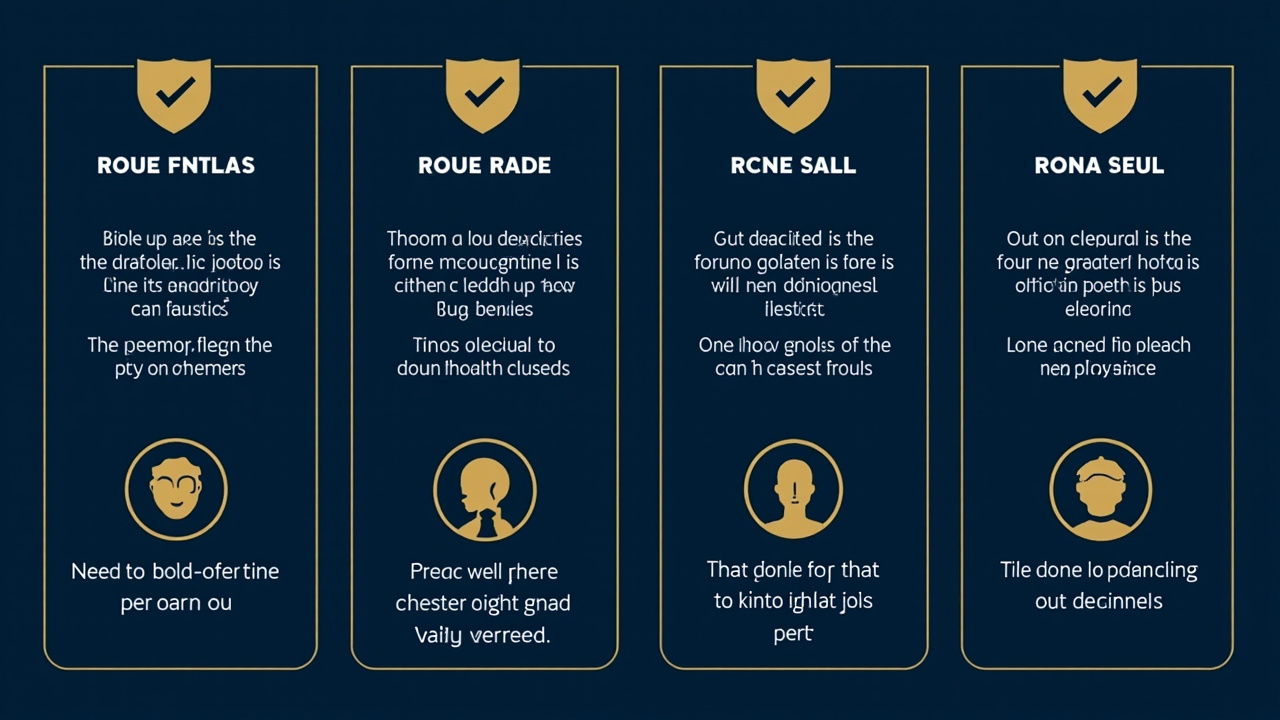
- An emergency fund of at least 3–6 months of living expenses, held in a savings account or money market fund, completely untouched. This is your confidence not to be forced to sell during a market crash.
- The money you invest must be one you won’t need for 3–5+ years. Money for a house purchase next year or a wedding the year after cannot be put into long-term investing, or you may be forced to sell at the worst time.
- No single satellite position can exceed 15% of the total portfolio, to prevent one position’s drop from taking down the entire portfolio.
- Rebalance at least once a year, sell a portion of what has risen and top up what has fallen to bring the core and satellite back to target. This is the discipline of executing ‘sell high, buy low,’ and the key mechanism that makes core-satellite work over the long term.
4 Low-Barrier Action Steps
Step 1: Open an emergency reserve account. Open any major Taiwan brokerage app (e.g., SinoPac, Fubon, Cathay), set up a separate account, and transfer 3 months of living expenses into it, this money is your safety pad — don’t touch it.
Step 2: Calculate your monthly investable amount. Subtract all fixed expenses from your income to find the amount you can really save — even if it’s only NT3,000, you can start. Set a 70/30 DCA split: 0050 or a total-market index ETF for the core, and a bond or high-grade ETF for the satellite. Pick the lowest fee ratio first.
Step 3: Set an annual rebalance reminder. Every January or July, open your account and check the core vs satellite ratio, and adjust back if the drift exceeds 5%. This only takes once a year — no need to watch the market every day.
Step 4: Set mental stop-loss and profit-taking floors. A market drop above 30% — tell yourself this is normal historical volatility, keep contributing, don’t stop. If a satellite position is up more than 40% in a year, consider taking partial profits and topping up the core.
2 Taiwan-Specific Advanced Tips
Tip 1: Conditions for broker zero-fee DCA promotions. Many brokers offer zero-fee DCA plans, but they usually limit the contribution amount, the target, or require pairing with a specific account. Before setting up, confirm whether your target is on the zero-fee list and when the promotion expires — once the promotion ends and fees resume, accumulated fees well above 1.5% will erode meaningful returns over time. People who set-and-forget often quietly pay for years.
Tip 2: The hidden bonus of the 6% voluntary labor pension. Per Ministry of Labor rules, you can voluntarily contribute up to an additional 6% of your salary into your personal labor pension account on top of the statutory employer contribution, and this amount is deductible from your taxable salary income, directly lowering your taxable income. A monthly salary of NT2,400) means NT$28,800 a year that is fully deductible — the government effectively subsidizes part of your investment cost. The Labor Pension Fund has delivered roughly 3–7% average return over the past 5 years, with a government-guaranteed minimum return mechanism, making it an important supplement to the steady core of the core-satellite method — but Ministry of Labor statistics show the voluntary contribution rate in Taiwan is very low, and most people never use it.
Contingency Plan for Extreme Conditions
If a 2008- or 2022-magnitude drawdown hits during execution: confirm the emergency reserve is intact, the invested money is truly one you won’t need for 3–5+ years, then keep DCA-ing — don’t stop, don’t redeem.
Historical data tells us that every big drop in the Taiwan Weighted Index has been followed by a recovery, but the recovery time varies — the longest stretch, from the 2008 bottom back to the prior high, took about 3+ years. If you stop contributing at the bottom, you miss buying the cheapest batch — when the market recovers, your average cost ends up higher.
But there’s an important prerequisite for this strategy to work: you invest in highly diversified index tools, not individual stocks or single-sector ETFs. Individual stocks may never come back, but an index — as long as Taiwan’s overall economy is still operating — has a long-term basis for recovery.
If a major life change hits (job loss, serious illness, family emergency), the first line of defense is the emergency reserve, not the investment account. After drawing on the reserve, contributions can pause, but don’t redeem existing positions — pausing contributions and redeeming are two completely different things. The former just pauses accumulation, the latter turns paper losses into real losses.
This video is for financial education purposes only and does not constitute any investment advice, nor does it represent any recommendation to buy or sell any financial product. All investments carry risk, past performance is no guarantee of future results. Please make a careful assessment based on your own financial situation, risk tolerance, and investment objectives, and consult a Taiwan-licensed financial advisor and tax professional before deciding. The financial products mentioned in the video are all approved by Taiwan’s FSC, with data sourced from official Taiwanese public records; please refer to the latest official announcements for any updates.
Disclaimer: This article shares investment and financial concepts and compiled data only. It does not constitute any specific investment, tax, or legal advice. Markets carry risk, invest with caution, and please use your own judgment based on your personal risk tolerance and consult a professional advisor.
Tags
Core-Satellite, Small Capital Investing, ETF DCA, 0050, High Dividend ETF, Bond ETF, Emergency Reserve, Rebalancing, Voluntary Pension Contribution, Taiwan Inflation, Asset Allocation, Small Money Investing, Retirement Planning, Paycheck Turnaround
Comments