
Friends, how have you been at 40 lately? Does it feel like that little loading circle spinning endlessly on your phone — turning and turning, never producing a result?
Let me tell you, the 40 of today is nothing like the 40 of our fathers’ generation. Back then, 40 was the start of middle age. Our 40 is the peak of workplace pressure — at work, you’re the salary cookie, crushed under KPIs from above and pressing down on your team from above you; at home, you’re the slice of meat in the middle of the sandwich, worrying about your parents’ health on top and your kids’ homework below. Pinched from both sides, you barely have room to breathe.
Even worse, problems at this stage don’t play the game of gradual decay — they play sudden collapse. One moment of inattention, and your body and mood snap like a rubber band stretched for ten years.
I’m not here today to teach you how to brute-force your way through 40 — that’s a survivor mentality. What I want to talk about is how to make the next ten, twenty years of your life more brilliant than now.
Let’s get one thing straight: you think the pressure is heavy, the money insufficient, the relationships troublesome — I’m telling you, those are false alarms. When does the real alarm go off? The day you squat down to pick something up, your back goes “crack” and you can’t stand back up — at that moment, every KPI, every mortgage payment, every client’s expression becomes a passing cloud, and the only thing in your head is: my back isn’t coming back.
So what is the one truth at 40? Don’t let your life collapse before your body and mindset go bankrupt.
Alright, so to not let it collapse, we need to restart these five things one by one, like background apps on your phone: health, relationships, money, mind, habits.
1. Health: Turn Alcohol From a Social Consumable Into a Manageable Ritual
Let’s start with a social consumable — alcohol.
In your 20s, drinking meant a quick gulp with deep feeling; in your 30s, drinking meant painfully pushing yourself for the sake of the job. If you’re still drinking like that at 40, it’s called burning through your body.
Have you noticed? Back in the day, you could drink until midnight and splash your face the next day to bounce right back. Now? After one night out, you’re a walking zombie for the next three days — attention span gone, and every face looks like a fight waiting to happen.
Authoritative medical research says it plainly: alcohol’s impact on the body is cumulative. Every sip you drink takes the body time to metabolize. Your body at 40 is not an age for squandering — it’s an age to be cherished.
I’m not asking you to become a saint, but can we try a different approach?
- First, this month set a rule for yourself: only drink every few days, not every time you’re happy.
- Second, set a social cap for yourself, like two drinks — stop when you reach it.
- Third, those late-night energy-draining gatherings — cut them back as much as you can first.
You’ll find that the next morning, you’re no longer a zombie dragged awake by the alarm clock, but a fully charged version of yourself. Stop treating health as mysticism; treat it as a KPI. We all love numbers — salary, housing prices, WeChat step counts — so why, when it comes to our bodies, do we suddenly switch to “I feel fine”?
Here, let me teach you the three numbers you should track most at 40:
First, weight. Every morning after you pee, step on the scale shirtless. Don’t worry about today’s number; watch the weekly average — it’s quietly telling you whether you’re heading in a good direction or slowly losing control.
Second, waist size. This is even more honest than weight. If your weight hasn’t changed but your pants are tighter, it means your body composition is shifting. Visceral fat, breathlessness — that signal can’t fool you.
Third, blood markers. Get a regular health checkup. A lot of people treat it like trash paper — I’m telling you, isn’t that your body’s dashboard warning light? Once every five years at 30; once every three years at 40. That’s far more useful than praying to the gods. You know to maintain your car regularly — why can’t you spare half a day to check the body you’re planning to drive until 80?
Remember: tracking the numbers isn’t meant to scare you to death — it’s to live with clarity. Don’t wait until the doctor tells you it’s time to be hospitalized before you regret not checking the dashboard sooner.
Is Your Muscle Savings Enough?
Many people, when they hear strength training, picture those muscle-bound gym bros. Let me tell you, lifting at 40 isn’t about fitting into a tight shirt — it’s about being able to stand up from a chair by yourself 30 years from now.
Think of your muscles as savings for your old age: your 20s and 30s are the golden years of saving, your 40s and 50s are years when you’re only withdrawing without saving, and by 70 you’ll find your body has no strength — forget carrying your grandchild, you can’t even lift a delivery box.
How to do it? Nothing complicated. Two squats a week at home, imagining you’re sitting on an invisible chair. Can’t do a standard push-up? Drop to your knees — no shame in it. Shaking like a sieve during a plank? That’s fine — the only goal is: hold one second longer, do one more rep than yesterday.
Two more heavily underestimated habits: walking and stretching. Don’t laugh. A 15-minute walk after a meal works better than any wellness tea — blood sugar stabilizes, head clears. After getting scolded by the boss, step out for a walk, and when you come back, your thoughts are clear — and you’ll realize he’s the one who should be doing the reflecting.
Then stretching. Working out at 40 without warming up is like driving without releasing the parking brake. Spend 5 minutes in the morning stretching like a cat, twisting your neck — and you’ll find your neck is no longer welded to your shoulders that day.
Sleep: You’re Not Stealing Time — You’re Stealing Tomorrow’s Self
Many 40-year-olds know they should exercise and control their diet, but what often drags their state down the most is chronic sleep deprivation.
Because sleep isn’t just rest — it’s actually your recovery system. Whether today’s stress gets digested, whether emotions stay stable, whether appetite stays in check, whether tomorrow has motivation — a lot of that depends on how you slept.
After 40, work responsibilities and family responsibilities arrive together, and sleep time easily gets compressed. Overtime, commuting, accompanying the kids, handling household chores — once all of that is done, you finally have time for yourself, and you can’t bear to sleep: scrolling your phone, watching videos, zoning out. That feeling is normal, but the cost is high.
Try changing your view of sleep from “only lie down when I’m dead tired today” to “I recharge myself at a fixed time every day.” Treat sleep as part of recovery, not the last resort.
If you can, start keeping a simple sleep log: what time you went to bed, what time you woke up, whether you woke in the middle of the night, how your energy felt the next day. Once you start logging, you’ll spot patterns — a late dinner, too much alcohol, too much pre-sleep scrolling, and the next day’s state really is worse.
The time you spend scrolling on your phone late at night is usually not relaxation — it’s borrowing against tomorrow’s self.
2. Relationships: Curate Your Circle, Escape the Echo Chamber
Have you noticed something real at 40? Your contact list has hundreds of people, but the ones you could call in the middle of the night to talk from the heart can be counted on one hand. You have dozens of group chats, but apart from “thanks,” “good work,” there’s almost no warm conversation in them.
That’s the truth about relationships at 40: friends have turned into contacts.
In your 20s, you chose friends based on whether you clicked. In your 30s, you chose friends based on whether they were useful. By 40, if you don’t deliberately curate, your circle will become coworkers, clients, your kids’ classmates’ parents, and a few old friends you see once a year.
What’s the biggest problem with that circle? It’s the echo chamber. You all talk about the same things — whether housing prices have risen, what your kid scored on a test, what’s changing at the company. You hear answers that are almost identical to what’s already in your head.
This is the midlife version of the “information cocoon.” I’m telling you this deserves vigilance — because when your circle is full of people who are as tired, as confused, as brute-forcing their way through life as you are, you’ll develop the illusion that “everyone’s like this, so I’m normal too.”
But just because everyone is like this doesn’t mean it’s right; just because everyone is tired doesn’t mean being tired is the way it should be.
So what do you do?
First, deliberately make a few friends at least ten years younger than you. Not to pretend, or to learn some internet slang, but because young people’s brains haven’t been bound by the inertia of society yet. Their sensitivity to new things, their willingness to question old rules, even their willingness to try — these are things your 40-year-old body may be missing. Have a meal with them, chat a bit, and you’ll find out the world isn’t just a loop of overtime, mortgage payments, and tutoring sessions.
Second, at the same time, also have a few senior friends more than ten years older than you. Who are these people? They are your life preview. They’ve walked the road you’re currently walking. The things you’re anxious about — rebellious kids, aging parents, career bottlenecks, marriage friction — they’ve been through all of it. Chat with them, and you’re not looking for a standard answer — you’re looking for reassurance. They’ll tell you: I’ve walked this road, it’s hard, but it passes. Just that one sentence carries real power.
Third, consciously keep your distance from people who drain your energy. There’s a type of person: every time you finish talking with them, you feel especially exhausted. They always complain — about work, the environment, family, luck. You try to give them advice, they always have a reason it won’t work. You try to encourage them, they say you don’t understand. These kinds of people will drain your energy. At 40, you have no obligation to rescue every person — politely keeping your distance is being responsible to yourself.
On the other hand, there’s a type of person you should really cherish — the kind you can sit with in silence and not feel awkward. Friendship at 40 is no longer about taking a bullet for each other — it’s about “I know you’re there, and that’s enough.”

3. Money: The Dumbbell Strategy + Emergency Reserves Matter More Than Earning More
Two friends down — let’s get more practical — money.
Talking about money at 40 is different from talking about it at 20. At 20, you talk about how to earn your first million. At 40, you talk about how to protect your wealth before retirement.
Let me state a reality first: 40 is a critical stage in your career. What does that mean? When you drive onto the highway, the acceleration lane is only so long. If you don’t build up speed in the acceleration lane, you’ll be at a disadvantage when you merge into the main lane. The decade from 40 to 50 is the critical phase of your career. You can still earn after 50, but your time may start facing challenges — your stamina and reaction speed won’t naturally match those of younger colleagues. What you can rely on is experience, judgment, and the ability to integrate resources.
So the first principle of personal finance at 40 is not to earn more — it’s to avoid major mistakes. What counts as a major mistake?
First, over-borrowing to invest. Borrowing to buy a home in your 20s is getting on the train; borrowing to speculate on property in your 40s is high-risk gambling. If the market moves, rates rise, or your income changes, the risks stack up.
Second, blindly following the herd into investments. A coworker made money on stocks, a friend made money on some product — and you? You, at 40, should already understand one truth: when someone else is making money and you rush in, it’s usually not the right time. You no longer have the trial-and-error time of your 20s. Lose a big chunk, and the 20-year-old can console himself with “experience gained” — the 40-year-old will be very much on the back foot.
Third, over-sacrificing your own retirement savings to satisfy the next generation. This is a hidden form of trouble: scraping everything together to send the kid to private school, study abroad, or even help them with the down payment on a home. Let me ask you: if you drain your own retirement nest egg, will your kids support you, or will you become a burden on them? The young people of today already have a hard enough time taking care of themselves — don’t turn your financial anxiety into over-giving to your children.
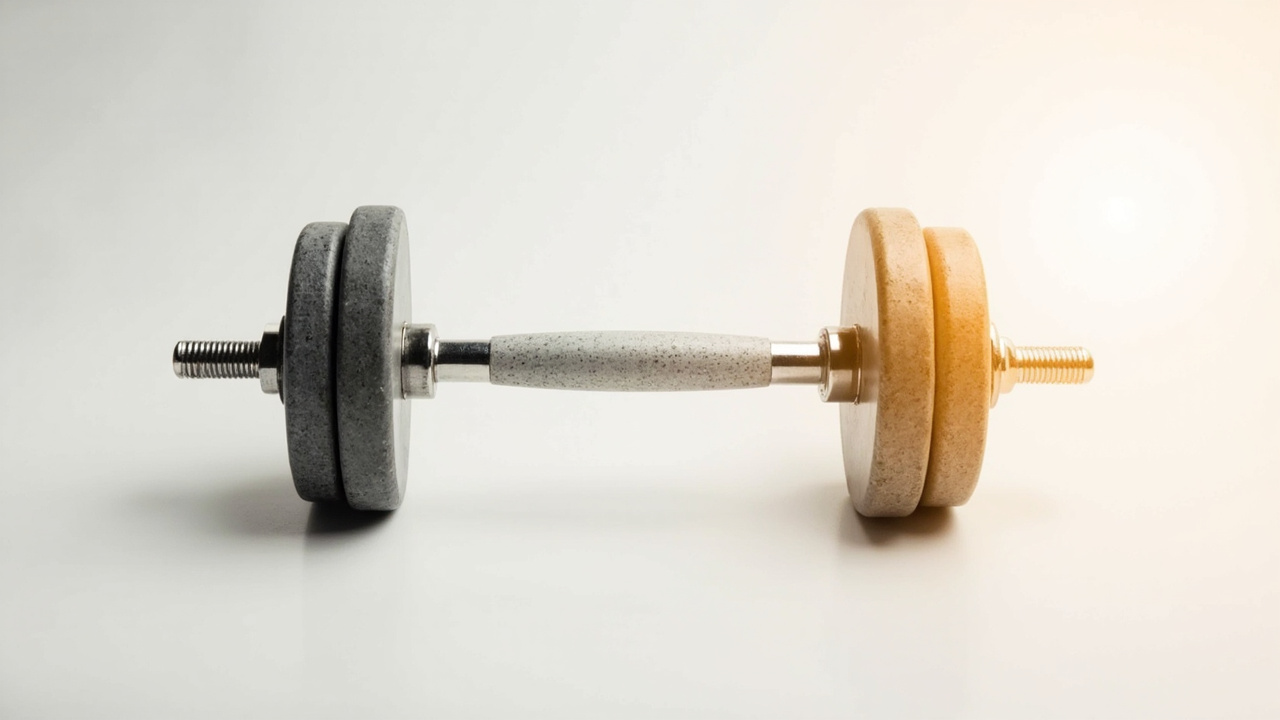
So how should a 40-year-old manage money? Three words — the dumbbell strategy.
One end of the dumbbell: steady and conservative. Hold enough cash or low-risk products to cover six months to a year without income. This is your safety net; don’t touch it lightly.
The other end of the dumbbell: moderately aggressive. Put 20% to 30% of your funds into things you truly understand — don’t touch what you don’t. If you don’t understand anything, then invest in yourself — take classes, earn certifications, learn a new skill you can do until 60. The best investment at 40 is upgrading your anti-obsolescence ability.
The middle of the dumbbell: treat medium-risk, medium-return products with caution. The historical risk-return ratio is asymmetric. You’re not a professional investor, and there’s no need to participate in everything.
One last sentence to leave you with, something an older friend once said: “Before 40, earning money is to prove yourself; after 40, earning money is to make sure you and your family live with peace of mind.” Savor that — savor it carefully.
4. Mind: Combat “Passive Busy-ness,” Go Offline 30 Minutes a Day
Alright, we’ve talked about body, friends, and money — now let’s talk about the most easily overlooked but most lethal thing — your mind.
Have you noticed that your memory now feels like a different person compared to five years ago? You used to handle several things at once with room to spare; now, opening a few browser tabs makes you anxious. You used to pick up new software in half an hour; now, the first reaction to an app update is “more to learn, so annoying.”
This is not your imagination — it’s a signal that deserves attention. At 40, the brain’s processing speed and working memory capacity do experience natural changes. But note my wording — natural changes. What really makes you feel your brain has slowed down is not entirely physiological; it’s also influenced by behavioral habits.
What do I mean? Think about the contents of your day — meetings, replying to emails, filling out forms, scrolling short videos, watching group chats — how many of these require deep thought? Almost none. Your brain is like a muscle: if you make it march in place every day, it won’t stay in good shape. You need to let it actually run once in a while.
One trend worth noting at 40 is using busyness as a substitute for thinking. You feel busy — so busy you don’t have time to think — but in reality you’re just reacting nonstop — replying to messages, dealing with work, handling the so-called errands. This is called “passive busy-ness.” This kind of busy-ness will not improve your brain state.
So what do you do? Three methods:
Method 1: Go offline 30 minutes a day. Find a time window, turn off your phone, computer, all screens. Sit and daydream, take a walk, brew some tea — but minimize any new information input. What will your brain do during these 30 minutes? It will organize, categorize, and store the day’s fragmented information, like a system optimizer running on a computer. If you don’t let it run, its efficiency drops.
Method 2: Write a thinking note once a week. Not a diary, not a chronicle — but spend 30 minutes seriously thinking about one question. For example: “What’s the dumbest decision I made this week, and why?” Or, “If I could redo this week, on which day and at which moment would I make a different choice?” Write it down — by hand, on paper. This process helps your brain switch from scattered mode to focused mode — an effective form of mental training.
Method 3: Learn something useless once a month. What counts as useless? Something unrelated to your work and temporarily unrelated to making money. For example, learn a magic trick, learn origami, learn two chords on an instrument, learn how to read star constellations. Why? Because learning new things stimulates the neural circuits you don’t use often — the ones often linked to creativity and inspiration. A lot of innovation comes from collisions between knowledge in different domains. At 40, don’t let your brain be left with only the practical stuff.
5. Habits: Fight “The Regret of Inaction,” Break Big Goals Into Small Steps
I want to talk to you about a psychological concept: the two forms of regret.
One is the regret of action — you did something, then regretted it. For example, you quit your job to start a business and it failed. You’ll regret it for a while, but you’ll learn something, and then you’ll adjust.
The other is the regret of inaction — you could have done something, but out of fear, hesitation, or feeling it was too late, you didn’t. For example, you could have confessed your feelings to that person, but you didn’t. You could have changed your lifestyle, but you didn’t. You could have said “I love you” to your family, but the words never came out.
Which kind of regret do you think sticks with you longer? The answer is the second one.
Research shows that when people look back over their lives, what they regret most is rarely “what I did,” but rather “what I didn’t do” — I didn’t dare to chase that dream, I didn’t dare to make a change, I didn’t dare to speak the truth, I didn’t dare to live the life I really wanted.
At 40, you have one very unique advantage: you still have time to let the regret of inaction become the experience of action. You’re not in your 20s, afraid of choosing wrong; you’re not in your 60s, with your options narrowed. You have experience, judgment, and a certain capacity to absorb risk. You may only be missing that one little bit of courage to act.
So here’s an exercise for you: take out a piece of paper and write down three things:
- If I don’t do this, what will I regret five years from now?
- If I don’t do this, what will I regret ten years from now?
- If I don’t do this, what will I regret the day I’m old?
Then look at the third one — that’s an important direction for your life. You don’t have to do the hardest thing right away, but starting today, every small decision can move a little closer in that direction.
- Want to learn to draw but think you have no talent? Then buy a sketchbook and draw an apple. It’s fine — the point is you’ve started.
- Want to reconnect with a long-lost friend? Send a message first: “How have you been lately?” It’s okay if they don’t reply — the point is you’ve sent it.
- Want to switch jobs but afraid it’s not stable? Spend a month, every evening, looking at job postings for 30 minutes. Find out what skills the market needs, then learn accordingly.
Break big goals down into small actions — that’s the action-management method for 40.

Closing: 40 Is Not the End of Your Youth — It Is the Real Start of Your Life
People at 40 are prone to a state of caring too much about outside validation — titles, income levels, consumer brands — as if these things can define them.
But have you ever thought about it: one day when you retire, have no title, when income no longer matters — what’s left of you? The truly important things are usually invisible — the way your family looks at you, your kids’ willingness to talk with you, your mindset when facing difficulty, and your respect for yourself. Those things can’t be exchanged for with external conditions — they accumulate, bit by bit, every day.
What truly carries weight is what others can feel when you walk out the door — your state of mind, your gaze, the way you walk. That is your real business card.
Alright, we’ve covered a lot — from alcohol to exercise, from friends to money, from the brain to action. You might feel the volume of information is a bit much. That’s okay — let me boil it down into three directions for adjustment:
Adjustment 1: From brute-forcing it to actively designing it. Before 40, many people run in brute-force mode — push through exams, push through overtime, push through all kinds of pressure. After 40, you can try switching to “design mode.” What does design mean? Choosing actively instead of reacting passively. You stop asking only “what should I do,” and start asking “what do I want,” then work backward to what to do today. Your body, time, experience, attention — all are limited resources. You’re not a superhero — you’re the designer of your own life.
Adjustment 2: From pursuing more to pursuing better. In youth, you chase more — more income, more friends, more experiences. At 40, you can learn to pursue better — better health, better relationships, better state. Less ineffective drain, less late-night scrolling, less “I could have.” Your energy is limited — focus your attention on what really matters.
Adjustment 3: From proving yourself to others to living the experience for yourself. Before 40, many people work hard to prove to others — to parents, to colleagues, to those who once looked down on them. After 40, you can try changing the goal to “living the experience for yourself.” You’re not an actor; you don’t need an audience. You’re the protagonist of your own life. What you need is real experience — a good meal with your family is an experience, climbing a mountain alone to watch the sunset is an experience, learning to cook a new dish is an experience.
Stop treating life like an exam — it’s more like an open-ended journey with no standard answer. What matters is your own choices and experiences.
Alright, I know you’ve been listening for a while. Maybe you were doing something while listening, maybe you were resting, maybe on the commute with earphones in. Wherever you are, thank you.
One last sincere suggestion: starting today, please be a little kinder to yourself. That “a little kinder” doesn’t mean letting yourself slack off — it means putting your health, emotions, time, and dreams in a more important place.
You might say: “I’ll exercise when I have time”; “I’ll spend time with family when I’m less busy”; “I’ll do what I like later.” That “later” usually doesn’t come on its own — because work is never finished, responsibility keeps piling up, time keeps moving.
One effective method is: starting now, starting this second, put down your phone, stand up, stretch, drink a glass of water, and then do one small thing that just flashed through your mind but you waved off as “maybe another day.”
- Even if it’s just tidying up the desk that’s been a mess for two weeks;
- Even if it’s just sending a long-lost friend a “How have you been?”;
- Even if it’s just turning off the lights 30 minutes earlier tonight.
Go do it. Because 40 is not the start of a downhill road — it’s a signal to shift gears: from reacting passively to taking control. Your body, your life — they’re waiting for your action.
One final line for you: 40 is not the end of your youth — it is the real starting point of your life.
Disclaimer: This article is for viewpoint sharing and life advice only, and does not constitute any medical, financial, or investment advice. Health, finances, and career planning all depend on individual circumstances — please consult professionals before making decisions carefully.
Tags
40 歲理財, 啞鈴策略, Emergency Reserve, 肌肉存款, 三明治中年, 睡眠恢復, 同溫層效應, 後悔心理學, 行動管理法, 職場下半場, Cognitive Upgrade, 人生換擋
Comments