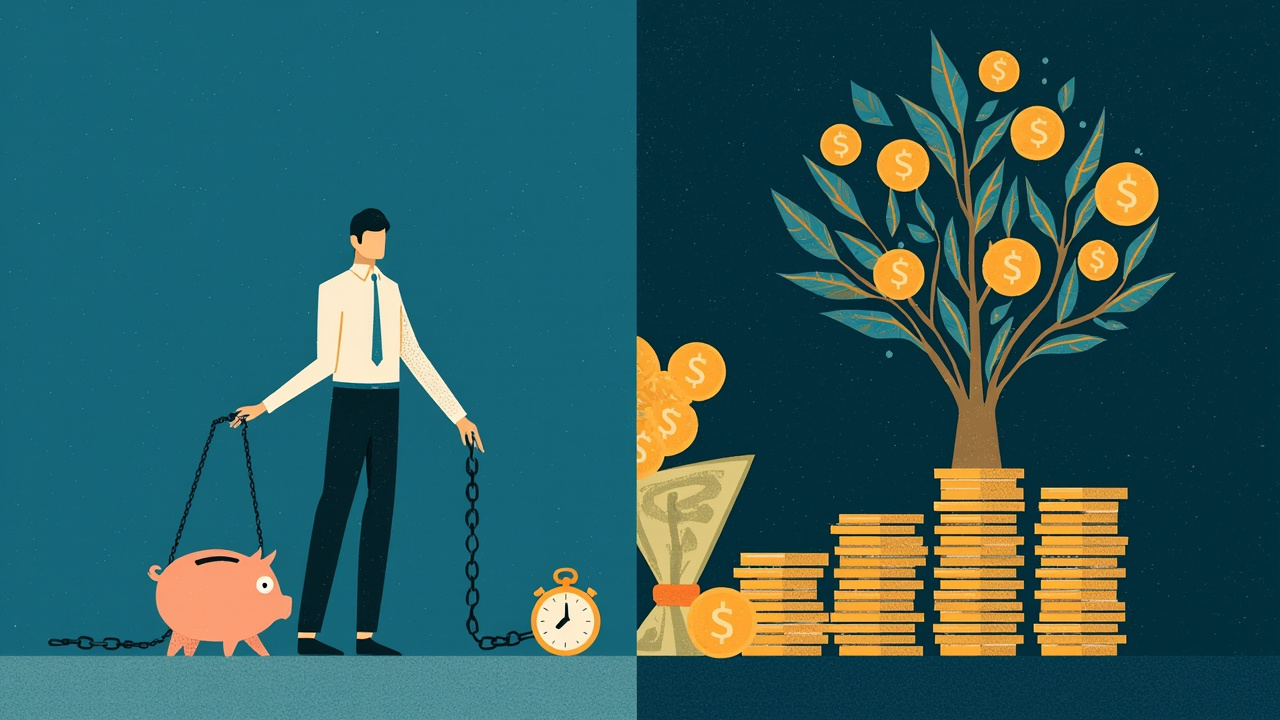
In Taiwan, your salary sets your ceiling, but asset allocation decides whether you break through it.
The core of this statement is not just telling you to buy ETFs, but telling you to start making every financial decision today using the mindset of the wealthy.
The gap between Taiwan’s top 3.5% wealthy and ordinary office workers does not lie in how much they earn, but in three things you may never have seriously considered:
- Let your assets work for you instead of relying solely on labor income
- Control the true total cost of every financial decision
- Build a financial system independent of emotion
This article breaks each one open and gives you concrete actions you can execute today.
1. Why are you still broke after a raise?
Most Taiwanese office workers’ financial logic goes like this:
“I earned NT$40K this month, paid living expenses, credit card bills, mortgage, and put whatever is left in a checking account.”
The real return on a checking account is almost zero, and 2% to 3% of purchasing power is eaten away by inflation every year. Your money sitting there isn’t “not moving”, it’s shrinking right before your eyes at an invisible speed.
This is the first gap between the wealthy and ordinary people — the wealthy never let their money slowly die in the bank.
Two types of money
- Labor income: Money you exchange time for; you only get paid when you sell your time.
- Asset income: Money your money makes for you; it works while you sleep.
If you rely only on labor income, you are using a fixed-time salary to fund a lifetime of bills. Even with a 3% annual raise, you cannot outrun Taiwan’s real inflation.
The real turning point is: convert part of your labor income into assets that work for themselves. This is not telling you to day-trade; it’s telling you to start building a system today.
2. The first底层 logic: Let your assets work for you
The Taiwan Weighted Index, from the 1990s to today, has survived multiple black swans including the 2000 dot-com bubble (fell to around 3,000 points, a drop of over 60%), the 2008 financial crisis, and the 2020 COVID pandemic (single-month drop of nearly 30%), yet the long-term annualized return is still between 7% and 8%.
What does this mean? It means that if you disciplinedly invest in index ETFs over the long term, the market’s long-term upward tendency will help you accumulate wealth. But the prerequisites are:
- You must have enough emergency reserve so you don’t need to sell when the market crashes
- You must have a clear understanding of your own risk tolerance
- You must choose fund products issued by FSC (Financial Supervisory Commission)-approved investment trust companies
But knowing this alone is not enough. Because over 90% of Taiwanese have heard about investing, but according to the Securities Investment Trust and Consulting Association (SITCA), the average holding period for Taiwanese DCA investors is less than two years. Most people stop their contributions or redeem when the market drops.
Why? Because they have not figured out the second底层 logic.
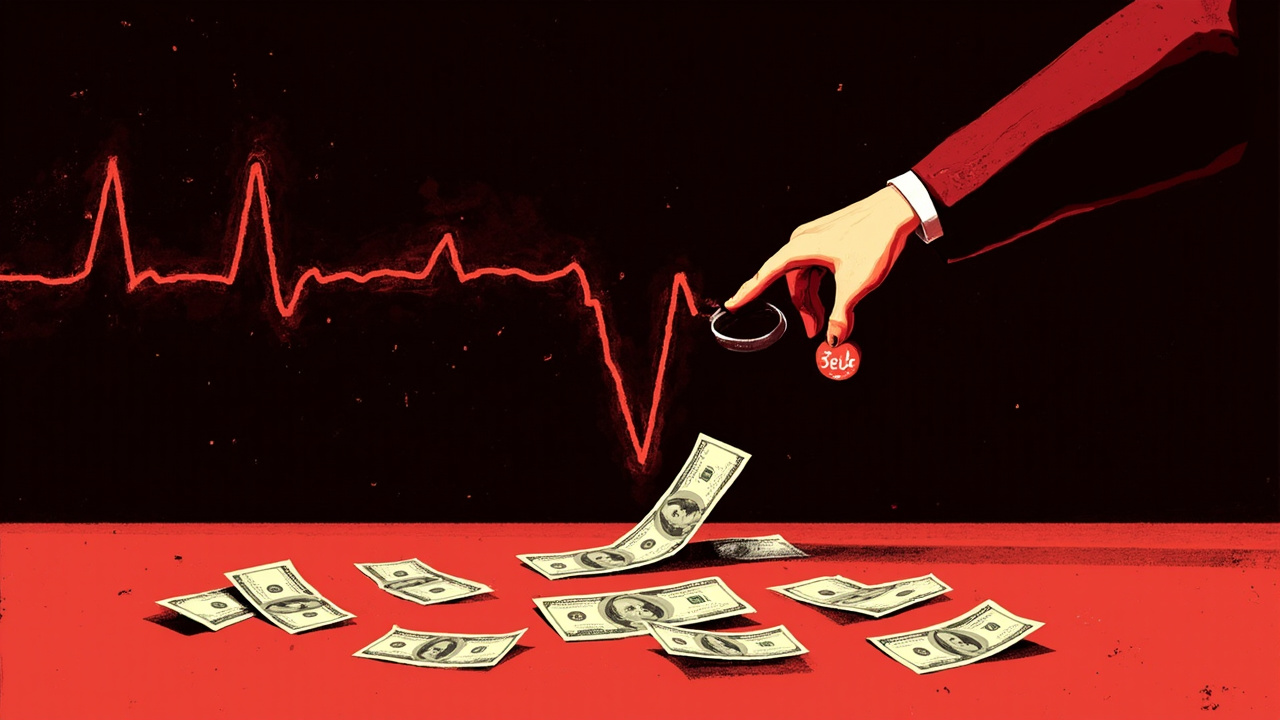
3. The second底层 logic: Control the true total cost of financial decisions
Have you noticed that when banks, insurance companies, and financial advisors in Taiwan recommend products, they talk about return rates, dividend rates, and protection.
They almost never proactively tell you what the total cost of the product is — including management fees, transaction fees, and loadings hidden inside premiums.
The invisible drain of costs
1. Savings insurance loading fee ratio
According to FSC Insurance Bureau data, certain Taiwanese savings insurance products have loading fee ratios (the portion of premiums used to pay agent commissions and company administrative expenses) as high as 15% to 20% or more in the first few years. This means nearly one-fifth of the premiums you pay in year one is not saving for you — it’s paying various fees.
2. Total cost of mutual funds
Mutual funds sold through Taiwanese bank channels typically charge 1.5% to 3% in front-end fees and about 1.5% annual management fee. It sounds small, but stretched over time, the compounding effect of this cost is staggering.
If you invest NT300,000 in lost compounding.
Wealthy vs ordinary
- The first question the wealthy ask before a financial decision: What is the true total cost of this thing?
- The question ordinary people ask: How much return can this thing give me?
The higher the cost, the less return you keep over time. This is the most fundamental difference in financial decision-making between most ordinary Taiwanese and the wealthy.
4. The third底层 logic: Build a financial system independent of emotion
What is a financial system independent of emotion?
It means you don’t greedily add positions beyond your risk tolerance when the market is good; you don’t panic and dump everything when the market is bad. You have a pre-set rulebook, you follow it, no matter how the market moves.
This sounds simple, but according to SITCA surveys, when the market drops over 20%, the proportion of Taiwanese retail investors who stop contributions or redeem rises sharply. This means most people choose to stop buying at exactly the moment they should be buying the most.
This is not your fault — it’s a hardwired human response to loss. But this instinct is the biggest killer that keeps you from ever catching up with the wealthy.
Ordinary people make decisions based on emotion; the wealthy make decisions based on systems.
5. A four-step actionable plan (executable today)
Step 1: Build your emergency reserve
Today, open your bank APP or post office APP and separate the money in your checking account that exceeds six months of living expenses, ready for the next allocation steps.
- Six months of living expenses is your emergency reserve
- Keep this money in a time deposit or high-yield savings account, don’t touch it
- Taiwanese online banks like Taishin Richart, O-Bank, and Cathay United all offer higher-than-standard interest rate plans — compare and pick one to open
Step 2: Use the “100 minus age” formula to set your stock-bond ratio
For amounts above six months of living expenses, decide what percentage to invest in index ETFs based on your age and risk tolerance.
Here is a simple reference formula commonly used in Taiwan (not a hard rule, just a starting point):
Stock allocation percentage = 100 − your age
- A 25-year-old fresh graduate: cap around 75%
- A 50-year-old middle-aged group: cap around 50%
This percentage should be adjusted based on your own financial situation, debt, and family responsibilities. Not every person fits the same number.
Step 3: Choose a compliant index ETF and start dollar-cost averaging
- Open an account with an FSC-approved investment trust company
- Choose an ETF that tracks the Taiwan Weighted Index or a global market index
- Set up automatic monthly debits on a fixed date
- Taiwan has multiple index-tracking ETFs listed on the TWSE that you can buy directly through your broker with relatively low transaction fees
Before any investment decision, please be sure to read the fund’s prospectus first, understand its fee structure, risk level, and investment targets, and assess whether it matches your own risk tolerance.
Step 4: Rebalance your portfolio once a year at year-end
Readjust your asset ratios back to your target:
- If your stock allocation has appreciated heavily and exceeded the cap, transfer the excess to more conservative asset classes
- If it has dropped, top up to restore the target
This happens once a year, no need for frequent action, but it is the key to keeping your financial system running long-term.
6. Four iron rules (must read before execution)
If any one of these is not met, fix it first before continuing.
- Do you have high-interest consumer debt? If you carry credit card revolving interest, cash card loans, or personal loans above 5%, please pay those off before discussing investing. Very few investments can reliably outperform the 15%+ credit card revolving rate.
- Do you have at least 3 to 6 months of emergency reserve? If not, save that amount first before starting DCA. Without an emergency reserve, you are most likely to be forced to sell at the bottom when you need cash during a market drop.
- Do you know your actual monthly cash flow? Income minus all fixed expenses — how much is truly discretionary? If unsure, track your spending for a month.
- Have you made an honest assessment of your risk tolerance? If a 20% paper loss keeps you up at night, you should not put all investable funds into high-volatility equity ETFs.
7. Two Taiwan-specific hidden traps
Trap 1: Second Generation NHI supplemental premium
Many Taiwanese office workers only realize after starting to receive dividends or bonuses that income above NT$20,000 triggers a 2.11% Second Generation NHI supplemental premium. The fee itself is small, but if you don’t understand the rule, your real return calculation will be off.
More importantly, Taiwan’s dividend income tax filing has two methods:
- Combined taxation
- Separate taxation
Which one suits you depends on your overall income bracket. Before each year’s tax season, use the Ministry of Finance’s income tax calculator system or consult a licensed tax advisor to figure out which method is more favorable for you.
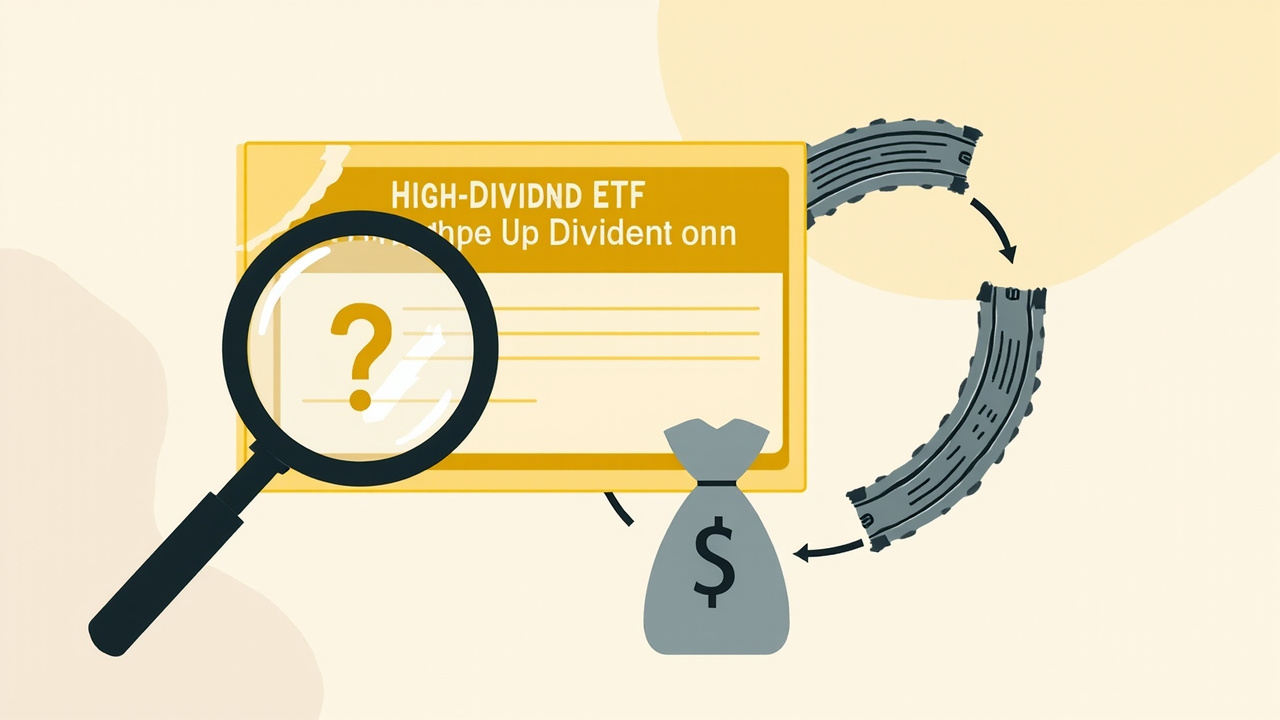
Trap 2: The ETF dividend trap
There are many ETFs in Taiwan that boast high dividend yields, and the yield numbers look attractive. But have you thought about where the dividend money comes from?
According to FSC and SITCA regulations, ETF dividends can come from dividend income, capital gains, and in some cases return of capital.
If part of an ETF’s dividend is a return of capital, the dividend you receive is essentially your own money returned to you, the NAV drops at the same time, and your total assets do not increase.
This does not mean all high-dividend ETFs are problematic, but before choosing any ETF you must read its prospectus and understand the source of its dividends, not just look at the yield number.
8. Emergency playbook for extreme scenarios
If a 2008-level systemic crisis hits Taiwan and your portfolio’s paper loss exceeds 30%, what should you do?
- Confirm your emergency reserve is intact. If it is, you don’t need to sell any investment position because your living expenses are covered.
- Continue your DCA — do not stop contributing. Buying at the market bottom has the lowest cost; this is one of the biggest advantages of a DCA strategy.
- Don’t look at the numbers in your account. If looking will trigger emotional decisions, set a check-in point, like the last day of each month.
- If you really cannot take it, you can temporarily reduce your monthly DCA amount, but do not stop entirely and do not fully redeem.
According to Taiwan Weighted Index history, after the 2008 financial crisis, Taiwan’s stock market had returned to near pre-crash levels by around 2011, and subsequently continued to make new highs. This is not a guarantee that history will repeat, but it is a historical reference to steady your nerves in extreme scenarios.
9. Boundary conditions by demographic
- Fresh graduates just entering the workforce: With a salary around NT3,000. Time is your biggest asset — the gap between starting at 20 and starting at 30 to age 60 is in the millions.
- Young families with mortgages: With monthly mortgage and child expenses, cash flow pressure is highest. First confirm your emergency reserve is enough, then look at how much can be invested each month. Do not sacrifice financial safety margin chasing returns.
- Middle-aged parents: Need to balance your own retirement planning with your children’s education fund — these two have different time horizons and must be planned separately. Retirement funds have a long horizon and can tolerate higher volatility; education funds needed within 5 years should not sit in high-volatility assets.
- Those nearing retirement: Priority is protecting accumulated assets; equity allocation should gradually shrink and shift toward less volatile asset classes, ensuring stable post-retirement cash flow.
10. Your next step
Working hard is necessary, but if you only work hard, you are just trading time for money. What really separates wealth is:
- Whether you let your assets work for you
- Whether you calculate the true total cost before every financial decision
- Whether you build a system independent of emotion that you can run long-term
These three things don’t require a high education, lots of capital, or special connections. You can take the first step today.
Financial freedom is not a destination, it is a system you run every day. Once you start building that system today, the gap between you and that top 3.5% has already started to close.
This article is for financial education purposes only and does not constitute investment advice or any recommendation or solicitation for any financial product. All investments carry risk, and past performance does not guarantee future results. Historical data and cases mentioned in the video are for reference only and do not guarantee future outcomes. Each person’s financial situation, risk tolerance, and investment goals are different. Before making any investment decision, please assess your own risk and consult Taiwan-licensed financial advisors and tax professionals. For any financial product mentioned, please read the prospectus first to understand the relevant risks before deciding.
Disclaimer: This article shares investment and financial concepts and information, and does not constitute any specific investment, tax, or legal advice. Markets carry risk; invest with caution and make independent judgments based on your own risk tolerance, consulting professional advisors as needed.
Tags
Asset Allocation, DCA, ETF Investing, Emergency Reserve, 100 Minus Age Rule, Investment Cost, Savings Insurance Trap, NHI Supplementary Premium, ETF Distribution Trap, Taiwan Retail Investors, Rich Mindset, Rebalancing
Comments