
You tap hearts on friends’ omakase posts, then open your banking app and see NT$2,300 left. This isn’t an isolated case — it’s the lived reality of over a million young Taiwanese office workers every single month.
You think you’re enjoying life, but the numbers don’t lie. You’re actually trading your future financial freedom for 30 likes on your social feed today.
Even crueler: those around you who look like they’re living the most exciting lives are often the deepest in debt. According to the Taiwan Financial Wisdom Education Promotion Association, Taiwanese office workers aged 25 to 35 have an average savings rate of just single digits, with nearly 40% unable to save anything each month, yet over 60% of this same group travels abroad every year.
This article shares information for financial education purposes only and does not constitute any investment or financial advice. Everyone’s income, family situation, and life needs are different; what works for someone else may not work for you. Please assess all financial decisions independently and consult a properly licensed Taiwan financial advisor or wealth management specialist.
What “Fancy Poverty” Really Is: You’re Not Buying Experiences, You’re Buying 30 Seconds of Social Approval
Fancy poverty in Taiwan isn’t because young people don’t try hard — it’s because the entire consumption environment has trained you to be an ATM.
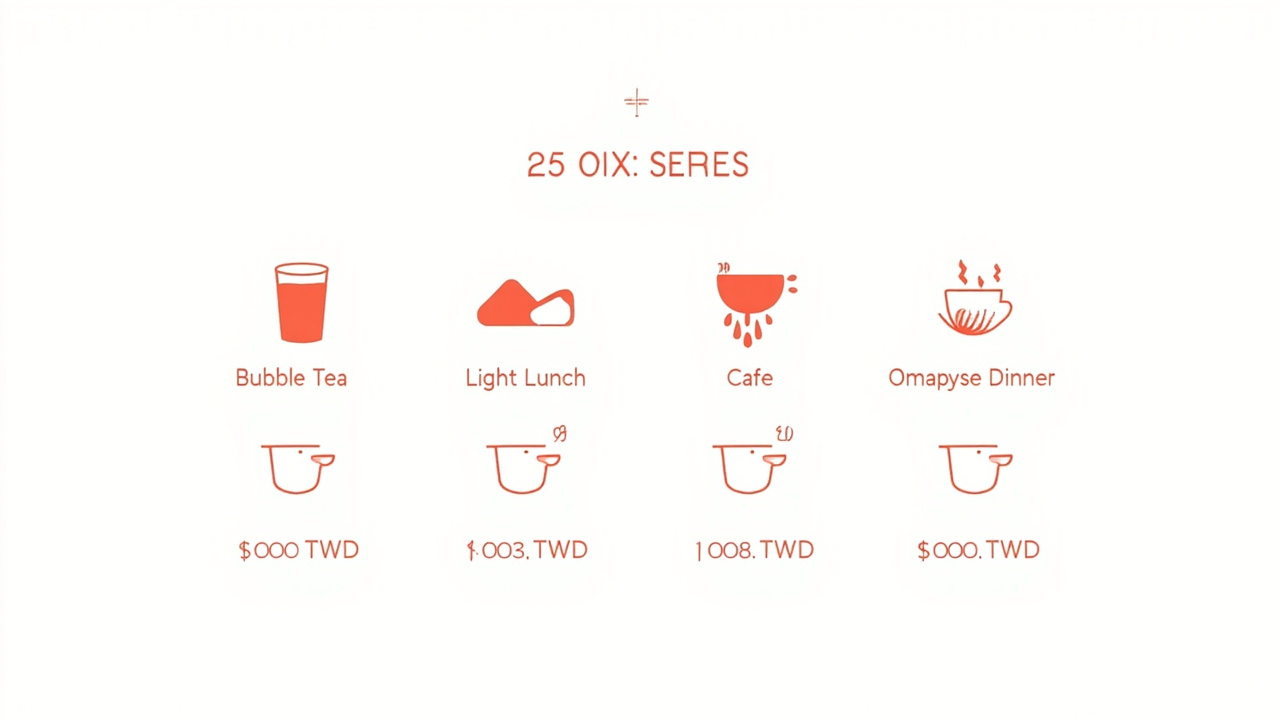
From the moment you leave home in the morning: bubble tea NT180, an afternoon café session where you open your laptop, pretend to be busy, and snap a photo for NT1,200 per head. You blow NT$1,600 in a day and call it “enjoying life.”
But have you ever calculated that in a month that’s NT38,000. You’re not enjoying life; you’re buying the persona of “I’m doing great” on a credit card installment plan.
The Psychology of Consumption: What You Lose Isn’t Money, It’s Opportunity Cost
Fancy poverty isn’t about lacking purchasing power, it’s that your spending isn’t buying what you think it’s buying. You think you’re buying experience, pleasure, and quality of life, but what you’re really buying is:
- 30 seconds of social approval
- A satisfaction that vanishes in two days
- A hidden debt that keeps rolling over
That hidden debt isn’t just the credit card statement — it’s opportunity cost. Taiwan’s Consumer Price Index has averaged annual growth of roughly 2% to 3% in recent years, but your salary growth? According to DGBAS data, real wage growth for Taiwanese employees has been almost flat — many people’s nominal salary rises, but after stripping out inflation they haven’t moved at all.
You’re living in an environment where salaries barely move, with an ever-expanding consumption standard. That gap widens every month — you just choose not to look at it.
The Real 30-Year Outcome: NT8 Million
Let’s do a real calculation. Suppose you spend an extra NT$8,000 per month on fancy consumption — the spending you didn’t have to do, but did because Instagram showed friends going and you didn’t want to be left out.
Scenario A: Stay Fancy-Poor
You keep spending NT$8,000 per month on Instagram posts, omakase dinners, and café pretending-to-work sessions. After 30 years what do you have? You have 30 years of Instagram story archives and an empty retirement account.
And if you add credit card revolving interest — Taiwan’s credit card revolving rate can run as high as 15% — many people think they’re just doing installments, but every month they’re getting bled by revolving interest.
Scenario B: Turn NT8 Million
If starting at age 25 you DCA that NT8 million.**
That’s still a conservative estimate. Add dividend reinvestment plus the market’s long-term uptrend and the actual number could be higher. Skip 20 cups of bubble tea, 5 café visits, and 3 omakase dinners each month — and you get an NT$8 million retirement pot.

4 Iron Rules to Rescue Yourself from Fancy Poverty
Rule 1: The 30-Second Rule
Before every purchase, open your phone’s timer for 30 seconds. Ask yourself: “Will I still remember this expense 30 days from now? Will it still make me happy?” If the answer is no, don’t spend it.
Rule 2: The 72-Hour Rule
For any non-essential purchase over NT$3,000, don’t decide in the moment — wait 72 hours. If 72 hours later you still want it, buy it; if you’ve forgotten, you’ve saved the money. The hallmark of fancy poverty is impulse spending, and impulse has an expiration date.
Rule 3: Translate Consumption Language into Investment Language
Before every purchase, reframe “spending on an experience” as “investing in this experience would cost X, and the future return is Y.” Once you start thinking about spending in investment terms, you’ll automatically filter out most fancy-poverty consumption.
Rule 4: Recategorize Your Social Feed
Not asking you to delete friends, but recategorize your social media information sources: mute or unfollow accounts that make you want to spend, and pin accounts that inspire you to save, learn, or live meaningfully. Your spending habits are shaped by your feed — change the feed and you change the spending.
You Don’t Need to Quit All Enjoyment — You Only Need 3 Things
Enjoyment Doesn’t Need Quitting, but It Does Need Classification
You don’t need to become someone who never spends — that won’t make you happy either. You need to split spending into three categories:
- True experiences (a few times a year, planned in advance, memorable): e.g., an annual family trip, important anniversaries
- Daily small happiness (within monthly budget, doesn’t dent savings): e.g., a bubble tea, the occasional nice meal
- Impulse fancy poverty (triggered by social media, no real value): e.g., visiting an Instagram café just for the photo
Keep the first category, manage the second, and completely stop the third. That’s a healthy spending structure.
4 Steps to Take Today
Step 1: Calculate Your Real “Fancy-Poverty Spending”
Open your credit card app or internet banking, review the last 3 months of transactions, and isolate and total your “fancy-poverty spending”. The purchases that make you think “why did I spend this money?” when you look back — those are what you need to cut.
Step 2: Set Up Auto-Transfer
On the day your salary hits, automatically transfer 20% of your salary into a savings or investment account you can’t easily touch. Live on the remaining 80%.
This sequence cannot be reversed. Save first, then spend — not spend first, then save whatever’s left. This is the only formula for the broke-to-surplus transformation.
Step 3: Run Your Own “30-Day No-Spend Challenge”
Pick 30 days for a no-spend challenge: during these 30 days, buy no non-essential items (food and daily necessities excluded). You’ll find after 30 days your account has several thousand extra dollars — more importantly, you’ll discover you don’t actually need those things.
Step 4: Auto-Invest the Money You Saved
Take the money you saved in the first month and put all of it into a DCA investment in a Taiwan stock ETF. The amount doesn’t need to be large; the point is to build the habit of converting consumption into investment. When you see that first investment growing, you’ll naturally cut back on fancy-poverty spending.
Conclusion: You’re Not Selling Experiences, You’re Selling Life Options
You’re using credit card installments to buy the persona of “I’m doing great.” But you’re not selling experiences — you’re selling life options.
Thirty years from now, when your classmates are planning retirement, traveling the world, or achieving early financial freedom, you’ll still be worrying about next month’s rent, credit card bill, and living expenses. That gap isn’t decided by fate — it’s accumulated by your NT$8,000 every day.
You can keep living fancy-poor, or starting today you can turn NT8 million. The math isn’t hard; the hard part is whether you’re willing to press the “no more fancy” button.
Next time before opening Instagram to post a story, open your investment account first. That number is your real “persona” — and this persona won’t put you in debt.
Disclaimer: All content in this article is information sharing for financial education purposes only and does not constitute any investment or financial advice. Each person’s income, family situation, life needs, and risk tolerance are different; what works for someone else may not work for you. Please assess all financial decisions independently and consult a properly licensed Taiwan financial advisor or wealth management specialist. Any numbers and simulations mentioned in this article are estimates based on specific assumptions and do not guarantee actual investment outcomes. Markets carry risk; please do your homework before investing.
Tags
Broke Fancy, Consumption Traps, IG Stories, Paycheck-to-Paycheck, Credit Card Revolver, Emergency Reserve, Consumer Psychology, Pension Planning, Opportunity Cost, DCA, Taiwan Youth, Consumption Downgrade, Investment Discipline, Social Media
Comments