TAG

#Investment Psychology

42 articles · ← All tags

Wealth Awakening

After Kevin Warsh Takes the Fed, Dollar Strength Becomes the Market's Focus: 4 Drivers, 3 Risks, What It Means for Global Allocators

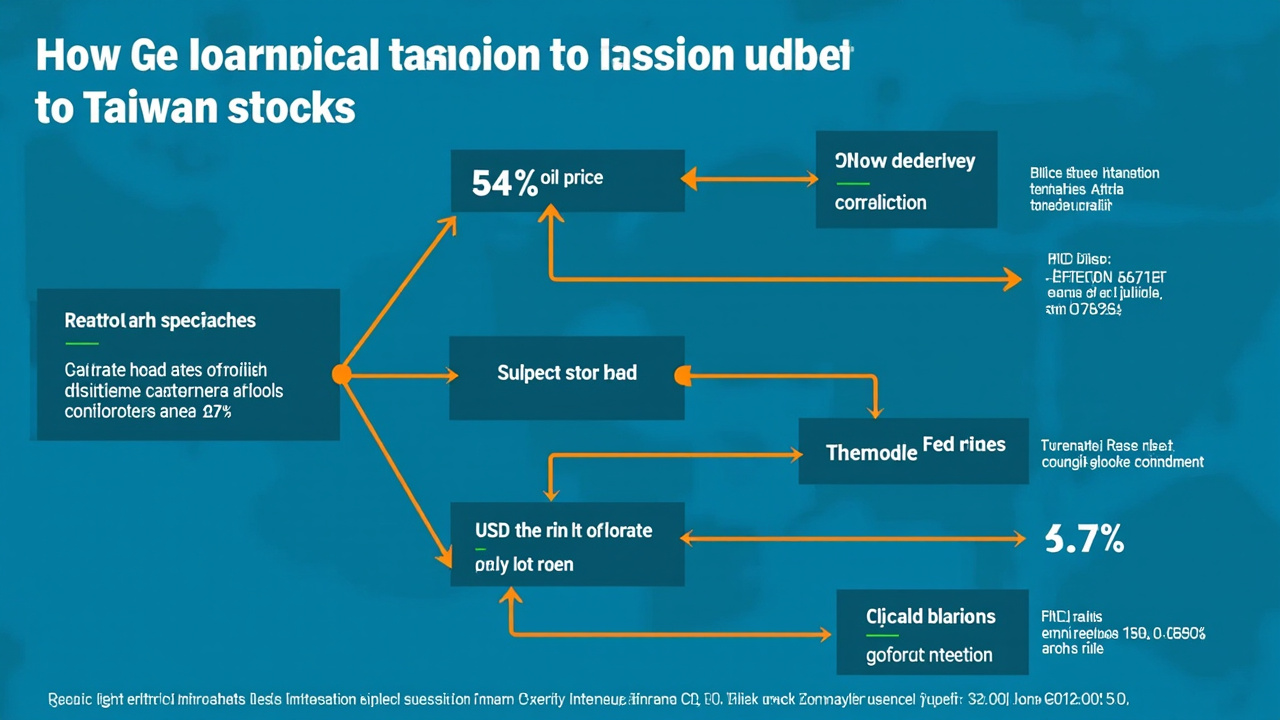
5 月 22 日凱文·沃什宣誓接掌聯準會主席,是 18 年來首位被視為「通膨鷹派」的掌舵者。6 月 17 日 FOMC 利率維持 3.5-3.75% 不變,但市場已在押注他接手後的加息路徑。摩根大通、美國銀行、高盛、渣打、德意志等大行齊聲看多美元,CFTC 數據顯示對沖基金美元多頭達 294 億美元。本文拆解美元強勢的 4 大驅動力、3 個即將面臨的風險、對台股與新興市場的具體影響。

12 min
Wealth Awakening

Apple Computers Just Got More Expensive on 6/26: 20% Global Hike, Where's the Cheapest Place to Buy?

Apple quietly refreshed Mac and iPad pricing before the US market open on 6/25. MacBook Air jumped from $1,099 to $1,299 (+18.2%), MacBook Pro 14-inch from $1,699 to $1,999 (+17.7%). Average increase across the line: 18-20%. Tim Cook called it a 100-year flood. The truth: one day before the hike, Micron reported gross margin of 84.9%, locked in $22B in long-term agreements, and HBM supply tightness through 2027. The AI memory super-cycle's cost just landed in your shopping cart. Cross-market price test: US cheapest, Taiwan Education Pricing cracks top three, Japan and Europe priciest.

14 min
Wealth Awakening

Micron Revenue 4x, Gross Margin 84.9% Beats Nvidia: After-Hours +13%, AI Memory Super-Cycle Confirmed

Micron's FY26Q3 revenue hit $41.46B (+346% YoY), adjusted gross margin reached 84.9% (beating Nvidia's 75% and Meta's 81.9%), and adjusted EPS came in at $25.11 (12x YoY). Q4 guidance points to $50B in revenue with EPS midpoint $31. Sixteen long-term agreements lock in $22B in customer cash and roughly $1,000B in RPO. The stock jumped as much as 16% after hours, with market cap holding above $1 trillion. This isn't a decent earnings report — it's Micron's official promotion from AI supporting cast to AI lead actor.

11 min
Wealth Awakening

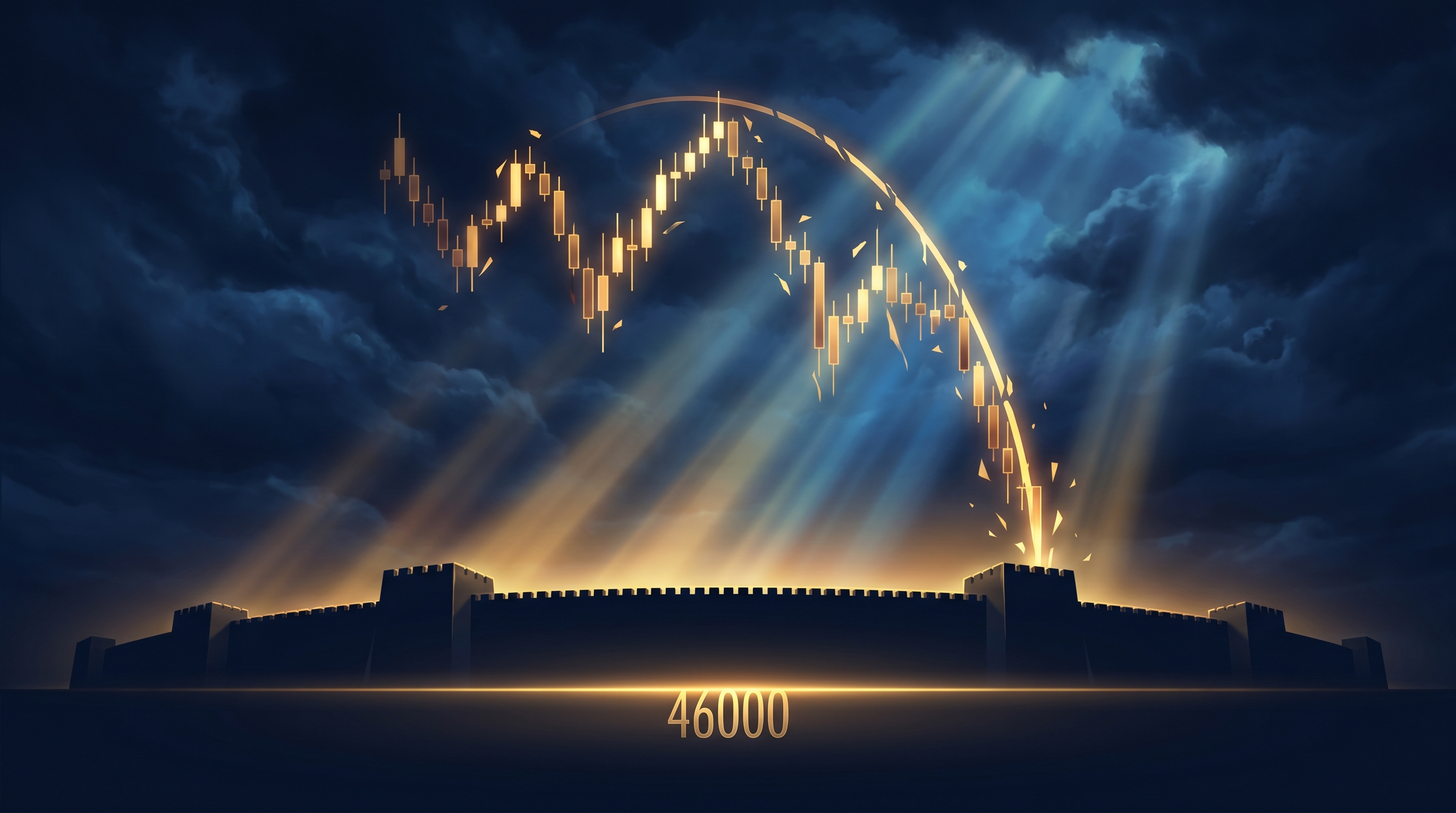
TSMC Drops NT$50 as Taiwan Stocks Open 800+ Points Lower, Defending the 46000 Line

TAIEX hit an all-time high of 46,552 in early June and closed yesterday at 47,100. Overnight U.S. tech rolled over, TSMC's ADR dropped 6.69%, the Philadelphia Semiconductor Index fell 7.87%, and Micron dropped 13.18%. Today (the 24th), Taiwan stocks gapped down 800+ points at the open, with the index slammed back to the doorstep of 46,000. This isn't a routine pullback — it's the moment someone hit mute at the AI bull party.

9 min
Wealth Awakening

SpaceX Drops 16%: Three-Day Slide, $400B Wiped, The Truth Behind the $20B Bond

On 6/22/2026 SpaceX (SPCX) plunged 16.43%, the third straight down day, with cumulative drawdown above 23% and a single-day market-cap wipe of about $400B. The company announced its first investment-grade bond of at least $20B, with filings disclosing roughly $100.8B cash. Why issue bonds with a hundred billion in cash? Because AI burns $2 for every $1 earned, and Oppenheimer forecasts net debt will rise by $400B by 2031. Debt becomes the primary funding source. Four concrete takeaways for Taiwan investors.

8 min
Wealth Awakening

Stock Down 30%? Stop Averaging Down. Swap and Recover 3x Faster.

Your stock is down 30% and the market just bounced — do you average down or wait it out? Brutal stat: nearly 7 in 10 averaging-down investors end up deeper in the red after six months. We expose the three psychological traps (sunk cost, confirmation bias, gambler's fallacy), reveal three quantitative filters for separating winners from losers, and walk you through a four-step swap-to-recover playbook that cuts your average breakeven time from three years down to one.

12 min
Wealth Awakening

From NT$10K to NT$20M: The Minimalist Dollar-Cost Averaging Formula That Beats 90% of Retail Investors

Why is the NT$10K you save every month slowly dying in your bank account? This article tears apart the minimalist DCA formula that turns a small monthly contribution into NT$20M: index ETFs, the discipline of compounding, the smile curve, an emergency cushion, and pay-yourself-first. We expose the high-dividend trap, the panic-selling curse, and the greed of bull markets — so you can build a retirement system that does not depend on luck.

14 min
Wealth Awakening

Retired Early with FIRE? Lost Everything: 5 Fatal Flaws in the 4% Rule

Quit at 35 chasing FIRE, only to get crushed by inflation and long-term care costs? This piece dismantles the 4% rule's outdated assumptions, the irreversible damage of sequence-of-returns risk, the cruel truth of renting in old age, the real bill when long-term care swallows a NT$10M nest egg, and the hidden killers of psychological emptiness and marriage friction—then hands you two wealthy exit paths: the Coast strategy and Barista FIRE.

9 min
Wealth Awakening

You Buy Because It "Feels" Like a Rally? The Brain Trap That Cost Retail Investors NT$5 Million

Why do you only feel the urge to buy right after the rally is already over? Dalbar data shows retail investors earned just 3.98% annualized over 30 years vs 10% for the S&P 500. We break down availability bias, herd behavior, and the structural media trap, then run the real numbers: NT$600K invested over 20 years delivers NT$3.9M if you follow your gut, but NT$8.92M if you automate. The gap is NT$5.02 million from the same money.

13 min
Wealth Awakening

90% of Retail Investors Die at This Trap! Unmasking the S&P 500 Smiling Curve

Nine out of ten retail investors blindly stick to traditional dollar-cost averaging, never realizing this golden-child strategy hides a fatal mathematical flaw. Once your principal hits NT$5 million, a single crash can wipe out twenty years of effort. This post reveals the advanced Value Averaging method quietly used by Wall Street masters, with dynamic scaling-in and forced-sell mechanisms that finally deliver true buy-low-sell-high — your ticket to early retirement.

13 min
Wealth Awakening

Why Do You Buy the Dip and Lose? Nine Iron Rules for Retail Investors to Turn the Whales into Your ATM

Down 10% you wait. Down 20% you fear. Down 30% you give up. A 10% rebound brings doubt, 20% brings anxiety, 30% brings all-in FOMO — this isn't bad luck; it's the inevitable outcome of human nature. This article distills nine iron rules that walk retail investors from "catching every falling knife" to "exiting with logic," centered on three things: hold fewer names, review every trade, and enforce strict stop-losses. Master these and retail investors may stop being lambs led to slaughter and start becoming consistent winners.

7 min
Wealth Awakening

You're Trading Your Most Valuable Asset for Something Worth Nothing!

At 1 a.m. you're staring at a red account, 30, 32, 35 years old—fear creeps in: what if you can never get a handle on money from now on? What truly eats your future is never the loss itself, but a hidden trap: you're trading your most valuable assets (time, focus, human capital) for the cheapest thing (the win/loss of high-frequency short-term speculation). This article unpacks the rules, psychology, and deeper logic of the 2026 workplace shake-up, and gives you a path that ordinary people can really walk.

7 min
Wealth Awakening

The Poor Chase Speed, the Rich Chase Stability: The Secret Path to Getting Rich Slowly, Understood by Only 1%

In Taiwan, only one in every three people who opens a brokerage account actually makes money over the long term. Same market, same tools, same time — yet the outcomes are completely opposite. A 25-year-old e-commerce customer-service rep in Taichung earning under NT$40,000 a month had enough for the down payment on a two-bedroom apartment three years later; a 30-year-old semiconductor equipment engineer in Hsinchu earning over NT$1 million a year lost the wedding fund his parents left him. The difference isn't luck — it's the fundamental understanding of "what a stock really is." This article uses the story of a 60-year-old goose-meat shop to fully unlock the essence of stocks, why most people treat stocks like gambling tools, and the slow-wealth secret path that only 1% understand.

7 min
Wealth Awakening

Money Made by Luck Always Gets Returned: The Investing Psychology That Can Save You Hundreds of Thousands

TSMC climbs to NT$1,000 and you don't dare buy — it's too expensive; it drops to NT$800 and you still don't dare buy — it might fall further; when it returns to NT$100 you finally chase in, then it drops again. This isn't your problem — it's your brain's problem. This article dissects the five most common psychological traps in investing — from the fundamental mismatch of "price vs. value" to how "earning by luck" triggers confirmation bias and drags you into the abyss. Seeing these traps won't make you rich overnight, but it will keep you from making costly mistakes.

8 min
Wealth Awakening

Is Diversification a Trap? The Truth About Why 10 Stocks Diversified Your Losses More Neatly

Open your brokerage account—over a dozen stocks, ETFs spanning every category, and you think this is risk diversification? The truth: you've just spread your money across highly overlapping assets that fall together. This article unpacks the three biggest "fake diversification" traps that retail investors fall into, and teaches you how to dynamically balance diversification and concentration based on your capital size and stress tolerance. Investing is never a binary choice—it's a dynamic balance that matches your stage.

6 min
Wealth Awakening

TWSE Breaks 40,000 in H2 2026: Four Principles to Protect Your Principal from Getting Wiped Out

The TWSE is at 40,000 but your account is still losing money. This is not a joke, it is happening right now. The index hitting a new high and your account making money are two completely different things, and that is the biggest cognitive blind spot for 90% of Taiwan retail investors. This article uses the real recovery cycles of the 2008 financial crisis (TWSE fell nearly 60%, recovery over five years), the 2020 COVID crash (nearly 30% in a single month), and the 2022 rate-hike cycle (close to 32% drawdown) to show how the wrong capital allocation can lock your losses in. It also breaks down the cost gap between active funds charging 1.5% to 2.5% in annual management fees versus index ETFs like 0050 under 0.4%, and the hidden transaction-cost bill that can exceed NT$10,000 a year for an active retail trader. It then walks through four principles to protect your principal in a TWSE-40,000 high market: building a capital firewall, replacing lump-sum entry with dollar-cost averaging, setting written stop-loss and take-profit rules before entry, and rebalancing annually. It closes with four veto iron rules to keep you from adding at the worst possible moment.

12 min
Wealth Awakening

Buy the Dip on US Treasury ETFs? Three Duration Blind Spots That Can Shrink Your Principal by 30%

Hundreds of thousands of people in Taiwan keep buying the dip on long-duration US Treasury ETFs without realizing that products with a 15-to-20-year duration can cut your principal in half in a rising-rate environment, just as the iShares 20+ Year Treasury Bond ETF (TLT) lost more than 50% from its 2020 high to its 2023 low. This article breaks down three blind spots you must understand before adding more: the math of duration times interest-rate moves that decides your maximum drawdown, the trap where yield does not equal total return and monthly distributions can come out of your own principal, and the hidden costs of FX hedging and premium/discount mechanics that are specific to Taiwan-listed US Treasury ETFs. It provides four iron rules and a four-step action plan to help you decide whether buy-the-dip is right for your situation, plus an extreme-scenario backup plan to keep your retirement savings from getting trapped by rates you cannot control.

13 min
Wealth Awakening

Trump Pauses the Iran Strike: The Real Decoder Behind TSMC and Oil Prices

Trump paused the Iran strike before April 6, and behind it was not pacifism but political calculus: oil prices cannot rise, inflation cannot slip out of control again. Taiwanese retail investors see the news and their first reaction is "geopolitical risk is down, so I can enter the market"—but that logic treats short-term emotion as long-term positioning. This article breaks down the real two-layer transmission path from geopolitics to Taiwan stocks (oil to inflation to Fed to USD to foreign capital), three sets of account comparisons including a 10-year DCA gap of NT$300K to NT$400K and a 2008 crisis case study, three questions for reading foreign-capital positioning using TWSE's daily institutional data, a four-step action plan (foreign-investor flow check, resume DCA, after-tax return calculation, rebalancing trigger), and an emergency plan for extreme scenarios including a Strait of Hormuz blockade. Pain point: news-driven trading systematically buys high and sells low. Promise: build a decision framework anchored in positioning data, not headlines.

12 min
Wealth Awakening

60% of Taiwanese Have Stock Accounts, Only 10% Make Money: The Truth About Stocks in 36 Minutes

Taiwan has over 12 million brokerage accounts—roughly 60% of all adults have entered the market—yet fewer than 10% achieve stable long-term profits. The shared fate of the other 90% is not bad luck or wrong picks, but treating speculation as investing and using an investor's mindset to deceive themselves. This article breaks down the structural disadvantage of short-term trading, the overconfidence bias from behavioral finance amplified by Taiwan's 2016–2024 bull run, three underlying iron rules (compounding cost erosion, low-buy-high-sell losses, and the liquidity trap of strong capital), four questions to ask before every order, a complete four-step action plan, three real account scenarios (5-year and 20-year horizons), two Taiwan-specific high-level traps (dividend tax plus NHI supplemental premium, and ETF tracking error plus premium/discount), and an emergency plan for extreme market conditions. Pain point: even in Taiwan's strongest bull run, most retail investors left with less than they started. Promise: a tested framework that turns stock decisions into a discipline, not a feeling.

11 min
Wealth Awakening

From All-In on AI to Nothing Left: The 5 Endgame Blind Spots of Taiwan Stock Retail Investors

Three months after going all-in on concept stocks, your account is down to less than half—that is the real story of hundreds of thousands of Taiwanese retail investors last year. Long-term returns for Taiwan retail investors are systematically below the broader market, not because of stock-picking skill, but because of entry-timing bias compounded by hidden costs continuously eating away at returns. This article breaks down 3 underlying rules (behavioral cost as the real erosion, structural market asymmetry against retail investors, and the revenue logic of financial institutions that pushes you to trade more), 3 account-checking scenarios with hard numbers, 4 ironclad veto rules, 4 actionable steps, a four-question decision filter, and age-based application boundaries for fresh graduates, young families, middle-aged parents, and seniors. Pain point: you keep buying high and selling low and cannot explain why. Promise: a reusable framework that puts your trading decisions back in rational control, with concrete rules for each life stage.

15 min
Wealth Awakening

The S&P 500 Hidden Loss Trap: Why DCA into US ETFs Isn't Risk-Free, and the Right Way to Retire Early

Using a Taiwan salary to DCA into S&P 500 ETFs looks like the world's strongest passive investment, but hides four loss traps that Taiwanese investors most often overlook. This article uses the 2008 financial crisis, the 2020 COVID crash, and the 2022 rate-hike cycle as examples to break down four blind spots — exchange rate, costs, timing, and emotion — and delivers the correct way for Taiwanese investors to buy US ETFs for early retirement, plus alternative routes. Many investors do not realize that from 2020 to 2021 USD/TWD dropped from 30 to 27.5, meaning a 50% S&P 500 gain translated to only about 30% in NTD. The Dalbar study shows average retail investors underperform their funds by 1.5% to 2% annually due to behavioral mistakes. Total fee differences between domestic and overseas S&P 500 ETFs can reach 0.3% to 0.8%, with another 0.1% to 0.2% hidden in FX hedging costs. Get a step-by-step guide covering tool selection, fixed DCA scheduling, FX management, and age-adjusted equity-bond allocation, and learn why psychological tolerance matters ten times more than index choice.

8 min
Wealth Awakening

Wiped Out by One Crash? The Same Mistake Every Taiwan Retail Investor Makes: The Sandpile Effect

You poured three years of savings in last month, and this month your account is halved. It's not bad luck or a bad stock pick; your portfolio was already sitting at an invisible tipping point, waiting to collapse. This is the fatal investment blind spot proven by physicists in the sandpile experiment: highly correlated assets fall together in a crash. This article breaks down 3底层 rules, 3 calculations, 4 iron rules, and a 4-step action plan to help you design a portfolio you can keep holding even in the worst moments. Over 60% of Taiwan retail investors concentrate holdings in the electronics sector, with TSMC alone accounting for over 30% of the weighted index. Many investors mistakenly believe buying 10 semiconductor supply chain stocks is diversification, but those 10 stocks have a correlation coefficient near 0.9. The article covers maximum drawdown as the psychological breaking point, the correlation trap that destroys diversification in crisis, the hidden value of rebalancing, and a true comparison showing how NT$1 million lost 59% in the 2008 crash and needed six years to recover. Get a portfolio that lets you survive the avalanche.

14 min
Wealth Awakening

Waiting for a Taiwan Stock Crash Before Buying? Retail Timing's Fatal Trap — Missing the Rally Is Worse Than Losing Money

You waited three whole years, Taiwan stocks never dropped, you never got in — and your wealth shrank anyway. Not because you lost money, but because you never earned any. The hidden cost of missing a rally is far worse than paper losses — but you won't see it on a balance sheet. Taiwan's TAIEX has delivered roughly 7% to 8% annualized total return over the past 20 years, and waiting through a 50% run-up before entering means missing opportunity cost that can never be recovered. Three side-by-side calculations in this article show a NT$1 million to NT$1.4 million wealth gap after 20 years between a disciplined DCA investor and a wait-for-crash investor whose effective invested months are only 60% as many. You'll get 3 underlying rules explaining why timing the market is structurally doomed, 4 veto-proof iron rules including a 3 to 5 year minimum time horizon on invested money, and 4 actionable steps to set up automatic DCA on a mid-month trading day and close the app.

15 min
Wealth Awakening

Goldman Sees S&P 8000 — 3 Fatal Mistakes Taiwan Retail Will Make

Goldman just lifted its S&P 500 target above 6,500 with some analysts seeing 8,000, calling for an 18-to-24-month super-bull market. Taiwan retail investors are most likely to make three fatal mistakes in the heated sentiment: treating behavioral costs as returns, choosing the wrong channel that hides fees, and being led by financial institutions' commercial interests. Using Taiwan Stock Exchange data on retail trading frequency versus institutions, FSC disclosure on offshore-fund expense ratios, and the U.S. estate-tax exposure of NT$60,000 / 40% bracket for non-citizens, this article breaks down three underlying rules, three calculation sets, four veto iron rules, and a four-step action plan to help you preserve wealth before the bull market actually ends. You will learn why the gap between 4% and 8% annualized over 20 years amounts to over NT$2.2 million, how to check the total expense ratio of any Taiwan-listed U.S.-equity ETF via SITCA, and why inheritance-tax and currency-hedging costs are two Taiwan-local advanced traps hidden in plain sight. By the end you will know whether your current allocation can survive a 30% drawdown — and whether you should even add right now.

16 min
Wealth Awakening

The Diversification Trap: Why 90% of Taiwan Stock Beginners Fake-Diversify

You bought ten Taiwan stocks and watched them all plunge together, your account down NT$300,000. The problem is not that diversification is wrong, but that you fundamentally misunderstood what diversification means. Nine out of ten Taiwan beginners practice fake diversification: they spread their eggs across ten tech-stock baskets that all ride the same ship. Using real 2022 Taiwan market correction data, a three-question decision framework, and two Taiwan-specific advanced traps (tracking error, dividend tax), this article redefines what true diversification actually looks like. By the end, you will know exactly when to concentrate, when to diversify, and how to avoid the costly illusion of safety that wipes out nine out of ten new investors. The actionable four-step plan starts today.

12 min
Wealth Awakening

Is Dollar-Cost Averaging a Trap? If You Have Idle Cash, Stop Blindly DCA-ing: Lump Sum Can Retire You 10 Years Earlier

More than 3 million people in Taiwan use DCA, but 9 out of 10 of them don't know what they're doing. U.S. research spanning 30 years confirms that lump-sum investing beats DCA 66% of the time, and the same NT$600,000 over 20 years ends up differing by NT$8 million. This article breaks down the 3 underlying rules, 4 iron thresholds, and a 4-step action plan, explaining why blindly DCA-ing your idle cash is the most expensive habit of your life. DCA is not a poison — it is just used in the wrong place. If you are a fresh graduate whose salary after rent and living expenses leaves only NT$5,000, of course you should DCA — you have no idle cash to lump-sum. But if you have been working 5–10 years and have NT$200,000, NT$500,000, or even NT$1 million saved, continuing to DCA is wasting your own money.

8 min
Wealth Awakening

It's Not Compound Interest That Fooled You — You Got the Reinvestment Order Wrong

Compound interest itself is not the problem — from Einstein to Buffett, they all point to the same logic. The problem is that you got the order of execution wrong from the very start. You buy at the high and stop contributing at the low; the average Taiwanese fund investor holds for only about two years, while compound interest needs 10 years to double — and you pull out long before it can do its work. This article breaks down the three underlying rules, four non-negotiable iron rules, and a three-question decision framework, paired with three real calculations and Taiwan-specific advanced traps around second-generation NHI supplementary premiums and voluntary labor pension contributions. You will see the real cost of switching funds every two years and what 'cost basis' actually means in dollar-cost-averaging.

17 min
Wealth Awakening

Why Are You Still Losing Money on ETFs? 4 Fatal Mistakes That Make 20 Years Pointless

You are buying the S&P500 and the Nasdaq 100, but your account stays in the red. The problem is not the ETFs — it is the four operational mistakes Taiwanese investors make most often: turning dollar-cost averaging into a market-timing tool, ignoring the cost structure, ignoring currency, and panic-stopping contributions at the worst moment. Perfect execution over 20 years builds roughly NT$3.5 million; after mistakes it is only about NT$2.7 million — how exactly does a million NTD walk out of your pocket? This article walks through the arithmetic, exposes the fee and currency traps, and gives you four pre-written emotional rules that protect your compounding when discipline breaks down. If you are about to give up on ETFs, read this first — the answer is rarely to stop, and almost always to fix how you buy.

9 min
Wealth Awakening

99% of S&P500 Buyers Won't Save Enough for Retirement: The Real Logic Behind Correct DCA

Everyone around you says buying the S&P500 is the right move, but fewer than 1% of investors actually complete a 20-year accumulation plan. The problem is not the S&P500 itself, but how you execute dollar-cost averaging. This article uses a real 2020 COVID-crash account gap and a 20-year compounding shortfall of over NT$1 million to break down the chronic trap of "saving less the longer you DCA." You will get a three-step retirement plan tailored to four life stages and four iron rules that turn this tool into real wealth. Stop blaming the market. The leak is in your behavior. Read on and fix your execution starting today.

9 min
Wealth Awakening

SpaceX IPO: A Complete Guide to 4 Types of Taiwan Proxy Stocks

SpaceX listed on Nasdaq on June 12, 2026 (ticker: SPCX), raising $75B at a $1.77T valuation — the largest IPO in history. Taiwan's supply chain plays a critical role: from PCB leader Unimicron and RF specialist Ascend Science to ground equipment maker Wistron NeWeb, this guide systematically breaks down 4 categories of Taiwan SpaceX proxy stocks with 3 key screening criteria to identify genuine beneficiaries vs. theme imposters.

9 min
Wealth Awakening

Money Earned by Luck Will Be Lost: 5 Psychological Traps Behind Retail Losses

When TSMC hit NT$1,000 you didn't dare buy. At NT$800 you still didn't dare. You finally chased it at NT$1,000 — and it dropped. This isn't your fault — it's how the human brain is wired. Behavioral finance shows psychology drives investing more than you think. People who make money by luck tend to repeat the same approach next time. This article breaks down 5 psychological traps that drain retail accounts. Reading it could save you a million.

16 min
Wealth Awakening

You're Trading Your Most Valuable Asset for the Cheapest Thing

Staring at a red account at 1 AM, age 32, with a creeping fear: if I can't figure out money now, what about later? The real thing eating your future isn't the loss — it's the hidden trade: you're spending your time, focus, and human capital on the cheapest thing in the market (short-term trading). This article breaks down the 2026 workplace reset, the three layers of the trading trap, and the one ordinary-person path that actually works.

7 min