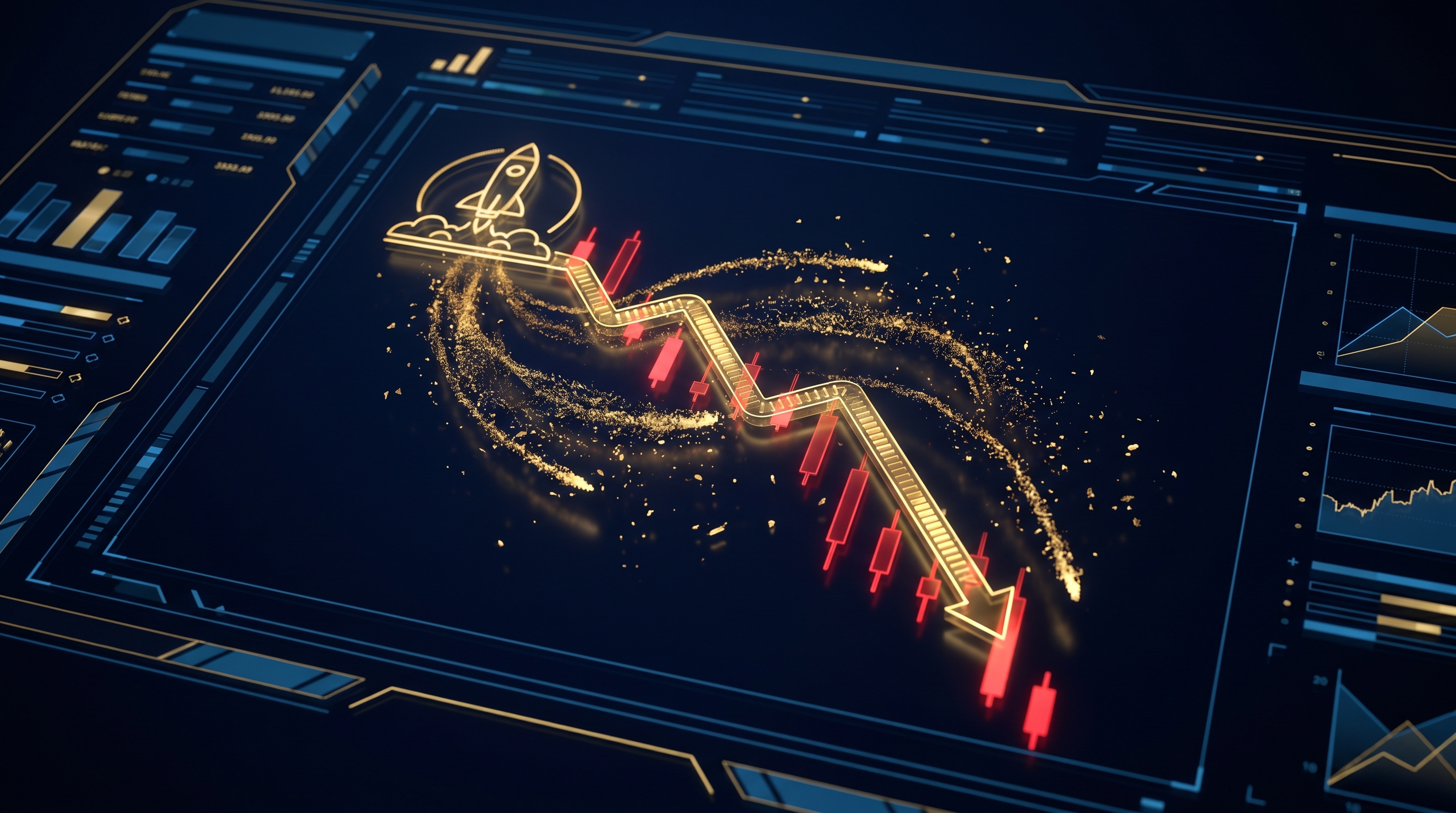
On June 12, 2026, SpaceX listed on Nasdaq at 2.1T market cap, and made Elon Musk the first trillionaire in human history. The whole market was asking: how long can this frenzy last?
Ten days later, on June 22, the market gave a partial answer.
That day SPCX plunged 16.43% to close at 400B. Total cap slid back toward 135 IPO price, the day-one $160.95 close has been breached.
This is the most dramatic valuation re-rating since the SpaceX IPO.
1. The Double Hit: Crash Plus Bond Issuance in 24 Hours
Lay out the timeline and the 24-hour rhythm becomes obvious:
- Weekend (6/20–21): Oppenheimer issued a 115. A 56% spread — the Street was already split.
- Pre-market 6/22 (US Eastern): SpaceX officially announced its first investment-grade bond issuance, at least 100.8B in cash on hand.
- Mid-session 6/22: SPCX plunged as much as 16% intraday, closed at 27.16B in traded volume, ranking #4 on US volume.
- Same day: NASDAQ Golden Dragon China index fell 1.35% (Xiaomi, Alibaba, JD, Tencent all down). But Philadelphia Semiconductor +2.04%, Micron +7%, memory chips hit record highs.
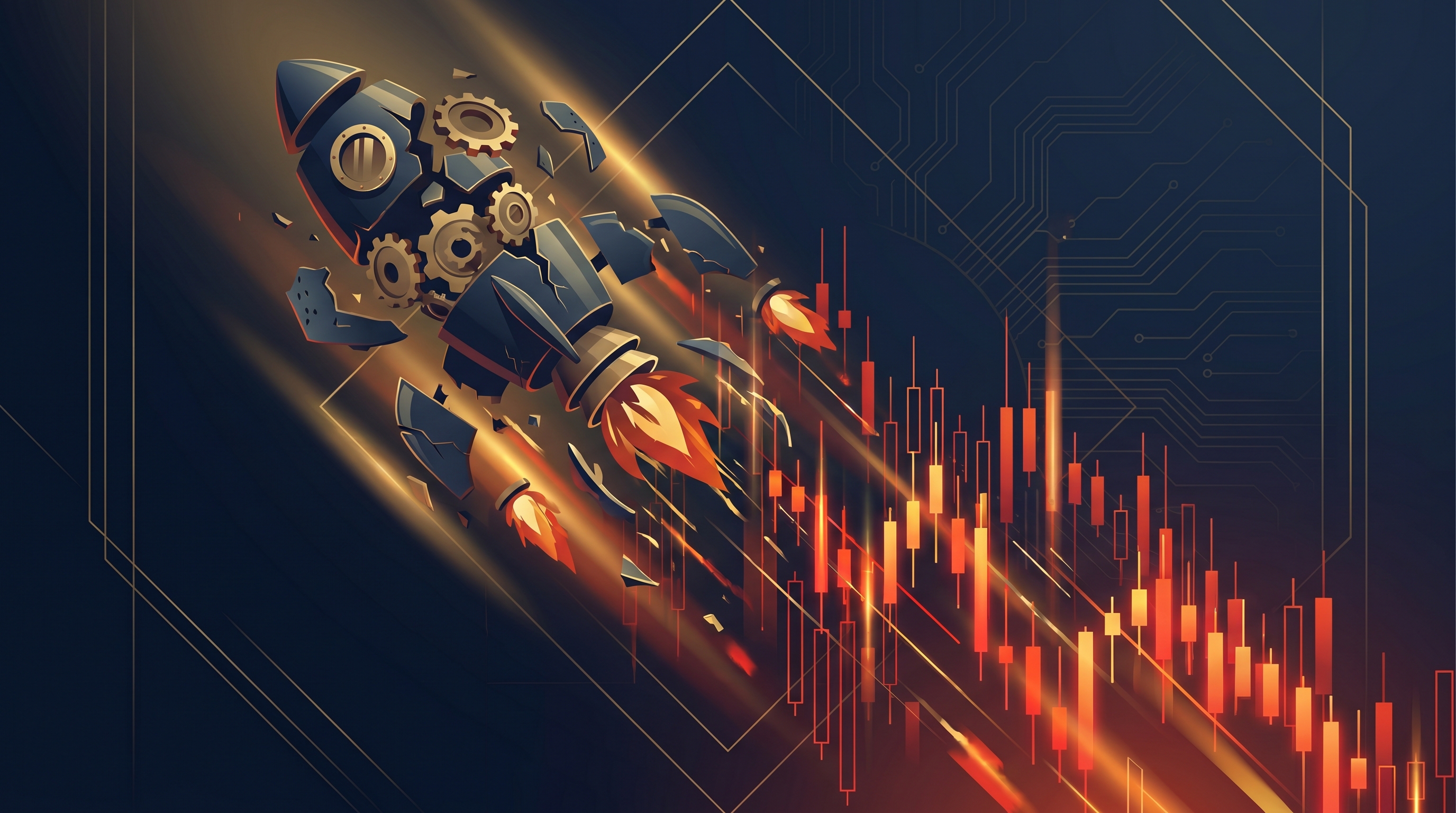
SpaceX was not alone. Google fell 5.08% (DeepMind VP John Jumper jumped to Anthropic), Amazon -4.75%, Microsoft -3.18%, Meta -2.32%. Magnificent 7 dropped 2.33% on the day.
But SpaceX was the heaviest casualty — a $400B single-day wipe equals erasing a McDonaldons market cap from the planet.
2. 20B Bonds — What Is the Logic?
This is the most counter-intuitive signal of 6/22: you sit on 20B in bonds?
The answer hides behind three keywords: cash burn rate, AI expansion, cost of debt.
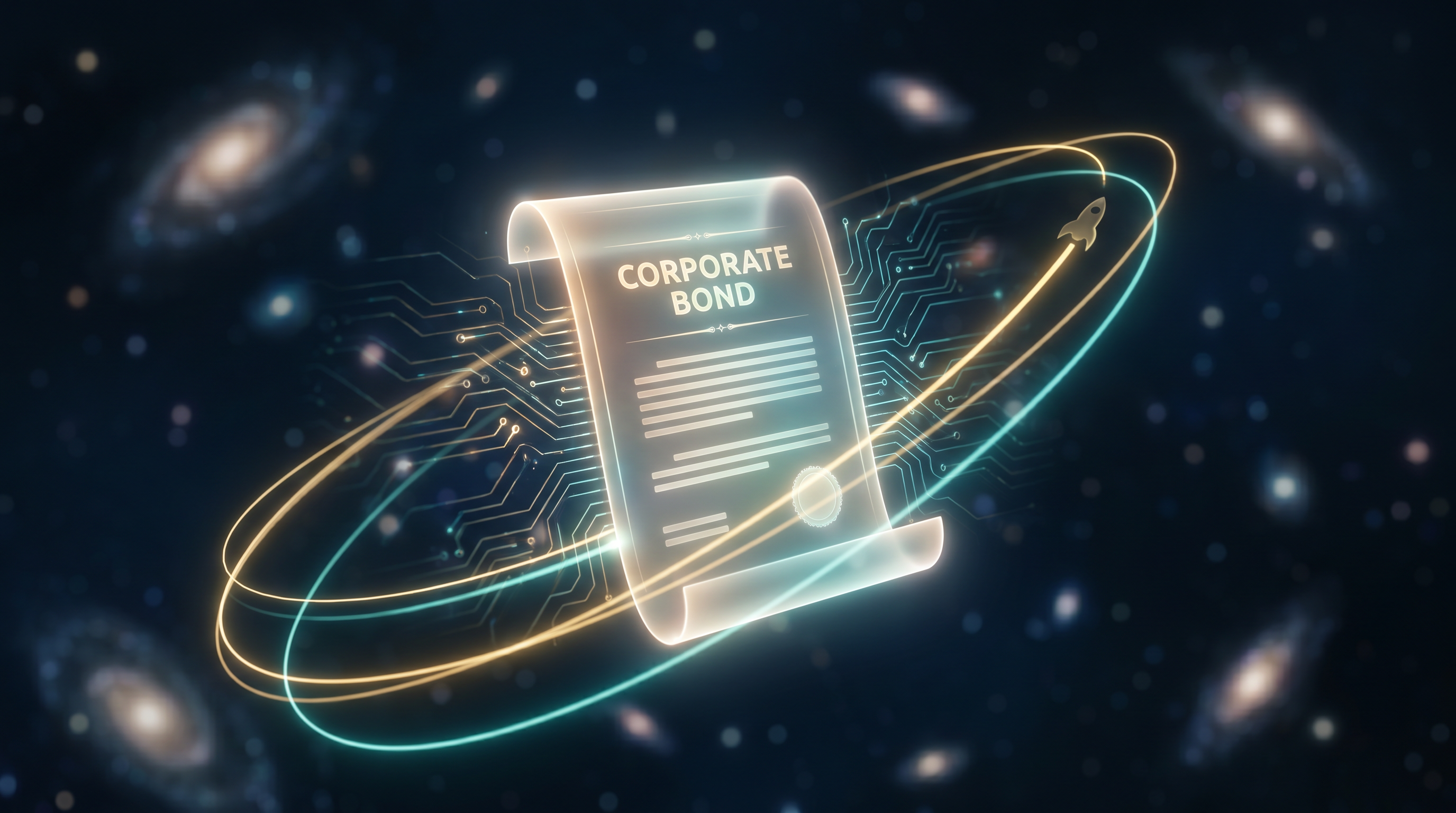
One, the AI business burns faster than people think. In 2025, SpaceXs AI segment generated 6.36B operating loss — for every 2 was burned. 2026 Q1 loss widened to 7.72B. Oppenheimer forecasts SpaceX net debt will grow by $400B+ by 2031 — three times Oracles current total debt.
Two, Oppenheimer is explicit: debt will become SpaceXs primary funding source. Why not equity? Dilution would directly threaten Class B holders (mainly Musk) voting power. With 85.1% voting control concentrated in the founder, any equity raise looks like a control threat. Bonds are the only way to raise money without disturbing governance.
Three, the bond tenor is locked at 5–30 years. Short-end cost is 4–5%, the 30-year can compress to 5.5–6%. With Fed June hold at 98.5% and September cut expectations compressed, this is a “issue while you can” window for SpaceX.
So both are true: the 20B bond. The two are not contradictory — the former is accumulated history, the latter is the pre-funding of future AI cash burn.
3. AI Narrative vs Fundamentals — Who Is Paying?
What this crash really exposes is not the magnitude of the drop, but a structural problem: SpaceX is no longer a “space company”; it is a space company dressed up as AI infrastructure.
Look at the key numbers:
- Valuation: IPO at 3T, against 2025 revenue of $18.7B — peak P/S of about 160x.
- Profitability: 2025 net loss 4.28B, AI segment single-quarter loss $2.47B.
- Cash flow: The only stable profit engine is Starlink — 2025 revenue 4.42B, margin 38.8%.
- xAI merger: Closed Feb 2026; the AI segment burns $12.7B per year on chips and data centers.
In other words, SpaceXs valuation is propped up by Starlinks real cash flow plus xAIs imagination. The former is real, the latter needs 5–10 years to verify.
A concrete data point: on 6/22 itself, Reflection AI signed a deal with SpaceX to use Colossus 2 data center capacity, paying 150M/month is a drop in the bucket against the AI segments $2.47B quarterly loss.
The market is re-running the numbers.
4. Four Takeaways for Taiwan Investors
Retail investors in Taiwan cant directly buy SPCX, but the lessons from this round are worth more than the stock itself:

1. “IPO day-one moonshot” is not the norm; it is survivorship bias. SpaceX has been public for 10 days — first to 154. If you walked in with the “must allocate IPOs” mindset, the past week was painful. The right attitude toward IPOs is “observe, dont chase the highs.”
2. Never go all-in on a 100x P/S asset. Even if you believe the long-term SpaceX narrative, you should not be building positions at 160x P/S. Diversify, DCA, keep cash — that is the only way to survive valuation churn.
3. A bond issuance is an early warning of valuation topping. A company sitting on 20B in bonds to fund AI burn is essentially telling the market: “My cash flow cannot cover my burn, I need bond financing to stay alive.” This signal will keep repeating across “AI narrative stocks” in 2026.
4. Watch the 60-day unlock wave. By December 2026 the float rises to 50%; by June 2027 Musk and core insider holdings unlock. The selling pressure then is the biggest systematic risk post-IPO. That window is the real stress test for SPCX.
The SpaceX crash is not the end of the world, but it is a mirror reflecting what an AI narrative stock really looks like in 2026: story props up the multiple, cash flow props up the conviction, debt props up the time.
When any one of these three legs starts to tremble, the story gets re-priced.
For Taiwan investors, the real lesson of this round is not how much SPCX fell, but: whether you are willing, at the most seductive valuation, to admit you do not fully understand it.
This article is for educational and informational purposes only and does not constitute investment advice. Investing involves risk; please make decisions based on your own risk tolerance.
Comments