60% of Taiwanese Have Stock Accounts, Only 10% Make Money: The Truth About Stocks in 36 Minutes
You open your phone and see your stock account is down NT$300,000. Your hand trembles and you cannot bring yourself to tell your family. How many people in Taiwan live this scene every day? According to TWSE statistics, more than 12 million brokerage accounts have been opened in Taiwan—about 60% of Taiwanese adults have entered the market. But TWSE’s long-running investor gain/loss survey reveals a brutal fact: the proportion of retail investors who achieve stable long-term profits is below 10%.
60% enter; fewer than 10% make money. Where did the remaining 90% go? They exited with losses, are stuck waiting for recovery, or repeatedly lose money in the market and refuse to leave. Why do these 90% lose? Not because they don’t try, not because they are not smart, but because they are hijacked from the very beginning by a fundamental misconception.
Retail Investors’ First Death Trap: Treating Speculation as Investing
Do you know how long the average Taiwanese retail investor holds a stock? TWSE data shows that retail turnover ratios are well above those of foreign investors and institutions, with many retail investors holding a stock for no more than three months—many actively trading at the weekly or daily short-term level. But the same people, when losing money, tell themselves “I am a long-term investor, I will wait for it to come back.”
When the market rises, they are short-term speculators; when it falls, they become long-term investors. This self-deception in mindset is retail investors’ first death trap, and it has been cultivated by Taiwan’s entire financial media environment. Turn on a financial TV show and every day you hear which stock will rise today, which theme will explode next week. LINE groups share insider picks. PTT’s stock board is full of people sharing daily percentage gains and losses. The whole environment reinforces short-term trading thinking, yet no one tells you that the win-rate structure of this game is systematically unfavorable to retail investors.
The Second Death Trap: Overconfidence Under Information Asymmetry
Behavioral finance research shows that ordinary investors attribute gains to their own stock-picking ability when the market rises, and blame bad luck when they lose. This bias is especially severe among Taiwanese retail investors, because Taiwan’s stock market has had a long bull run since 2016. People who entered during this period made money on almost anything they bought.
In the 2020–2021 rally, the Taiwan Weighted Index went from 8,000 to 18,000, nearly doubling. Most retail investors who entered during this period had profit experience, so they started believing in their own stock-picking ability, increased positions, borrowed money to enter, and concentrated in a single sector. Then 2022 came. The Taiwan market fell from 18,000 back to 12,000, a drop of over 30%. The overconfidence built during the bull market was mercilessly shattered that year. TWSE data shows that 2022 retail aggregate losses were staggering—many people gave back virtually all their 2020–2021 gains, and some were left net negative.
First Iron Rule: The Compounding Erosion of Trading Costs
Many people think the cost of buying and selling stocks is just the 0.1425% commission plus the 0.3% securities transaction tax on the sell side—less than 1%, no big deal. But have you calculated how much this adds up to over a year if you trade frequently?
Suppose you have NT1M costs about NT70,200 in pure trading costs, which is 7% of principal. The Taiwan Weighted Index’s long-term annualized return including dividends is around 8% to 10%. Frequent trading’s annual cost alone has eaten up most of that long-term return.
Second Iron Rule: Retail Investors Make the Least in Bulls and Lose the Most in Bears
Taiwan stocks trended upward over the long run from 2004 to 2024, but why can’t retail investors capture that return? Because in every correction—2008, 2015, 2018, 2020, 2022—retail investors cut their losses and exited. Each correction was a 20% to 30% drop, retail investors saw a 20% paper loss and cut positions, then the market rebounded and they chased back in at the high. Repeatedly “selling low and buying high,” retail investors’ actual returns lagged the broader index by a wide margin over time.
Third Iron Rule: Retail Investors’ Mindset Is Shaped by the Dominant Money
The “disposition effect” in behavioral finance shows that people tend to sell winners too early and hold losers too long. This bias is especially obvious in Taiwan because the financial media daily reinforces the trading logic of “take 20% profit and run” and “hold losers a bit longer.” Dominant capital (foreign, big players, institutions) knows your reaction patterns, so every time you “take profit and run, hold losers longer,” you are the liquidity they have designed into the system.
Three Account Scenarios Showing the Real Gap
Scenario 1 (35-year-old office worker, NT15,000 monthly contribution, frequent active stock picking): Over 5 years, trading costs alone could eat NT400,000 loss plus NT600,000, more than two years of salary.
Scenario 2 (Same conditions, dollar-cost averaging into 0050): 5-year trading costs under NT160,000 versus scenario 1. Taiwan’s Weighted Index with dividends has a long-term annualized return of 8% to 10%. In a normal market, the 5-year wealth gap could exceed NT1M. In the extreme 2022 scenario, 0050’s maximum drawdown was about 20% to 25%, still creating paper losses but recovering far faster than individual stocks.
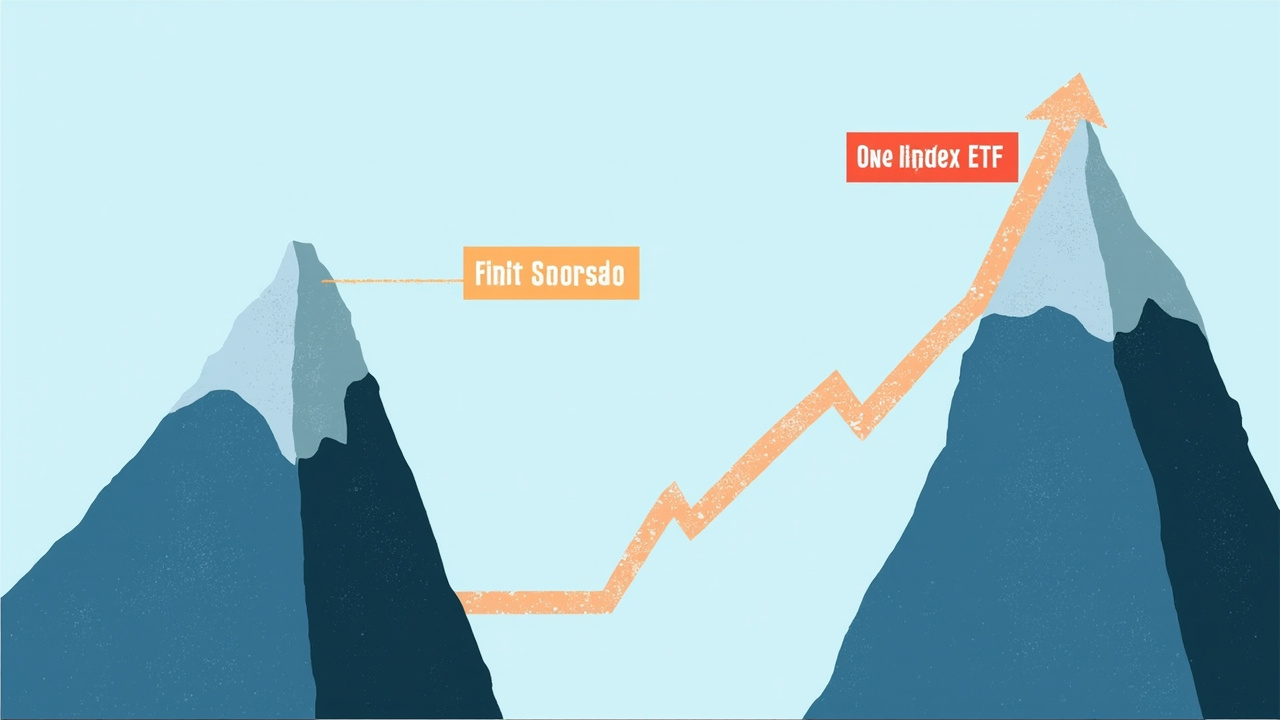
Scenario 3 (20-year long-term gap): Frequent-trading retail investors, net of costs and stock-picking losses, earn about 0% to -3% per year. Over 20 years, principal plus contributions barely break even or even lose. Dollar-cost averaging into an index ETF at 7% to 8% per year, with NT8.5M to NT$9M after 20 years. The gap is not about who is smarter; it is about the difference in tools and methods.
Treating Stocks as Ownership vs. as Chips
The standard definition of stock investing is buying shares issued by a listed company, becoming a part-owner of that company, with rights to the company’s earnings distribution and residual asset claims. In plain language: when you buy a stock, you are one of the small owners of that company. When the company profits, you share the dividend; when it loses, you share the loss. But 90% of Taiwanese retail investors don’t think “I want to be a shareholder of this company” when they buy. They think “will this stock go up tomorrow?”
People who see themselves as owners read financial statements, look at the industry outlook, look at P/B and dividend yield, and buy at reasonable valuations for long-term holding. People who treat stocks as chips only look at candlestick charts, news flow, and big-player activity, in today and out tomorrow. The former is investing, the latter is speculating. Both are valid, but you must be clear which one you are doing, and use the matching method and mindset, or you will lose in ways you cannot explain.

Four Questions to Ask Yourself Before Every Order
Question 1: Why am I buying this stock? Is it because you understand the fundamentals and future outlook, or because someone recommended it, because it has been going up, or because you fear missing out? If the answer is the latter, stop.
Question 2: Can I accept a 30% or even 50% drop on this stock? This is not about whether you are willing; it is about whether you have the financial and psychological capacity to bear that result. If the answer is “no,” your position is too large or this stock is too risky.
Question 3: What is my investment time frame? How long do I plan to hold it? If you say long-term, but you check your account every month and want to rotate stocks every week, you simply do not have the long-term mindset.
Question 4: If it does not rise for three years, would I still keep holding? If the answer is “no,” then you need to think about your stop-loss and take-profit points now, not wait until you are losing and then say “I am a long-term investor.”
Four Complete Action Steps
Step 1: Spend 30 minutes calculating your full financial situation. Open your banking app and add up all your account balances. List your monthly fixed expenses (rent, food, transportation, insurance, children’s costs). 3 to 6 months of necessary expenses is your emergency reserve standard; park it in a high-liquidity account (savings or money market fund). What remains is the idle capital that can go into the stock market.
Step 2: Open a Taiwan-domestic brokerage account with reasonable commissions and dollar-cost averaging ETF services. You can start from as little as NT$1,000 per month. Many account-opening processes can now be done fully online without visiting a branch.
Step 3: Set up your dollar-cost averaging plan and your stop-loss/take-profit rules. The core of DCA is staggered buying to average the entry cost down, reducing the risk of a single all-in at the high. But DCA is not a panacea. If the underlying you are buying is in a long-term downtrend, DCA will just mean you buy more of a losing position. On stop-loss: cut individual stocks when they hit your maximum acceptable loss (15% to 20%), no matter how unwilling you are. On take-profit: when you hit your target return, exit in batches. Do not be greedy waiting for more.

Step 4: Conduct a full account review and rebalance every six months. Look at each holding’s actual return and whether the original reason for buying still holds. If you set up a 60/40 stock-to-other-assets allocation, check every six months whether market moves have pushed it significantly off target and adjust back—this action automatically reduces your stock exposure at market highs and adds at lows, following the low-buy-high-sell logic systematically.
Two Taiwan-Specific High-Level Traps
First: Dividend income tax and National Health Insurance (NHI) supplemental premium. Taiwan’s dividend income has two calculation methods: consolidated (with an 8.5% credit, capped at NT20,000 also trigger a 2.11% NHI supplemental premium. These two tax costs meaningfully affect your actual return. Before filing each year, run the numbers in the MOF tax calculator or consult a tax professional.
Second: ETF tracking error and premium/discount. Tracking error is the gap between an ETF’s actual return and its index return; it can come from management fees, trading costs, and timing differences in constituent rebalancing. Premium/discount is the gap between an ETF’s market price and its net asset value per unit, which can deviate significantly during volatile markets. For long-term holders with smaller amounts, the impact is limited. But for large amounts or big trades during extreme volatility, you must check the TWSE and the management company’s public data first.
Emergency Plan for Extreme Market Conditions
If the Taiwan market faces an extreme drop like the 2000 tech bubble, the 2008 global financial crisis, or the 2020 pandemic shock: First, do not panic-sell. Taiwan stocks have recovered from every major crash in history, but recovery can take a long time. If you panic-sell at the bottom, you turn a paper loss into a realized loss, and you will very likely not have the courage to re-enter when the market recovers. The precondition for not panic-selling is that you hold stocks with fundamental support or index ETFs, not names whose fundamentals have already deteriorated.
“Entering before conditions are ripe is not investing; it is buying an education with money, and the tuition is usually far more expensive than you imagine.” This line is worth engraving somewhere before every impulse order.
This article is for financial education only and does not constitute investment advice. Data cited is from public sources including TWSE, SITCA, the Ministry of Finance, and the FSC, and is for reference only. Investors should assess their personal financial situation and risk tolerance, and are advised to consult Taiwan-licensed financial advisors and tax professionals. All investments carry risk, past performance does not represent future returns, and investors may lose some or all of their principal.
Disclaimer: This article is a sharing of investment and financial concepts and a compilation of information, and does not constitute any specific investment, tax, or legal advice. Markets carry risk; invest with caution. Please make independent judgments based on your own risk tolerance and consult professional advisors.
Tags
Taiwan Retail Investors, Stock Investing Truth, Short-Term Speculation, DCA, 0050, Index ETF, Transaction Cost, Investment Discipline, Stop Loss Take Profit, Risk Diversification, Investment Psychology, Taiwan Stocks
Comments