From All-In on AI to Nothing Left: The 5 Endgame Blind Spots of Taiwan Stock Retail Investors
Three months after going all-in on concept stocks, your account is less than half of what it was—this is not someone else’s story. This is the real experience of hundreds of thousands of Taiwanese retail investors last year. Have you ever had that feeling? You clearly thought you read the market right this time. Everyone around you is making money. Yet the moment you enter, it starts to drop. The moment you cut your loss, it starts to rise again.
You are not unlucky. You have fallen into a systemic trap that has been harvesting retail investors for decades. And this trap has been operating from the very first moment you heard “Taiwan stocks hit a new high.”
What we will discuss today is not some stock-picking tip or technical analysis, but the full life cycle of a Taiwan retail investor from entry to wipeout. You will see your own shadow here. You will calculate exactly where your losses went over the past few years. And you will get a long-term decision framework so that the next time you face a hot theme, you no longer make decisions driven by emotion.
Core idea: In an information-asymmetric market, the most expensive thing for retail investors is not the brokerage fee, but the entry timing bought with emotion.
Why You Always Buy at the Top and Sell at the Bottom
Have you ever wondered why, every time the news announces a big rally, you cannot resist entering? And why, when it falls sharply, you are too afraid to buy?
This is not your problem. This is a problem of the human brain. Behavioral research on Taiwanese investors shows that retail investors’ average entry timing tends to come after the price has already risen significantly, and the average exit timing tends to come after it has already fallen. In other words, you buy at the highest emotional cost and sell at the lowest confidence. This cycle repeats over and over, and the account gets eroded bit by bit.
Let me tell the real story of a Taiwanese office worker:
Xiao Ming works at a technology company with a monthly salary of about NT200,000, and bought in batches near a relatively high point in a certain AI concept stock. At first he actually made some money, with NT40,000 of paper gains, and felt great.
Then in early 2024 the price started to oscillate, and he told himself to “hold on.” The more it fell, the less willing he was to sell. When the paper loss expanded to NT80,000, he started losing sleep. Work suffered. Eventually, near the bottom he took the loss and sold out, losing nearly NT$100,000. After he sold, the price slowly climbed back up.
This is not an isolated case. This is the standard life cycle of a Taiwan retail investor. Do you see your own shadow?
Underlying Rule 1: Behavioral Cost, Not Trading Fees, Is the Real Core of Retail Losses
Most retail investors think they lose money because they picked the wrong stock, because of bad luck, because they lack insider tips—but these are surface reasons. Data from the Taiwan Stock Exchange (TWSE) shows that the overall long-term return of Taiwan retail investors is systematically below the average return of the broader market index.
This is not because retail investors do not try hard, but because their trading behavior itself continuously creates drag.
Many people think Taiwan stocks’ trading costs are low. After discounts, brokerage fees may seem like only a few thousandths. But have you calculated the full cost? Taiwan’s securities transaction tax is 0.3% (3‰) on the sell side, which is fixed and applies whether you make money or lose. Add in the round-trip brokerage fees, and the total cost of a complete trade is roughly between 4‰ and 6‰ (depending on your discount).
It does not sound like much, but think about it: if you trade 20 times a year, with NT$200,000 of principal each time, how much do trading costs eat?
On NT1,000, and 20 round trips a year is NT$20,000 in pure trading costs. That assumes you do not lose money on top of it.
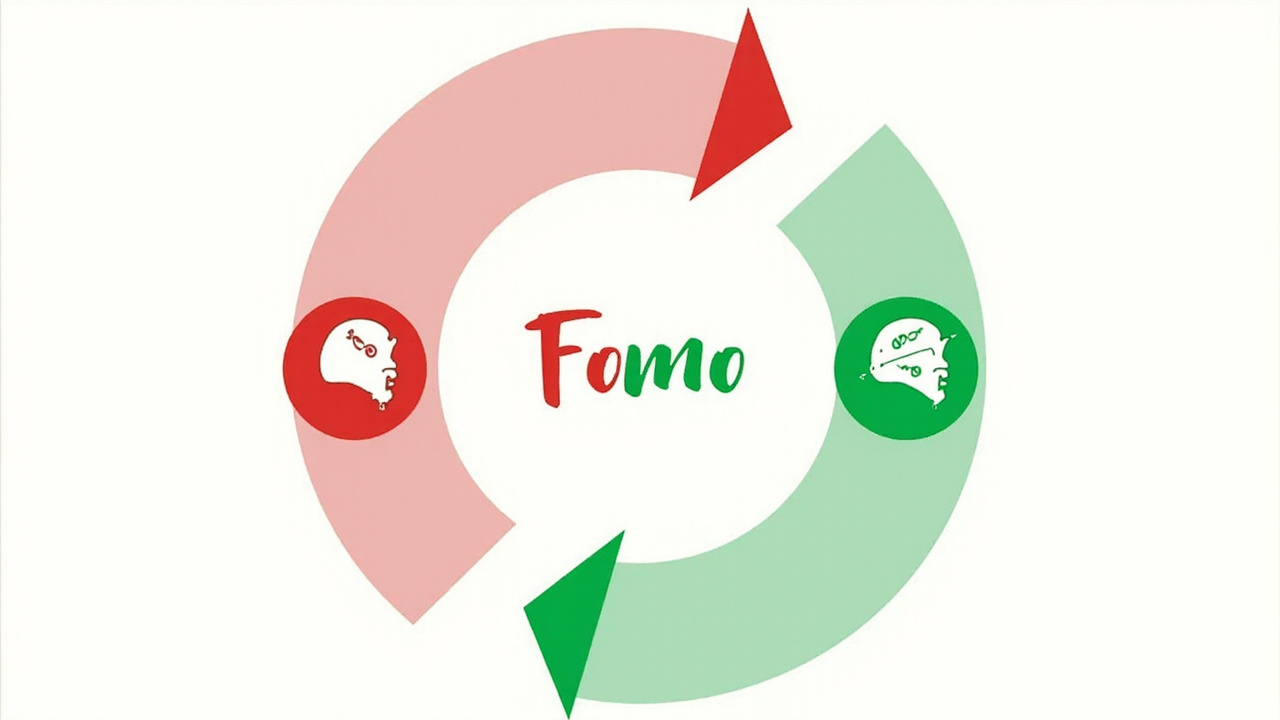
If you add in the entry/exit timing bias (the losses from the FOMO-panic neural loop), academic research in Taiwan estimates that the annualized return loss caused by behavioral bias may far exceed pure brokerage fees. That is the real core of retail investor losses.
For Taiwan retail investors, the most expensive thing is not the brokerage fee, but the entry timing bought with emotion.
Underlying Rule 2: A Century-Old Taiwan Rule—Even Professional Managers Struggle to Beat the Index
Since the 1990s, the annualized long-term return of the Taiwan Weighted Stock Price Index, with dividends reinvested, has, according to TWSE and related research historical data, provided a substantial compounding base for the overall market. But that figure is the overall market average, not what every retail investor actually gets.
Why? Because the overall market return is captured by passive holders, while retail investors’ active trading systematically erodes that return. According to SITCA, after fees, a large proportion of Taiwan’s actively managed mutual funds do not outperform the broader market index over the long term.
This phenomenon is documented across global markets, and Taiwan is no exception. If even professional fund managers find it hard to consistently beat the index over the long term, what chance do retail investors have of beating it by watching financial shows, chasing hot themes, and trading short-term?
More importantly, Taiwan has a local feature: the foreign institutional holding ratio in Taiwan stocks has long been substantial, and foreign capital flows have a significant impact on the Taiwan index. The information-processing capability, research resources, and trading technology gap between foreign institutions and individual retail investors is not small; it is structural asymmetry.
You are trading against foreign capital in the same market. The starting line is simply not the same. This is not to say you cannot make money in Taiwan stocks, but you must use the right approach to find your place in this asymmetric environment.

Underlying Rule 3: Financial Institutions’ Revenue Logic Is What Drives You to Chase and Sell
Have you ever wondered why every time a market theme emerges, financial media, online communities, even your bank relationship manager all broadcast related investment messages at the same time? This is not a coincidence. This is a complete commercial ecosystem at work:
- Brokers’ revenue comes from trading commissions—the higher the volume, the higher the revenue. So broker platforms are designed to make it easier for you to trade, and trade more frequently, not to make you trade less
- Financial media’s revenue comes from traffic and advertising—hot topics drive traffic, so media coverage amplifies market themes and emotional swings, rather than telling you to stay calm
- Bank relationship managers’ performance reviews are usually tied to the financial products they sell—so the products they recommend come with their own sales pressure
What is the result of this ecosystem? Most of the financial messages you receive every day push you to trade more, chase hot themes, and buy more products, instead of helping you build a long-term, stable wealth system.
That is the root of Taiwan retail investors’ systematic losses. It is not that you are not smart enough. The information you receive every day pushes you in the wrong direction from the start.

3 Account-Checking Scenarios: The Real Cost Gap Between Retail and the Correct Approach
Scenario 1: The real cost of chasing rallies and selling on dips for retail investors
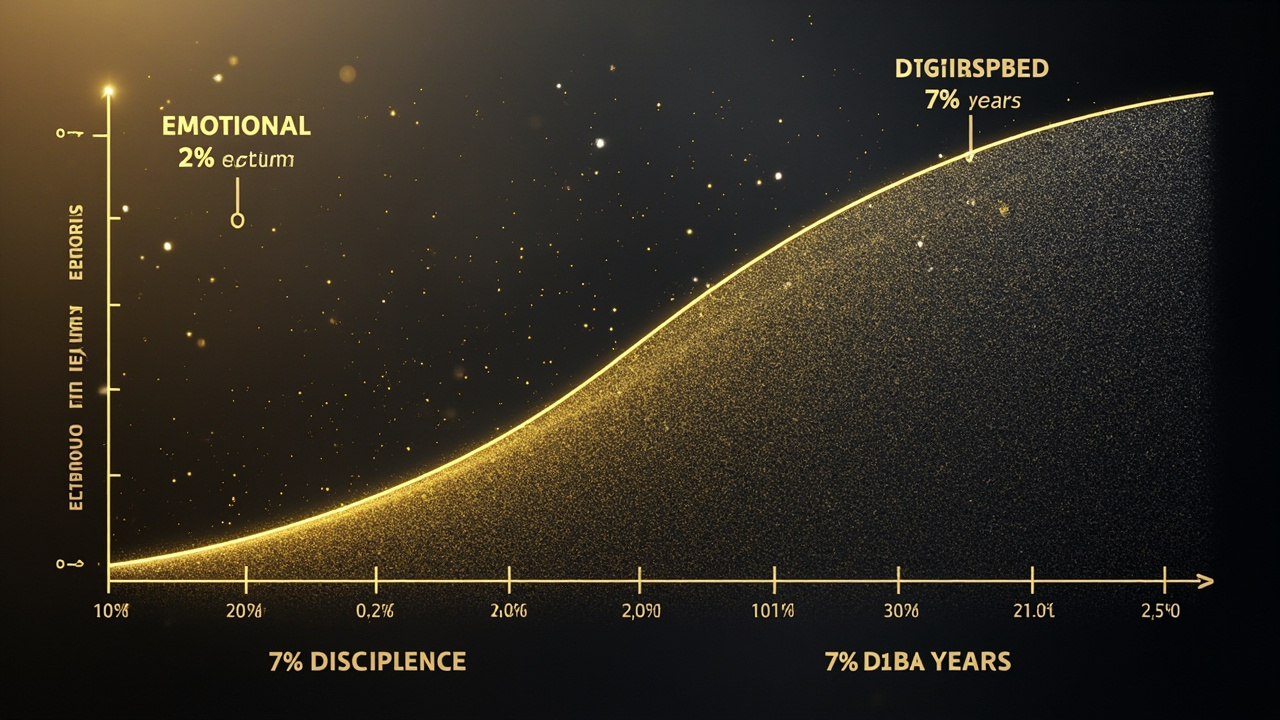
Suppose you are an office worker with a monthly salary of NT120,000 a year to put into Taiwan stocks, continuously for 10 years. If you operate by chasing rallies and selling on dips, assume your annualized return is 5 percentage points lower than the broader market due to timing bias and trading costs (this assumption is conservative; the actual gap may be larger). What will your account look like after 10 years?
If the broader market returns 7% per year and you actually get 2%, on NT1.3M. It looks like you made money, but consider inflation—some years’ inflation has exceeded 3%, so your real purchasing power is actually shrinking.
Scenario 2: The result of the correct approach
With the same NT$120,000 per year, using Taiwan-domiciled index funds or ETFs with dollar-cost averaging, not chasing hot themes and not frequently entering and exiting, assuming long-term annualized returns close to Taiwan’s overall market historical average after fees, the compounding effect over 10 years will show a very significant gap from chasing and selling.
But the precondition must be stated: realizing this result requires you to not stop contributing and not panic out when the market crashes. For most people, this is a huge mental challenge, and not everyone can do it.
Scenario 3: The worst case in extreme black-swan scenarios
Taiwan’s stock market has had several major extreme events you must know:
- The 2000 tech bubble burst: Taiwan stocks dropped over 60% from the high, taking nearly two years from peak to trough, and even longer to revisit the prior high
- The 2008 global financial crisis: Taiwan stocks fell over 50%. If you went all-in at the end of 2007, it would take many years for your account to return to breakeven
- The 2020 COVID pandemic outbreak: Taiwan stocks fell over 30% in a few short months, but recovered quickly. If you sold in panic during the crash, you missed the rebound
If at these extreme moments you were all-in on AI concept stocks or a single sector, your losses could far exceed the index’s drawdown, because individual stocks fluctuate far more than the index. That is the real risk for retail investors—not the numbers on the screen, but the mental collapse at extreme moments that causes them to sell at the bottom, turning paper losses into permanent losses.
Here is a question for you: when the Taiwan market drops 30%, do you think you can keep contributing without stopping? The answer to this is critical to your strategy going forward.
The Four-Question Decision Method: Force Yourself to Ask These Before Every Investment
- Is my current entry impulse driven by rational analysis or emotional reaction? If you are responding to news headlines, friends saying they are making money, or a drawdown that makes you want to average down, these are emotional reactions, not rational analysis
- If this position loses 50%, how much will my life be affected? If the answer is “I will not be able to sleep” or “my emergency reserve will not be enough,” this money should not go into high-risk investments
- Do I have a clear exit plan, including take-profit and stop-loss conditions? If you are only thinking about entering and have not thought about how to exit, you are running naked
- Do I fully understand the fee structure of this investment? Including entry costs, holding costs, and exit costs. If you cannot answer, go figure it out first
These 4 questions are not a one-time check; they are a standard procedure you must run every time you make an investment decision. Their core logic is to separate emotion from reason, and to separate your circle of competence from your circle of impulse.
4 Veto Rules: Violate Any One and You Absolutely Should Not Touch Active Stock Picking
- Do not put any money into the stock market until you have built at least 3 months of living expenses as an emergency reserve. This applies to everyone without exception. The standard for an emergency reserve is: if you lose your job or face an unexpected event, you can maintain at least 3 months of basic living without touching your investment account
- The money you put into the stock market must be money you will not need for at least 5 years. Historically, Taiwan stocks have sometimes taken years from high to revisit the prior high. If you need this money in 3 years, you simply cannot afford to wait
- You must have a clear exit plan before entering, including the maximum loss you can accept and your take-profit condition. Entering without an exit plan is like skydiving without a parachute
- You cannot allocate more than a set percentage of your total investable assets to any single position. The exact percentage depends on your risk tolerance and investment time horizon, but for most office workers, putting more than half of their investable capital into a single stock or a single sector is beyond reasonable risk tolerance
4 Action Steps You Can Take Today
- Today, open your online banking or brokerage account, list every position you currently hold, calculate your actual gain/loss (including all realized trading P&L and current unrealized P&L), and add up every brokerage fee and transaction tax you have ever paid. Many people have never done this because they are afraid to face the real numbers. But if you do not face them, the problem does not go away—you are simply running from it
- Use Taiwan-domestic tools to build your emergency reserve account. You can use a Taiwan demand savings deposit or a Taiwan money market fund, parking 3–6 months of living expenses there. This money is not invested, not touched, and is only there for emergencies. This is not investing; this is your financial safety net
- If you decide to keep investing in Taiwan stocks, starting today consider gradually shifting the active stock-picking portion into Taiwan-domiciled index ETFs. Set a fixed date and fixed amount each month, and execute regardless of whether the market is up or down. But a special note: dollar-cost averaging is not a magic bullet. It helps reduce entry/exit timing bias, but in a long-term declining market, it will still lose money. You must understand this precondition
- Build an annual portfolio review mechanism. At the end of each year, open your account and do three things: confirm whether your asset allocation still matches your current life stage and risk tolerance, check whether there are unnecessary costs you can cut from your investment fee structure, and confirm whether your emergency reserve is sufficient. This annual review is not about frequent adjustments; it gives you a chance once a year to calmly reassess your financial situation
3 Age-Based Application Boundaries
Fresh graduates just entering the workforce (monthly salary around NT$30,000): The most important thing for you is not stock picking, but first building a 3–6 month emergency reserve, then starting with small-amount dollar-cost averaging to develop the habit. The biggest risk at this stage is not investment losses, but not starting at all, or giving up after one big loss. Your margin for error: if your invested amount loses money, it does not affect your daily life or emergency reserve. That is what you can afford.
Young families with a mortgage or rent pressure: Your strategy core is stability, not chasing maximum return. The one thing you absolutely cannot do is invest your emergency reserve or money you need in the short term, because the moment the market drops, you may be forced to sell at the worst time.
Middle-aged parents with children (10–20 years from retirement): Your investment time horizon is long enough to absorb some market volatility, but you also need to start thinking about portfolio stability, and you cannot pile into high-risk assets like you did when you were young. The biggest trap at this stage is overconfidence in good markets and over-panic in bad markets, leading to severe entry/exit timing bias.
Seniors close to retirement (less than 10 years from retirement): Your portfolio should gradually reduce risk assets, because you do not have enough time to wait for the market to recover from a major drawdown. The most dangerous thing at this stage is holding assets beyond your risk tolerance in pursuit of higher returns.

Final Words for You
When you enter the market at its hottest, you are often carrying the last batch of buyers. When you exit at the market’s coldest, you are often making room for the next batch of buyers. These two sentences together describe the most common loss pattern of Taiwan retail investors, and the habit you most need to break.
In an information-asymmetric market, the most expensive thing for retail investors is not the brokerage fee, but the entry timing bought with emotion. Take this sentence with you today. Put it on your phone’s home screen. Every time you are about to make an investment decision, look at it first and ask yourself: “Am I using rational judgment right now, or am I reacting emotionally?”
This article is for financial education only and does not constitute any form of investment advice or recommendation. All investments involve risk, and past market performance does not guarantee future results. Taiwan stocks and all financial markets carry the risk of principal loss; investors may lose all or part of their invested capital. Before making any investment decision, please assess your personal financial situation, risk tolerance, and investment goals, and consult a Taiwan-licensed financial advisor, investment advisor, or tax professional. This video does not constitute a recommendation of any specific financial product; all financial instruments mentioned are used for educational illustration only.
Disclaimer: This article is a sharing of investment and financial concepts and a compilation of information, and does not constitute any specific investment, tax, or legal advice. Markets carry risk; invest with caution. Please make independent judgments based on your own risk tolerance and consult professional advisors.
Tags
Taiwan Retail Traders, AI Concept Stocks, Chasing Rips Dumping Dips, Transaction Cost, Information Asymmetry, Investment Psychology, Confirmation Bias, Emergency Fund, DCA, Asset Allocation, Retirement Money, Investment Discipline
Comments