
99% of S&P500 Buyers Won’t Save Enough for Retirement: The Real Logic Behind Correct DCA
You faithfully contribute every month, and ten years later your account is half what you expected. This is not a story. It is the daily tragedy happening across Taiwan. Everyone around you says buying the S&P500 is the right move, so you open an account, set up automatic contributions, and put in NT10,000 every month, feeling that you are finally doing the right thing. Then the market drops. You get anxious. It drops more, and you start doubting. When the pain becomes unbearable, you stop contributing — or worse, you redeem. Then the market rebounds, and you watch from the sidelines, half regretting, half relieved that you stopped the bleeding. Sound familiar?
The problem is not that the S&P500 is bad. The problem is that you never understood the underlying logic of dollar-cost averaging itself: why it works, the conditions under which it leaves you short of retirement, and the conditions under which it actually compounds your money. Write down this sentence today, because the entire article revolves around it — the money you put in through DCA is not what you saved; it is what market volatility earned for you. The moment you stop contributing is the moment your real loss begins.
Why 99% of People Use Dollar-Cost Averaging Wrong
The official definition from the Taiwan Securities Investment Trust & Consulting Association (SITCA) is: an investor agrees to purchase fund or ETF beneficiary certificates at fixed intervals and fixed amounts, using staged entries to average down cost and reduce the timing risk of a lump-sum investment. Note four key terms: fixed interval, fixed amount, staged entry, cost averaging.
The most important word among those four is “fixed.” Fixed does not mean contributing when you are in a good mood, contributing when the market rises, and pausing when it falls. Fixed means: regardless of where the market is, you contribute.
But in reality, most people stop contributing when the market crashes hard. By stopping your contributions at the bottom, you are choosing not to buy when the market is cheapest — this is not protecting your money; it is voluntarily giving up the most powerful profit mechanism of DCA.
The principle behind DCA’s ability to lower your average cost lies entirely in this: when the market drops, your fixed amount buys more units, pulling your average cost down. The deeper the market falls, the more units you buy, and the larger your multiplier when the market eventually rebounds.
A Real Number: Pausing for Two Months Costs You an Entire Rally
Take an example starting in January 2020, contributing NT$10,000 every month into an FSC-approved S&P500-tracking ETF. In March 2020, the COVID shock sent the market down more than 30% in just over a month. If you paused your contributions in March and April, you missed two months that happened to be among the cheapest periods for S&P500 unit net asset value in modern history.
In those two months you paused, your colleague who kept contributing used the same NT$20,000 to buy nearly 40% more units than you would have in normal market conditions. From late 2020 the market rebounded and kept climbing into late 2021, turning all of those extra units into profits. You missed those two months, and your retirement account lost an entire move in that cycle — a move that could have let you retire two years earlier.
This is only the cost of a single event. Stretch this behavior pattern across 20 years and compounding amplifies the gap to an astonishing degree.
The 2–4% Behavior Drag on Retail Investors: 20 Years Burns NT$1 Million
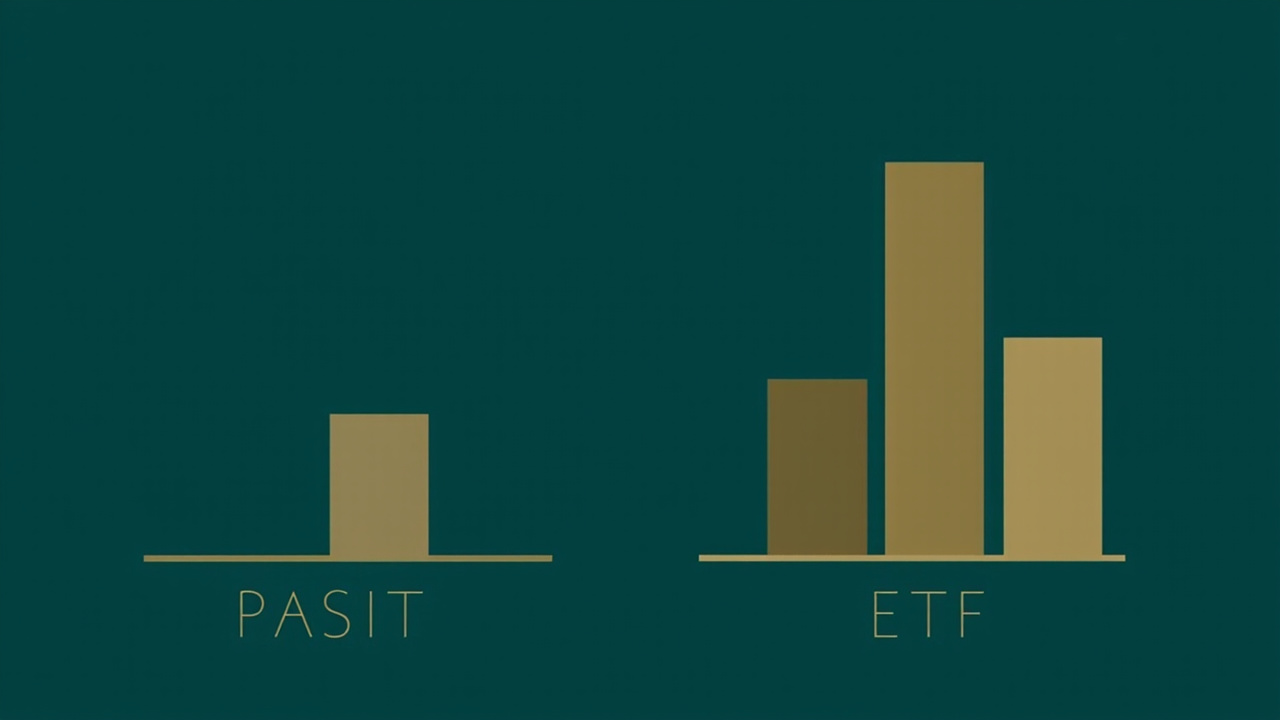
The Taiwan Academy of Banking and Finance has studied Taiwanese retail behavior and found that the most common mistake is stopping contributions when the market falls and re-entering after it rises. This pattern is academically known as “chasing high and selling low,” and the result is that you always buy at the top and refuse to buy at the bottom.
The S&P500 index has delivered a USD-denominated long-term annualized return of roughly 7 to 10 percentage points over the past decades — that is the index itself. But ordinary retail investors, because of mistimed entries and exits, typically realize an annualized return 2 to 4 percentage points lower than the index itself.
That sounds small, but stretch it over 20 years:
- Contribute NT5.9 million**.
- Contribute NT4.8 million**.
- The gap exceeds NT$1 million.
That NT$1 million was not lost to the market. It was lost to your own human nature.
A Three-Step Retirement Plan for Every Age Stage
For DCA to work, you need to know where you are heading. Do these three steps today:
Step 1: Calculate your retirement gap. Open the Ministry of Labor’s Labor Pension section, look up your current Taiwan Labor Pension account balance, then use the Directorate-General of Budget, Accounting and Statistics inflation data to estimate the real purchasing power you will need at retirement and calculate your target gap. Most people have never done this, but it is the baseline for every subsequent action.
Step 2: Reverse-engineer your contribution from the goal. Open your brokerage app, find the DCA calculator, input your retirement target amount, years remaining, and expected annualized return, and back-solve how much you need to contribute each month. If your current contribution is below that number, raise it today. Major Taiwanese investment trust and brokerage platforms (Uni-President, Yuanta, Cathay, Fubon, SinoPac, etc.) all have this tool built in.
Step 3: Write a “do-not-stop-contributing” pledge. After you finish setting up, write one rule and post it where you will see it: “Unless my living expenses face a shortfall, my DCA will never stop.” This framework works for any age and any income level. The numbers differ, but the logic is identical.
For different life stages, the details adjust slightly:
- Students and fresh graduates: Your advantage is time; your disadvantage is small principal. At this stage, the point is not how much you contribute but building the habit of never stopping. Even if you can only contribute NT3,000 a month, building the habit matters more than anything. The power of time compounding is your greatest asset at this age.
- Young working families and salaried professionals: The pressure is mortgage, kids, and living expenses; the amount you can save is limited. First make sure your emergency reserve is sufficient — at least 3 to 6 months of living expenses — kept in a demand deposit or money-market fund. That money should never go into DCA. Beyond the reserve, contribute whatever you can, but always use the three-step plan to calculate your target gap. If it is not enough, find ways to raise income or cut expenses — do not lower the contribution.
- Middle-aged parents: The biggest trap is mixing your children’s education fund with your own retirement fund. Your retirement is yours; your children’s education fund must be planned separately and cannot be carved out of your retirement account. Your children can borrow to study, but you cannot borrow to retire.
- Pre-retirees within 10 years of retirement: The strategy must be adjusted. You are no longer suited to putting 100% of your DCA into equity ETFs. You need to start thinking about asset allocation and gradually shift some of your money toward lower-volatility instruments, to avoid a major drop right before retirement that discounts your pension. This is not stopping contributions; it is adjusting allocation. The two are completely different.
Four Iron Rules: Veto Power, None Can Be Missing
These four rules operate on a “one-veto” basis. If you fail any one of them, your DCA will go wrong.
- Your emergency reserve must be in place first. The amount is 3 to 6 months of fixed expenses, kept somewhere immediately accessible, and never placed inside an ETF. If you start DCA without an emergency reserve, the moment an unexpected event hits you will be forced to redeem at exactly the wrong time — the most common scenario of being forced to sell at the bottom.
- Your contribution amount must be calculated against the retirement gap. It is not whatever others contribute, and it is not a number you set casually when you are in a good mood.
- The product must be FSC-approved and compliant. You cannot buy offshore products through unknown platforms. Compliance is the prerequisite for everything, with no exceptions.
- At least one annual review every year. Open your account, check your accumulated progress, and confirm the product still matches your risk tolerance. As you grow older and approach retirement, your allocation must adjust accordingly.
A Four-Step Action Checklist You Can Do Today
- Calculate your retirement gap today. Open the Ministry of Labor’s Labor Pension section and check your balance. Use DGBAS inflation data to back-solve the real purchasing power at retirement. Calculate the gap.
- Adjust your contribution amount today. Open the DCA calculator in your brokerage app, input the target, the years, and the expected annualized return, and back-solve how much you should contribute each month. If your current contribution is insufficient, raise it today.
- Set your psychological line today. In your phone’s notes app, write down: “When the market drops more than 30%, what I should do is not stop contributing — it is to confirm that my emergency reserve is still sufficient, then keep contributing.” Use written words to lock in rational decisions and fight the human impulse to panic.
- On the last weekend of December this year, do your first annual review. Open the account, check the accumulated amount against the retirement progress chart. If you are behind, find ways to catch up. Do not leave it alone.
Disclaimer: The historical returns and simulated calculations described in this article are for illustration only and do not represent the future performance of any investment product. All investing carries risk; DCA is not a principal-protected or profit-guaranteed method, and actual results may differ due to market volatility, exchange rates, and personal discipline. Please carefully evaluate based on your own risk tolerance and financial situation, and consult a licensed financial professional when necessary.
Tags
DCA, S&P500, Pension Planning, Saving Traps, Cost Averaging Down, Buy High Sell Low, Investment Psychology, Emergency Fund, Small Capital Investing, ETF Investing, Taiwan Labor Pension, Asset Allocation, Long-Term Investing
Comments