
Each month when your salary hits, you open the Fubon or Cathay app, see your US Treasury ETF is down again, your hand starts itching, and you tell yourself “the more it drops, the cheaper it gets. If I don’t buy now, when will I?” Then you actually click buy. Then it keeps dropping. You buy more. It keeps dropping. You start feeling something is off but you can’t put your finger on it.
Hundreds of thousands of people in Taiwan are going through the same thing right now. The problem is not that you picked the wrong security. The problem is you have no idea how deep and how long the security you bought can keep falling before the rate environment turns around—and the drawdown can be several times worse than you imagine.
Behind this is a concept called duration. The vast majority of Taiwan’s finance channels will only tell you that the higher this number, the higher the interest-rate sensitivity, and then leave it at that. What they don’t tell you is that behind this number there are three real traps that will quietly shrink your principal by 20%, 30% or more without you even knowing.
Today I’ll break all three blind spots open for you. After reading you will know:
- The maximum drawdown your current US Treasury ETF could face in an extreme rate scenario
- Under what conditions the “buy the dip” instinct is right, and under what conditions it just traps you deeper
- How to set stop-loss and take-profit boundaries appropriate for your life stage, so you don’t end up using your retirement savings to bet against rates
The core takeaway: until you understand duration, every time you “buy the dip” you are simply buying more interest-rate risk at a lower price.
The Real Battlefield of 2022: The Hiking Cycle Cut Long-Duration Bonds in Half
In 2022, the Federal Reserve launched the most aggressive hiking cycle in 40 years, pushing rates from near zero to 5.25% in just over a year. During that period, Taiwan investors piled into long-duration US Treasury ETFs, including products tracking 20+ year US Treasuries.
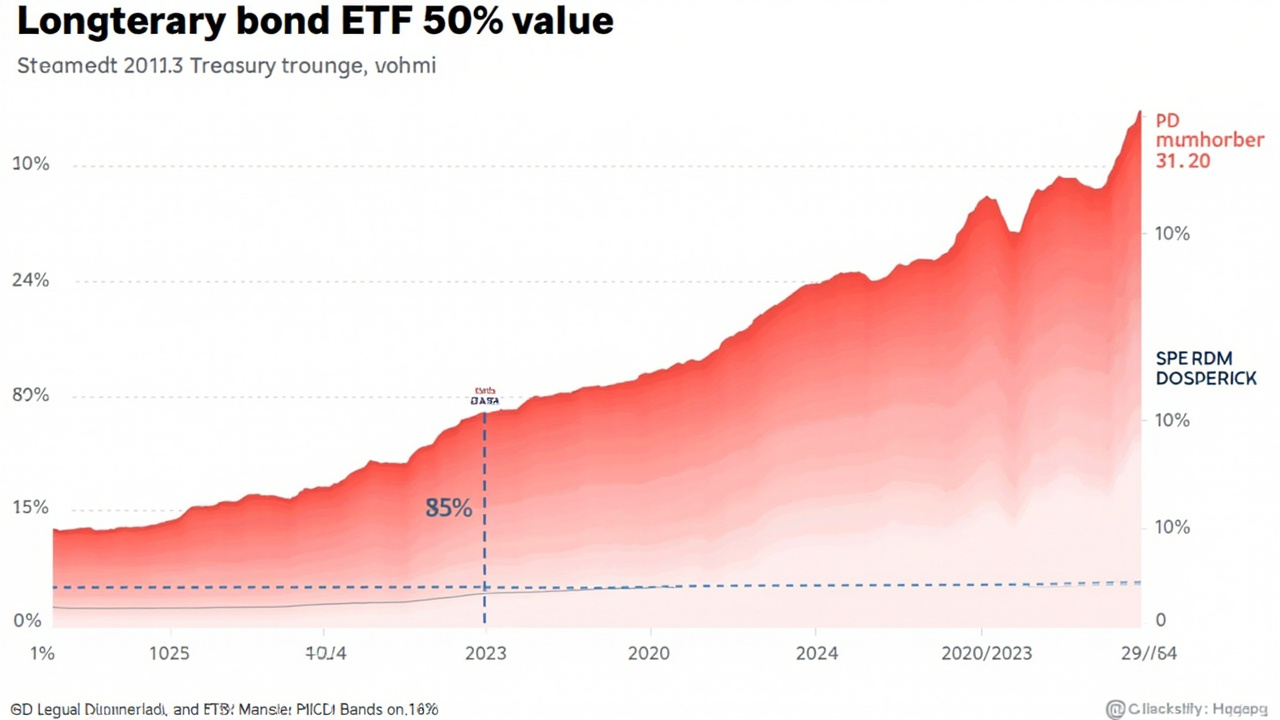
What was the result? Take the iShares 20+ Year Treasury Bond ETF (TLT), the benchmark product. From its 2020 high to its 2023 low, it fell more than 50%. Taiwan-listed long-duration US Treasury ETFs had somewhat smaller drawdowns thanks to TWD FX buffering, but plenty of investors still took principal losses above 30%.
Many people aren’t unaware that bonds carry risk. What they don’t realize is that long-duration bonds can fall as hard as stocks, and in some scenarios even harder to endure. That’s because there is no rebound momentum from an economic recovery driving them back up. Their recovery depends entirely on one thing: when rates cut.
You thought you were buying a steady bond. What you actually bought was a highly leveraged bet on rates.
Blind Spot 1: The Math of Duration Sets Your Maximum Drawdown
The standard definition of duration is “the weighted-average maturity of a bond’s cash flows, expressed in years.” It also represents: for every 1 percentage point move in interest rates, approximately how much the bond price moves in the opposite direction in %.
This is the number disclosed in the prospectus approved by the investment trust. It’s not invented by any blogger.
The problem is that most people see this number, just nod “oh, that’s high,” and keep buying. They never multiply this number by the actual interest-rate move they could face.
The long-duration US Treasury ETF you are buying right now has a duration of roughly 15 to 20 years. What does that mean? It means if the US 10-year Treasury yield rises by 1 percentage point, your ETF market value drops by roughly 15–20%.
That sounds okay. What if rates rise 2 percentage points? That’s a 30% to 40% principal loss.
From 2022 to 2023, the US 10-year Treasury yield rose from below 1.5% to nearly 5%, a full 3.5 percentage points. Multiply that number by a duration of 17 and you get roughly the theoretical drawdown of long-duration US Treasury ETFs during that period.
This is not meant to scare you. This is math.
So now do you understand? Every time you see your US Treasury ETF down 3% and think it’s cheap, if rates still have room to rise, that 3% is just the opening act. The premise of “buy the dip” is: you are sure the top in rates is in, or you have a long enough time horizon to wait for it to come back. Do you have either of these?
Blind Spot 2: Yield ≠ Total Return, Monthly Distributions Can Be Your Own Principal
This is the trap most likely to catch intermediate investors, and they still think they know what they’re doing. Plenty of people with one or two years of investing experience already know the concept of duration, know to watch the yield curve, but they make one mistake: they mix yield and total return together, then think they are making money.
Taiwan-listed US Treasury ETFs pay distributions every month. Some products show annualized yields of 5%, 6% or even higher. This number is very attractive, especially for DCA investors—seeing a payment land in the account every month feels reassuring.
But have you ever calculated whether the distribution you receive each month is positive or negative relative to your market value loss?
According to data from SITCA, during the 2022–2023 hiking cycle for Taiwan long-duration US Treasury ETFs, even after adding back the distributions, the cumulative loss on some products still exceeded 20%. In other words, the few hundred dollars you receive each month in distributions are nowhere near enough to offset the decline in market value.
The bigger issue: many Taiwan US Treasury ETFs use a monthly distribution design, and the source of the distribution is not always pure interest income. It may also include return of principal or distribution of capital gains. If your ETF is still paying out while market value keeps falling, you need to check where that distribution is actually coming from. The FSC requires asset management companies to disclose the source in the prospectus. All of this is available on the Market Observation Post System.
True total return equals market value change plus distributions. Both are required. Looking only at distributions and not at market value is like withdrawing money from your savings account every month to spend, then thinking you are making money.
Here is a framework you can use over the long term: when evaluating any distributing ETF, first calculate its total return over the past 1 year and 3 years. Not the yield—the total return. If the total return is negative, that distribution is not your profit. It is just your own money handed back to you in a different form, while your principal is still shrinking.
Blind Spot 3: TWD FX and Hedging Cost—The Hidden Fee Specific to Taiwan Investors
This blind spot is the easiest for experienced investors to overlook, and almost no one in Taiwan explains it clearly. Plenty of investors with 3+ years of experience already know how to read duration, how to calculate total return, and know to wait for rate cuts. But they overlook one thing—
Taiwan-listed US Treasury ETFs, compared to buying products like TLT directly in the US, have one fundamental difference: TWD/USD exchange rate risk, and the hedging cost on some products.
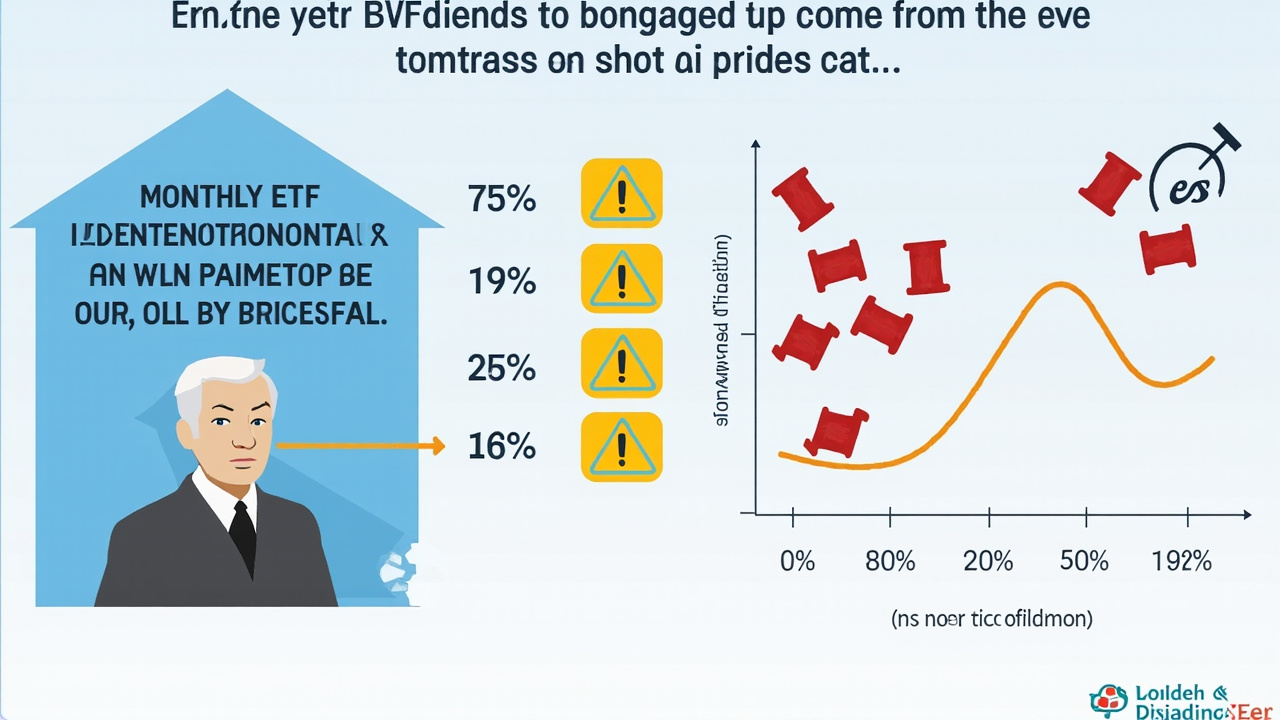
Some Taiwan-listed US Treasury ETFs hedge FX, others do not. On hedged products, your return is not affected by TWD appreciation, but you pay a hedging cost. This cost can run as high as 3% to 4% per year when the US–Taiwan rate differential widens.
That means the yield on your US Treasury might be 4.5%, but after the hedging cost the interest you actually keep might be only 1% to 2%.
On unhedged products, your return is affected by TWD exchange rates. When the dollar strengthens and the TWD weakens, your return is amplified; but if Taiwan’s central bank intervenes in the FX market, or the dollar weakens, your US Treasury return can be eaten in a big chunk by TWD appreciation.
In 2022, TWD weakness did help some US Treasury investors buffer part of their losses, but that FX buffer is not permanent, and you cannot build your investment thesis on an uncertain FX trajectory.
According to public information from Taiwan’s FSC, Taiwan-listed bond ETFs vary widely in whether they hedge FX, and investors must read the FX risk and hedging strategy disclosures in the prospectus before buying.
The core of this blind spot: you think you are making a rate call, but you are actually making a currency bet at the same time, and most people have no idea what they are betting on.

Four Iron Rules: Are You Cut Out for “Buy the Dip”?
Until you understand duration, every time you “buy the dip” you are simply buying more interest-rate risk at a lower price. This framework sets the baseline for Taiwan investors at different life stages. If you cannot meet any one of these, you are not suited to adding to long-duration US Treasury ETFs via buy-the-dip:
- Investment horizon of at least 5 years: this is what it takes to hold long-duration US Treasury ETFs with a duration over 10 years. For investors over 55 with a retirement plan within 3 years, the duration risk of long-duration US Treasuries can directly threaten your retirement safety. In that case, what you need is not buy-the-dip but shortening duration and reducing rate sensitivity.
- Calculate the maximum drawdown you can tolerate: before buying, look up your chosen ETF’s duration and figure out the worst-case drawdown in an extreme rate-hike scenario. If that number exceeds your psychological limit, you cannot buy.
- Emergency reserve must be fully independent: it needs to cover at least 6 months of your living expenses. US Treasury ETFs often drop hardest exactly when you need cash the most. If you don’t have an independent reserve, you will be forced to sell at the bottom.
- Check three things: the duration of your ETF, whether it hedges FX and the hedging cost, and the disclosed distribution source. All of this is on the Market Observation Post System and the asset management company websites. If you haven’t even reviewed this basic information, you should not be buying the dip.
Four-Step Action Plan: You Can Do This Today
- Open the Market Observation Post System (mops.twse.com.tw), search the ticker of the US Treasury ETF you currently hold or want to buy, find the latest prospectus, flip to the “duration” or “modified duration” field, write that number down, and next to it write “if yields rise 1 percentage point, my ETF roughly drops X%” and “if yields rise 2 percentage points, what then?”. You can finish this calculation in 5 minutes.
- Open your brokerage app, check your US Treasury ETF position, calculate the gap between your average cost and the current market value, add the total distributions you have received, and work out your true total return (not the paper gain/loss alone, but total return including distributions). If total return is negative, the question is not whether to keep adding, but whether your holding thesis is still valid.
- Set a position cap based on your life stage: for young investors under 35, the share of long-duration US Treasury ETFs in deployable capital should not exceed 30%; for the 45–55 middle-aged cohort, keep it within 20%; for pre-retirees over 55, be very cautious with products whose duration exceeds 10 years. Prefer shorter-duration intermediate-term bond ETFs.
- Set written stop-loss and take-profit triggers: for example, “if total return including distributions exceeds -20%, I will reassess whether to keep holding”; “if the Fed clearly enters a cutting cycle and yields drop by more than 1 percentage point, I will consider phasing out profits.” This trigger does not need to be perfect, but you need a written plan. Don’t operate on feel.
Extreme Scenario Backup Plan
If a more aggressive hiking scenario than 2022 emerges in the future, or a US fiscal crisis drives Treasury yields to spike sharply, long-duration US Treasury ETF market value could drop more than 30% in a short time. What should you do in that case?
- Do not panic-sell (unless your emergency reserve is depleted or your financial situation genuinely cannot hold). Panic-selling is the fastest way to turn paper losses into real losses.
- Stop adding until you see a clear signal of a Fed policy shift (not market speculation, but the Fed’s public statement on its policy stance).
- Reassess your position share: if your long-duration US Treasury ETF share has dropped below your originally set cap, you don’t need to rush to top it back up. Wait until the market direction is clear before deciding.
- For pre-retirees, the extreme-scenario backup plan is: if your US Treasury ETF total return including distributions has exceeded -20% and your retirement is within 3 years, you need to seriously consider rotating part of the position into shorter-duration products to lower the interest-rate risk going forward.
This is not about giving up and selling at a loss. It is about reassessing whether your risk tolerance and your retirement plan still match.

A Final Decision Framework for You
For any bond ETF investment decision, you can use these 4 steps:
- Look up duration, calculate the worst-case drawdown you could face
- Confirm your investment horizon is long enough to wait for the market to break even
- Confirm your emergency reserve is fully independent from this position
- Set written stop-loss and take-profit conditions, write them before you buy, don’t operate on feel
These 4 steps require no finance background. Anyone can do them.
Duration is not just a number. It is your real risk exposure in the interest-rate market. Once you understand it, you really know what you are buying.
This article is for financial education purposes only and does not constitute any investment advice, nor any recommendation or solicitation for any financial product. All investing carries risk. Principal can be lost. Past performance does not guarantee future results. All investment decisions should be carefully evaluated based on your own financial situation, risk tolerance, and investment objectives. It is advisable to consult Taiwan-licensed financial advisors and tax professionals. Market data and official sources cited in this article are subject to the latest announcements by the relevant official institutions. Investors should review the latest information themselves.
Disclaimer: This article shares investment and financial concepts and compiled information. It does not constitute any specific investment advice, tax advice, or legal opinion. Markets carry risk; invest with caution. Please make independent judgments based on your own risk tolerance and consult professional advisors.
Tags
US Treasury ETF, Duration, Bond Risk, Hike Cycle, Currency Hedging, Distribution Trap, Asset Allocation, Pension, Taiwan Stock Investing, Investment Psychology, Premium Discount, Tracking Error
Comments