Search

Current filter #0050 All Clear filters

20 articles found

Wealth Awakening

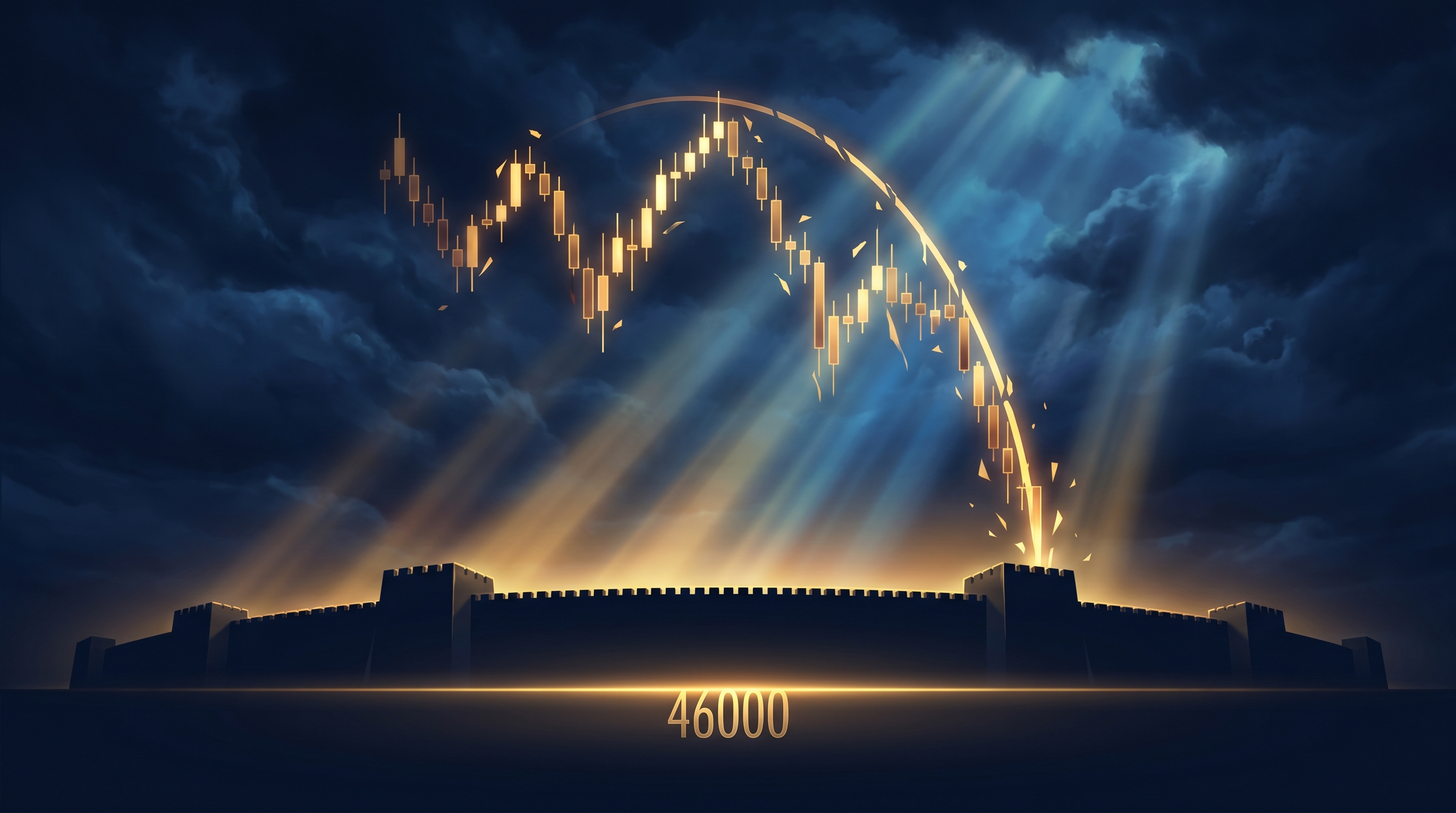
TSMC Drops NT$50 as Taiwan Stocks Open 800+ Points Lower, Defending the 46000 Line

TAIEX hit an all-time high of 46,552 in early June and closed yesterday at 47,100. Overnight U.S. tech rolled over, TSMC's ADR dropped 6.69%, the Philadelphia Semiconductor Index fell 7.87%, and Micron dropped 13.18%. Today (the 24th), Taiwan stocks gapped down 800+ points at the open, with the index slammed back to the doorstep of 46,000. This isn't a routine pullback — it's the moment someone hit mute at the AI bull party.

9 min
Wealth Awakening

How Leveraged 2x ETFs Blew 30% of My Money: Daily Reset Trap Exposed

Retail favorite 2x long and -1x inverse ETFs are not wealth-doubling shortcuts — they are math traps engineered by Wall Street. The daily reset mechanism quietly erodes your principal on every swing, evaporating 30% of your net value in six flat months. This piece uses a simple math model to unmask volatility decay, contrasts the rich man's low-cost debt leverage with the poor man's derivative trap, and shows why real wealth only compounds through time and quality assets.

11 min
Wealth Awakening

From NT$10K to NT$20M: The Minimalist Dollar-Cost Averaging Formula That Beats 90% of Retail Investors

Why is the NT$10K you save every month slowly dying in your bank account? This article tears apart the minimalist DCA formula that turns a small monthly contribution into NT$20M: index ETFs, the discipline of compounding, the smile curve, an emergency cushion, and pay-yourself-first. We expose the high-dividend trap, the panic-selling curse, and the greed of bull markets — so you can build a retirement system that does not depend on luck.

14 min
Wealth Awakening

The Lazy Investor's Compounding Toolkit: A Cash-Flow Allocation That Beats 80% of Investors While Lying Flat

Open your phone, see someone else's investment statement showing a 30% annual return, tap in for three seconds, then quietly close it. Open the brokerage app, see ETFs, dollar-cost averaging, digital accounts—an avalanche of jargon—swipe a few times and decide it's all too much, then close it. You're not lazy—you're overwhelmed. If your savings are under NT$1.5 million, today we're cutting the fluff and skipping the theory: we'll tell you exactly where the money should sit first, what to buy first, and why. You don't have to be brilliant. You only have to do one thing: treat yourself like a smart ordinary person.

8 min
Wealth Awakening

Trump Pauses the Iran Strike: The Real Decoder Behind TSMC and Oil Prices

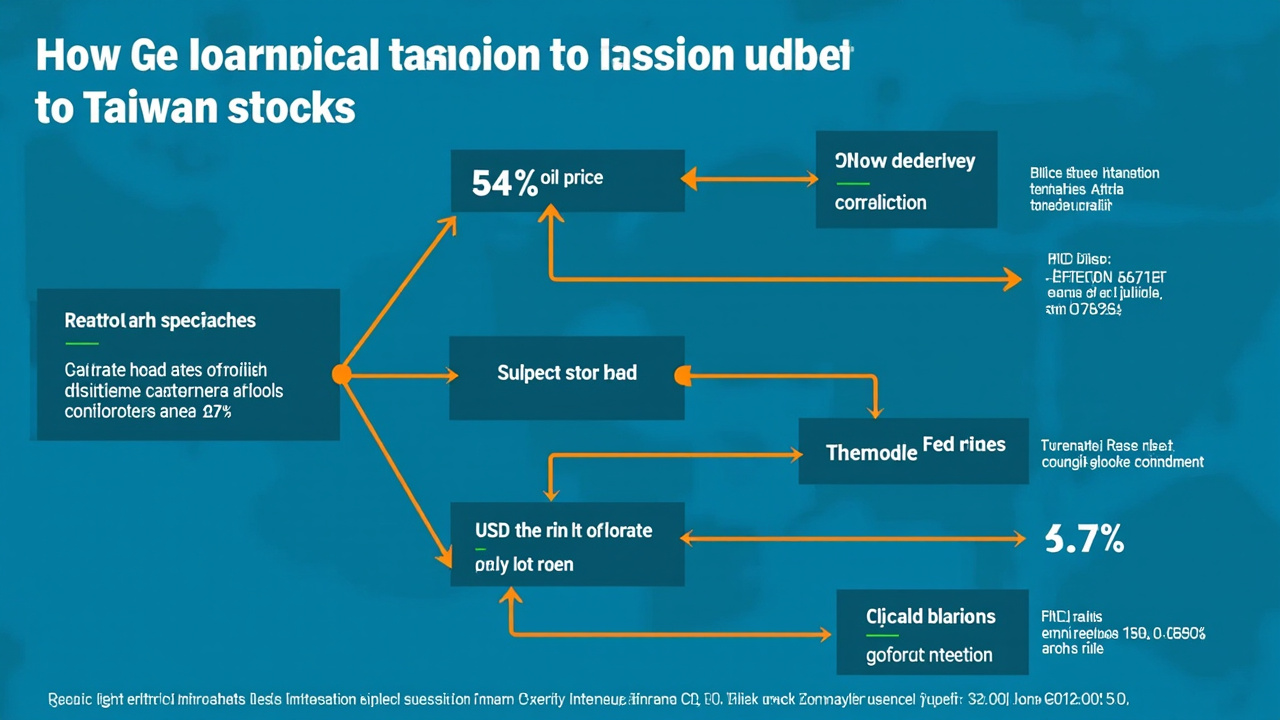
Trump paused the Iran strike before April 6, and behind it was not pacifism but political calculus: oil prices cannot rise, inflation cannot slip out of control again. Taiwanese retail investors see the news and their first reaction is "geopolitical risk is down, so I can enter the market"—but that logic treats short-term emotion as long-term positioning. This article breaks down the real two-layer transmission path from geopolitics to Taiwan stocks (oil to inflation to Fed to USD to foreign capital), three sets of account comparisons including a 10-year DCA gap of NT$300K to NT$400K and a 2008 crisis case study, three questions for reading foreign-capital positioning using TWSE's daily institutional data, a four-step action plan (foreign-investor flow check, resume DCA, after-tax return calculation, rebalancing trigger), and an emergency plan for extreme scenarios including a Strait of Hormuz blockade. Pain point: news-driven trading systematically buys high and sells low. Promise: build a decision framework anchored in positioning data, not headlines.

12 min
Wealth Awakening

60% of Taiwanese Have Stock Accounts, Only 10% Make Money: The Truth About Stocks in 36 Minutes

Taiwan has over 12 million brokerage accounts—roughly 60% of all adults have entered the market—yet fewer than 10% achieve stable long-term profits. The shared fate of the other 90% is not bad luck or wrong picks, but treating speculation as investing and using an investor's mindset to deceive themselves. This article breaks down the structural disadvantage of short-term trading, the overconfidence bias from behavioral finance amplified by Taiwan's 2016–2024 bull run, three underlying iron rules (compounding cost erosion, low-buy-high-sell losses, and the liquidity trap of strong capital), four questions to ask before every order, a complete four-step action plan, three real account scenarios (5-year and 20-year horizons), two Taiwan-specific high-level traps (dividend tax plus NHI supplemental premium, and ETF tracking error plus premium/discount), and an emergency plan for extreme market conditions. Pain point: even in Taiwan's strongest bull run, most retail investors left with less than they started. Promise: a tested framework that turns stock decisions into a discipline, not a feeling.

11 min
Wealth Awakening

9 Iron Rules Stock Pros Use to Make Money: Rule 1 Slaps You, Buying the Dip Is Amateur Behavior

You think buying the dip is smart, but 90% of retail investors either get trapped after buying or panic-sell on a tiny rebound. This article reveals the 9 iron rules stock pros actually use, starting with Rule 1 "entering the market without a system is giving your money away", breaks down 5 Taiwan-specific blind spots retail investors most often fall into, and gives you a decision framework that doesn't rely on luck or brands. Per SITCA statistics, Taiwan retail investors' average holding period is far shorter than institutional investors, and many rush to exit at the first sign of breaking even. The 2022 Taiwan Weighted Index correction fell from 18,000+ to around 12,600 — a drop of over 30%. Buying after only a 10% drop means enduring another 20% before losses start shrinking. Includes 5 core controls for retail investors (entry timing, capital allocation, stop-loss discipline, news response speed, emotional control), real arithmetic comparing 100% lump-sum vs 5-equal-lot entry, and 3 questions to ask before clicking buy. Get a framework built on discipline and survival, not stimulation.
7 min
Wealth Awakening

Working Hard Yet Poor for Life? What the Poor Lack Isn't Income — It's the Money Logic the Rich Never Tell You

Earning NT$40K–60K and saving hard, your assets barely grow in ten years, while your colleague next door has already bought a second home. This isn't fate — it's a money logic no one ever taught you. Taiwan's median employee earns about NT$40,000 a month, yet Taipei's price-to-income ratio has hit 16x and the six special municipalities average over 9x — meaning a median earner needs 9+ years of saving every penny to afford an ordinary home, while salary grows nowhere near as fast as assets. This article breaks down 3 underlying rules: why labor income and capital income are two completely different games; how retail trading frequency eats into returns (a perfect 10-year DCA into 0050 grows NT$600,000 into NT$1.2–1.4 million, but most retail investors capture less than half); and the structural conflict of interest between Taiwan's financial institutions and your wallet. You'll also get 3 Taiwan-specific blind spots including why high-dividend ETFs aren't time deposits, why starting 10 years earlier beats saving twice as much, and 3 things you can do today.

9 min
Wealth Awakening

Save NT$3,000/Month Into 0050, Roll Into NT$5.5 Million in 30 Years: The Most Reliable Path for Ordinary People

Park your money in a bank savings account and your real purchasing power erodes every year — Taiwan savings rates of 0.1% to 0.2% can't keep up with DGBAS's 2% to 3% 5-year inflation average, which hit 3.05% in 2022. NT$3,000 per month parked in a 1.5% time deposit for 30 years yields about NT$1.3 million nominally, but in real purchasing power equals only NT$700,000 of today's money. This article uses three real calculations to break down 0050's compounding path: at a conservative 7% annualized return, NT$3,000 monthly DCA grows to NT$3.6 million; at 8%, NT$4.3 million; at 9%, approaching NT$5.5 million — but also lays out the brutal truth that 0050 fell nearly 58% in 2008 and 30% in 2020. You'll get 4 iron thresholds every beginner must clear before opening an account, including the 30%/50% drawdown emotional rule that must be written down before emotions kick in, plus 4 actionable steps and advanced reminders about broker fee differences that compound into a non-trivial cost over 30 years.

8 min
Wealth Awakening

Waiting for a Taiwan Stock Crash Before Buying? Retail Timing's Fatal Trap — Missing the Rally Is Worse Than Losing Money

You waited three whole years, Taiwan stocks never dropped, you never got in — and your wealth shrank anyway. Not because you lost money, but because you never earned any. The hidden cost of missing a rally is far worse than paper losses — but you won't see it on a balance sheet. Taiwan's TAIEX has delivered roughly 7% to 8% annualized total return over the past 20 years, and waiting through a 50% run-up before entering means missing opportunity cost that can never be recovered. Three side-by-side calculations in this article show a NT$1 million to NT$1.4 million wealth gap after 20 years between a disciplined DCA investor and a wait-for-crash investor whose effective invested months are only 60% as many. You'll get 3 underlying rules explaining why timing the market is structurally doomed, 4 veto-proof iron rules including a 3 to 5 year minimum time horizon on invested money, and 4 actionable steps to set up automatic DCA on a mid-month trading day and close the app.

15 min
Wealth Awakening

The Jewish Secret to Generational Wealth: Pay Yourself First — The Order 90% of Taiwanese Get Wrong

Every payday your salary arrives and you immediately pay rent, the credit card, and premiums — only then do you think about saving — and by month's end you stare at an empty account. You've earned millions in your lifetime, so why can't you accumulate wealth? It's not that you don't work hard or live frugally; the problem is that the wealth-distribution order passed down by Jewish tradition for thousands of years is the exact opposite of what you were taught. A side-by-side calculation reveals the gap: an NT$45,000 earner saving NT$3,000 a month from what's left for 35 years ends with about NT$1.3 million in a savings account, while the same earner who force-transfers 15% into a Taiwan 50 index fund on payday ends with NT$11–12 million over the same period — an 8 to 9x gap from a single sequencing change. This article breaks down 3 underlying rules including why time is the only free weapon ordinary people have, the 3-bucket principle for distributing every paycheck, 4 veto-proof iron rules such as never borrowing on credit card revolving interest at 15%, and a 4-step action plan to put it into practice starting today.

15 min
Wealth Awakening

Inflation Era: Holding Cash Means Getting Poorer — 3 Strategies the Wealthy Use to Beat Inflation

You deposit your salary into the bank every month, the number never shrinks, yet your money is quietly disappearing — not stolen, but evaporated bit by bit by inflation. Taiwan's inflation rate hit 3.15% in 2022 while savings accounts paid just 0.2%, meaning inflation eats your money 3 to 10 times faster than you can save it. In real terms, NT$1 million in savings only retains the purchasing power of NT$975,000 after a year of 2.5% inflation, and a young worker saving NT$5,000 a month for 10 years sees NT$140,000 of those savings silently stolen by rising prices. This article breaks down 3 underlying strategies the wealthy use to fight inflation: the dual-bucket structure that splits life-saving money from money-at-work money, dollar-cost averaging into the 0050 ETF, and Taiwan Labor Pension voluntary contributions of 6% for tax savings that can save roughly NT$3,500 a year in tax for a 12% bracket earner. You'll also get 4 non-negotiable iron rules, 4 concrete action steps you can take today, and an emergency protocol to follow when markets crash 30% or more.

15 min
Wealth Awakening

Monthly Distribution Isn't a Retirement Plan — The Tax Strategy Taiwan's Rich Use

Taiwan's high-dividend ETF AUM broke NT$1 trillion by end of 2023 — 00878 alone exceeded NT$500 billion — but the truly wealthy in Taiwan don't retire on monthly distributions. They use a fully legal but largely unknown tax-optimization and compounding architecture that doubles wealth growth. Using the post-2018 tax-reform dividend choice (combined reporting with the 8.5% credit capped at NT$80,000 vs 28% separate taxation) and Taiwan's current capital-gains-tax exemption for individuals, this article breaks down why distributions aren't a free lunch, why a 20-year gap of NT$1.5–2 million exists between high-dividend ETFs and total-market ETFs (such as 0050), four iron rules, and four action steps. You will see exactly how a 20%-bracket taxpayer with NT$200,000 in dividends pays about 11.5% effective tax under combined reporting — and how the same person choosing a 0050-style accumulation product can keep compounding uninterrupted. The article also shows how to dynamically switch between combined and separate reporting each May based on that year's income bracket, turning tax planning into a 5-minute annual optimization rather than a once-and-done decision. Closing with four contingency moves for 2008 or 2020-style systemic crashes, this is the tax and compounding playbook most Taiwanese retail investors were never taught — and most bank RMs won't bring up because their KPI is sales, not your after-tax return.

15 min
Wealth Awakening

Earning NT$70K but Still Broke: Taiwan's Fake Middle-Class Trap

You earn NT$70,000 a month in Taiwan, outpacing 60% of earners, yet your bank balance hovers at four digits. You drive a financed import car, carry a 30-year mortgage, and finance branded goods on installment — a so-called middle-class professional who is, in reality, a debt specialist dressed up as success. This article breaks down the three harvesting rules — installment trap, social-pressure consumption, and pseudo-assets — that quietly drain your wealth, then lays out four iron rules and a four-step turnaround plan. Using real math on a NT$1.5 million import car and a NT$15 million apartment, you will see exactly how monthly cash flow leaks NT$24,000 per month on the car alone while you sleep. You will also learn how to consolidate high-interest revolving credit, build a six-month emergency reserve, and start disciplined ETF dollar-cost averaging with as little as NT$5,000 per month. The piece closes with a stark contrast: those who look rich and those who actually are. By the end you will understand why fake richness is more dangerous than honest poverty and how to start your ten-year real turnaround today.

12 min
Wealth Awakening

Can NT$10,000/Month Really Become NT$20M? 3 ETF DCA Truths

You dutifully stash your savings in time deposits every month, and twenty years later you realize your money hasn't grown — it has only gotten thinner. With Taiwan deposit rates hovering around 1.5–2% and CPI running above 2% (sometimes over 3%), keeping cash in the bank quietly destroys purchasing power year after year. So can NT$10,000/month for 30 years really compound into NT$20 million? The answer is yes — but only if you avoid the fatal mistakes. This article uses Taiwan's published historical data (Taiwan weighted index total-return annualized 7–9% since the 1990s, 0050 8–10% since 2003) to break down three projection sets: time deposit versus 0050 DCA versus active funds over 30 years, including fees, tax, and real purchasing power. You will see that 0050's total expense ratio sits at roughly 0.43–0.46% while active funds charge 1–3% upfront plus 1.5% management fees — a 30-year gap that can reach NT$3 million. The article closes with the dual-track Labor Pension voluntary contribution strategy (6% tax shield plus ETF DCA), four iron rules, four action steps, and tailored positioning for every life stage. By the end you will know whether your money is working for you or quietly working against you, and the three habits that separate the disciplined few from the rest.

16 min