
You collect a monthly distribution, but the money in your account is shrinking — do you ever feel that? Every month you open the account and see the distribution land, feeling some inexplicable peace of mind, telling yourself this is passive income, this is financial freedom.
But have you calculated: after tax, after the opportunity cost of reinvesting distributions, is your wealth actually growing, treading water, or quietly shrinking?
Taiwan now has over 3 million holders of high-dividend ETFs, and the number is still climbing fast. Every finance forum, every YouTube channel, tells you that monthly or quarterly distributions will fund your retirement financial freedom — but let me tell you a fact no one dares to put plainly: Taiwan’s truly wealthy don’t retire on distributions. They use a fully legal but largely unknown tax-optimization and compounding architecture that grows wealth exponentially.
In Taiwan, investors who don’t understand tax planning are legally handing over part of their earnings to others every year.
First Underlying Rule: Distributions Aren’t a Free Lunch
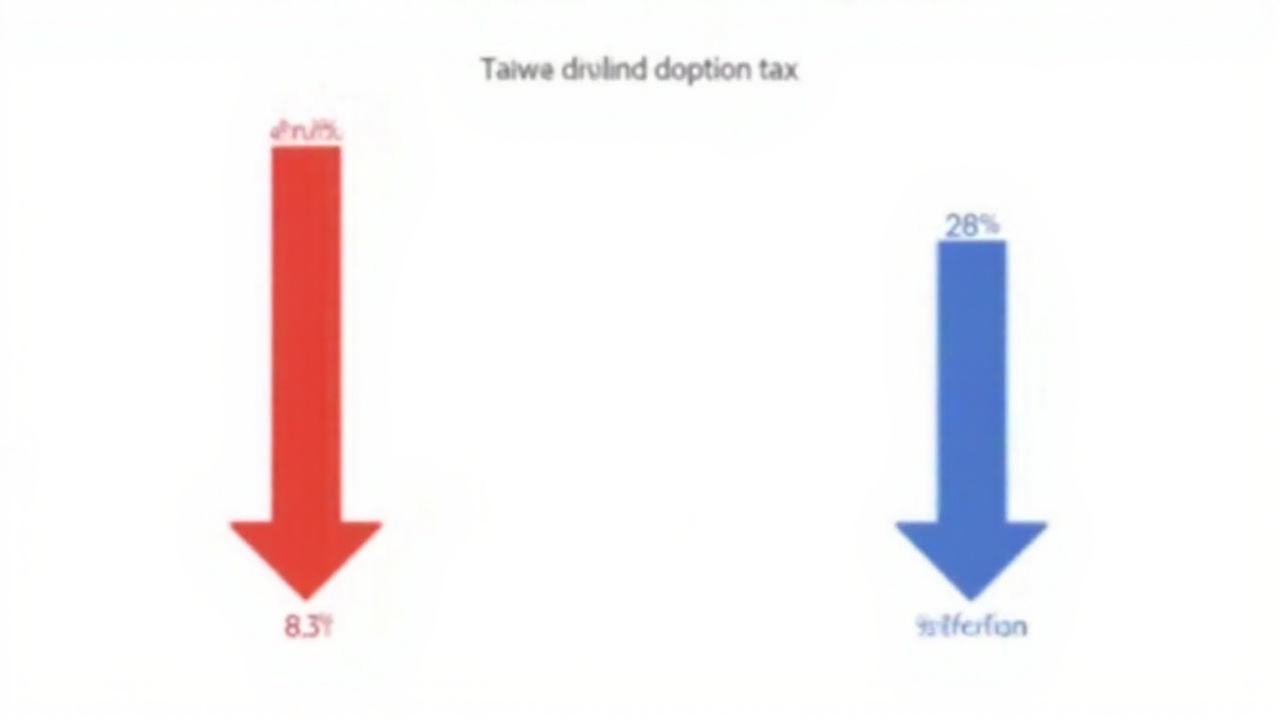
Taiwan’s dividend income tax system, after the 2018 tax reform, gives investors two choices:
- Combined reporting: dividends combined with comprehensive income tax, but eligible for an 8.5% credit, capped at NT$80,000
- Separate taxation: a flat 28% rate
Sounds like a choice, but here’s the problem: if your annual income plus dividends lands you in the 30% or 40% bracket, combined reporting’s effective tax can run 21.5%–31.5%; separate taxation is a flat 28% — either way, you’re paying out a big chunk.
The nature of a distribution is to allocate the fund’s NAV to you in cash form — the day you receive the distribution, the ETF’s NAV falls proportionally. The distribution you receive counts as dividend income and is taxed at your income bracket or the 28% flat rate. In other words, you didn’t get free money — you just converted part of your assets into cash, and you owe tax on that action.
A concrete number: a person earning a salary plus NT1.2 million pushing them to 30%, the same NT43,000 to NT$56,000.
If that money had stayed in the market compounding for 20 years, at Taiwan’s weighted index past-20-year annualized total return of about 8–10%, the gap will leave you speechless.
Second Underlying Rule: The Business Logic of High-Dividend ETFs Doesn’t Match Your Financial Goals
Per SITCA data, the AUM of Taiwan’s high-dividend ETFs broke NT500 billion — that scale generates astronomical management fees annually.
The trust company’s core interest is to keep the scale expanding, to keep more people pouring in, to make the distribution mechanism a marketing tool to attract retail. The more frequent the monthly or quarterly distributions, from an investment-efficiency perspective, may not be optimal for retail — because frequent distributions mean frequent asset realization, frequent tax events, and frequent breaks in the compounding chain.
Taiwan’s weighted index over the past 20 years has produced 8%–10% annualized total return, but realizing this number has one critical prerequisite: distributions must be fully reinvested and there must be no tax friction. Reality is most people don’t reinvest 100% of distributions — they spend some, can’t be bothered to manually buy more, or don’t even know they should reinvest. This execution gap plus the annual tax cost creates a long-term wealth gap far bigger than you’d imagine.
Here’s the cognitive blind spot 90% of finance influencers miss: you think the high-dividend ETF’s distribution yield is your actual return, but the yield is just distribution amount divided by share price — it doesn’t reflect how much tax you paid, doesn’t reflect the efficiency of reinvestment, and doesn’t reflect the NAV change itself.
A high-dividend ETF with 8% yield, at a 20% tax rate, post-tax yield is about 6.9%; at 30%, about 6.2%; at 40%, about 5.5%. And that’s not the end — you also have to look at how much the NAV itself rose or fell over those years. If the NAV didn’t grow or even declined, your real total return is far below the yield you thought you had.
Three Projection Sets: Wrong, Right, and the 20-Year Gap
Scenario 1 (wrong approach): 35-year-old investing NT1 million, distribution yield 6% (NT6,900 in tax, keeps NT37,100 actually goes back), the other NT$16,000 is spent or left idle. This is the average Taiwan retail execution gap — not the ideal, but real human nature. Effective reinvestment rate about 62% of original distribution.
Scenario 2 (right approach): same 35-year-old, same NT$120,000 per year, but choosing a total-market index ETF (such as 0050 or a total-market index fund) letting compounding roll uninterrupted, with no forced distributions or minimal distributions — the benefit is your asset growth comes mainly from NAV appreciation rather than frequent distribution realization, drastically reducing tax events. 0050 from its 2003 launch to end of 2023, 20-year total-return annualized about 9%–10%, with full drawdowns through the 2008 financial crisis and 2020 COVID crash included.
Scenario 3 (20-year long-term gap): same starting point, same NT$120,000/year:
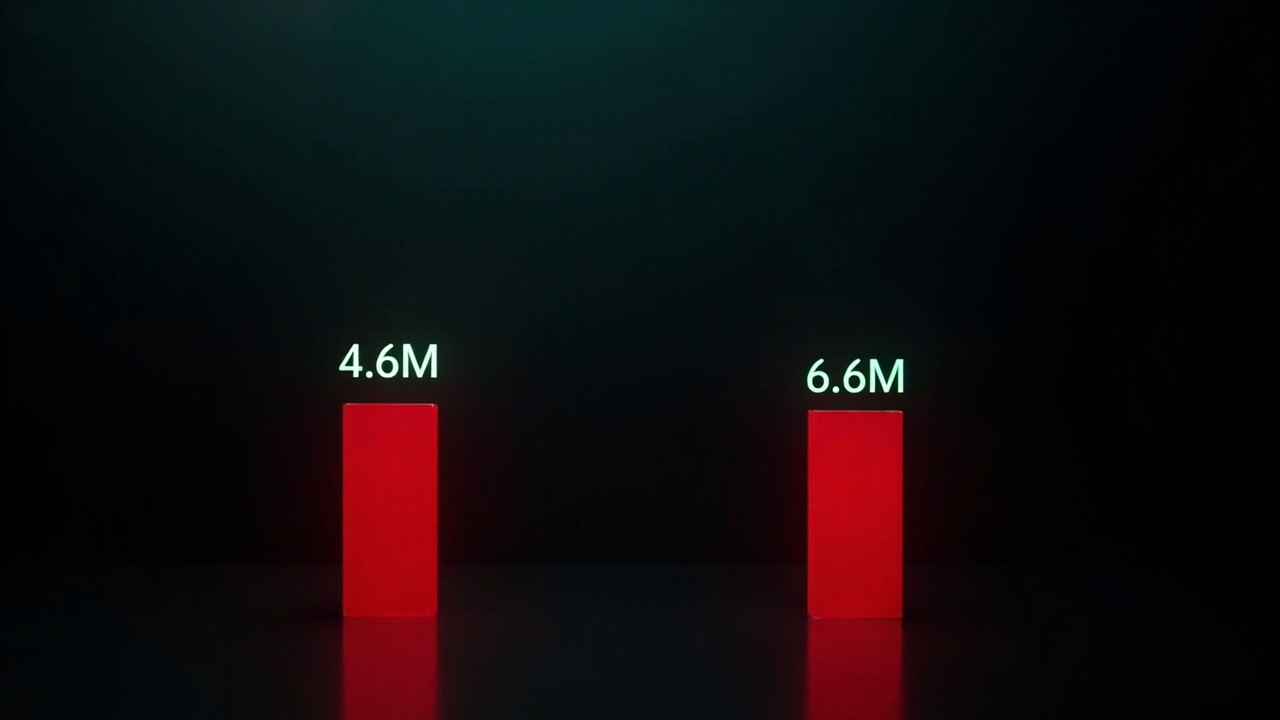
- High-dividend ETF with tax friction and execution gap (effective 6–6.5% annualized), about NT$4.4–4.8 million accumulated after 20 years
- Total-market ETF (8–9% annualized, lower tax friction), about NT$5.9–6.8 million accumulated after 20 years
The gap is roughly NT$1.5–2 million — in Taiwan, that’s three to four years of an ordinary office worker’s salary.
Third Underlying Rule: The Marketing-Harvest Logic of Taiwan’s Financial Institutions
The core pitches Taiwan’s banks and trusts use to push high-dividend ETFs come in two flavors: first, stable cash flow makes you feel money coming in every month, psychologically very safe; second, long-term buy-and-hold, so you feel this is a lazy-person financial tool. Both pitches have merit, but they also obscure a more important issue — your overall tax planning.
Taiwan bank RMs are evaluated on sales performance, not on clients’ long-term wealth growth. This isn’t a critique of individual RMs — it’s the systemic evaluation structure of Taiwan’s financial industry. Per FSC rules, RMs must conduct suitability assessments, but suitability assessment focuses on risk tolerance, not tax-efficiency planning — so when you visit a bank RM, they’ll ask whether you can accept losses, but they almost never proactively help you plan which income bracket your dividends fall into, whether you should choose combined or separate reporting, or how your family’s overall tax plan should be structured. This information asymmetry isn’t a conspiracy — it’s a systemic service gap — you need to fill that gap yourself.
The Two Advanced Tax Architectures Taiwan’s Rich Actually Use
Advanced Architecture 1: Cross-Year Tax Smoothing via the Dividend Choice. After the 2018 tax reform, individuals can each year choose whether to combine dividends into comprehensive income or take 28% separate taxation — and you can re-select every year — it’s not a one-time-for-life decision.
This means you can dynamically adjust based on that year’s income: if this year your income is unusually high because of a mid-year bonus or side income, pushing you into the 30% or even 40% bracket, separate taxation at 28% is actually better; if your income is low and you’re in the 20% bracket or below, combined reporting plus the 8.5% credit may mean only 11.5% or lower effective tax — combined reporting is better.
This dynamic choice is executed each May during filing via the Ministry of Finance’s electronic filing system — zero cost, fully legal, done the same day. But most Taiwanese just pick one option every year and never compare — this laziness can cost you thousands to tens of thousands in extra tax each year.
Advanced Architecture 2: Strategic Use of Taiwan’s Capital-Gains-Tax Exemption. Taiwan currently does not levy income tax on individuals’ securities transaction gains. This means appreciation in NAV while you hold an ETF or stock is, when sold, currently tax-exempt as a capital gain — but distributions you receive are taxable.
Putting these two together, what does it mean? It means in Taiwan, appreciation as NAV growth is more tax-efficient than cash distributions. Taiwan’s rich core logic is to let assets accumulate as NAV growth rather than realize them as distributions — because appreciation is tax-exempt, distributions are taxable. This isn’t a tax loophole — it’s a fully legal strategy within Taiwan’s current tax framework. Of course, this regime may be adjusted in the future, and you must stay current on FSC and Ministry of Finance policy moves.

Legitimate Use Cases for High-Dividend ETFs
Not a blanket rejection. If you’re already retired with no salary income and your comprehensive income tax rate is very low or even below the exemption, dividend tax cost is small — high-dividend ETF stable cash flow has real value then. If you’re a working professional but cash flow is genuinely tight and you need a fixed monthly income to subsidize living expenses, high-dividend ETFs also have their function — just be clear about how much tax cost you’re paying for that cash flow.
The problem isn’t the tool itself — the problem is whether you’re using it in the right scenario.
Advanced Blind Spot: High-Dividend ETF Selection Logic ≠ Quality
Taiwan’s high-dividend ETFs typically use past distribution records and yield as the primary screening criteria, but a high yield sometimes comes from a falling share price pushing the yield up rather than the company actually earning more — this is called a value trap, an advanced risk that sophisticated investors must guard against.
What you’re buying isn’t just distributions — you’re buying these companies’ long-term operating capability. If the selection logic itself has structural bias, the long-term NAV growth potential may be inferior to a total-market ETF. This isn’t saying high-dividend ETFs are necessarily bad — it’s saying you must understand the underlying logic of what you’re buying, not just look at the distribution-rate number.
4 Veto Iron Rules
- Don’t park all your spare cash in ETFs before your emergency reserve hits 6 months of living expenses. Taiwan’s 2020 COVID crash saw the market drop over 30% in a month; many were forced to sell at the low because they urgently needed money — that’s the real loss. The emergency reserve is what keeps you from being forced to sell.
- Don’t pour heavily into ETFs while you still have high-interest debt (such as credit-card revolving 15–20%). Taiwan credit-card revolving rates run 15%–20% — no ETF’s long-term return beats that — pay off debt first, then invest. That’s not conservative, that’s rational.
- If you don’t know your marginal tax bracket and haven’t compared combined vs separate reporting, don’t hold large amounts of high-distribution assets. Tax planning is part of investment efficiency. Going in without doing the math is using hard work to make up for laziness. This rule targets working professionals and middle-aged groups earning over NT$600,000 per year.
- If your investment horizon is under 5 years, don’t park retirement money entirely in equity ETFs. Taiwan’s longest recovery cycle in market history was about 7–8 years after the 2000 tech bubble. If you need the money in 5 years, you may not have time to wait for the market to come back.
4 Practical Action Steps
Step 1: Check your tax bracket. Today open the Ministry of Finance’s electronic filing system or download the tax-filing app on your phone, look up last year’s comprehensive income tax filing record and find which bracket your net taxable income falls into. If your rate is 20% or below, combined reporting plus 8.5% credit gives about 11.5% effective tax — combined reporting is usually better; if your rate is 30% or above, 28% separate taxation is usually better. Note this number — it’s the baseline for all your future dividend tax decisions. This action takes 5 minutes.
Step 2: Audit the tax cost of your current ETF allocation. Open your brokerage account (SinoPac Securities, Fubon Securities, Cathay Securities, or other platforms), split all the ETFs you hold into two categories — the first is high-distribution monthly or quarterly products (higher annual dividend income, more tax friction), the second is lower-distribution products where NAV growth dominates. Based on your tax rate and cash flow needs, evaluate whether your allocation is reasonable. This action isn’t asking you to immediately sell anything — it’s letting you see clearly what the tax cost behind your allocation is.
Step 3: Build an annual tax health-check habit. Every January, total last year’s dividend income, salary income, and other income, forecast this year’s income tax rate, decide in advance whether to choose combined or separate reporting this year. This action is annual, but over the long term it can save you significant tax cost. If you can’t do the math yourself, Taiwan has licensed tax agents and tax professionals, with fees typically a few thousand NT$ — far less than what you overpay in tax by failing to plan.
Step 4: Set an annual rebalancing checkpoint. Every December open your account and check whether your allocation has drifted from target. If one asset class has run hot and is over-weighted, consider whether to adjust; if the market shows extreme drops (such as a single-month drop over 20%), don’t panic sell — review whether your emergency reserve is sufficient, confirm you don’t need to be forced to sell, then keep holding. Extreme drops are the moment that tests whether your allocation is reasonable, not the moment to make hasty decisions.

Contingency Plan for Extreme Scenarios
If Taiwan’s market sees a 2008 or 2020-style systemic crash:
- Confirm emergency reserve is intact; do not touch the investment account
- Stop watching the screen — seriously, staring at paper losses daily will lead to emotional decisions
- If you’re still DCA-ing, continue — don’t stop. DCA at market lows is an important source of long-term return
- If you’re already retired and living off the investment account, that’s why you must keep enough cash or short-term bond allocation so you don’t need to sell stocks at market lows
Extreme conditions aren’t surprises — they’re a risk you must plan for in advance.
High-dividend ETFs themselves are compliant financial tools, with their use cases and real value. Today’s article isn’t telling you to sell everything — it’s about making sure every investment decision you make factors in tax cost, execution efficiency, and your own income bracket, so you make the choice that’s actually best for you rather than being led by marketing pitches.
All content in this video is for financial education only and does not constitute any investment or financial-planning advice. All investing carries risk; past performance does not guarantee future returns. Data sources cited are public materials from the Taiwan Stock Exchange, SITCA, Ministry of Finance, FSC, and other public sources — for reference only, with no guarantee of completeness or timeliness. Everyone’s financial situation, income bracket, and risk tolerance differ — please evaluate your own risk before making any investment or tax-planning decision and consult a Taiwan-licensed financial advisor and professional tax expert for advice tailored to your situation.
Disclaimer: This article is for the purpose of sharing investment and financial-planning concepts and compiled data, and does not constitute any specific investment, tax, or legal advice. Markets carry risk; invest prudently. Make your own judgment based on your personal risk tolerance and consult a professional advisor.
Tags
High Dividend ETF, Monthly Distribution Trap, 28% Dividend Tax, Joint Tax Filing, 8.5% Tax Credit, Capital Gains Exempt, Tax Smoothing, 00878, 00713, 0050, Rolling Compound, Credit Card APR, Investment Horizon, Value Trap
Comments