Search

Current filter #Investment Discipline All Clear filters

20 articles found

Wealth Awakening

After Kevin Warsh Takes the Fed, Dollar Strength Becomes the Market's Focus: 4 Drivers, 3 Risks, What It Means for Global Allocators

5 月 22 日凱文·沃什宣誓接掌聯準會主席,是 18 年來首位被視為「通膨鷹派」的掌舵者。6 月 17 日 FOMC 利率維持 3.5-3.75% 不變,但市場已在押注他接手後的加息路徑。摩根大通、美國銀行、高盛、渣打、德意志等大行齊聲看多美元,CFTC 數據顯示對沖基金美元多頭達 294 億美元。本文拆解美元強勢的 4 大驅動力、3 個即將面臨的風險、對台股與新興市場的具體影響。

12 min
Tech Growth

GPT-5.6 Official Complete Report: Sol / Terra / Luna, Official Pricing, Policy Context

OpenAI officially launched the GPT-5.6 series at 6/27 AM, named Sol / Terra / Luna (NOT Mini/Standard/Pro). Pricing: Sol $5/$30, Terra $2.5/$15, Luna $1/$6. Sol hits Terminal-Bench 2.1 standard mode 88.8%, Ultra mode 91.9% new record. At the U.S. government's request, the initial release goes to ~20 trusted partners with broader rollout in coming weeks. All three models marked high risk. METR report shows the model is starting to act on its own. This is the first time the U.S. government has required an AI company to limit-launch a new model.

20 min
Wealth Awakening

Apple Computers Just Got More Expensive on 6/26: 20% Global Hike, Where's the Cheapest Place to Buy?

Apple quietly refreshed Mac and iPad pricing before the US market open on 6/25. MacBook Air jumped from $1,099 to $1,299 (+18.2%), MacBook Pro 14-inch from $1,699 to $1,999 (+17.7%). Average increase across the line: 18-20%. Tim Cook called it a 100-year flood. The truth: one day before the hike, Micron reported gross margin of 84.9%, locked in $22B in long-term agreements, and HBM supply tightness through 2027. The AI memory super-cycle's cost just landed in your shopping cart. Cross-market price test: US cheapest, Taiwan Education Pricing cracks top three, Japan and Europe priciest.

14 min
Wealth Awakening

Micron Revenue 4x, Gross Margin 84.9% Beats Nvidia: After-Hours +13%, AI Memory Super-Cycle Confirmed

Micron's FY26Q3 revenue hit $41.46B (+346% YoY), adjusted gross margin reached 84.9% (beating Nvidia's 75% and Meta's 81.9%), and adjusted EPS came in at $25.11 (12x YoY). Q4 guidance points to $50B in revenue with EPS midpoint $31. Sixteen long-term agreements lock in $22B in customer cash and roughly $1,000B in RPO. The stock jumped as much as 16% after hours, with market cap holding above $1 trillion. This isn't a decent earnings report — it's Micron's official promotion from AI supporting cast to AI lead actor.

11 min
Wealth Awakening

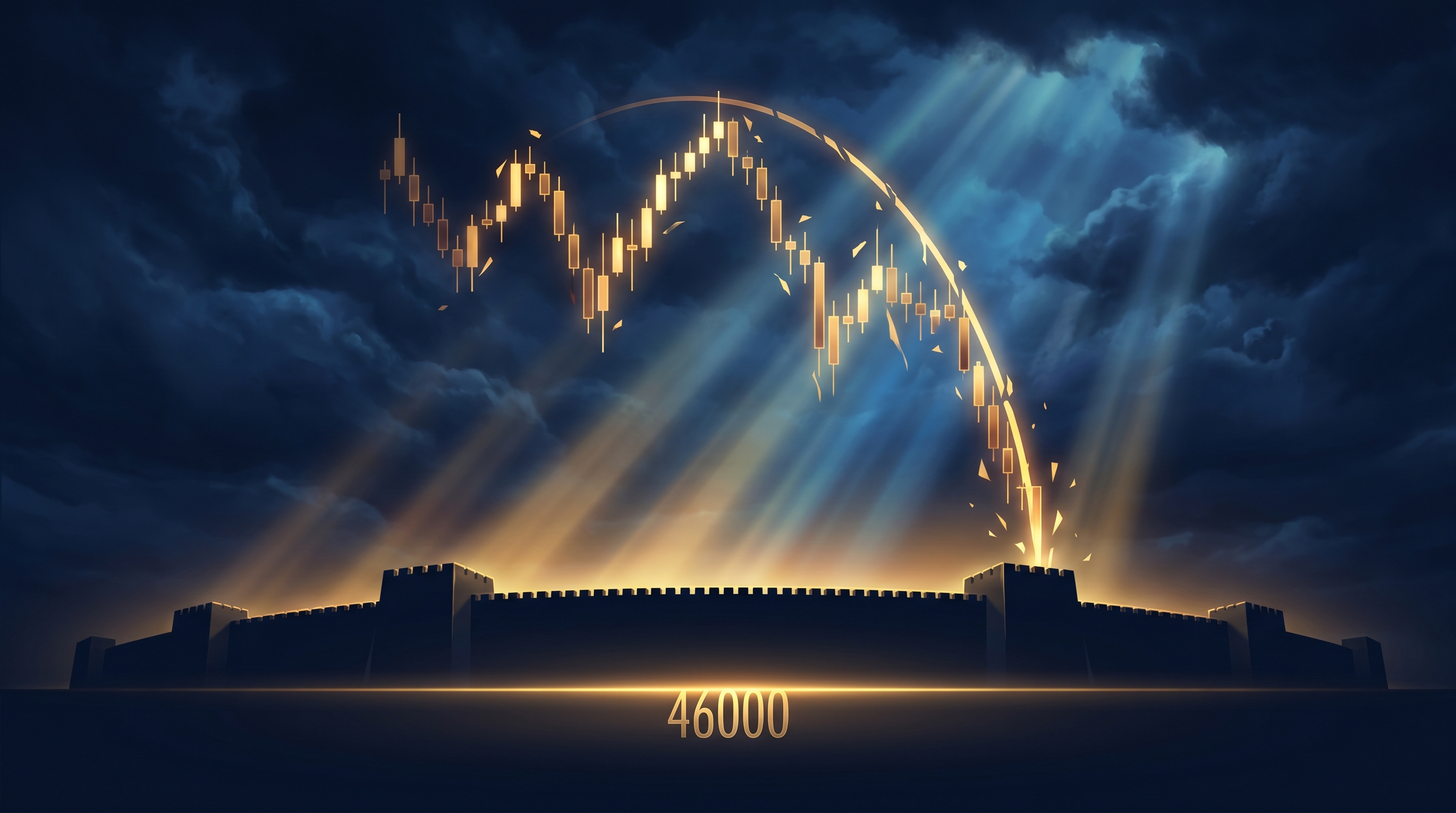
TSMC Drops NT$50 as Taiwan Stocks Open 800+ Points Lower, Defending the 46000 Line

TAIEX hit an all-time high of 46,552 in early June and closed yesterday at 47,100. Overnight U.S. tech rolled over, TSMC's ADR dropped 6.69%, the Philadelphia Semiconductor Index fell 7.87%, and Micron dropped 13.18%. Today (the 24th), Taiwan stocks gapped down 800+ points at the open, with the index slammed back to the doorstep of 46,000. This isn't a routine pullback — it's the moment someone hit mute at the AI bull party.

9 min
Wealth Awakening

SpaceX Drops 16%: Three-Day Slide, $400B Wiped, The Truth Behind the $20B Bond

On 6/22/2026 SpaceX (SPCX) plunged 16.43%, the third straight down day, with cumulative drawdown above 23% and a single-day market-cap wipe of about $400B. The company announced its first investment-grade bond of at least $20B, with filings disclosing roughly $100.8B cash. Why issue bonds with a hundred billion in cash? Because AI burns $2 for every $1 earned, and Oppenheimer forecasts net debt will rise by $400B by 2031. Debt becomes the primary funding source. Four concrete takeaways for Taiwan investors.

8 min
Wealth Awakening

You Buy Because It "Feels" Like a Rally? The Brain Trap That Cost Retail Investors NT$5 Million

Why do you only feel the urge to buy right after the rally is already over? Dalbar data shows retail investors earned just 3.98% annualized over 30 years vs 10% for the S&P 500. We break down availability bias, herd behavior, and the structural media trap, then run the real numbers: NT$600K invested over 20 years delivers NT$3.9M if you follow your gut, but NT$8.92M if you automate. The gap is NT$5.02 million from the same money.

13 min
Wealth Awakening

TAIEX at 43,500: The Warning Signs of a Crash! The Fully-Invested Are Walking Toward a Cliff

That friend who never watches the markets starts asking you what to buy now. Two office workers at a convenience store chat about "AI—if you don't buy now, you'll miss out." Nobody in the group is talking about risk anymore. These are the most dangerous signals. With TAIEX at 43,500 and U.S. stocks repeatedly hitting new highs, the fully-invested are walking toward a cliff. Understand these three crash warning signs, and retail investors can survive a crash—no one needs to precisely predict the top; you only need to know that when these three signals appear at the same time, your behavior has shifted from investing to gambling.

7 min
Wealth Awakening

Retail Investors' Biggest Enemy Isn't the Whales! Understand the Underlying Logic of the Stock Market to Grow Against the Trend

Every morning at 8:45 the market opens, the color of the K-line decides whether your day is good or bad, you spend more time studying technical patterns than your own profession — and at year-end you're still in the red. You think the enemy is the whales, that you're not glued to the screen enough? Wrong. The real enemy is that you're playing a game you don't understand, in the wrong place, in the wrong way. This article breaks down the essence of institutional betting, humans' evolutionary instinct to chase rallies and dump the dips, and the underlying logic of retail investors turning things around: first understand who your opponent is, then decide whether to enter this gamble.

7 min
Wealth Awakening

Money Made by Luck Always Gets Returned: The Investing Psychology That Can Save You Hundreds of Thousands

TSMC climbs to NT$1,000 and you don't dare buy — it's too expensive; it drops to NT$800 and you still don't dare buy — it might fall further; when it returns to NT$100 you finally chase in, then it drops again. This isn't your problem — it's your brain's problem. This article dissects the five most common psychological traps in investing — from the fundamental mismatch of "price vs. value" to how "earning by luck" triggers confirmation bias and drags you into the abyss. Seeing these traps won't make you rich overnight, but it will keep you from making costly mistakes.

8 min
Wealth Awakening

81% of Retail Investors Lose Money on AI Stocks: Understand the TWSE Underlying Logic in 30 Minutes

You open your phone and see your AI stocks are down again, with paper losses exceeding NT$100,000. According to the latest data from the Taiwan Stock Exchange and SITCA, between 2025 and 2026 the loss rate for retail investors participating in AI concept stocks reached 81%. Eight out of ten ended up losing money. The problem is not that you aren't smart enough. It is that the rules of the game you joined were never designed for you. This article breaks down three underlying rules: why the core reason for losses is a systematic bias in participation timing rather than stock-picking ability, why Taiwan's century-old iron rule (the market is a voting machine short-term and a weighing scale long-term) gets ignored by retail investors whose average equity holding period is under six months, and how financial institutions' business model systematically forces you to pay more than necessary. It then runs a 20-year wealth comparison showing a gap of more than NT$2 million between ideal execution, normal execution, and the 2008 black swan scenario, and closes with three Taiwan-specific blind spots (0050's top-10 concentration above 70%, dividend-tax filing-method optimization, and high-dividend ETF turnover risk) plus a four-step decision framework.

13 min
Wealth Awakening

TWSE Breaks 40,000 in H2 2026: Four Principles to Protect Your Principal from Getting Wiped Out

The TWSE is at 40,000 but your account is still losing money. This is not a joke, it is happening right now. The index hitting a new high and your account making money are two completely different things, and that is the biggest cognitive blind spot for 90% of Taiwan retail investors. This article uses the real recovery cycles of the 2008 financial crisis (TWSE fell nearly 60%, recovery over five years), the 2020 COVID crash (nearly 30% in a single month), and the 2022 rate-hike cycle (close to 32% drawdown) to show how the wrong capital allocation can lock your losses in. It also breaks down the cost gap between active funds charging 1.5% to 2.5% in annual management fees versus index ETFs like 0050 under 0.4%, and the hidden transaction-cost bill that can exceed NT$10,000 a year for an active retail trader. It then walks through four principles to protect your principal in a TWSE-40,000 high market: building a capital firewall, replacing lump-sum entry with dollar-cost averaging, setting written stop-loss and take-profit rules before entry, and rebalancing annually. It closes with four veto iron rules to keep you from adding at the worst possible moment.

12 min
Wealth Awakening

TWSE Drops 2,700 Points, Institutions Siphon Off NT$9 Trillion: The Underlying Logic of Harvesting Retail Investors Explained Once and For All

In April 2025, the TWSE plunged more than 2,700 points in just a few trading days, with market capitalization evaporating an estimated NT$9 trillion—equivalent to five full months of Taiwan's entire productive output. NT$9 trillion did not vanish into thin air; it simply moved from one pocket to another. This article does not tell you which stock to buy, nor does it try to forecast where the TWSE bottom is. Instead, it lays out the underlying logic of how retail investors get harvested: three market mechanics (structural information asymmetry, retail always being last in and last out, conflicts of interest in financial institutions), three sets of sobering accountings (including a NT$3.05 million hidden-cost gap over 30 years), a four-question decision framework, four iron rules, and two Taiwan-specific traps (ETF ex-dividend pitfalls and liquidity risk). The core lesson: in an information-asymmetric market, emotion is the retail investor's most expensive cost, and discipline is the only edge retail investors can actually control.

19 min
Wealth Awakening

90% of Retail Investors Lose Because They Cannot Let Go: The Wealthy "Lock-In and Double" Batch Profit-Taking Method

Have you ever made NT$300,000 on paper and ended up with nothing? Watching the uptrend candlesticks, your heart racing, finger hovering over the mouse, an inner voice saying "just a bit more"—then the price reverses, your NT$300,000 paper gain shrinks to NT$100,000 and then into loss. TWSE data shows that Taiwan retail investors' annual turnover is far higher than institutions, yet their overall returns lag the broader index over the long run. This article breaks down behavioral finance's disposition effect (selling winners too early, holding losers too long), the structural bias in Taiwan's financial media ecosystem that encourages holding rather than locking in gains, the real logic behind the wealthy "lock-in and double" approach, and provides the one-third profit-taking method (sell 1/3 at 20% gain, another 1/3 at 40%, trailing stop on the final 1/3), 4 iron rules, 4 action steps, age-based boundaries, and an extreme-market contingency plan. Closes by clarifying the critical difference between taking profit on Taiwan broad-market ETFs versus individual stocks, and the tax timing of profit-taking events.

16 min
Wealth Awakening

60% of Taiwanese Have Stock Accounts, Only 10% Make Money: The Truth About Stocks in 36 Minutes

Taiwan has over 12 million brokerage accounts—roughly 60% of all adults have entered the market—yet fewer than 10% achieve stable long-term profits. The shared fate of the other 90% is not bad luck or wrong picks, but treating speculation as investing and using an investor's mindset to deceive themselves. This article breaks down the structural disadvantage of short-term trading, the overconfidence bias from behavioral finance amplified by Taiwan's 2016–2024 bull run, three underlying iron rules (compounding cost erosion, low-buy-high-sell losses, and the liquidity trap of strong capital), four questions to ask before every order, a complete four-step action plan, three real account scenarios (5-year and 20-year horizons), two Taiwan-specific high-level traps (dividend tax plus NHI supplemental premium, and ETF tracking error plus premium/discount), and an emergency plan for extreme market conditions. Pain point: even in Taiwan's strongest bull run, most retail investors left with less than they started. Promise: a tested framework that turns stock decisions into a discipline, not a feeling.

11 min
Wealth Awakening

From All-In on AI to Nothing Left: The 5 Endgame Blind Spots of Taiwan Stock Retail Investors

Three months after going all-in on concept stocks, your account is down to less than half—that is the real story of hundreds of thousands of Taiwanese retail investors last year. Long-term returns for Taiwan retail investors are systematically below the broader market, not because of stock-picking skill, but because of entry-timing bias compounded by hidden costs continuously eating away at returns. This article breaks down 3 underlying rules (behavioral cost as the real erosion, structural market asymmetry against retail investors, and the revenue logic of financial institutions that pushes you to trade more), 3 account-checking scenarios with hard numbers, 4 ironclad veto rules, 4 actionable steps, a four-question decision filter, and age-based application boundaries for fresh graduates, young families, middle-aged parents, and seniors. Pain point: you keep buying high and selling low and cannot explain why. Promise: a reusable framework that puts your trading decisions back in rational control, with concrete rules for each life stage.

15 min