💡
Wealth Awakening

Wealth Awakening

Wealth mindset, business thinking, asset allocation

Wealth Awakening

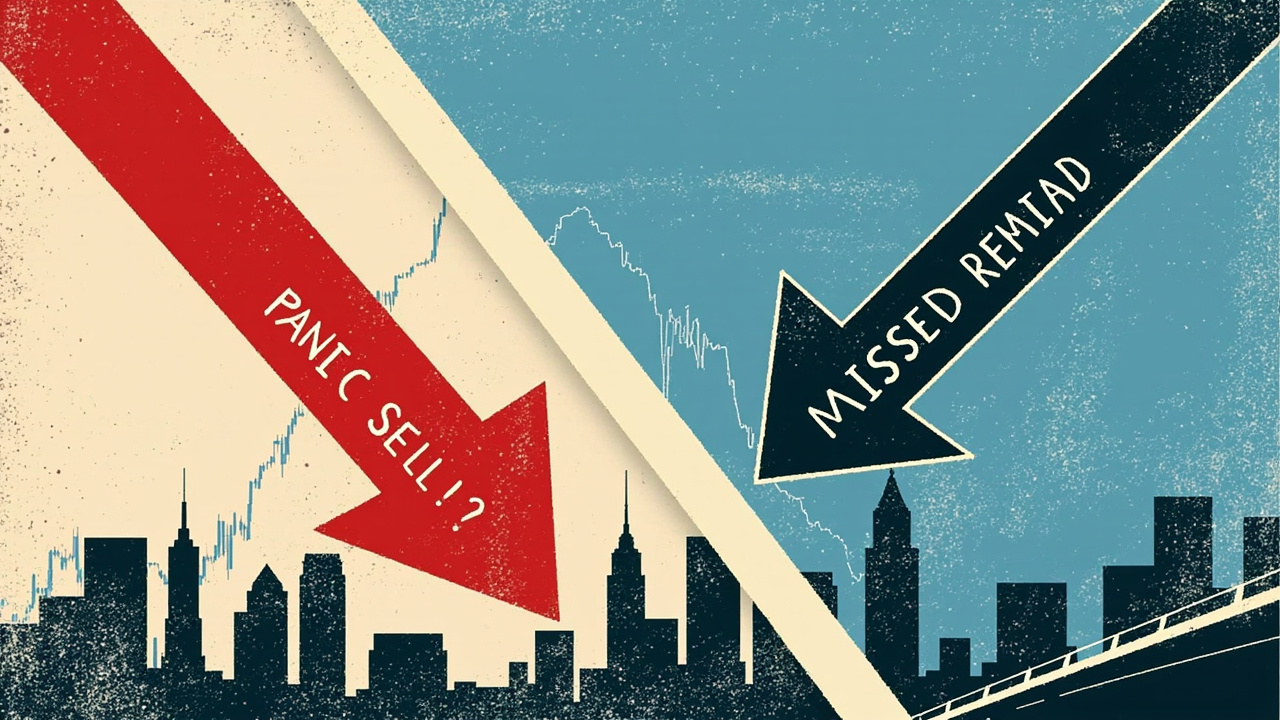
Retail Investors Fear Crashes, the Wealthy Wait for Them: The Underlying Logic of 5 Things That Make the Rich Richer in a Crash

The market is limit-down, your phone screen is full of red, and your first reaction is to sell and run — but have you considered that at the very same second, the truly wealthy are doing the exact opposite? Retail investors fear crashes, the wealthy wait for them. The gap is not capital, not information, it is mindset. This article breaks down the five things the wealthy do in a crash: hold cash, buy core assets, execute rebalancing, understand cycles, and use the crash for tax and cost optimization. You also get four iron rules, a four-step action plan, and a contingency plan for extreme drawdowns. TWSE data confirms: during major corrections, retail investors' net selling ratio is far higher than institutions' — they sell into the dip, then chase the rally. SITCA also shows institutional cash positions at market highs are typically more than double those of retail.

14 min
Wealth Awakening

90% of Retail Investors Die in Crashes: How to Beat the Wall Street Psychological Trap

In March 2020 the TAIEX collapsed from 12,197 to 8,523, retail investors net-sold more than NT$200 billion, the market rallied back to a new high within six months — so who took that NT$200 billion? Drawing on behavioral finance and loss aversion, this article breaks down the three underlying rules for crashes, four investment iron rules, and a four-step action plan, with real calculations for retail investors from 2008 to the present. You will learn why the saying 'the master knows when to sell' has killed more people than any other, and how Kahneman and Tversky's research on asymmetric loss-pain proves that your brain's wiring is exactly what strong money is betting against. TWSE data shows that for holding periods of more than one year from 2001 to 2023, the probability of a positive return exceeds 70% — but most retail investors still underperform the index because they sell at the bottom and chase at the top.

10 min
Wealth Awakening

Build a NT$10 Million Portfolio Starting With Less Than NT$100,000 Saved: The Complete Core-Satellite Allocation Guide

Taiwan's CPI has averaged more than 2% annual growth over the past 5 years, but regular bank savings rates are below 0.5% and the best time deposits only reach 1.6% — you think you're preserving capital, but you're actually losing money every year. This article uses DGBAS real wage data, a 30-year time-deposit vs ETF simulation, and the historical record of the 2008 and 2022 Taiwan stock drawdowns to break down the core-satellite allocation method for small capital, four non-negotiable iron rules, an annual rebalancing SOP, and the hidden tax bonus of the 6% voluntary labor pension contribution. Finally, a 4-step low-barrier action plan means you can start rolling your retirement with just NT$2,000 from today. The Taiwan Financial Services Institute has made it clear: asset allocation contributes more to long-term portfolio returns than stock picking or market timing — how you 'allocate' matters more than what you buy.

10 min
Wealth Awakening

It's Not Compound Interest That Fooled You — You Got the Reinvestment Order Wrong

Compound interest itself is not the problem — from Einstein to Buffett, they all point to the same logic. The problem is that you got the order of execution wrong from the very start. You buy at the high and stop contributing at the low; the average Taiwanese fund investor holds for only about two years, while compound interest needs 10 years to double — and you pull out long before it can do its work. This article breaks down the three underlying rules, four non-negotiable iron rules, and a three-question decision framework, paired with three real calculations and Taiwan-specific advanced traps around second-generation NHI supplementary premiums and voluntary labor pension contributions. You will see the real cost of switching funds every two years and what 'cost basis' actually means in dollar-cost-averaging.

17 min
Wealth Awakening

Selling at 20% Profit Is Why You Never Build Wealth: 3 Iron Rules of Compounding to Multiply Your Gains

When a stock goes up 20%, you press sell immediately — and then you miss the next 40% to 60% of the move. This article breaks down the three most fatal rules Taiwan retail investors ignore (the compounding time axis, the real meaning of profit-taking, and asset allocation) using a side-by-side 10-year comparison of a NT$300,000 position held with annual 20% profit-taking versus held untouched. You will see the true cost of constant trading. Also included: four operational iron rules, blind spots in labor pension allocation, and a dividend tax calculator. Taiwan's TWSE historical data and academic research show the average retail investor's annualized return persistently lags the broad market, and most are even in the red — the reason is not bad stock picking, it is the constant trading-in, trading-out, and the act of cutting the compounding time axis yourself.

12 min
Wealth Awakening

Earning NT$50,000 a Month and Still Taking a Car Loan? The Brutal Truth About Losing NT$5 Million in 10 Years

The salesman says the monthly payment of NT$25,000 is affordable, but once you add maintenance, parking, fuel, and insurance, your real monthly burn is NT$35,000 — and with only NT$15,000 left, how do you ever get ahead? This article uses the real 5-year account of a NT$1.5 million import car loan, the 10-year NT$5 million opportunity cost, and the gap between a 25-year-old and a 35-year-old's two choices to expose the underlying rules of how the poor buy cars versus how the rich buy cars. It also gives you four non-negotiable iron rules to help you judge whether you currently have any business touching a car loan at all. If you earn a paycheck in Taiwan and feel the showroom glow pulling you in, these numbers will change the way you think about that decision for the rest of your life.

12 min
Wealth Awakening

Can't Save NT$1 Million? It's Not Your Income — 3 Invisible Leaks Draining Your Money Daily

Most people in Taiwan earning NT$45,000–50,000 per month blame their income for not being able to save, but the real culprit is three invisible financial leaks happening every single day. Official data shows Taiwan's CPI has risen more than 30% since 2000, while real wages have barely grown — your cash in a savings account earning near 0% is silently losing purchasing power to a hidden inflation tax. The Taiwan Financial Services Institute (TFTI) found that the average consumer holds 3–5 subscriptions, at least 2 of which are barely used, while FSC's 2022 financial literacy survey revealed that over 60% of adults have no fixed savings plan and save only what is left at month end. This article dissects the subscription black hole, the nominal vs real wage trap, and the fatal 'spend first, save later' logic taught by Taiwan's financial institutions. It also exposes investment-linked insurance policies with first-year add-on fees as high as 150%, and delivers a three-layer financial structure, four iron rules, and four steps you can start tonight when you get home from work.

11 min
Wealth Awakening

Why the Poor Hoard Cash While the Rich Borrow Aggressively: The Truth About Leverage Mindset

You hold NT$500,000 in pure fixed deposit earning 1%-plus a year — about NT$6,000 in interest. Meanwhile, your neighbor just borrowed NT$5 million from the bank at 2% to invest in an 8% project, and a year later he earned NT$300,000. This article breaks down three underlying rules behind why the poor save money while the rich accumulate assets, and runs two outcome comparisons: NT$10,000/month saved from age 25 for 40 years (NT$6.5 million vs NT$34.9 million) and buying versus renting and investing over 30 years (a NT$26 million gap). It also gives you the four prerequisites for a leverage mindset plus a self-assessment checklist so you can tell whether borrowing-to-invest is a tool or a trap for you.

11 min
Wealth Awakening

Bank Fixed Deposit at 1.35% Can't Beat Inflation: 3 Truths About Capital Protection vs Preservation

You park money in a bank fixed deposit and get back only 1.35% per year, while Taiwan inflation averaged over 2.7% in 2022–2023, eroding 2% of your purchasing power every year. This article breaks down the fundamental gap between principal protection and value preservation, the bank's interest-spread business model, the 3-to-5-year lock-up trap in structured products, and runs three end-state scenarios for NT$1 million over 10 years. It closes with a four-step action plan you can start today. If you have been told your fixed deposit is "safe," you need to hear what kind of safety that actually is — and what it is costing you in real purchasing power.

10 min
Wealth Awakening

AI Stock Margin Tops NT$300 Billion: Wall Street Quietly Retreats — 3 Wealth-Protection Plays

Margin balance on Taiwan's AI stocks surged past NT$300 billion in 2024. Retail investors scramble to borrow money to buy, convinced the AI theme is the last chance to turn their life around. Yet while you chase the rally, foreign institutional investors on Wall Street are quietly doing the opposite — they are selling, systematically and on schedule. A new high in margin balance is not proof of a strong bull market; it is the warning light of retail leverage piling up. This article breaks down the mechanics of forced margin selling, three wealth-protection plays (core-satellite, stop-loss/take-profit, periodic rebalancing), two overlooked advanced traps (margin usage ratio at 20%, foreign institutional open-interest in options), four iron rules, and a three-question decision framework. Core thesis: when others buy confidence with borrowed money, prepared investors buy protection with their own.

15 min