
You put money in a bank fixed deposit and only get back 1.35% per year, while your living costs quietly rise by more than 2% at the same time. You think you are saving; in reality you are losing money every year. This is not a metaphor; this is the real financial loss happening right now to every ordinary Taiwanese person who keeps money in a bank fixed-deposit account.
Do you ever feel this way? Your salary lands every month on time, you save diligently and do not splurge, the account number creeps upward, but your standard of living is not improving. You go to the supermarket and the same basket of vegetables costs more than last year; you fill up the tank and the bill is higher than three years ago; you think about buying a home and the down-payment gap keeps widening. You are clearly not spending more, yet the money just keeps being not enough.
The problem lies exactly where you thought it was safe — in the bank fixed deposit.
This article shares information for financial-education purposes only and does not constitute any investment advice. Each person’s financial situation, risk tolerance, and life stage are different; what works for someone else may not work for you. Please evaluate all asset allocation decisions on your own and consult a Taiwan-licensed financial advisor or tax professional.
Truth 1: Principal Protection Protects the Number, Not Your Purchasing Power
The one-year fixed-deposit rate most recently announced by Taiwan’s central bank sits at around 1.35%, and some banks’ demand-deposit rates are only 0.01%, essentially zero. But according to DGBAS data, Taiwan’s full-year CPI growth was 2.49% in 2023 and 2.95% in 2022, an average inflation rate over those two years above 2.7%.
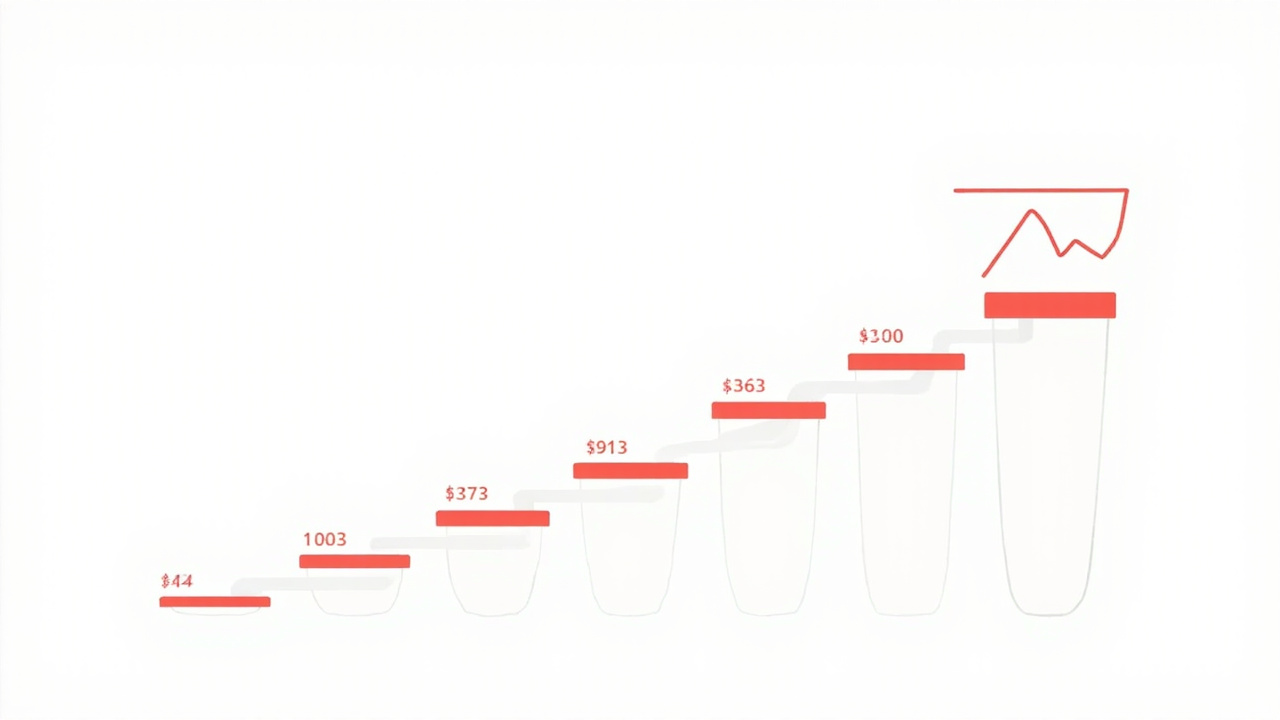
You earn 1.35% on your savings, but your purchasing power is being eaten by more than 2% of inflation every year — your real return is negative. Principal protection protects the nominal number, not your real purchasing power. Principal protection is not value preservation. In the face of inflation, a non-negative account balance is the gentlest wealth-harvesting machine.
Run the first calculation: assume your account has NT1,013,500 — you nominally made NT1,024,900 this year.** Your account only has NT11,400.
If you had put NT1.06 million, but cumulative Taiwan inflation over those five years exceeded 10%. To keep your NT1.1 million, so your NT40,000.
Slow boiling frog — you do not feel yourself losing more, but you keep losing.
Truth 2: The Bank’s Interest-Spread Business Model
Taiwan’s bank deposit and lending rates follow Taiwan’s central bank policy rate. Between 2022 and 2023, Taiwan’s central bank joined the global tide and raised the rediscount rate from 1.375% to 2%, the largest rate hike in nearly 14 years. But have you noticed your fixed-deposit rate rose far less than the rate hike?
A bank’s core business model is to eat the interest spread. You deposit money, they lend it to businesses and individuals, and they earn the spread in the middle. Under this model, the deposit rate the bank gives you will never be its lending rate, and it will never come close to inflation — because if it did, they would have no spread to earn.
This is not a conspiracy; this is the unchanging business logic of banking for a century. You deposit money in a bank and you are lending money to the bank. The bank pays you interest, then uses your money to earn more. In this relationship you are the capital provider, and you take the lowest share of the return.
In Taiwan, more than **NT2 trillion, how much of it is money from ordinary people like you who think it is safe sitting there, while inflation silently eats into it year after year?
Truth 3: The Lock-Up Trap of Structured Products
Why, even though you know the fixed-deposit rate is low, do you still leave the money sitting there? Behind this sits a psychological weakness that banks and the broader financial-marketing system exploit with surgical precision: loss aversion. Research in behavioral finance tells us that people’s fear of loss is roughly twice the joy of an equivalent gain.
The bank’s “principal-protection pitch” steps precisely on that psychological weakness. They tell you fixed deposit is zero risk and the account won’t lose money; your brain immediately reads that signal as safety, and you put the money in and stop thinking about inflation.
Taiwan’s bank wealth-management products include a category called structured products, which usually tell you “100% principal protection, linked to some index, with the chance to earn higher returns than fixed deposit.” Sounds great, right? But read the product prospectus carefully:
- These products usually have a 3 to 5 year lock-up period
- You cannot redeem in the middle, or redemption incurs heavy penalties
- The 100% principal protection only holds at maturity; if you urgently need the money mid-term, the principal protection is gone
- The “chance to earn higher returns” is conditional, and the conditions are usually designed so that the probability of receiving the top payout is quite limited
The FSC’s deposit-insurance rules provide a maximum coverage of NT$3 million per depositor per financial institution — that is the scope of deposit insurance. It protects you from losing your nominal principal if the bank fails, but the FSC has never issued any document stating that fixed deposits can protect your real purchasing power from inflation. These are two different things.

Three End-State Scenarios: The Real 10-Year Gap for NT$1 Million
To make the opportunity cost of different choices crystal clear, three scenarios are compared below. All investing carries risk; the comparison is to show you the opportunity cost of different choices, not to guarantee any return, and not to tell you to put all your money into investments.
Scenario A: NT$1 Million All in Fixed Deposit
Annual rate 1.35%, inflation 2.5%, real return is negative 1.15%. After ten years you have nominally NT1.03 million — a purchasing-power loss of more than NT$110,000.
Scenario B: NT400,000 Staged into a Taiwan Equity ETF
NT400,000 is invested in stages into a Taiwan Weighted Index ETF.
The Taiwan Weighted Index’s annualized total return over the 20 years from 2003 to 2023 was roughly 8% to 10%, but in between it had the 2008 financial crisis with a peak drawdown over 50% and the 2020 pandemic with a peak drawdown over 30%. If you had entered at the 2008 high, you would have had to wait until 2013 to break even — fully five years.
Under that premise, assuming a conservative estimate of 6% annualized on the NT400,000 grows to about NT600,000 growing to about NT1.36 million, nominally NT1.14 million, and the real purchasing-power gap is even larger.**
Scenario C: Extreme Black Swan
You lump-sum invested NT400,000 became less than NT$200,000.** And you sold in panic; then the money really was lost, and it would take many years to accept it psychologically. This is the worst case; you have to know it exists.
The prerequisites for the correct approach are very clear: only use idle money, invest in batches, hold long-term, and do not sell in panic. Missing any one of these four prerequisites can cause the result to fall far short of the ideal.
Four Steps to Take Action
Step 1: Clarify Whose Money This Is
It is not about choosing tools; it is about clarifying whose money this is, when you will need it, and what it will be used for. Once you answer those three questions clearly, the tool naturally becomes obvious.
Split your money into three categories:
- Emergency reserve (3 to 6 months of living expenses): in a high-interest savings account or money-market fund, with liquidity as the top priority
- Short-term needs (within 1 to 3 years): in fixed deposits, locking in the still-decent current rates
- Long-term idle capital (5+ years untouched): consider staged entry into index ETFs or other investment tools whose risk matches your tolerance
Step 2: Build the Emergency Reserve First
If your emergency reserve has not yet reached 3 to 6 months of living expenses, do not even think about investing; fill this bucket first. Investing is built on top of financial security, not gambling with living expenses.
Step 3: Pick the Right Low-Cost Tools
For long-term investing tools, Taiwan index ETFs are the easiest entry for ordinary investors. When picking, focus on the total expense ratio (TER) and tracking error — these two numbers directly affect your long-term real return.
Step 4: Review Once a Year
At the end of each year, open your account and calculate your real return (nominal return minus inflation over the same period). If it has been negative for three years in a row, your asset allocation has a problem and needs to be readjusted.
Conclusion: Money Has to Move, but It Has to Move in the Right Direction
Money that does not move against inflation is walking backwards, and only money that beats inflation is truly working for you. This statement has a prerequisite: you must first clarify your own risk tolerance and the purpose of the capital, before talking about how to put money to work.
Once you understand principal protection versus value preservation, you will have a chance to truly hold on to your wealth. The next time a bank relationship manager pitches a structured product that is “principal-protected and better than fixed deposit,” ask three things: when does the principal protection hold? how long is the lock-up? what are the conditions for the top return? When you finish asking, you will know the truth about that product.
Disclaimer: All content in this article is for financial-education purposes only. All data is sourced from public materials published by Taiwan’s DGBAS, central bank, SITCA, and FSC, and does not constitute any personal investment advice nor a recommendation or guarantee for any financial product. Each person’s financial situation, risk tolerance, and life stage are different; before making any asset allocation decision, please carefully evaluate the risks and consult a Taiwan-licensed financial advisor or tax professional. All investing carries risk; past performance does not guarantee future results.
Tags
Bank CD, Inflation, Capital Protection Trap, Structured Products, Central Bank Hike, TAIEX, Emergency Fund, Asset Allocation, Loss Aversion, Bank Spread, Purchasing Power Shrinkage, CD Early Withdrawal
Comments