💡
Wealth Awakening

Wealth Awakening

Wealth mindset, business thinking, asset allocation

Wealth Awakening

99% of People Buy S&P 500 Wrong: Building Income That Doesn't Require Going to Work

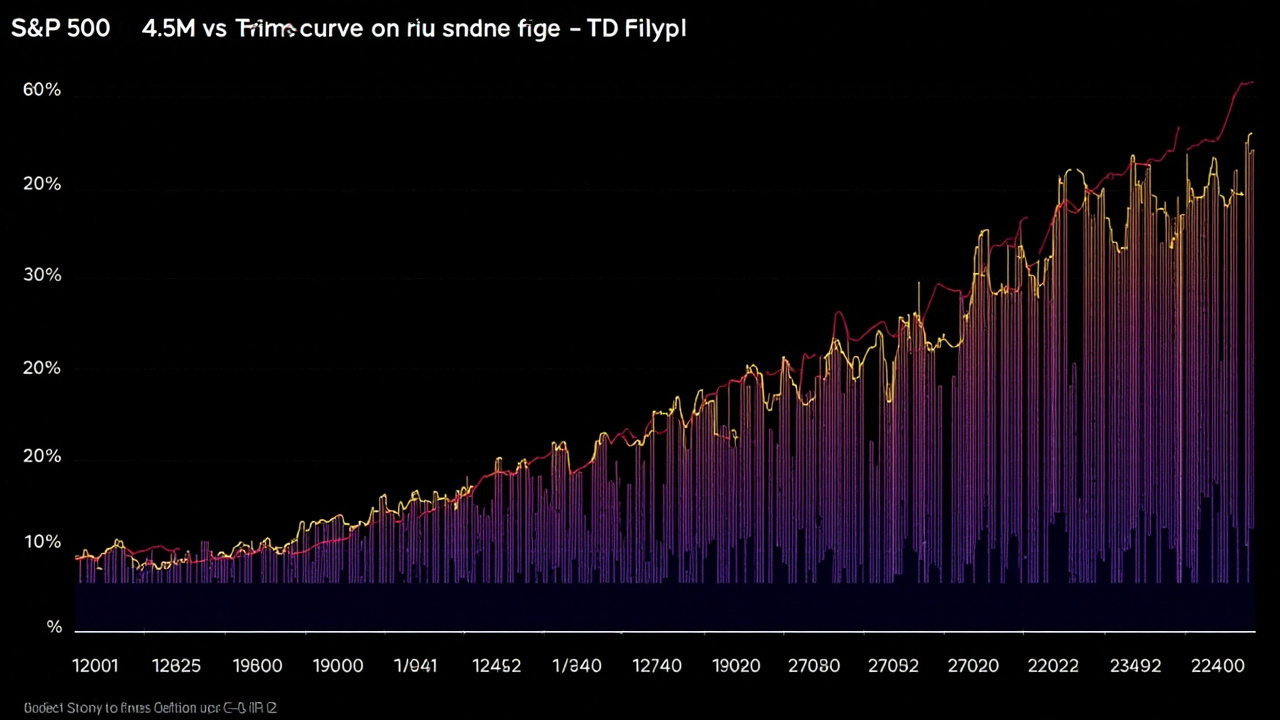
The S&P 500 index itself is fine; the problem is in how you buy it. Taiwanese investors holding it through mutual funds and bank-wrapped products face an average total expense ratio of 1.2% to 1.8%, but direct VOO is only 0.03% to 0.07%. On NT$1M over 20 years, that fee gap produces a final-asset difference of over NT$2M. This article breaks down the true cost of four packaging methods, four iron rules of investing, four action steps, and the US estate tax trap that 99% of Taiwanese investors don't know about. For a Taiwan worker earning NT$45K/month contributing NT$8,000 over 20 years: a 1.5% management fee offshore fund yields about NT$4.88M; direct VOO via sub-brokerage yields about NT$5.67M — an NT$800K gap just from fees. Add behavioral mistakes (stopping DCA during 2008, 2020, 2022 crashes) and the gap to NT$5.67M exceeds NT$2M. The US imposes up to 40% estate tax on US-listed ETF holdings above US$60,000 for non-US residents, and Taiwan has no estate tax treaty with the US. Possible alternatives include Irish-domiciled UCITS ETFs or Taiwan-listed S&P 500 ETFs. Includes specific packaging comparison: Yuanta S&P 500 (00646), Fubon S&P 500 (00650), VOO/IVV, mutual funds, and structured products.

12 min
Wealth Awakening

S&P 500 vs Nasdaq 100: A 3x Retirement Gap and the Age-Based Golden Ratio

Same NT$6,000 monthly contribution, same 20 years: pick S&P 500 and you end at NT$4.5M, pick Nasdaq 100 and you reach NT$7M — a gap of over NT$2M. But the Nasdaq 100 dropped 83% in the 2000 dot-com bust and needed 15 years to recover, and dropped another 33% in 2022's single year. This article gives you 5底层 rules, an age-based stock-bond golden ratio, and the real criteria for picking an index — so you know how to allocate today. With NT$6,000 monthly DCA over 20 years, S&P 500's 9.8% annualized return produces about NT$4.5M while Nasdaq 100's 13–14% annualized return produces nearly NT$7M. But volatility on Nasdaq 100 runs 30–50% higher than S&P 500. The 2000 dot-com crash saw Nasdaq 100 down 83% with a 15-year recovery; S&P 500 fell 49% with a 7-year recovery. Includes 4 age bands (25–35, 35–50, 50–60, 60+) with concrete stock-bond-ETF allocations, plus a core-satellite framework to manage psychological tolerance. The biggest risk isn't picking the wrong index; it's refusing to adjust after picking wrong.

9 min
Wealth Awakening

S&P 500 at 7,600 and Nasdaq at 27,000! The 3 Places the Wealthy Are Quietly Moving Money

S&P 500 at 7,600 and Nasdaq at 27,000 — your finger is already on the order page. This article breaks down the three places the wealthy move capital at market highs instead of chasing them (short-term Treasuries plus money market funds, relatively cheap defensive sectors, and emergency reserve top-ups), and runs three end-state scenarios comparing lump-sum NT$300K entry at the high vs DCA entry. It closes with three Taiwan-specific blind spots for local investors and a 4-step action plan. The S&P 500's current CAPE ratio is in a relatively elevated zone, meaning new entrants get less future return for the same dollar than three years ago. Recent data shows institutional flows into short-term Treasuries and money market funds have reached historic highs — these investors aren't bearish on stocks, they are simply preserving dry powder. For Taiwanese investors, similar positioning can be done via Taiwan-listed short-term Treasury ETFs, USD time deposits, or USD money market funds. Includes emergency reserve design (6 to 12 months of expenses), bullet allocation (20–30% in short-duration Treasuries), and FX cost transparency for the local market.

10 min
Wealth Awakening

The S&P 500 Hidden Loss Trap: Why DCA into US ETFs Isn't Risk-Free, and the Right Way to Retire Early

Using a Taiwan salary to DCA into S&P 500 ETFs looks like the world's strongest passive investment, but hides four loss traps that Taiwanese investors most often overlook. This article uses the 2008 financial crisis, the 2020 COVID crash, and the 2022 rate-hike cycle as examples to break down four blind spots — exchange rate, costs, timing, and emotion — and delivers the correct way for Taiwanese investors to buy US ETFs for early retirement, plus alternative routes. Many investors do not realize that from 2020 to 2021 USD/TWD dropped from 30 to 27.5, meaning a 50% S&P 500 gain translated to only about 30% in NTD. The Dalbar study shows average retail investors underperform their funds by 1.5% to 2% annually due to behavioral mistakes. Total fee differences between domestic and overseas S&P 500 ETFs can reach 0.3% to 0.8%, with another 0.1% to 0.2% hidden in FX hedging costs. Get a step-by-step guide covering tool selection, fixed DCA scheduling, FX management, and age-adjusted equity-bond allocation, and learn why psychological tolerance matters ten times more than index choice.

8 min
Wealth Awakening

Scratch Cards Are a Death Trap for the Poor: The Expected Value Math

You hand over NT$50 for a scratch card and lose more than NT$50. Taiwan Lottery Corporation public data shows the overall payout ratio is about 60–70%, meaning you lose NT$30–40 in expected value for every NT$100 spent — this is not bad luck, this is a certain loss. According to the Directorate-General of Budget, Accounting and Statistics (DGBAS) Household Income and Expenditure Survey, low-income households spend a much higher share of disposable income on gambling than high-income households. This article breaks down three底层 rules of scratch cards (certain loss, near-miss effect, opportunity cost), two Taiwan-specific advanced traps (information asymmetry in prize announcements, house money effect), an expected-value filter decision framework, 4 iron rules, and 4 action steps. Finally, we run the numbers: spending NT$500 per month on scratch cards for 20 years carries an opportunity cost of roughly NT$270,000–NT$300,000. Most dangerous is the lottery design itself, where small frequent prizes reinforce purchasing behavior rather than provide profit. Get out of this negative-expected-value death loop and start building real wealth instead.

12 min
Wealth Awakening

Wiped Out by One Crash? The Same Mistake Every Taiwan Retail Investor Makes: The Sandpile Effect

You poured three years of savings in last month, and this month your account is halved. It's not bad luck or a bad stock pick; your portfolio was already sitting at an invisible tipping point, waiting to collapse. This is the fatal investment blind spot proven by physicists in the sandpile experiment: highly correlated assets fall together in a crash. This article breaks down 3底层 rules, 3 calculations, 4 iron rules, and a 4-step action plan to help you design a portfolio you can keep holding even in the worst moments. Over 60% of Taiwan retail investors concentrate holdings in the electronics sector, with TSMC alone accounting for over 30% of the weighted index. Many investors mistakenly believe buying 10 semiconductor supply chain stocks is diversification, but those 10 stocks have a correlation coefficient near 0.9. The article covers maximum drawdown as the psychological breaking point, the correlation trap that destroys diversification in crisis, the hidden value of rebalancing, and a true comparison showing how NT$1 million lost 59% in the 2008 crash and needed six years to recover. Get a portfolio that lets you survive the avalanche.

14 min
Wealth Awakening

Earning NT$40K But Still Broke? The Dark Formula of Taiwan's Top 3.5% Wealthy

In Taiwan, your salary sets your ceiling, but asset allocation decides whether you break through it. This article dissects the fundamental gap between Taiwan's top 3.5% wealthy and ordinary office workers, not return rates, but three底层 logics: making assets work for you, controlling true total cost, and building an emotion-free financial system. From the 100-minus-age stock-bond formula, savings insurance with 15-20% loading fees, ETF dividend traps, to Second Generation NHI supplemental premium tax tricks, you get an actionable plan to start today. Most Taiwanese salary earners lose 2-3% purchasing power annually to inflation by parking money in low-interest checking accounts. The Taiwan Securities Investment Trust and Consulting Association data shows the average DCA holding period is less than two years. This piece delivers a four-step action plan with four iron rules, two local hidden traps (Second Generation NHI 2.11% levy and dividend-from-capital ETF schemes), and emergency scenario playbooks, helping you build the system that separates the top 3.5% from everyone else.

13 min
Wealth Awakening

Earning NT$30K–50K But Can't Save? Quit These 5 Expenses First and Save an Extra Month's Salary

Payday looks decent, but by month's end only NT$3,000 is left. The problem isn't low income — it's a spending structure that systematically evaporates wealth. This article breaks down the 5 spending traps Taiwanese office workers fall into most: forgotten subscriptions averaging NT$1,500/month across five services, savings insurance treated as high-rate time deposits when its actual annualized return after fees is just 1%–2%, hidden-interest credit card installments at 7%–15% annualized rates, expired bulk-buy sale hoarding (the Taiwan Consumers' Foundation estimates average household food waste exceeds NT$10,000 a year), and anxiety spending disguised as self-investment. Conservative estimates put the total annual evaporation at NT$40,000–65,000 — about 1.5 months of a NT$40,000 salary — and that's money you didn't even feel leaving. Redirected into DCA at 4%–6% annualized returns, the 20-year compounding gap is in the NT$1 million range. Includes 4 iron rules, a 4-step action plan starting with a 20% auto-transfer on payday, and 2 overlooked Taiwan-specific tax-saving tools including Labor Pension voluntary contributions that can save roughly NT$1,400 a year in tax at the 5% bracket.

14 min
Wealth Awakening

When Stocks Crash Hard, the Rich Are Frenzy-Buying Bonds: A 20-Minute Guide to the Wealthy Hedging Play

Stocks crash 30% and your portfolio halves, while the rich enter to buy bonds during the crash. This isn't coincidence — it's the wealth logic they never tell you: bonds aren't a tool to make you rich; they're the moat that stops your wealth from being eaten by market volatility. The median Taiwanese office worker saves only NT$10K–15K a month, and a 30% TAIEX drop can vaporize two years of savings in days; the 2008 GFC took the index down nearly 60% and required nearly 10 years to recover. This article uses 3 underlying rules to unpack the inverse relationship between bond prices and interest rates (Taiwan's Central Bank hiked from 1.125% to 2% across 2022–2023, slashing bond fund NAVs by 15% to 20%), the hidden risk of duration (a 10-year duration bond loses roughly 10% in price for every 1% rate hike), and how the bond products sold to you by Taiwanese bank RMs differ from what the rich actually buy: direct US Treasuries via overseas brokers and low-fee short-duration Treasury ETFs like SHY and IEI. Includes 4 Taiwan-specific blind spots and a 3-step action plan.

8 min
Wealth Awakening

Working Hard Yet Poor for Life? What the Poor Lack Isn't Income — It's the Money Logic the Rich Never Tell You

Earning NT$40K–60K and saving hard, your assets barely grow in ten years, while your colleague next door has already bought a second home. This isn't fate — it's a money logic no one ever taught you. Taiwan's median employee earns about NT$40,000 a month, yet Taipei's price-to-income ratio has hit 16x and the six special municipalities average over 9x — meaning a median earner needs 9+ years of saving every penny to afford an ordinary home, while salary grows nowhere near as fast as assets. This article breaks down 3 underlying rules: why labor income and capital income are two completely different games; how retail trading frequency eats into returns (a perfect 10-year DCA into 0050 grows NT$600,000 into NT$1.2–1.4 million, but most retail investors capture less than half); and the structural conflict of interest between Taiwan's financial institutions and your wallet. You'll also get 3 Taiwan-specific blind spots including why high-dividend ETFs aren't time deposits, why starting 10 years earlier beats saving twice as much, and 3 things you can do today.

9 min