TAG

#損失規避

4 articles · ← All tags

Wealth Awakening

Buying the Dip at TWSE 40,000? This Is the Real Reason Taiwanese Retail Investors Lose Money

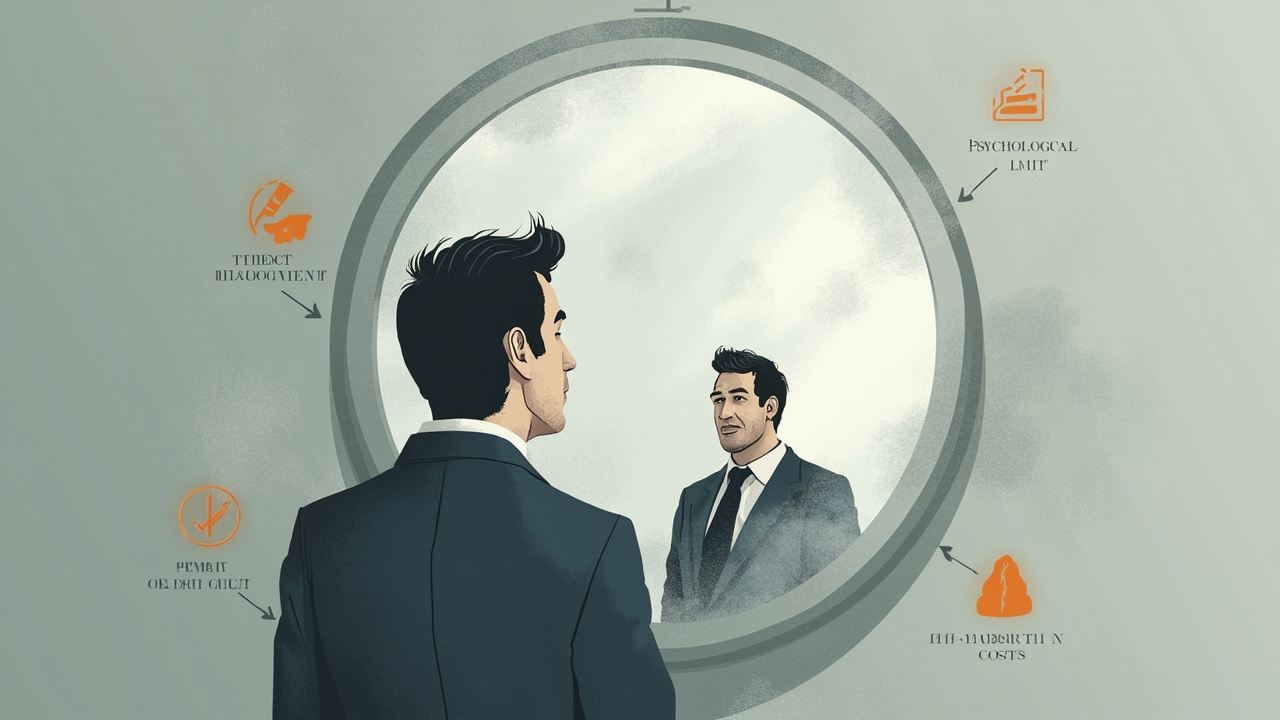
Taiwan stocks have broken 40,000 points. You open your phone, look at your account, and wonder whether to add to the bottom—then a year later you are down NT$300,000. Taiwanese retail investors lose money not because they pick the wrong stocks or lack inside information, but because their understanding of bottom-fishing is fundamentally wrong from the start. This article breaks down 3 underlying rules (using the wrong timing cancels time compounding, Taiwan stock volatility exceeds psychological capacity, and the structural interest alignment of Taiwan's financial institutions), 3 sweat-inducing account scenarios (including a 20-year gap of NT$2.86M), a 4-question decision framework, 4 veto rules, 4 practical action steps, 2 overlooked Taiwan-specific traps (after-tax dividend income yield, and leveraged ETF daily reset decay), and an emergency plan for extreme markets. Core line: in Taiwan stocks, what makes you lose money is never the market, it is your misjudgment of yourself. Action hint: before your next impulse buy, run the 4 questions and check the veto rules.
18 min
Wealth Awakening

Waiting for a Taiwan Stock Crash Before Buying? Retail Timing's Fatal Trap — Missing the Rally Is Worse Than Losing Money

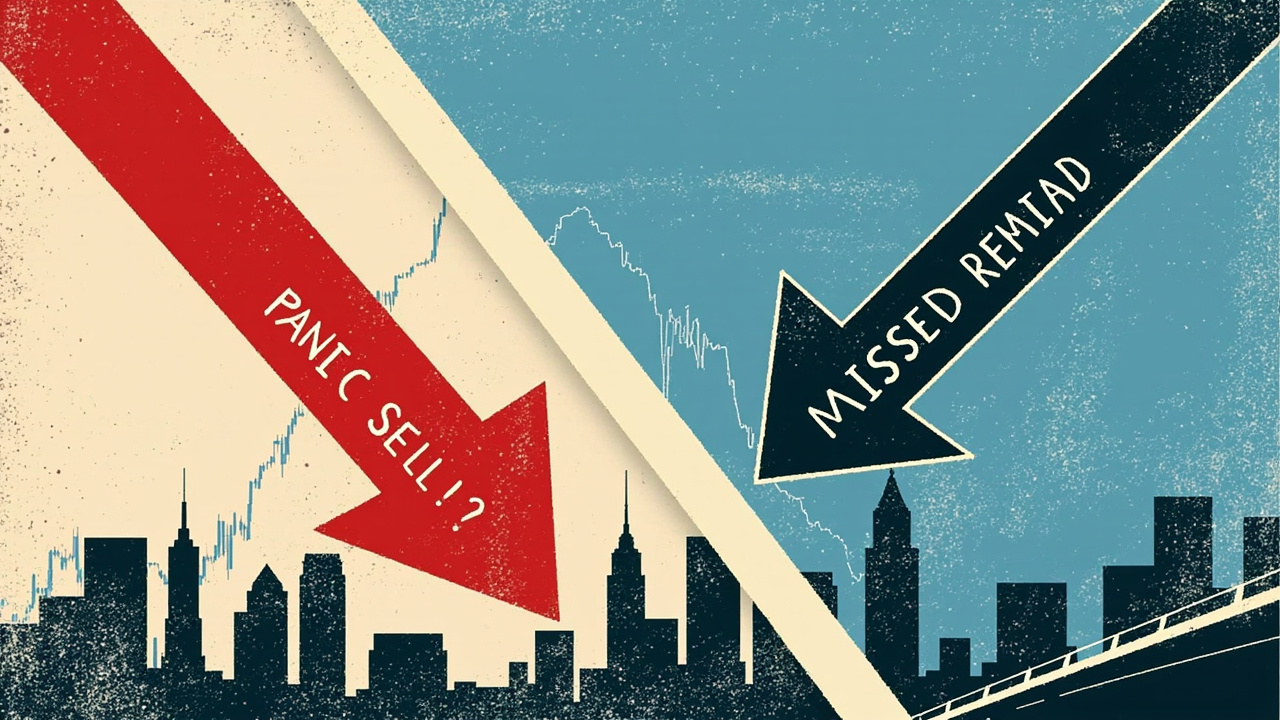
You waited three whole years, Taiwan stocks never dropped, you never got in — and your wealth shrank anyway. Not because you lost money, but because you never earned any. The hidden cost of missing a rally is far worse than paper losses — but you won't see it on a balance sheet. Taiwan's TAIEX has delivered roughly 7% to 8% annualized total return over the past 20 years, and waiting through a 50% run-up before entering means missing opportunity cost that can never be recovered. Three side-by-side calculations in this article show a NT$1 million to NT$1.4 million wealth gap after 20 years between a disciplined DCA investor and a wait-for-crash investor whose effective invested months are only 60% as many. You'll get 3 underlying rules explaining why timing the market is structurally doomed, 4 veto-proof iron rules including a 3 to 5 year minimum time horizon on invested money, and 4 actionable steps to set up automatic DCA on a mid-month trading day and close the app.

15 min
Wealth Awakening

90% of Retail Investors Die in Crashes: How to Beat the Wall Street Psychological Trap

In March 2020 the TAIEX collapsed from 12,197 to 8,523, retail investors net-sold more than NT$200 billion, the market rallied back to a new high within six months — so who took that NT$200 billion? Drawing on behavioral finance and loss aversion, this article breaks down the three underlying rules for crashes, four investment iron rules, and a four-step action plan, with real calculations for retail investors from 2008 to the present. You will learn why the saying 'the master knows when to sell' has killed more people than any other, and how Kahneman and Tversky's research on asymmetric loss-pain proves that your brain's wiring is exactly what strong money is betting against. TWSE data shows that for holding periods of more than one year from 2001 to 2023, the probability of a positive return exceeds 70% — but most retail investors still underperform the index because they sell at the bottom and chase at the top.

10 min
Wealth Awakening

Bank Fixed Deposit at 1.35% Can't Beat Inflation: 3 Truths About Capital Protection vs Preservation

You park money in a bank fixed deposit and get back only 1.35% per year, while Taiwan inflation averaged over 2.7% in 2022–2023, eroding 2% of your purchasing power every year. This article breaks down the fundamental gap between principal protection and value preservation, the bank's interest-spread business model, the 3-to-5-year lock-up trap in structured products, and runs three end-state scenarios for NT$1 million over 10 years. It closes with a four-step action plan you can start today. If you have been told your fixed deposit is "safe," you need to hear what kind of safety that actually is — and what it is costing you in real purchasing power.

10 min