Search

Current filter #高股息ETF All Clear filters

11 articles found

Wealth Awakening

Inflation Erodes Savings: Why Skipping Investments Can Lead to Financial Fragility in Retirement

Taiwan has seen consumer prices roughly double over the past decade, with fried-chicken lunch boxes climbing from NT$80 to around NT$150 and bubble tea from NT$35 to NT$80. This article uses a fictional 38-year-old office worker, Jia-hao, to illustrate the long-term gap between labor income and capital income, and outlines a practical, disciplined savings framework accessible to workers earning NT$30,000 to NT$40,000 per month.

9 min
Wealth Awakening

High-Dividend ETFs as Savings? The 6% Yield Burying Your Million-Dollar Wealth

You think piling into high-dividend ETFs and watching monthly payouts roll in is passive income. In reality, you are personally burying the compounding snowball of a million-dollar fortune. We unmask the truth: dividends are just left-hand-right-hand money, the stabilization reserve is a vampiric black box that returns your own principal as 'yield', Taiwan's 2nd-generation NHI supplementary premium doubles the tax skinning, and inflation turns a 6% yield into a slow-motion wealth funeral. The hard logic of where money really flows.

15 min
Wealth Awakening

Earning NT$70K But Drowning in Debt? Unmasking Taiwan's Fake-Rich Trap

Why do white-collar workers earning NT$70,000 a month end up broke after paying for imported cars, luxury bags, and a mortgaged home? This article tears open Taiwan's 'fake-rich' phenomenon, exposing the brutal truth that the poor buy face while the rich buy assets. From the only rule for distinguishing assets vs. liabilities, to the difference between good debt and toxic debt, plus concrete methods for forced saving and dollar-cost averaging over 20 years — discover the mindset shift that can move you out of the paycheck-to-paycheck trap and into genuine class mobility.

10 min
Wealth Awakening

Is DCA Actually a Trap? The 50/50 Golden Ratio That Retires You 10 Years Earlier

Scared to lump-sum into a crash, but DCA feels painfully slow? A century of Wall Street backtests reveals 90% of retail investors lose—not because the method is wrong, but because they lose to human nature. We expose the blind spots of lump-sum psychology and the cash-drag trap of DCA, then unlock the full Core-Satellite 50/50 Golden Ratio: 50% high-dividend core + 50% broad-market satellite. Pair it with a dual-account discipline and you sleep soundly through crashes, buy the dips, and retire a full decade earlier.

15 min
Wealth Awakening

Monthly Distribution Isn't a Retirement Plan — The Tax Strategy Taiwan's Rich Use

Taiwan's high-dividend ETF AUM broke NT$1 trillion by end of 2023 — 00878 alone exceeded NT$500 billion — but the truly wealthy in Taiwan don't retire on monthly distributions. They use a fully legal but largely unknown tax-optimization and compounding architecture that doubles wealth growth. Using the post-2018 tax-reform dividend choice (combined reporting with the 8.5% credit capped at NT$80,000 vs 28% separate taxation) and Taiwan's current capital-gains-tax exemption for individuals, this article breaks down why distributions aren't a free lunch, why a 20-year gap of NT$1.5–2 million exists between high-dividend ETFs and total-market ETFs (such as 0050), four iron rules, and four action steps. You will see exactly how a 20%-bracket taxpayer with NT$200,000 in dividends pays about 11.5% effective tax under combined reporting — and how the same person choosing a 0050-style accumulation product can keep compounding uninterrupted. The article also shows how to dynamically switch between combined and separate reporting each May based on that year's income bracket, turning tax planning into a 5-minute annual optimization rather than a once-and-done decision. Closing with four contingency moves for 2008 or 2020-style systemic crashes, this is the tax and compounding playbook most Taiwanese retail investors were never taught — and most bank RMs won't bring up because their KPI is sales, not your after-tax return.

15 min
Wealth Awakening

High-Dividend ETF as Time Deposit? Your Retirement Is Being Stolen by the Stabilization Fund

You collect a distribution every month, your account balance grows, you think you're making money — but your retirement is quietly being stolen. How much of what you receive is genuine portfolio profit? How much is your own principal being paid back to you under a different name? How much is propped up by the stabilization-fund mechanism? This article fully unpacks the underlying logic of stabilization funds, runs three calculation sets, lays out four veto iron rules, four action steps, and an extreme-market contingency plan. Using FSC rules on Taiwan-listed ETFs' distributable earnings reserve (平準金), you will see how the mechanism can pay distributions out of fund assets themselves (principal return) and how this is technically legal but practically corrosive. You will also see why putting NT$1 million into a single high-dividend ETF like 0056, 00878, or 00919 over three years versus parking it in a 1.5% time deposit can leave you NT$20,000 worse off once you account for principal erosion, and why 2008-style 50% drawdowns need seven to ten years to recover even with continuous 6% distributions. The article also covers the 2.11% second-generation NHI supplementary premium on single distributions exceeding NT$20,000, and where to find the distribution-source breakdown on the SITCA fund-rating website. By the end you will have four immediate checks to run on any high-dividend ETF you currently hold, and a clear life-stage-based allocation framework.

13 min
Wealth Awakening

Park NT$500K This Way, Collect NT$20K/Month — 94% Don't Know

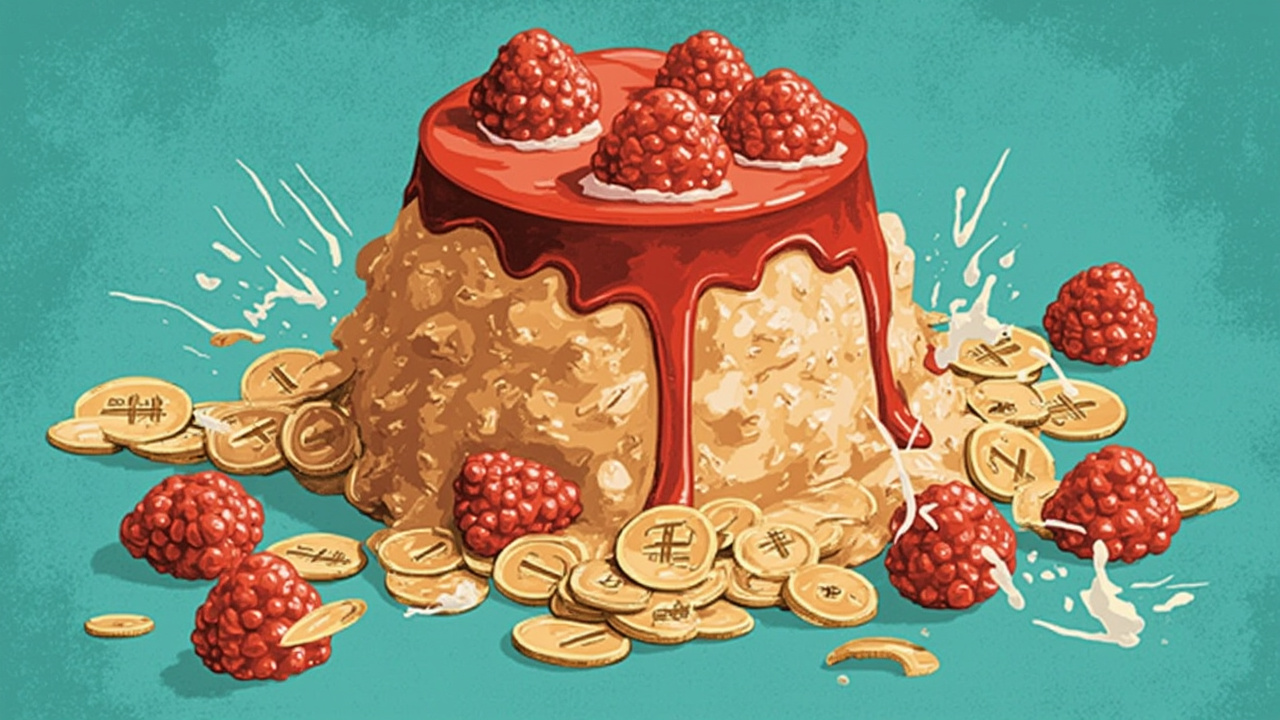
You have NT$500,000 in a savings account earning NT$4,000 a year in interest, but inflation eats NT$10,000 of purchasing power annually. Split the money into four layers — high-dividend ETFs (0056 or 00878), U.S. Treasury bond ETFs (00687B), inverse-hedge tools, and an emergency reserve — combine that with dividend reinvestment and disciplined monthly saving, and within three years your passive income can exceed your monthly salary. This article breaks down the actual allocation ratios, year-by-year compounding projections from year one to year three, and explains why banks, RMs, and investment-guru teachers will never teach you this playbook. You will see how 0056/00878 high-dividend ETFs at 6–7% yield and 00687B U.S. Treasury bond ETFs at 4–5% generate a baseline NT$1,500–1,800 of monthly passive income in year one, growing to NT$3,000+ in year three and over NT$60,000/year in year five. The article also covers the structural fee and interest-spread game banks play, the 2.11% second-generation NHI surcharge on dividends above NT$20,000, and why daily-rebalancing inverse ETFs erode over time and should only be used as short-term hedges. By the end you will have a concrete, executable NT$500K-to-financial-freedom plan that takes the next 1,095 days to unfold.

7 min
Wealth Awakening

Retail Investors Fear Crashes, the Wealthy Wait for Them: The Underlying Logic of 5 Things That Make the Rich Richer in a Crash

The market is limit-down, your phone screen is full of red, and your first reaction is to sell and run — but have you considered that at the very same second, the truly wealthy are doing the exact opposite? Retail investors fear crashes, the wealthy wait for them. The gap is not capital, not information, it is mindset. This article breaks down the five things the wealthy do in a crash: hold cash, buy core assets, execute rebalancing, understand cycles, and use the crash for tax and cost optimization. You also get four iron rules, a four-step action plan, and a contingency plan for extreme drawdowns. TWSE data confirms: during major corrections, retail investors' net selling ratio is far higher than institutions' — they sell into the dip, then chase the rally. SITCA also shows institutional cash positions at market highs are typically more than double those of retail.

14 min
Wealth Awakening

Build a NT$10 Million Portfolio Starting With Less Than NT$100,000 Saved: The Complete Core-Satellite Allocation Guide

Taiwan's CPI has averaged more than 2% annual growth over the past 5 years, but regular bank savings rates are below 0.5% and the best time deposits only reach 1.6% — you think you're preserving capital, but you're actually losing money every year. This article uses DGBAS real wage data, a 30-year time-deposit vs ETF simulation, and the historical record of the 2008 and 2022 Taiwan stock drawdowns to break down the core-satellite allocation method for small capital, four non-negotiable iron rules, an annual rebalancing SOP, and the hidden tax bonus of the 6% voluntary labor pension contribution. Finally, a 4-step low-barrier action plan means you can start rolling your retirement with just NT$2,000 from today. The Taiwan Financial Services Institute has made it clear: asset allocation contributes more to long-term portfolio returns than stock picking or market timing — how you 'allocate' matters more than what you buy.

10 min
Wealth Awakening

Only 3 Buckets Needed: Ordinary People Can Live Off a Lifetime Pension

Savers who grind every month see the gap to financial freedom growing wider. Markets sit at scary highs — jumping in risks getting harvested, staying out means inflation slowly eats your deposits. The 3-Bucket Method has been a Wall Street staple for half a century, used by top advisors and even family offices managing billions. Bucket 1 saves you, Bucket 2 shields you, Bucket 3 grows you — combined with an annual water-level rebalance, this is the most complete 2026 financial awakening guide.

12 min
Wealth Awakening

Compound Interest for the Lazy: Turn $5,000/Month Into $6.1M

Open your phone, see someone else post a 30% annual return, then quietly close the app? This is for anyone with under $1.5M in savings. Learn the digital account migration method, automatic investing in market-cap ETFs, slashing fixed expenses, and labor pension voluntary contributions — all without watching the market daily. After 30 years, the gap isn't about money, it's about the choices you make today.

12 min