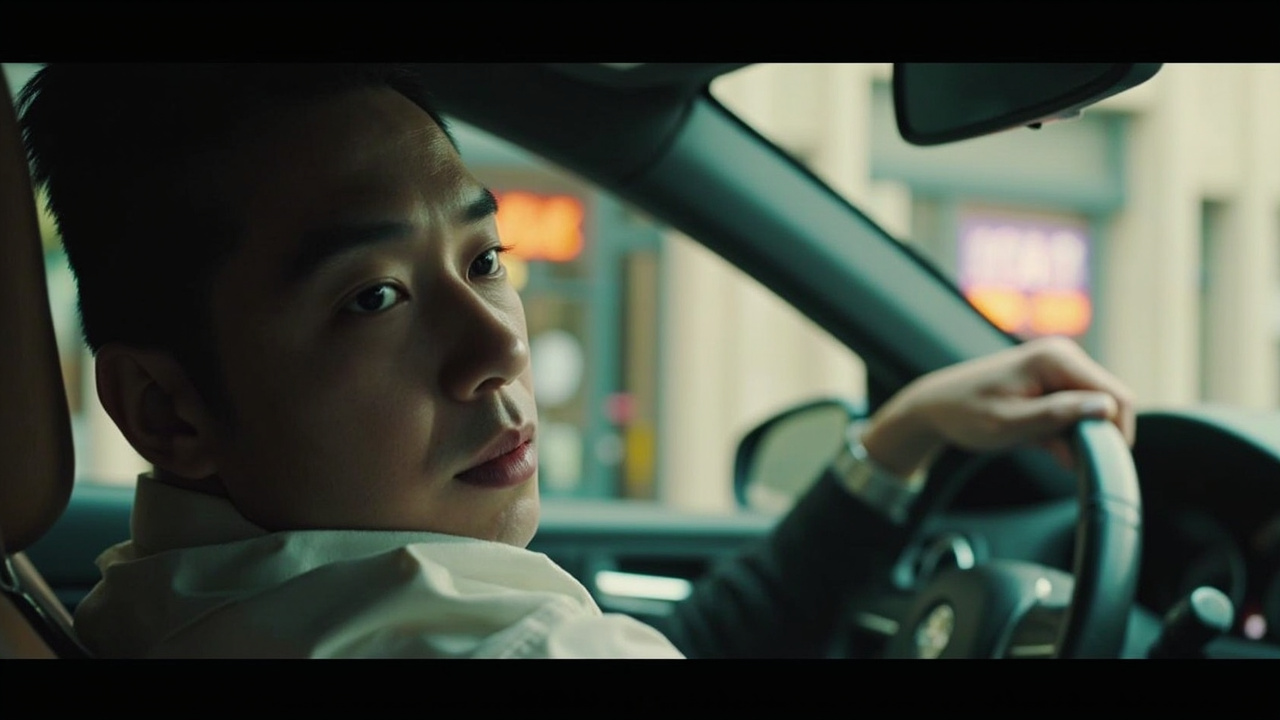
You see them every weekend: behind the wheel of the latest imported luxury sedan, sporting a six-figure watch, dining at upscale restaurants in Taipei’s Xinyi District. You assume they’re rich. The brutal truth is that more than 80% of these people are drowning in debt — they are the fake rich.
They weren’t born with silver spoons. They were kidnapped by face-saving and vanity, then conscripted into the army of the working poor. They earn NT$70,000 a month, but after bleeding payments on an imported car loan, credit card revolving interest, and shiny luxury expenses, they can’t even cover rent and three meals. This isn’t a movie plot. It’s the daily tragedy playing out across Taiwan.
What truly caps your wealth ceiling is never your monthly salary — it’s the cognitive gap between what you call an ‘asset’ and what you call a ‘liability.’ Today’s article rips off this mask of hypocrisy and shows you the most lethal chasm between the poor and the rich.
1. Ah-Hsiang’s Blood-and-Tears Story: How a NT70K Salary
Have you ever wondered how a single car can drag a perfectly presentable office worker straight into financial hell?
Ah-Hsiang’s base salary plus overtime came to just over NT500,000 down payment, signed an 84-month high-interest auto loan, and drove home a brand-new NT$2.5 million German luxury sedan.

The thrill of the new car lasted less than a month. What followed was seven years of slow-torture repayments. Monthly principal and interest, license tax, fuel tax, comprehensive body insurance, gasoline — this car relentlessly devoured more than NT30,000 left, he could barely cover rent and three basic meals.
The cruelest irony? He had to start leaning on credit card revolving interest, unable to even split a few hundred dollars for lunch. This is the real-life version of that internet joke about driving an imported car to the gas station and sheepishly saying ‘fill it up with NT$300 worth.’
Ah-Hsiang didn’t lose to bad luck. He lost to the fatal mindset of treating liabilities as assets. To buy a face that never belonged to his class, he ended up shackled deep in the basement of the working poor.
2. The Counter-Intuitive Money Philosophy of a Taichung 7th Redevelopment Tycoon: A Beat-Up Old Toyota Backing a Billion-Dollar Net Worth
The sharp contrast to Ah-Hsiang is the invisible tycoons of Taiwan who actually hold nine-figure fortunes.
If you ever wander into a tin-roof factory in Taichung’s Dadu or Shengang District, you’ll spot a white-haired old man in a faded yellow T-shirt, blue-and-white flip-flops, sitting in his office eating a NT.**

I once interviewed Chairman Chen, who runs precision machining. Three large factories under his name, annual net profit over NT$100 million, several mortgage-free luxury residences and commercial land in Taichung’s 7th Redevelopment District. Yet every day he drove to and from work in a Toyota older than fifteen years — paint peeling, AC making weird noises.
I asked him why he didn’t upgrade to a nicer car. His answer was ice-cold: “The second you drive a car out of the showroom, it starts depreciating, starts losing value, only takes money out of your pocket. I take the few million I’d have spent on an imported car and buy a new digital-control lathe instead. It works 24/7 making parts for me, printing an endless stream of US dollars. Why would I spend a few million on a meaningless face? Face is the most expensive — and most worthless — thing in the world.”
This is the most characteristic counter-intuitive money philosophy of Taiwan’s older generation of entrepreneurs: money is an army of soldiers. You deploy them to conquer territory — you don’t waste them parading your strength.
3. The Only Rule for Telling Assets from Liabilities: Does Money Flow Toward You, or Away From You?
The deepest chasm between the poor and the rich has never been birth circumstances or education level. It’s the total misunderstanding of two simple words: asset and liability.
In the poor person’s mind, anything that makes them look rich and respectable is a life asset worth showing off. The latest iPhone, the designer bag, the imported car bought on loan — they naively treat these as badges of pride. In reality, every one of these items is a vicious liability that constantly drains money out of your pocket.
The standard is brutally simple:
- Asset: Something that puts money into your pocket every single month, even when you do nothing. A stable rental storefront, a quality listed company that pays annual dividends, a long-term growth index fund, a patented technology that generates royalties.
- Liability: Something that pulls money out of your pocket every single month, no matter how hard you maintain it. An imported car bought on loan, luxury items bought on credit card installment, even the home you live in if it requires a NT$50,000 monthly mortgage payment.
A self-occupied home that produces no cash flow is, in essence, a massive liability. Because it relentlessly consumes your cash every single month.
The poor spend their entire lives working hard, mistakenly believing that designer brands and sports cars can fill the inferiority deep inside them. They obsess over what others think, over the status competition at Lunar New Year gatherings, and willingly become long-term slaves to bank loans just to maintain an illusion of wealth.
The rich, on the other hand, exercise extreme restraint on present consumption. They treat every dollar of hard-earned money as a soldier capable of conquering territory, pouring it all into real assets that generate cash flow. While the poor lie awake anxious about next month’s credit card bill, the rich sit back watching their assets grow under the magic of compounding.
When a rich person’s passive income from assets far exceeds daily living expenses, they have truly achieved financial freedom — with the backbone to say ‘no’ to a terrible job at any time.
4. Good Debt vs. Bad Debt: The Capital-Operation Truth Behind How the Rich Get Richer by Borrowing
Beyond the asset-liability cognitive gap, the rich hold another deeply counter-intuitive view — they are masters at using good debt to make themselves richer.
Many older generations in Taiwan believe that owing money is shameful and dangerous: once you have money, rush it to the bank; if you have a mortgage, pay it off as fast as you can. This seemingly prudent, conservative money view is, in today’s high-inflation era, actually slowly eating away your purchasing power.
How do the rich view debt? They split it into two categories: extremely evil bad debt, and good debt that makes money.

An ultra-high-interest auto loan to buy a luxury car, like Ah-Hsiang’s, or credit card revolving interest — debt that produces zero return and just keeps bleeding you — is the bad debt the rich absolutely refuse to touch.
But if you can leverage a solid credit record to borrow ultra-low-interest capital from the bank (Taiwan’s first-time-buyer mortgage rates currently sit around 2% something), the rich don’t hesitate: they mortgage the home, draw out long-term low-interest loans, and pour that money into Taiwan’s large-cap high-dividend targets that reliably produce 6% to 8% returns, or into long-term-growth index investing.
The fat 4% to 5% spread in the middle is the risk-free profit the rich earn using the bank’s money. Inflation keeps diluting the future value of that debt, so not only does this money not have to be earned by your own sweat, the bank actually becomes the most loyal, cheapest super-employee on their wealth empire’s payroll.
The poor park their hard-earned money in the bank earning a pathetic 1% interest, watching helplessly as inflation eats their purchasing power; the rich borrow the poor’s money from the bank and pocket an 8% return on real assets. That’s just how the world works.
5. The Working Poor’s Practical Escape Plan: Force-Save 20% + Dollar-Cost Average for 20 Years
If you recognize yourself trapped in the face-buying mindset of the poor, and you want to break this curse of class immobility — be warned, this is not an easy path. It demands an extremely strong psychological makeup and iron discipline.
First, you must learn the most painful lesson of all — radical delayed gratification.
Forcibly suppress your brain’s impulse to grab instant pleasure. When you see a designer bag still worth tens of thousands after discount, when you see a colleague upgrade to the latest iPhone while yours has a cracked screen, when you’re crammed into the MRT craving to take out a car loan to reward yourself — tell yourself loudly inside your head: every single one of these is a vicious, blood-sucking liability.
Never use the utterly hypocritical excuse of ‘treating yourself’ to mask your financial weakness and ignorance. True freedom isn’t buying a designer bag or splurging on a multi-thousand-dollar chef’s-choice omakase dinner. True freedom is when your boss is screaming at you unfairly, trying to make you the fall guy, and you have enough backbone to slam your resignation on his desk and walk away with style.
In the finance world, this money has an extremely vulgar but absolutely real name: Fuck You Money. Once you have this absolute-freedom backbone fund, you finally live with the dignity and value of a real human being.

As an ordinary working-poor person earning only NT50,000 a month, how do you actually pull off a counterattack? The wealth equation is so simple that most people dismiss it with contempt: forced saving plus buying real assets.
Starting from the day your salary lands next month, execute a brutally enforced saving plan. Immediately auto-transfer 20% of your income into an account you absolutely cannot touch. The remaining 80% is the hard ceiling for rent, utilities, and all living expenses this month. Not enough for fancy dinners. Not enough for Starbucks. That’s the point — force yourself to completely kick the vanity-driven, value-destroying spending.
Pour that 20% without hesitation into real assets that appreciate over the long term. For the working poor, the most stable, lowest-barrier-to-entry asset is a Taiwan large-cap index ETF or a high-dividend target. Even if you can only squeeze out NT10,000 per month, set up a dollar-cost-averaging plan without hesitation.
Never underestimate this humble NT$10,000. As long as you can throw the face-buying vanity straight into the trash, and stick with it for twenty years — buying continuously and reinvesting every dividend — the terrifying magic of compounding will turn this money into a ten-million-class asset that lets you retire comfortably or even leap up a class.
Closing: Drop the Worthless Face, Turn Every Dollar into Your Soldier
The wealth distribution rules of this world are cruel and ice-cold. The capital markets never sympathize with the weak. Inflation never goes easy on you just because you’re poor.
What you trade for is a lifetime of paycheck-to-paycheck, a lifetime of anxiety, a lifetime of living at others’ mercy. What you trade for is absolute freedom, absolute optionality, and generational wealth transfer. An employer can be ripped away by cruel reality at any moment, but your assets are yours — they are loyal to you forever.
This is the most important wealth watershed in your life. If you refuse to wake up now and choose to stay drunk on the fantasy of pretending to be rich, the future will force you to haggle over a few dozen dollars on vegetables.
Drop the face that was never worth anything! Turn every dollar into a financial soldier — and send them out to conquer your own wealth castle.
If this article hit a raw nerve and finally woke you up, please share it with the friends around you who are still running on the poverty treadmill for the sake of face. Let’s see through the truth of how capital really works — and become the last ones standing in this brutal wealth game.
This article involves financial/investment advice. Please evaluate based on your own circumstances and consult a professional financial advisor.
Comments