91% of Taiwan Retail Investors Lose Money! The 5 Deadly Sins—The 3rd Is the Most Fatal
You open your Taiwan stock app, your account numbers are dropping again, your finger hovers over the screen unsure whether to cut losses—is this a scene you live through every day?
According to recent TWSE statistics, the proportion of Taiwan retail investors who achieve consistent long-term profits is below 10%; over 90% of people in the market are losing money. 90%—stop and think about this. This is not a problem for a few people. This is the reality for the vast majority.
What makes it worse is that nearly every one of these 90% losers believes they are different, that this time is different, that “one more push and it will come back”—and that feeling is one of the core reasons you keep losing.
In the Taiwan stock market, information asymmetry is the norm, but behavioral indiscipline is the real killer for retail investors.
The Real Position of Taiwan Retail Investors: A Systemic Structural Problem
The average holding period for Taiwan retail investors, per TWSE statistics, is far shorter than that of institutional investors, with retail turnover extremely high. Many people buy and sell the same stock within a month. What does that represent? It means most retail investors are not investing at all; they are speculating.
Investing is based on judgments of a company’s long-term value; speculating is based on predictions of short-term price moves. These two activities use completely different tools, different logic, and different mindsets. But the vast majority of Taiwan retail investors use a speculator’s mindset while expecting an investor’s result—this mismatch is where losses begin.
Sin #1: Chasing Rallies and Selling on Dips (And You Don’t Know You’re Doing It)
Many people, when they hear “chasing rallies and selling on dips,” say “I’m not that kind of person; I do my homework.” But look at your own trading records—do you buy a stock after it has already risen a lot, then sell it after it has fallen a while? If so, you are chasing rallies and selling on dips, no matter how much homework you did.
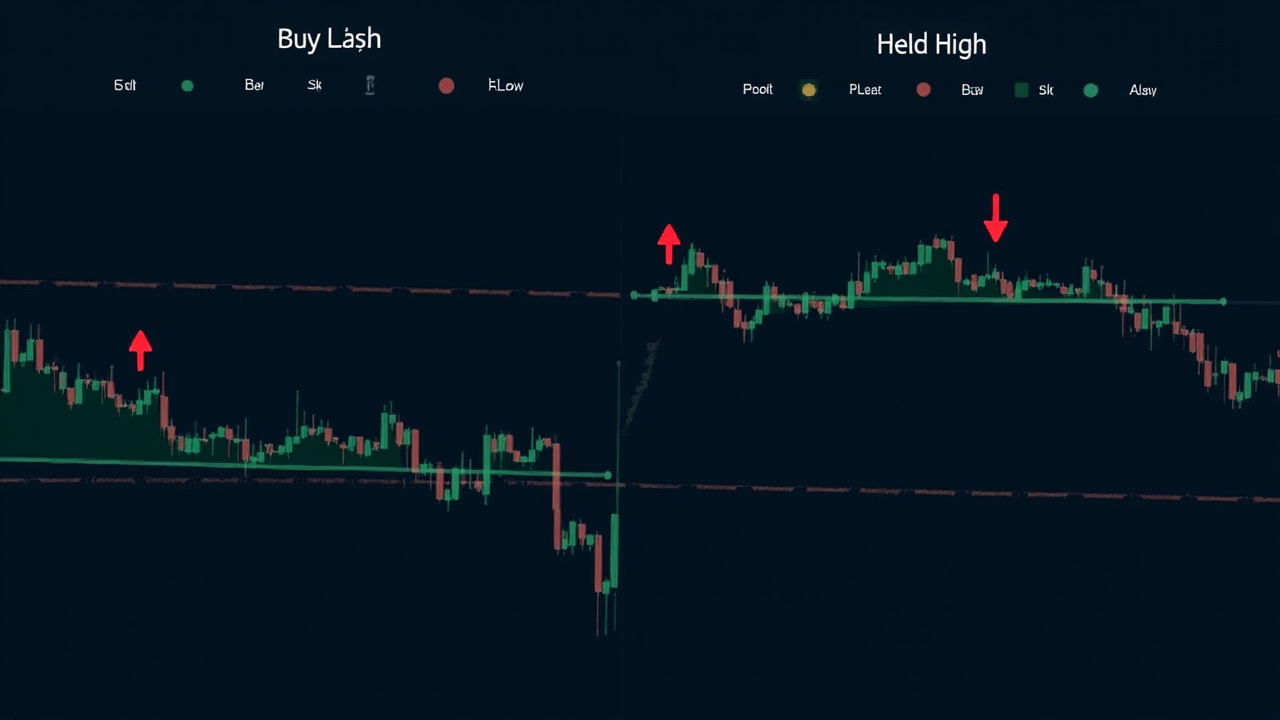
According to SITCA, when the market is hot and trading volume expands, the number of new account openings and retail buying in Taiwan rises significantly—this is not a coincidence; it is human nature. When people see others making money, the fear of missing out overrides all rational judgment. You are not buying because the stock is cheap; you are buying because it is rising and you are afraid of missing out.
After the 2020 pandemic, Taiwan stocks had a strong rally, with the Weighted Index more than doubling from the low to the 2021 high—during this period the number of new brokerage account openings in Taiwan hit a record. Then in 2022, the Taiwan market fell over 30% from its high, and the paper losses for those newcomers who had entered near the 2021 high were very real.
Let me show the math: suppose you invested NT300,000, roughly 30%. If you panic-sold at the 2022 low, that NT1M would have more than doubled at the 2021 high**—same tool, same money, vastly different results from entry timing alone.
The essence of chasing rallies and selling on dips is that you are making financial decisions with emotion—and emotion in the market is a cost, not an asset.
Sin #2: Over-Concentrated Stock Holdings (You Mistake It for Conviction)
A common Taiwanese retail investor mindset: “I’ve researched this company, I’m bullish, so I put most of my money in this one.” This behavior is even dressed up as courage in retail circles: “Buffett says to concentrate too.”
But when Buffett talks about concentration, he is doing it on the basis of complete corporate analysis capability, sufficient information advantage, and decades of investment experience. His concentration rests on extremely strict stock-picking standards. Taiwanese retail investors using that quote to justify all-in concentration are selectively quoting it after removing all the preconditions.
The Taiwan stock market is heavily concentrated in electronics and tech, especially semiconductors. Many retail investors, confident in Taiwan tech’s global competitiveness, put most of their capital in one or two tech stocks. When that sector hits a downcycle (such as the 2022 semiconductor inventory correction), individual stock price drops can exceed 50% or more—and if you had 70%+ of your capital in those names, your account damage was brutal.
According to modern portfolio theory, diversification can effectively reduce idiosyncratic risk (the specific risk of an individual company or sector) without significantly reducing expected return. The FSC’s investor education materials clearly recommend that ordinary investors avoid over-concentration in a single stock or single sector.
Let me run the math: NT400,000, and getting back to breakeven requires a 150% gain—not impossible, but it could take 3, 5, or even more years. But if you had diversified that NT$1M across 10–20 stocks or ETFs across different sectors, the overall drawdown would have been substantially buffered and the recovery time far shorter. In the 2008 financial crisis, the Taiwan Weighted Index fell nearly 60% from its high—investors holding a diversified Taiwan broad-market ETF recovered to roughly the prior high within about 3 years by 2011. But some people concentrated in certain individual stocks, and some of those names have still not revisited their 2007 high.
Diversification is not because you lack conviction; it is because you are sober enough to know that the market’s uncertainty is greater than your judgment’s capacity.
Sin #3 (Most Fatal): No Stop-Loss, or Setting One But Not Executing It
Retail investors have a memorable phrase: “Once you’re stuck, treat it as buying-and-holding.” Behind this phrase is a psychological mechanism that rationalizes a wrong decision—when a stock drops, admitting the loss is painful, so people automatically find reasons: “It’s fine, I’ll hold long-term. The company’s fundamentals are still good.”
The question is: when you bought, did you actually do fundamental analysis? Or did you buy because it was rising, and only after it fell did you suddenly become a long-term investor? If the latter, this is not an investment strategy; it is using a story to escape facing a loss.
The core logic of a stop-loss is not admitting defeat; it is capital protection. If you cut your loss at 20% today, you still have 80% of capital to redeploy; if you let it fall 50%, recovery requires a 100% gain—your capital efficiency and opportunity cost are massive losses.
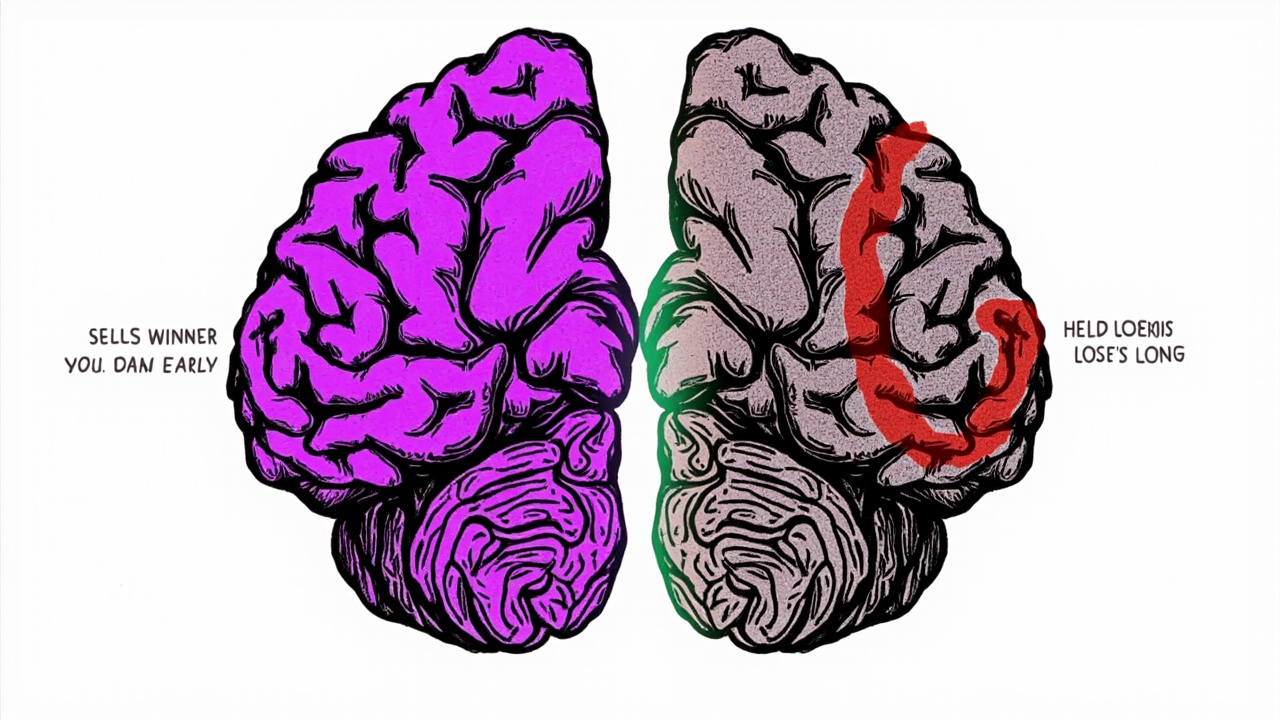
The Taiwan Academy of Banking and Finance and related academic research both point out that Taiwan retail investors exhibit a significant disposition effect: they tend to sell winners too early and delay cutting losses on losers. This is a phenomenon with rigorous research backing from behavioral finance, not a willpower issue—it is the human brain’s asymmetric reaction to losses and gains. Knowing this phenomenon exists does not mean you can keep letting it run—you have to use systematic rules to fight it once you know your tendency.
Let me show the math: **NT900,000 to redeploy. Next time you are right and gain 20%, your capital becomes NT600,000, and even if you are right next time with a 20% gain, you only reach NT$720,000—still a loss.
The standard for a stop-loss should not be a fixed percentage (like “stop at 10%”); it should be set based on the logic of your entry—why did you buy? When that reason no longer holds, that is the real stop-loss moment. A stop-loss is your honest check on your own original judgment.
Sin #4: Ignoring Trading Costs and Taxes
A common blind spot for Taiwan retail investors: only looking at the price move, not the full transaction cost. You made 5% on a buy, but did you factor in the commission and the sell-side securities transaction tax? If you turnover frequently, these costs accumulate to a significant amount.
Taiwan stock trading cost structure: both buy and sell pay commission, with a statutory cap of 1.425‰ of trade value; most brokers offer discounts, but even at a 30% discount you are still paying each time. On the sell side you also pay the securities transaction tax—3‰ for normal stocks, 1.5‰ for day trades.
Run a concrete scenario: NT1M with monthly round trips means annual trading costs alone could eat close to 7–8% of your return. Your Taiwan stocks would need to consistently rise more than 8% just to offset trading costs, let alone deliver real profit. The Taiwan Weighted Index’s near-20-year annualized return is about 7–10%, but that is the overall market figure—individual retail investors, depending on stock-picking timing and turnover frequency, realize far less than that.
Taiwan ETFs also carry an internal management fee, deducted annually from fund assets, not shown in your account statement, so many people do not even notice it exists. The management fee gap between Taiwan-domiciled ETFs is huge—on a NT$1M investment over 20 years, a 0.5% annual management fee gap could mean a six-figure difference in compounded value. That number is not huge in itself, but it is money you simply hand over for doing nothing.
Another often-overlooked tax issue: Taiwan implemented dividend taxation starting in 2018, with salary and dividend income either combined or taxed separately at a flat 28%. For higher-income earners, the impact of dividend taxation cannot be ignored—your actual dividend yield is lower than the headline number. Your real return is not how much the price went up; it is how much your capital actually grew after all costs and taxes.
Sin #5: No Investment Plan, Operating by Gut Feel
This is the most common and the hardest to admit. When you buy a stock, do you have a complete plan—why you are buying, expected holding period, target return, stop-loss point, what proportion of capital, what to do if the market keeps falling? Most retail investors’ answer is “no.” The reason for buying might be that a friend said it was good, a finance show said it was bullish, or the chart looked like it would go up—that is not a plan, that is a bet.
What is the consequence of having no plan? Every decision you make is an in-the-moment reaction, and in-the-moment reactions in the market are almost always wrong—because the market is designed to give you the strongest impulse to do the most wrong thing at the most wrong moment. You most want to buy when the market is up; you most want to sell when the market is down. Together, these two tendencies form the complete cycle of chasing rallies and selling dips.
The FSC’s investor education materials repeatedly emphasize: before investing, you should first assess your own risk tolerance, investment goals, and investment horizon—this is not a hurdle; it is the most basic guardrail against making decisions by feel.
Three Scenarios: Wrong, Right, and Extreme
Scenario 1 (Wrong approach: frequent turnover + no stop-loss): Monthly salary NT10,000 a month into Taiwan stocks, monthly round trip, commissions at half price plus transaction tax, roughly 6‰ per round trip; add the habit of chasing rallies and selling dips, average entry near relative highs and exit near relative lows, annualized return 5–10 percentage points below the broader market. After 10 years, contributing NT900,000 or less—you not only did not make money, you didn’t even beat inflation.
Scenario 2 (Right approach: low-cost dollar-cost averaging long-term hold): NT1.2M of contributions over 10 years, at 7% annualized the account is around NT$1.7M. The precondition: don’t panic-sell during major drawdowns, keep executing DCA, and don’t rotate stocks mid-stream.
Scenario 3 (Extreme black swan): Major Taiwan market drawdowns in history—the 2000 tech bubble dropped over 60%, recovery took over 10 years; the 2008 financial crisis dropped nearly 60%, recovery took about 3–4 years. If you put a large sum in all at once at the peak, you may wait many years to recover. This is why DCA gives ordinary retail investors more error-tolerance than lump-sum entry—it spreads your entry timing out, reducing the risk of going all-in at a high.
Four-Question Plus One-Confirm Decision Framework
Before any Taiwan stock investment decision:
- Is the money I’m investing idle capital I will not need for 3 years? If not, don’t enter yet.
- What is my reason for buying? Can I state it clearly in one sentence? If you cannot, you have not thought it through.
- What is my stop-loss point and take-profit target? Under what circumstances will I admit I was wrong?
- What share of my total assets does this position represent? If this money is entirely lost, how will I be affected?
One confirmation: confirm this decision is based on your plan, not on the moment’s emotion or the market’s heat.
4 Iron Rules
- Don’t enter the stock market without an emergency reserve—3–6 months of living expenses in a demand deposit or instantly accessible account; this is the safety net.
- No single stock position exceeds 30% of your total stock holdings—applies to ordinary retail investors without professional analysis capability.
- Set a stop-loss point before entering, and execute it—the stop-loss is not a fixed percentage, but is based on your entry reasoning.
- Don’t borrow to invest, don’t use margin, don’t add leverage—margin’s forced-liquidation risk is extremely dangerous for ordinary retail investors, no exceptions.
2 Taiwan-Specific Advanced Traps to Avoid
Trap 1: ETF tracking error and premium/discount. When you buy a Taiwan stock ETF thinking you are getting the index’s return, there is actually a gap between the ETF’s return and the index it tracks (tracking error). Beyond management fee, also look at its tracking error—this data is available on the management company’s website or in the prospectus. In addition, some Taiwan ETFs trade at a premium or discount to NAV, especially during volatile periods. Buying at a high premium means you paid more than the underlying assets’ value, which hurts your future return. TWSE’s website provides ETF premium/discount data.
Trap 2: The rights-off and ex-dividend fill trap. Many Taiwanese investors care deeply about dividends, treating high yield as a core stock-selection criterion. But after ex-dividend, the stock price drops by roughly the dividend amount—the dividend you receive is not money from the sky; it is deducted from your holding’s market value. After ex-dividend, the price has to climb back to the pre-ex-dividend level for “dividend fill” to complete. If a stock never fills after ex-dividend, your total return may be negative. Taiwan’s FSC and TWSE public data show that fill rates and fill times vary widely across Taiwan stocks—when evaluating a high-yield name, you cannot only look at the yield; you must also look at the company’s profitability and growth, which are the fundamental drivers of fill.
4 Practical Action Steps
Step 1: Audit current holdings and trading costs. Open your brokerage app, list all your holdings and ETFs in full, calculate each position’s share of total investable capital—is any single one over 30%? Also open your trading history, calculate your total trading cost over the past year (commissions + transaction tax)—the number may shock you.
Step 2: Decide your core allocation ratio. Decide the ratio of equity to fixed income based on your age and risk tolerance. A simple reference formula: 100 minus your age gives roughly the upper limit of the share you can allocate to equities—about 75% at 25, about 45% at 55. This is not an absolute standard, but a reasonable starting point.
Step 3: Set up a dollar-cost averaging plan. Set up an automatic deduction DCA plan in your brokerage account or fund platform, choosing a Taiwan broad-market ETF as the core holding. Invest a fixed amount each month that you will not be tempted to stop just because the market moves—an amount you are sure you can keep saving, not an amount you wish you could save.
Step 4: Set up an annual health-check mechanism. At least once a year (typically around Lunar New Year), review every investment position—confirm whether the original buy reason for each position still holds, confirm whether your overall asset allocation still fits your current financial situation and life stage, and rebalance based on the results. Rebalancing is not frequent turnover; it is a measured adjustment of positions that have drifted too far from target. Once a year is enough.
Differentiated Strategies for Different Groups
Students / fresh graduates just entering the workforce: Time is your biggest advantage; small capital and unstable income are your disadvantages. Prioritize building an emergency reserve, then start dollar-cost averaging into a low-cost Taiwan broad-market ETF, with NT$1,000–3,000/month. The point is building the habit; don’t rush to pick individual stocks; get the basics right first.
Office workers with families: Financial pressure is much greater (mortgage, car loan, kids’ education), investment strategy must be more conservative, ensuring equity exposure does not exceed your tolerable loss ceiling. DCA is still the most suitable strategy, but capital allocation must be more careful.
Middle-aged parents with children: 10–20 years from retirement, but with the heaviest financial responsibilities (kids’ education plus parents’ medical costs may hit at the same time). Gradually reduce risk and increase the fixed-income share, while ensuring retirement preparation is not disrupted by market volatility.
Seniors close to retirement: The first priority is capital preservation, not capital growth. You do not have enough time to wait for recovery from a major drawdown, so the equity share should be significantly reduced, with most capital in lower-risk vehicles (Taiwan government bonds, fixed deposits, or low-risk bond funds). Do not be drawn in by high-yield stocks and ignore the capital-loss risk.
This article is for financial education only and does not constitute any investment advice or solicitation. All investments carry risk, and past performance does not represent future results. All financial products mentioned are FSC-approved compliant products. Before making any investment decision, please assess your personal financial situation and risk tolerance, and consult Taiwan-licensed financial advisors or tax professionals.
Disclaimer: This article is a sharing of investment and financial concepts and a compilation of information, and does not constitute any specific investment, tax, or legal advice. Markets carry risk; invest with caution. Please make independent judgments based on your own risk tolerance and consult professional advisors.
Tags
Taiwan Retail Traders, Chasing Rips Dumping Dips, Concentrated Holdings, Disposition Effect, Stop-Loss Discipline, Transaction Cost, Securities Transaction Tax, ETF Management Fee, 28% Dividend Tax, Investment Plan, TRI, Behavioral Finance, Portfolio Diversification, Retail Losses
Comments