
Complete 2026 Taiwan Stock Tax Guide: Day Trading Loses to Taxes, Not to the Market
You made 30 short-term trades this year, your paper gain was NT52,000 actually landed in your pocket. Where did the missing NT$28,000 go? Have you seriously calculated it?
Many people blame their short-term losses entirely on “wrong market, wrong pick, wrong timing,” but I will tell you an uncomfortable truth: even if your stock-picking eye is sharper than 80% of retail investors, you can still lose all your profit—not to the market, but to taxes and transaction costs you never seriously calculated.
This is Taiwan’s most invisible stock-market harvester. It does not feel like a falling price. It cuts from your pocket a little at a time, every buy and every sell. And after it is done, you still think you just lack technique.
Core idea: When trading stocks in Taiwan, your real return is not paper gain divided by principal, it is paper gain minus all trading costs and taxes, divided by principal. That number is what you actually made.
The Complete Cost Structure of Trading Taiwan Stocks in 2026
Do you know what taxes and fees you pay when trading Taiwan stocks? If your answer is just “securities transaction tax,” you have missed at least half of the hidden costs.
The official rules are:
- Every buy and sell, you pay your broker a commission of 1.425‰ of the trade value, charged once on the buy and once on the sell, for a combined 2.85‰
- When you sell, the government also directly deducts a 3‰ securities transaction tax from your sale proceeds, regardless of whether you made money or lost money
Combined, each complete round trip carries a fixed cost of 5.85‰ of the trade value.
It does not sound like much, so let me run the real numbers: suppose you trade short-term with NT200,000 per round trip. Monthly commissions: NT5,700**. Monthly securities transaction tax: NT6,000**. These two alone cost you NT140,000 a year.
Your NT$1M of principal has not started making money, and just the habit of high-frequency trading already eats 14% of it per year. You must earn more than 14% in the market before you can call it real profit. The Taiwan Weighted Index’s average annual return in a normal year is roughly 8% to 12%, so trading costs alone have already eaten—and exceeded—the market’s average return.
That is the first death trap of short-term high-frequency trading in Taiwan—not a technique problem, but a math problem.

Dividend Income Tax: The Hidden Bomb Many Ignore
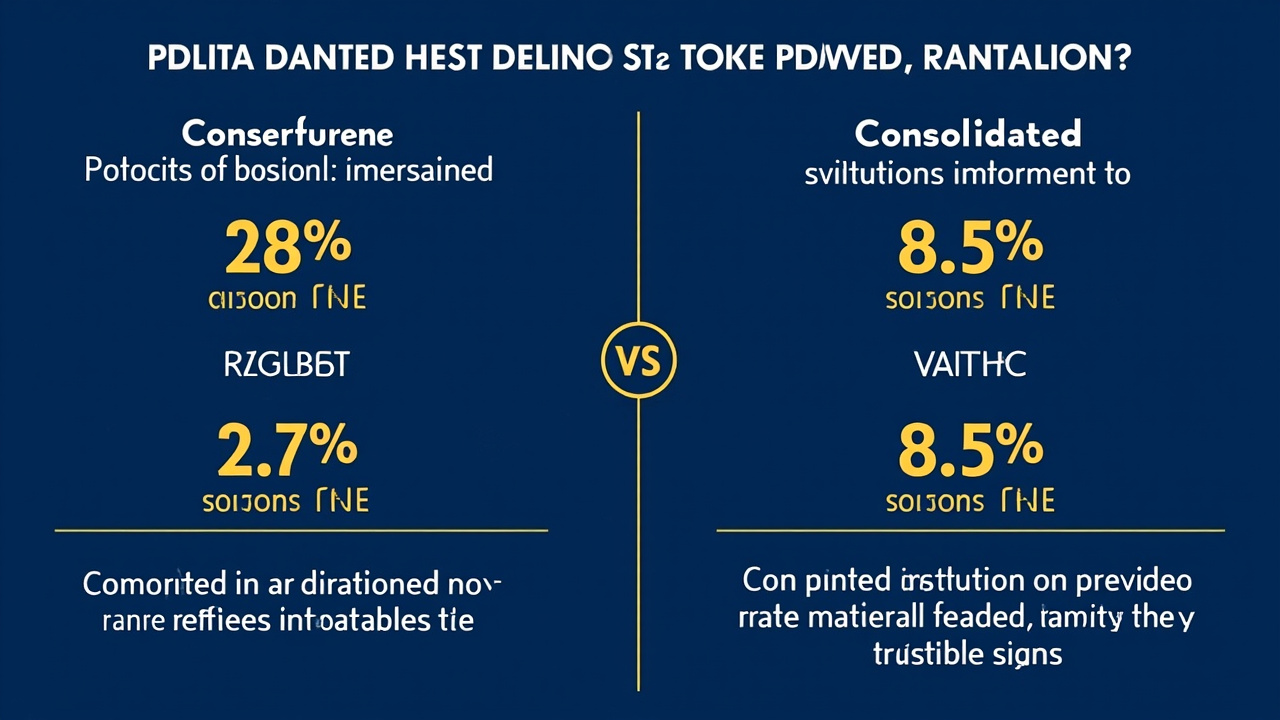
Taiwan’s dividend income tax is a hidden bomb that many ignore. According to the Ministry of Finance, dividend income can be combined with consolidated income or taxed separately. The separate tax rate is 28%; the combined calculation follows your consolidated income tax rate.
If your annual income is above NT$1.2M, your highest marginal rate is 30%. Many office workers think this is not their problem because they do short-term trading, but the issue is: if you hold a stock before the ex-dividend date and sell after the ex-dividend, the price gap from the dividend being filled is essentially dividend tax cost disguised as capital gains—you just do not feel it.
More importantly: Currently in Taiwan, capital gains on stock trading by ordinary retail investors are tax-free. As of 2026, this basic structure has not changed. But that does not mean your trading carries no tax cost—the securities transaction tax is paid on every sell, regardless of gain or loss.
That is the most asymmetric feature of Taiwan’s stock tax system: you pay tax even when you lose money. Have you ever thought about this? This is the underlying logic of Taiwan’s stock tax system—it does not tax your profits, it taxes your trading activity. The more frequently you trade, the more you pay, regardless of whether you make money.
3 Real Account Comparisons
Scenario 1: The total cost damage of short-term high-frequency trading
Xiao Ming has NT100,000. Monthly fixed trading cost: commissions NT2,280, securities transaction tax NT2,400, for a combined monthly NT56,160 a year, and the trading cost alone is 11.2% of his NT$500,000 principal**.
Even if Xiao Ming’s stock-picking eye lets him book a 15% paper gain, after costs his real return is only 3.8%. That is barely better than a fixed deposit, but he is taking on stock market volatility. This is the case where he actually makes money on paper. If Xiao Ming breaks even on paper for the year, he is actually down 11.2%. If a COVID-style crash like March 2020 hits and the Taiwan market drops nearly 30% in a month, his paper loss plus trading costs could leave him with only about NT500,000.
Scenario 2: The real cost structure of medium- and long-term holding
Xiao Hua also has NT5,000, a cost ratio of only about 1%**. In the same market environment and with the same stock-picking logic, Xiao Hua’s net return beats Xiao Ming’s by more than 10 percentage points. The difference is trading frequency.
Scenario 3: Long-term wealth gap with extreme black-swan scenarios
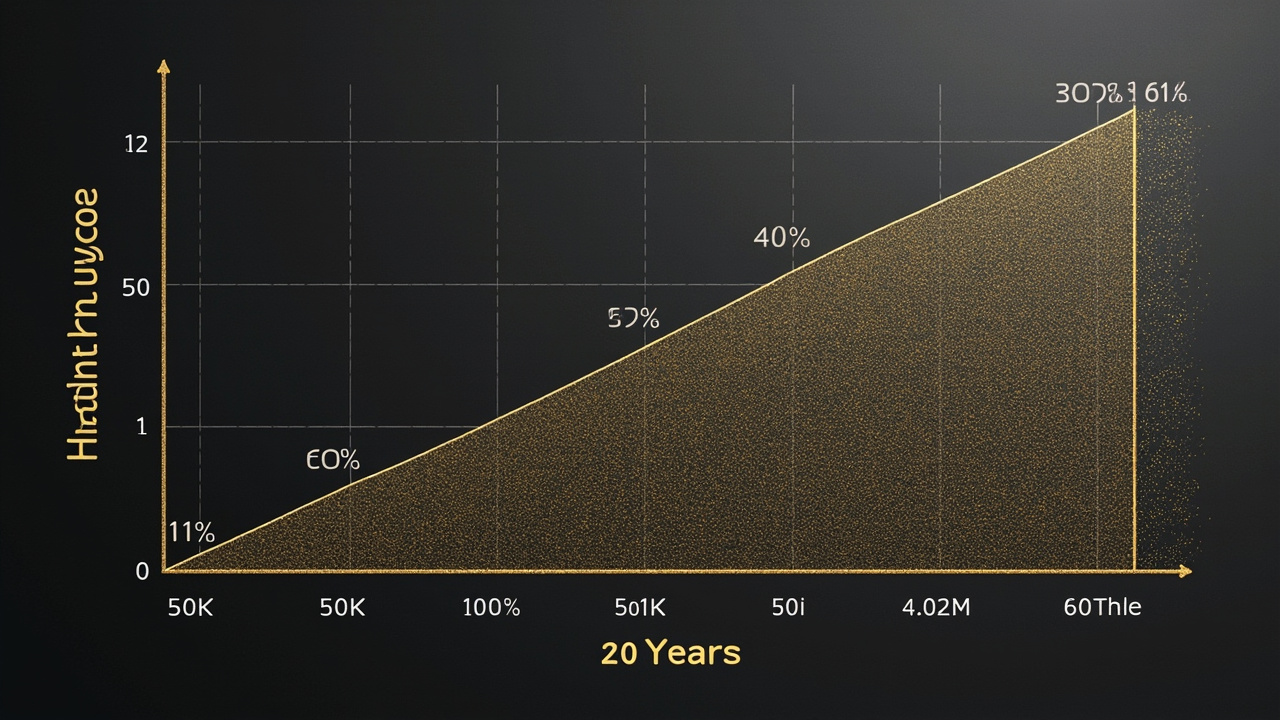
Using NT$500,000 as the baseline, suppose both have identical stock-picking ability and book 12% in paper gains each year:
- Xiao Ming loses 11% to trading costs each year, leaving 1% over a decade
- Xiao Hua loses only 1% per year, leaving 11% over a decade
After 20 years, Xiao Ming’s NT610,000, while Xiao Hua’s NT4.02M. Same starting principal, same stock-picking ability, a 20-year gap of NT$3.4M. This is not to scare you. This is the math of compounding plus cost gaps.
Adding extreme black-swan scenarios: Taiwan has had several major stock crashes:
- The 2000 tech bubble: Taiwan stocks fell from 10,000 to 3,900, a drop of over 60%, and it took nearly 15 years to recover
- The 2008 global financial crisis: Taiwan stocks fell from over 9,000 to under 4,000, a drop of over 50%, with recovery taking about three years
- The 2020 pandemic: Taiwan stocks fell nearly 30% in about six weeks, but recovered in about half a year
If you were trading short-term at high frequency at the peak and hit a 2000-style crash, your paper losses plus continued trading costs could leave you unable to break even for 15 years.
Core Concepts of Taiwan’s Stock Tax System
The official definition of Taiwan’s current stock tax system is:
- Securities transaction tax: Under the Securities Transaction Tax Act, listed and OTC stocks sold are taxed at 3‰ of the sale value, withheld by the broker on behalf of the government; the buyer is exempt
- Brokerage commissions: Under the rules of the Taiwan Securities Association, both buyer and seller pay 1.425‰, but most major brokers currently offer discounts; the actual rate may be between 0.7‰ and 1.425‰, depending on your trading volume and broker agreement
- Dividend income tax: Under the Income Tax Act, dividend income can be combined with consolidated income or taxed separately at a flat 28%, with an 8.5% tax credit on dividend income, capped at NT$80,000 per household
Taiwan’s stock tax system is designed so you pay a fixed cost on every trade, but your buy-sell price gains currently do not incur additional capital gains tax. In theory, this is favorable to investors. The problem is that many retail investors are unaware of this, and end up turning what should be tax-free capital gains into high trading costs through high-frequency trading.
Taiwan’s securities transaction tax is levied on the sell action, not on profit. What does that mean? As long as you do not sell a stock, you do not pay the transaction tax; when you sell, regardless of gain or loss, you pay 3‰. So from a tax-efficiency standpoint, holding quality names and not selling lightly is the behavior Taiwan’s stock tax system most rewards.
This is not telling you to hold losers indefinitely. It is saying that until you have a clear reason to sell, trading itself is a tax cost. Every unnecessary trade is working for the government and your broker.
3 Taiwan-Specific Cognitive Blind Spots
Blind Spot 1: For new investors and students. Many people think the lower the brokerage fee discount, the better, so they hunt obsessively for the cheapest broker, feeling smart for getting their commission from 1.425‰ down to 0.7‰. But the lower the discount, the more service quality, system stability, and order speed at some brokers may degrade accordingly.
More importantly, in your pursuit of lower commissions, if you end up trading more often because costs feel lower, the fees you save are nowhere near enough to offset the total cost of the extra trades. Saving small money to spend big—that is the most common tax-cost trap for beginners.
Blind Spot 2: For investors with one to three years of experience. Many people know dividends are taxed, but do not know there is a legitimate tax-planning approach using the 8.5% tax credit on dividend income, combined with your own consolidated income tax rate, to figure out which method is best for you.
According to the Ministry of Finance, if your consolidated income tax rate is 20% or below, choosing consolidated calculation with the credit is usually better than the 28% separate tax. The numbers vary by person, so before filing, try both methods in the Ministry of Finance’s electronic filing system; choosing right can legally save you tens of thousands a year. This is not tax evasion; this is a legal choice the tax code gives you. But many people never knew it was an option.
Blind Spot 3: For investors with three or more years of experience. Under the current Taiwan tax system, stock trading losses cannot be deducted, because capital gains are tax-free, so capital losses also have no deduction room. But if your trading losses come from warrants or other derivatives, the tax treatment is different from common stocks and requires special attention.
In addition, if you trade Taiwan stocks through an offshore account or hold foreign stocks, the tax reporting rules are completely different from domestic accounts, and omissions or errors can result in back taxes plus penalties. For this part, consult a CPA with securities tax expertise directly. Do not guess.

4 Iron Rules
- Before every trade, you must first calculate your breakeven point. Breakeven is calculated as: purchase cost plus buy-side commission, divided by (1 minus sell-side commission rate plus securities transaction tax rate). In simple numbers, if you buy at NT100.1425, you must sell at about NT50,000 or NT$5M
- Your demand deposits and emergency reserve must never be used for stocks, whether short-term or long-term. Taiwan’s emergency reserve standard is 3–6 months of fixed expenses; based on an average dual-income household spending of NT60,000 a month, the reserve should be at least NT360,000 in instantly accessible funds
- No single stock position may exceed 30% of your total stock holdings, no matter how confident you are. Taiwan’s history has plenty of “century stock” names that later faced financial trouble or delisted, from Lextar to Kang Yu, from Powerchip to Prince Housing—every one had people go all-in
- If your annualized trading cost exceeds 30% of your paper gain for the year, you must immediately stop increasing trade frequency and re-examine your strategy. This is not an arbitrary number; according to TWSE statistics, the share of Taiwan retail traders’ total trading cost relative to total trade value is one of the major reasons retail gains are eaten away
4 Full-Cycle Action Steps
- Open your online banking or brokerage account and export all your trading records from the past year, calculating how much in fees and securities transaction tax you actually paid. Many brokerage apps let you download an annual statement that lists your total commissions. Divide that number by your starting principal to get your annualized trading cost ratio. If it exceeds 5%, you need to seriously consider lowering your trading frequency
- Confirm your brokerage fee discount. Call or log in to your broker’s app to verify your current commission discount rate. Most major Taiwanese brokers can negotiate a 60% discount or better. If you are still paying the full 1.425‰, call and negotiate a discount right now. This is a zero-effort, instant-saving action. But remember, the saved commissions are not an excuse to trade more
- Before this year’s tax filing, use the Ministry of Finance’s individual income tax filing system to compute your dividend income under both consolidated calculation and separate taxation, and choose the better method. This is done during the May filing period; the system is free, and the MOF e-filing software automatically compares the two methods’ tax amounts—pick the lowest
- Build your own trading-cost tracking sheet. Use Excel or your phone’s notes to record, after each trade: buy amount, sell amount, commission, transaction tax, paper P&L, and realized net P&L. Review quarterly and check whether your actual net return is hitting your target. If your actual net return is negative for two consecutive quarters, you need to re-evaluate your strategy rather than add more positions
2 Taiwan-Specific High-Level Traps to Avoid
First: The trap of the day-trading tax incentive. To encourage market liquidity, Taiwan offers a securities transaction tax concession for day trades—the transaction tax on day-trade sells is reduced from 3‰ to 1.5‰. This incentive has been extended multiple times and currently applies through the end of 2027.
Many people see the incentive and assume day trading is cheaper. But note: although the day-trade sell-side transaction tax is halved, you still pay the buy-side and sell-side commission twice in one day, and day trading is far harder than swing trading. TWSE statistics show that the overall profitability of retail day traders is negative.
Second: The tax trap of holding Taiwan stocks through offshore accounts. Many Taiwanese investors trade Taiwan stocks through sub-brokerage or offshore broker accounts, but if you do not properly report overseas income, you may face penalties for omissions. Especially when your overseas income plus domestic income exceeds the basic exemption, you must apply the Alternative Minimum Tax rules.
Final Words for You
In Taiwan stocks, your real return is not paper gain divided by principal, but paper gain minus all trading costs and taxes, divided by principal. That number is what you actually made. Many people have never calculated this. Starting today, build that habit.
What is the truly smart approach? Reduce unnecessary trade frequency. This is not telling you to avoid stocks. It is telling you that every time you are about to hit the buy or sell button, first ask yourself: “After subtracting the fixed cost of 5.85‰, is my expected return still enough?”
This article is for financial education only and does not constitute any investment advice or recommendation. All investments carry risk, and past market performance is no guarantee of future results. Taiwan stock tax regulations are based on the latest announcements from the Ministry of Finance, the TWSE, and other competent authorities. Tax planning is a professional area; please consult a Taiwan-licensed financial advisor and tax professional before making decisions.
Disclaimer: This article is a sharing of investment and financial concepts and a compilation of information, and does not constitute any specific investment, tax, or legal advice. Markets carry risk; invest with caution. Please make independent judgments based on your own risk tolerance and consult professional advisors.
Tags
Short-Term Trading, Securities Transaction Tax, Fees, Day Trading Tax, Dividend Income Tax, 8.5% Tax Credit, 28% Separate Taxation, Investment Cost, DCA, Taiwan Stock Trading, Tax Planning, Securities Transaction Tax
Comments