
Opening: 20 Years of Friendship, 3 Sentences to Collapse
Many people think the scariest thing in life is missing a chance to strike it rich, but he used the loss of his entire second half of life to teach us a far crueler truth: what is truly frightening is grabbing a chance you simply cannot afford to lose on.
The main character of this story is called A-Ming, a perfectly ordinary systems engineer in New Taipei City. You probably have several friends just like him. What he lost at the end was not only the NT$12 million he and his girlfriend had scrimped and saved for a full 10 years, earmarked for a down payment on a home and their wedding, but also a “brother” he had genuinely called by that name for 20 years.
A-Ming is 35, with an annual salary north of a million NTD. In Taiwan that number sounds impressive, but if you have ever actually lived in this city, you know how ironic that label is. He is like the emperor’s new clothes — sounds dazzling, but cannot block the cold winds blowing in from every corner of real life.
At 7 a.m. his alarm rings. He wakes up in his rented apartment in Xinzhuang, pulls on the slightly faded company POLO shirt, and rides his seven-year-old Gogoro into the red river of scooters heading for Neihu Technology Park. He is an excellent engineer — that is beyond question — yet he feels like a hamster stuck on a wheel, running himself ragged every day, only to look up and find he has not actually moved.
Chapter 1: How Do You Save NT$12 Million Over 10 Years?
A-Ming and his girlfriend Xiao-Ya have been together since college — an eight-year long-distance-free love affair so steady it is almost boring. The only real obstacle between them, the biggest one, is a home of their own.
Xiao-Ya’s mother is a very traditional Taiwanese parent. She means no harm, but her words always carry a subtext: “How can you give our daughter any security without a home of your own?” Every weekend their only entertainment is opening the 591 housing website, pointing excitedly at some new development, and calculating the down payment. Then A-Ming quietly closes the page, opens online banking, and stares at the number: NT$12 million. That is what he and Xiao-Ya accumulated over a full 10 years of penny-pinching — no vacations abroad, no luxury goods, even restaurant meals required an online coupon first.
Ten years, NT$12 million — sounds like a lot, but in the face of New Taipei housing prices, that figure is as small as a grain of sand. He feels a deep, bone-level helplessness — the classic “premium hamster,” trading the most precious, scarcest, non-renewable resource (time) for the easiest resource to dilute (money).
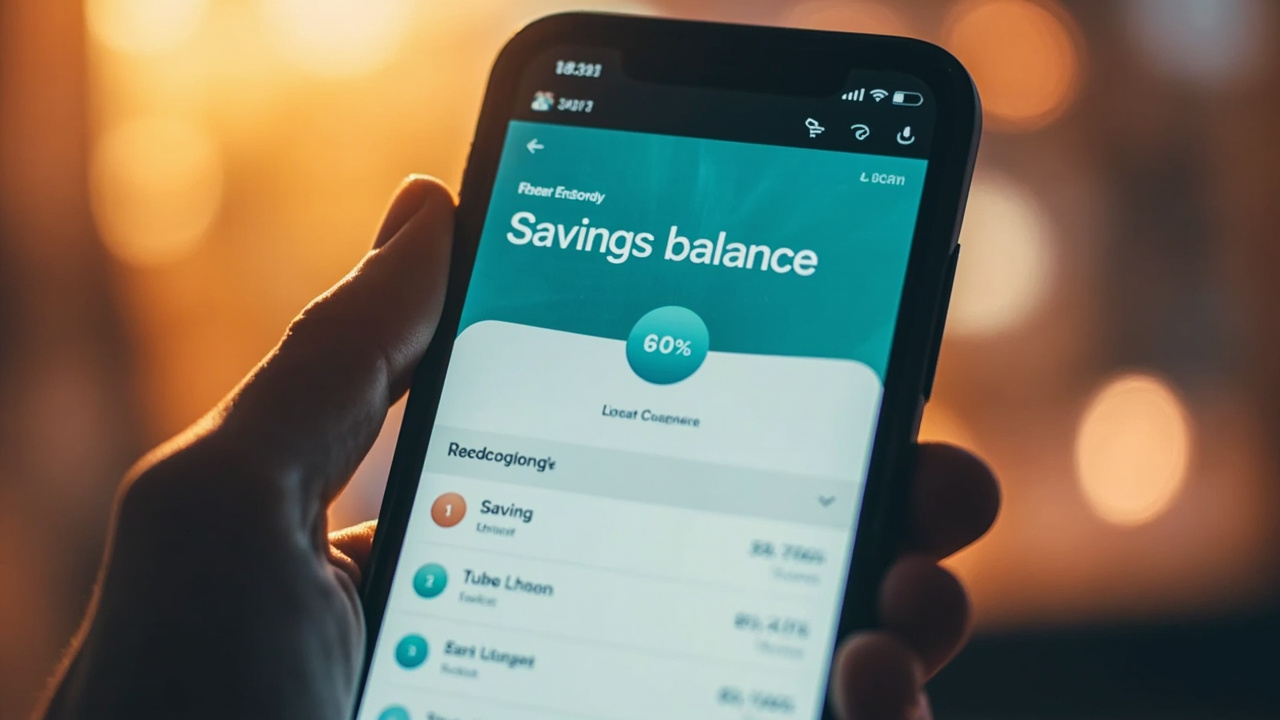
Chapter 2: The Phone Call, and Those 3 Sentences
What changed everything was an ordinary Wednesday evening, when A-Ming’s phone rang. Caller ID: “A-Zhi.” His junior high classmate — known each other for 20 years, the kind of brother who shows up for weddings and funerals.
A-Zhi sounded excited on the line: “Bro, I’m telling you, I just came across an amazing opportunity.” Then came three sentences, like three surgical blades, precisely slicing open the three most fragile vulnerabilities in A-Ming’s heart:
Sentence one: “This is something only my inner circle can hear about. There’s no channel for outsiders.” — This sentence weaponizes the “scarcity illusion.” When an opportunity is wrapped as “insiders only,” your brain automatically classifies it as “precious” — and you skip the most basic verification steps.
Sentence two: “Break even plus 30% in six months, guaranteed profit, only a few slots left.” — This one weaponizes “loss aversion.” When you see your savings earning a 1% bank rate, losing to inflation, and then hear “30% in half a year,” fear automatically overrides reason.
Sentence three: “I even mortgaged my house for this. You’re my brother — that’s the only reason I’m telling you.” — This one is the cruelest of all. It weaponizes “social proof plus sunk cost.” When someone you trust has put his own chips on the line, refusing feels like denying 20 years of friendship.
The most dangerous con is never one set by a stranger. It is set by the person you trust most — because that person knows exactly what you fear and what you want.

Chapter 3: NT$12 Million, 4 Months, Gone
The next four months of A-Ming’s life were the longest nightmare he has ever lived. He first wired NT$3 million to “test the waters,” and the account really did show a 10% return. He did not know that 10% was just the principal of those who joined after him — a textbook Ponzi scheme. A-Zhi called excitedly: “Bro, see? I didn’t lie to you. This time go bigger — we can hit 50% annualized.”
Then 5 million. Then 4 million — he even took out a personal line of credit to cover that last gap. Every time he thought “just hold on a little longer, almost there,” A-Zhi used the same script to calm him down. Until the end of the fourth month, A-Ming’s phone could no longer reach A-Zhi’s number.
That night A-Ming sat on his living room floor, staring at a bank notification text, silent for a full hour. What he lost was not NT$12 million — it was 10 years of youth, the future with Xiao-Ya, and his most basic trust in human nature. He later learned that the house A-Zhi had mortgaged had already been encumbered multiple times, and A-Zhi himself was drowning in debt. A-Zhi had not set out to hurt A-Ming; he had simply run the same script on himself, and the whole plate collapsed together.

Chapter 4: This Was Not a Scam — It Was Our Own Human Vulnerabilities
After the fact, it took A-Ming two years to climb back from rock bottom. Looking back on the whole thing, he slowly came to see — he had not lost to A-Zhi; he had lost to those three vulnerabilities inside his own heart:
- Blind trust in “familiar relationships.” Knowing someone for 20 years does not mean that person is capable of being responsible for your money. Friendship is friendship; finances are finances.
- Greed-fear over “high returns.” Any opportunity that promises “guaranteed profit” or “5x the market return” hides a 100% invisible cost.
- Refusal to let go of “sunk costs.” Putting in NT$3 million and being unable to stop was not because the opportunity got better — it was because admitting failure hurt too much.
We all think we will never be scammed, but scams are never designed for the rational mind — they are designed for fear, greed, and unwillingness to give up. When those three buttons are pressed at the same time, even the smartest people make stupid decisions.

Conclusion: Don’t Let Human Vulnerabilities Cost You Your Life
The scariest part of this story is not that A-Ming lost NT$12 million; it is that inside every one of us lives an A-Ming just like him. We too fear inflation, we too crave a quick turnaround, we too trust the “inner circle” around us. If that phone call came to you today, you might not do any better than A-Ming.
So please remember these three iron rules of financial defense:
- Any investment decision larger than one year’s salary must have a 72-hour cooling-off period, and must have written input from a third-party professional (lawyer, accountant, independent advisor).
- Any opportunity that promises “guaranteed principal with high returns,” “insiders only,” or “double in the short term” should be presumed a scam by default. Better to reject a hundred than to let one through.
- Financial decisions must be separated from emotions. A brother borrowing money, a married couple investing, family going into business together — get the written agreement, the collateral, and the exit mechanism on the table first, then talk about feelings.
The most expensive lesson in this world is never the loss of money — it is the belief that you cannot be scammed.
This article is a fictionalized story and opinion piece for reference only and does not constitute any investment advice. All investments carry risk. Please assess carefully based on your own risk tolerance, and if you suspect fraud, call the 165 anti-fraud hotline immediately.
Disclaimer: This article shares investment and financial concepts and compiled data. It does not constitute any specific investment, tax, or legal advice. Markets carry risk; invest with caution. Please judge independently based on your own risk tolerance and consult a professional advisor.
Tags
兄弟借錢, 高息借貸, 投資騙局, 友情詐騙, 1200萬, 人性漏洞, 信任陷阱, 財務防禦, Pension, 血淚教訓
Comments