
Opening: 70% of Entrepreneurs Are Doomed the Moment They Sign That Lease
Seven out of ten entrepreneurs are essentially doomed the instant they sign that lease. What they lose is absolutely not just a few million in savings — it is the last shot an ordinary person has at clawing their way up by their own effort.
Many people think they searched and screened, finally finding a gold-mine location overflowing with foot traffic — but they will not understand, until the day they close, that it was actually a trap using hustle as bait and your dreams as fuel, with an outrageously high price tag.
The main character, A-Jie, is 35 and works as an engineer at a tech company in Hsinchu. What does 35 mean for a man in Taiwan? It means several million NTD in mortgage on your shoulders, with the bank auto-deducting a big chunk of your salary the moment it hits; it means kindergarten, after-school care, and enrichment class invoices arriving more punctually than your own pay stubs; it means watching younger colleagues around you brimming with energy as if they never need to sleep, and starting to wonder whether you can keep running this liver-for-cash road for another ten years.
Chapter 1: Anxiety Is the Most Expensive Fuel for Decisions
A-Jie had a very simple dream: open a bubble tea shop of his own. He spent over a year researching recipes, learning to run a stall, and helping out at a friend’s shop on holidays for free. He felt ready. In his hands was the NT2 million was his everything: the only底气 (backbone) that let him dare to leave that suffocating office, and the “reset capital” his entire family would need for the next five years.
Reset capital is the money an ordinary family can lean on to get back on its feet after a major setback or failure. A-Jie did not realize it at the time, but he was about to take that last insurance policy and walk into a game he had almost no chance of winning.

His very first step was to look at locations. The way he hunted for a store was classic — and it is the first mistake almost every first-timer makes: he spent a weekend taking his wife and kids to a few of Taipei’s most famous, most crowded commercial districts, browsing the streets while scouting for a spot.
He saw one alley: “Wow, incredible — packed like New Year’s Eve.” He excitedly pulled out his phone to record, the lens full of young, trendy faces. He told his wife eagerly: “Honey, look — this is the place! With this many people, if even one in ten walks in to buy, we’re rich!” He snapped a few photos and shot a few clips, immediately forwarded them to the family group chat, captioned: “Mom, Dad, look — crowds are money in motion. I’m going to make it this time!”
Then, with barely a flicker of hesitation, he dialed the slightly faded “for rent” number pasted on the wall.
Chapter 2: The First Trap — Whose Customers Are the “Crowds” You See?
The landlord was warm on the phone and set up a viewing for the very next day. The rent was not cheap, but the landlord smiled and said: “Look at the crowds out there — breaking even in six months is not a problem.” A-Jie was dizzy with that line, and he did almost no homework — no check of competitor density within a 3 km radius, no analysis of who made up the foot traffic, no calculation of the rent’s share of revenue. All he could think was: “This many people — surely someone will come in?”
This is the first mistake almost every rookie makes — treating “people passing by” as “your customers.”
But he never stopped to consider: the “crowd” in that alley had been cultivated by other stores. They were rushing in for the 10-year-old legendary queue shop next door, the Instagram-famous café, the 24-hour convenience store. A-Jie’s bubble tea shop had zero differentiation from any of them — once the buzz faded, passers-by had no reason to walk in.
What was even crueler: that 200-meter stretch of alley already had 5 bubble tea shops — the highest density in all of Taipei. The moment he entered, he was trapped in a red-ocean price war, with gross margins squeezed below 30% and zero chance of breaking even.
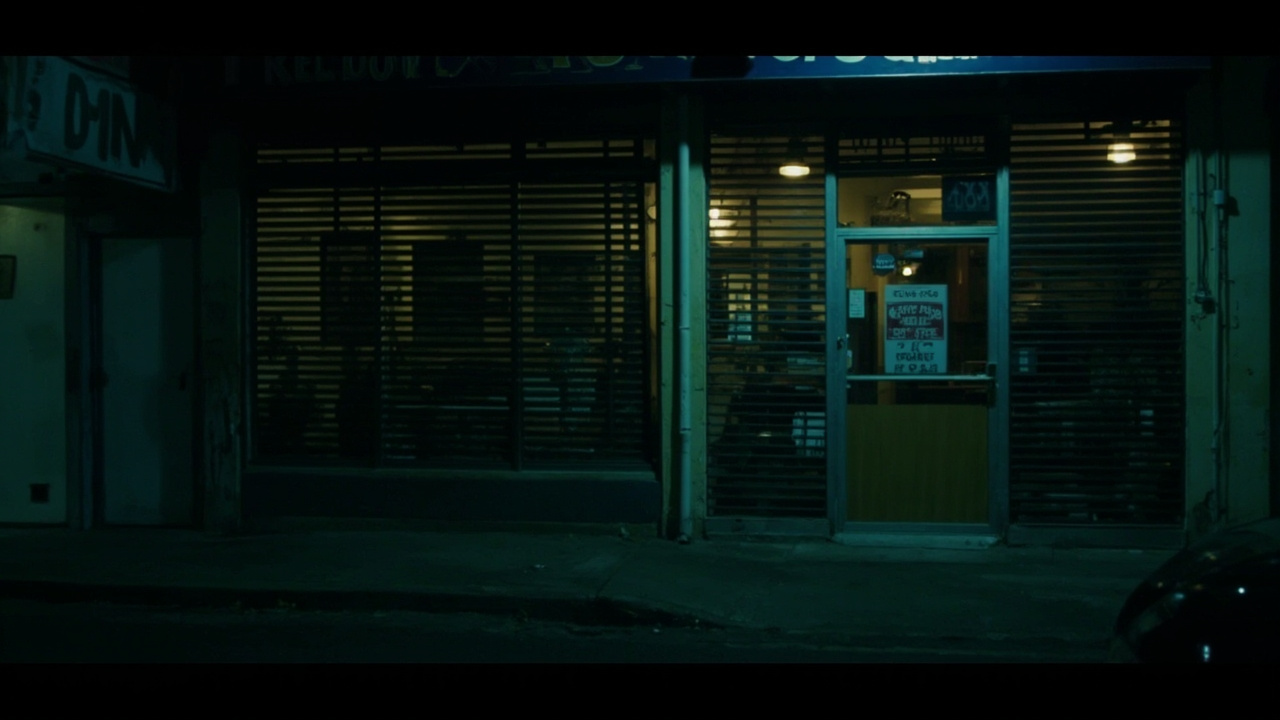
A place that looks crowded never means people will walk into YOUR store. They are drawn by existing brands and reputation — and they have nothing to do with you.
Chapter 3: The Second Trap — Rent Eats You Alive
On signing day, the landlord was all smiles. A-Jie paid 6 months’ rent plus 2 months’ deposit — **a single month’s rent was NT2 million reset capital.
He had not run the math: at NT$50 a cup and 60% gross margin, he needed to sell 90 cups a day just to cover rent, before counting labor, raw materials, and utilities. But the real in-store traffic on that alley averaged fewer than 30 cups a day.
In the third month of operation, he was using credit-card cash advances to pay the rent. In the fifth month, he borrowed NT$300,000 from an elementary school classmate for emergency relief. In the sixth month, the landlord came to change the locks, and a new “for rent” sign went up on the door — this time, aimed at the next dreamer.
A-Jie sat in the empty shop, stared at the menu stickers not yet fully peeled from the wall, and one sentence kept repeating in his head: “I thought I had planned for the worst. In reality, I just hadn’t thought far enough.”

Chapter 4: The Third Trap — You Were Not Prepared to Fail, So You Couldn’t Even Exit
It was only after closing that A-Jie truly realized: what he had lost was not just NT$2 million. What he had lost was his family’s “reset capital” for the next 5 years — money that could have paid down part of the mortgage, could have been the emergency education fund for his kids, could have served as his transition fund if he was laid off at 40.
Instead, he had burned it on a dream he “thought he was ready for” but was really just chasing the buzz.
Looking back on those six months, he summarized the three questions every would-be entrepreneur must answer first:
- Is the “crowd” in this commercial district actually relevant to you? Are you a differentiated brand that passers-by would be drawn into?
- Can your reset capital survive 18 full months of zero revenue? If not, save until it can.
- Can you absorb a 100% loss as the worst case? If losing it all would leave you with no way to start over, do not start.
Entrepreneurship is never a game for the brave. It is a game for those who have calculated the worst case clearly, and still choose to play.

Conclusion: Your Dream Should Not Be the Landlord’s ATM
The cruelest part of this story is not that A-Jie’s startup failed, but that from the very beginning he was kidnapped by three assumptions that sound obvious but are completely wrong: crowded places mean money, expensive rent means good location, and a failed business just means starting over.
The instant he signed that lease, he was already doomed — and he still believed he was “bravely chasing his dream.”
If you are feeling an urge to “open a shop of my own” right now, please do three things first:
- Spend at least three months stationed on the street you want to open on, recording real foot traffic. Calculate entry rate, conversion rate, average ticket size — and never believe any landlord’s “guaranteed break-even.”
- Split your reset capital into thirds: 12 months of working capital, equipment and decor capped at 1/3, and emergency reserve at 1/3. Any overrun on any one line should trigger a stop-loss.
- Validate small before scaling up. Use a cart, a night-market stall, or a delivery platform to test your product and business model. Get the minimum viable unit working before you sign a lease.
Don’t let your NT$2 million become the rent the landlord smiles as he pockets it.
This article is a fictionalized story and opinion piece for reference only. Starting a business involves high risk. Past success stories do not guarantee future performance. Please carefully evaluate based on your own financial situation, risk tolerance, and family responsibilities, and consult a startup advisor or accountant when necessary.
Disclaimer: This article shares investment and financial concepts and compiled data. It does not constitute any specific investment, tax, or legal advice. Markets carry risk; invest with caution. Please judge independently based on your own risk tolerance and consult a professional advisor.
Tags
創業失敗, 飲料店倒閉, 房東陷阱, 200萬創業, 店面選址, 重啟資本, 創業陷阱, 認知誤區, 創業風險, 上班族創業
Comments