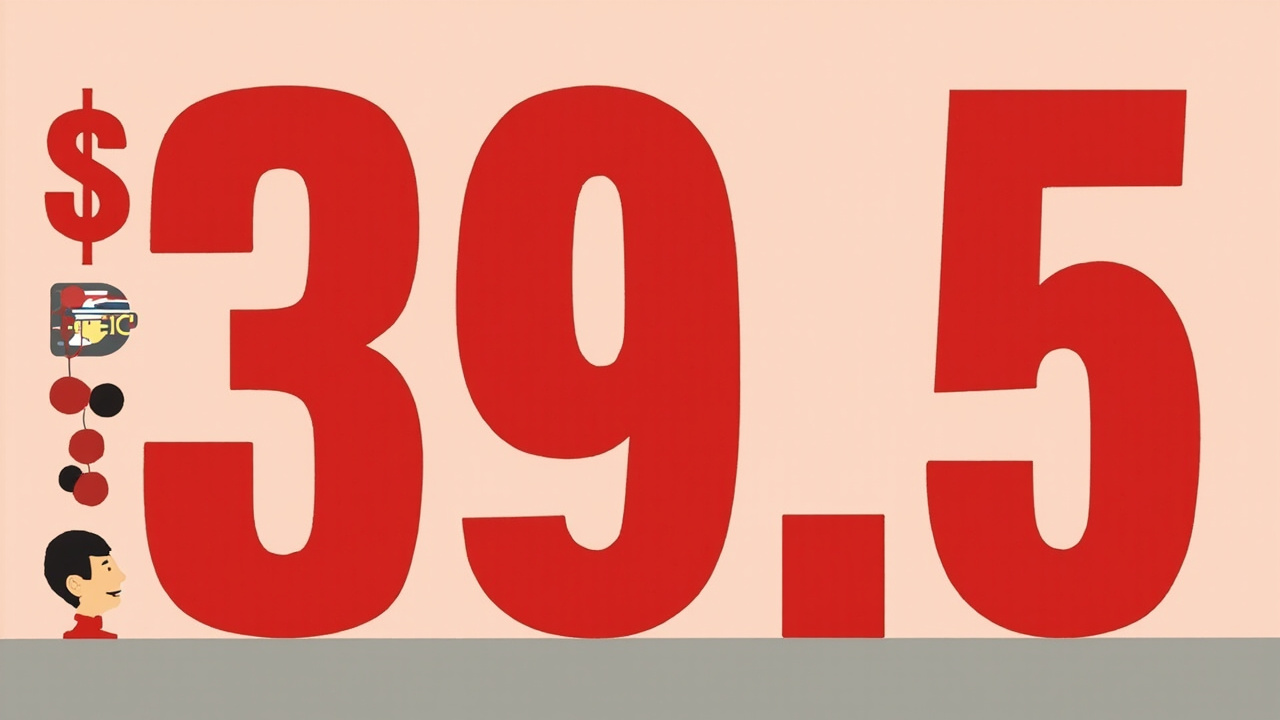
Part of the income tax you paid last month is currently helping the US government pay interest—I’m not kidding. The US national debt has now broken through US1 trillion. What does that number mean? Taiwan’s entire annual GDP is roughly US$750 billion. The US pays more than double Taiwan’s entire annual economic output in interest alone every year.
You think this has nothing to do with you? Your retirement fund, your US dollar time deposits, the US bond funds you own—all of them are tied to this story.
First Underlying Rule: The Nature of the US Debt Crisis Is Not Default
Many people hear about a national debt crisis and assume the US is about to collapse and that you should rush to dump dollars. That logic is wrong. As the issuer of the global reserve currency, the United States’ debt problem is fundamentally different from that of an ordinary country—the US can use Federal Reserve monetary policy to manage its own debt pressure to a degree.
Historically, every time the US faced fiscal pressure, the solution was never default. Instead, the resolution came through inflating away the real value of the debt via inflation, lowering interest costs by suppressing rates, or expanding the tax base via economic growth. But each of these three paths carries a cost:
- Solving debt through inflation → the cost is that your cash purchasing power gets diluted
- Solving debt by suppressing interest rates → the cost is asset bubbles and widening wealth inequality
- Solving debt through economic growth → it takes time and success is not guaranteed
So the real risk is not a US Treasury default. It is that, in the process of resolving the debt, the global pricing logic for capital gets reshuffled. Which assets will rise during that process, which will be eaten by inflation, which will collapse under rising rates—that is the core question you actually need to understand.
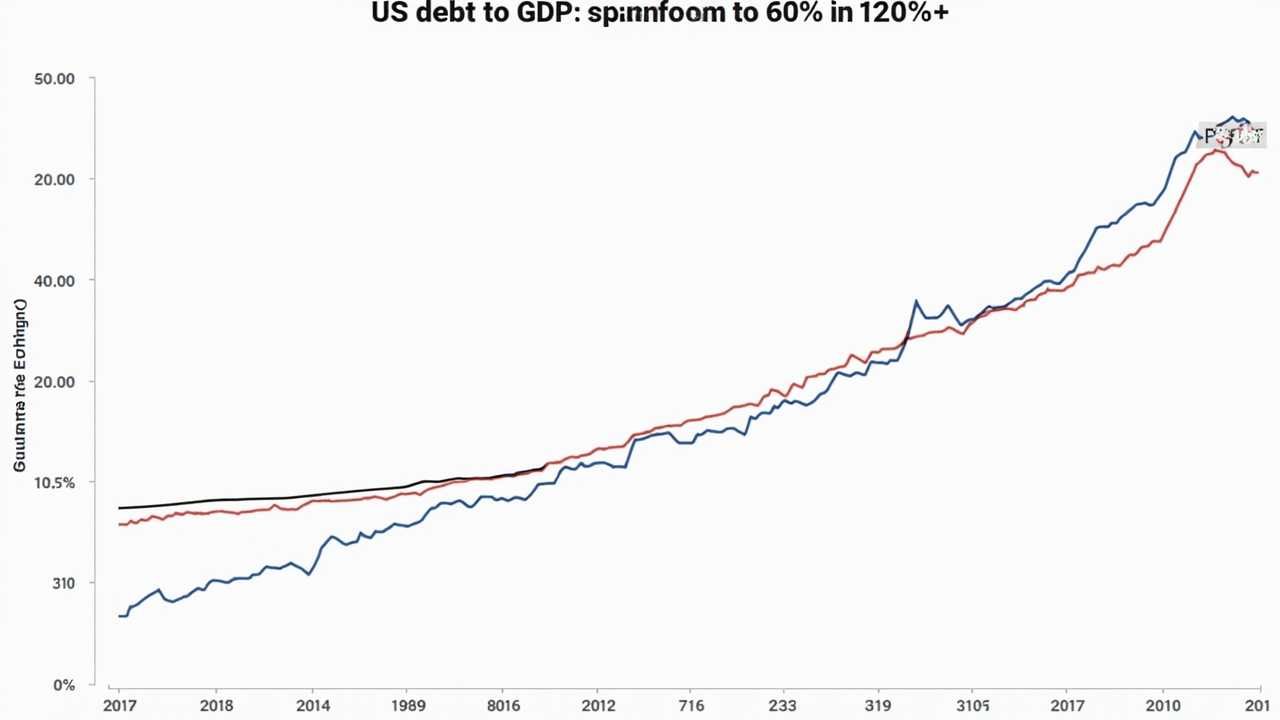
According to public data from the US Treasury, the US federal government’s debt-to-GDP ratio exceeded 120% in 2024. Research from Taiwan’s central bank has also repeatedly noted that when the fiscal position of a major reserve-currency country deteriorates, it produces systemic spillover effects on global financial markets. Taiwan, as a small, open, export-dependent economy, has a relatively limited capacity to absorb these spillovers.
Second Underlying Rule: What Is the Logic Behind Solving the National Debt with Bitcoin
You may have seen the claim online that the US government is going to build a Bitcoin strategic reserve and use Bitcoin to solve the national debt problem. Is this logic crazy or visionary?
First, the logic itself: Bitcoin has a hard cap of 21 million coins, and no one can unilaterally issue more. As government debt gets inflated away in real terms, Bitcoin’s scarcity gives it a “digital gold” anti-inflation property. From this perspective, if the US government added Bitcoin to a strategic reserve, it could in theory build an asset base that does not get eroded by inflation.
But this logic has three fatal problems:
- Bitcoin’s volatility is far higher than gold’s. It can drop 30% or rise 50% within a month. That kind of volatility is unacceptable for a national reserve asset.
- Bitcoin’s legal and regulatory framework is not yet mature. For the US government to add it to a strategic reserve, Congressional legislation would be required. The probability in the near term is very low.
- Bitcoin and Treasury bonds have conflicting characteristics—Treasuries are a liability instrument; Bitcoin is an asset instrument. Using a high-volatility asset to hedge a structural liability is itself a mismatch.
So this narrative is still in the political-talk stage. The distance from actual policy implementation is still very large. But this does not mean Bitcoin has no allocation value—what it represents is a small slice in a personal portfolio that hedges against fiat currency devaluation. It is not a savior.

Third Underlying Rule: How to Protect Yourself During the Repricing
You don’t need to believe the narrative that Bitcoin solves the national debt, but you do need to understand one thing: global liquidity is being repriced, and this process will have a real impact on the assets you hold.
Taiwan’s foreign exchange reserves exceed US$570 billion, and a large portion of that is allocated to US Treasuries. When US long-term rates rise, the market value of those Treasuries falls—this is basic finance: bond prices move inversely to interest rates. Taiwan’s foreign reserves will show paper losses on the books. Although this does not mean Taiwan is going bankrupt, this pressure will transmit to the TWD exchange rate, transmit to Taiwan’s monetary policy, and ultimately to your salary’s purchasing power and your mortgage rate.
As of the end of 2024, Taiwan’s Labor Pension Fund overall exceeded NT$4 trillion, with a meaningful share allocated to overseas stocks and bonds, where US assets make up a substantial weight. According to the annual Labor Pension Fund utilization report published by the Ministry of Labor, volatility in the overseas allocation directly impacts the actual return on your retirement account. This is not an abstract number. This is about whether you can live with dignity after 65.
Positioning Logic When Asset Prices Get Cut in Half
When US-debt-related assets drop sharply (that is, when Treasury yields spike), this is actually the time to phase into long-term positions—provided you have enough time and discipline.
Three concrete moves when prices get cut in half:
Move 1: Phase Into Long-Duration US Treasury ETFs
When yields spike above 4.5% to 5%, you can start phasing into long-duration US Treasury ETFs (such as TLT, TLH). Long-duration bonds have high interest-rate sensitivity; the drawdown is the largest when prices crash, but yields are also the highest. Spread your entry over 6 to 12 months to avoid single-point-in-time risk.
Move 2: Add a Small Allocation to Gold or Bitcoin
Gold (5% to 10%) and Bitcoin (1% to 3%) serve as hedges when inflation materializes or currency-devaluation expectations rise. These two assets are not the core of the portfolio, but they play a role as “insurance.” Keep the Bitcoin allocation strictly controlled; its volatility is far higher than gold’s.
Move 3: Review Your USD-Denominated Holdings
If you have USD time deposits, US Treasury bond funds, or US equity ETFs, these assets will be repriced in a debt crisis. Please check what share they make up of your total assets, whether rebalancing is needed, and whether they fit your risk tolerance.

Concrete Recommendations for Different Groups
For Taiwan Office Workers (30 to 50 Years Old)
Your core task is accumulating assets while building an inflation-resistant allocation. Beyond your existing S&P 500 or TWSE 0050 DCA, consider:
- Allocating 5% to 10% monthly to USD-denominated assets (USD time deposits or US Treasury ETFs)
- Holding 1% to 3% in Bitcoin as a digital-gold hedge
- Avoid putting your entire net worth in a single asset or a single currency
For Young Investors (25 to 35 Years Old)
Your time compounding is the largest, and your risk tolerance is the highest. You can be more aggressive:
- DCA into S&P 500 as the core, doubling contributions on big market drops
- Allocate 3% to 5% to Bitcoin (use DCA to spread entry timing)
- Do not liquidate all USD assets in panic during the debt crisis
For Retirees (55+)
Your core task is to protect the assets you have already accumulated. The debt crisis hits you hardest because you can no longer absorb a 50% drawdown:
- Reduce equity exposure to 40% to 50%
- Increase short-duration US Treasuries or USD time deposits to 30% to 40%
- Gold plus Bitcoin combined should not exceed 5%, as insurance
Cash Is Not a Hedge, Cash Is a Slow Loss
Many people’s first reaction to hearing about a debt crisis is to convert everything to cash. But this is exactly why ordinary people lose the most money in every financial crisis. As inflation materializes, cash purchasing power gets diluted rapidly. In 2022, inflation ran at 3% while cash in the bank earned 0.1%, so real purchasing power shrank by 2.9%.
A real hedge means making your assets outrun inflation. That requires a portfolio diversified across asset classes, currencies, and regions—not parking everything in a bank demand deposit.
Three Things You Can Do Today
- Inventory how much of your current allocation is in USD-denominated assets. If it’s below 20%, phase in when US Treasury yields are at the high end.
- Build a 1% to 3% Bitcoin or gold allocation as inflation insurance, using DCA to phase in. Do not bet the farm on a single lump sum.
- Don’t panic, but have a plan. The debt crisis is structural and chronic, not the end of the world. The biggest risk is following your emotions—selling at the bottom and chasing back in at the top.
In a macro debt crisis, those who can read where the money is going are the ones who survive. Those who follow their emotions will just sell at the bottom and chase back in at the top, again.
This article is for financial education purposes only and does not constitute any investment advice. All investing carries risk. Past performance does not guarantee future returns. Bitcoin and cryptocurrency are extremely volatile, and investors may lose some or all of their principal. Before making any investment decision, please evaluate your personal financial situation and risk tolerance and consult a Taiwan-licensed financial advisor or accountant.
Disclaimer: This article shares investment and financial concepts and compiled information. It does not constitute any specific investment advice, tax advice, or legal opinion. Markets carry risk; invest with caution. Please make independent judgments based on your own risk tolerance and consult professional advisors.
Tags
US Government Bonds, US Treasuries, Bitcoin, Strategic Reserve, Liquidity, Yield, Gold, Inflation Hedge, Asset Allocation, Retirement Fund, Labor Pension Fund, Risk Management
Comments