
You quietly pay your premium every month. What you get back 30 years from now may just be a joke. Have you ever calculated how much that whole-life medical insurance policy you pay from age 25 to 65 will total over 40 years? The agent told you at the time: “Lock in lifetime coverage in one go. No fear of getting sick when you’re old.” It sounded reassuring. What he didn’t tell you is how much purchasing power each dollar you pay today will still have 30 to 40 years from now under the erosion of inflation.
This is not to tell you to drop all your insurance, and it is not to ask you to believe insurance is a scam. Whole-life medical insurance, as a compliant financial product, has its reason to exist. But the way it has been packaged as “the most cost-effective choice” is backed by an interest logic you need to see clearly.
This article is for financial education and information sharing purposes only and does not constitute any investment or insurance advice. Everyone’s financial situation, health condition, and family structure are different. What works for someone else may not work for you. All policy adjustment decisions should be evaluated at your own risk and after consulting Taiwan-licensed insurance agents, financial advisors, or tax professionals.
Three Underlying Rules of Whole-Life Medical Insurance: Fixed Benefits Are an Asset That Shrinks Every Year
Remember this sentence: in the face of inflation, fixed-benefit coverage is essentially an asset that shrinks every year. When it shrinks faster than your needs grow, you are using today’s money to buy coverage that won’t be enough tomorrow. This premise applies to all fixed-benefit insurance products.
Rule 1: A Fixed Daily Benefit Shrinks Structurally Under Inflation
Let me drop you into a real scenario. You start a family at 28. The agent shows you a projection: pay premiums for 20 years, then have a lifetime hospital daily benefit of NT$1,500, plus a return-of-premium design—live to 80 and you get a payout. You think it sounds reasonable at the time, maybe even feel pretty well planned.
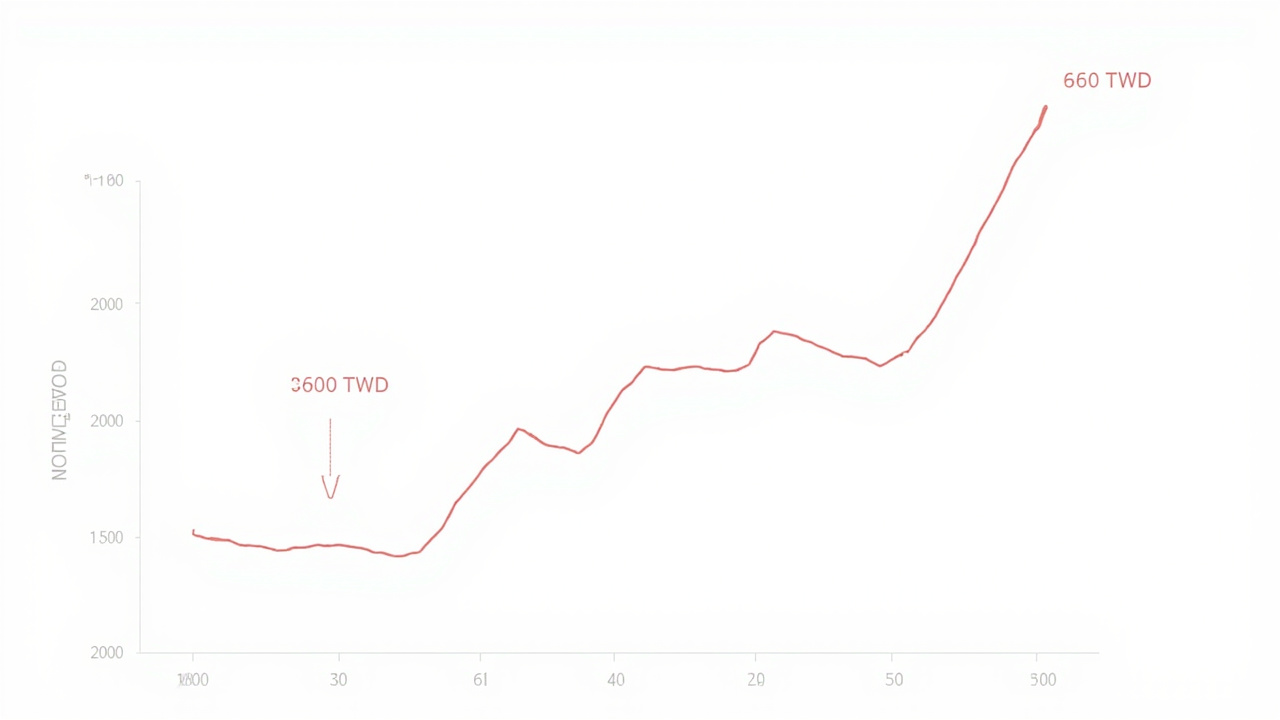
But have you thought about what your real daily cost actually is when you’re hospitalized? According to recent statistics from the Ministry of Health and Welfare, the actual daily cost of staying in a regular ward in Taiwan, including out-of-pocket and miscellaneous expenses, easily exceeds NT5,000. The gap beyond National Health Insurance (NHI) coverage is substantial, and that fixed NT$1,500 daily benefit, with inflation continuing to climb, will fill less and less of the gap over 20 and 30 years.
According to DGBAS data, Taiwan’s consumer price index (CPI) over the past 20 years has averaged around 1% to 1.5% per year, with medical services rising even faster. Some self-pay medical items have risen well above the overall CPI. The NT960 of real purchasing power—a shrinkage of nearly one-third.**
Rule 2: The Pricing of Whole-Life Medical Insurance Is Based on Low-Rate-Era Actuarial Results
Whole-life medical insurance pricing is built on an actuarial model that incorporates three core variables: the assumed interest rate, the mortality rate, and the expense load. The assumed interest rate directly determines how much of your premium pays for the insurance company’s cost of capital.
When the assumed rate is low, the premium is more expensive, because the insurance company assumes the return on the money it invests is low, so it charges you more. This logic is sound actuarial practice, but the issue is that consumers have no idea this mechanism exists, all they see is the projection the agent handed them, and they assume the high premium is because the coverage is good.
More importantly, almost all of Taiwan’s whole-life medical insurance policies pay a fixed benefit, unlike policies in some advanced countries that include inflation adjustment mechanisms. This means a policy you bought 30 years ago pays exactly the same amount as when you bought it, but medical costs have already multiplied several times over.
Rule 3: The Commission Structure on Whole-Life Policies Is Higher Than on Term Policies for Agents
You should know that the commission structure for Taiwan insurance agents on whole-life policies is generally higher than on term policies. This is openly known in the industry.
An agent recommending a whole-life policy over a term policy isn’t necessarily because the whole-life policy fits you better. It’s because the premium is larger and the commission is higher. This is not to say all agents are bad people. Some genuinely do have the client’s interests at heart, but the incentive structure is designed this way, and you need to be aware of that reality.
Three Numbers Worked Out: The Two Endings of NT$720,000 in Premiums
Now let’s run three sets of numbers. After you see them you may need to take a deep breath.
Calculation 1: The Real Opportunity Cost of the Wrong Approach
Assume you buy a whole-life medical policy at age 25, pay monthly premiums for 20 years, total NT1,500 per day hospital coverage for life. On the surface it looks like you paid NT$720,000 and got lifetime coverage. Feels like a good deal.
But have you ever calculated the opportunity cost of that NT1.3 million to NT$1.4 million.
Calculation 2: The Outcome of the Right Approach
Many financial planners recommend replacing whole-life with term medical insurance paired with self-directed investment. Term medical premiums are usually far lower. For a 30-year-old male, the same NT$1,500 daily benefit term medical policy might cost only one-third to one-half of the whole-life policy per year.
The premium savings can be deployed for self-directed investment. But the prerequisite for this strategy is that you have enough financial discipline to actually invest the savings instead of spending it. The biggest risk is that if you let the term policy lapse or fail to adjust it, you may end up with a coverage gap.
Calculation 3: The Long-Term Wealth Gap Between 20 and 30 Years
If from age 25 to 45, every month you invest the premium difference between whole-life and term (assume NT700,000 to NT$1,000,000 over 20 years.** That capital can become your healthcare fund after age 65, and you can use it flexibly based on the medical cost levels at that time, without being locked into a fixed daily benefit.
But you also need to know the worst case. If a crash like the 2008 financial crisis hits, the TAIEX’s maximum drawdown exceeds 50%. If you buy in at the top and then face a crash, your short-term paper loss will be brutal, and it may take three to five years or longer to break even.

Four Practical Questions: Ask Them Next Time an Agent Pushes a Policy
For any insurance product, ask yourself the following four questions:
- Is the benefit amount fixed or adjustable?
- What share of my income does this premium take up? Is it crowding out my other financial goals?
- If I switched to a term policy plus self-directed investment, which option produces better total assets and coverage after 20 years?
- Is this policy really designed for my needs, or is it designed to give the agent a higher commission?
Once you’ve asked these four questions, your judgment on any policy will jump a notch.
Strategies for Different Life Stages
Young professionals just entering the workforce: monthly premiums should be capped at 5% to 10% of income. Prioritize basic term life and indemnity-type (actual-cost reimbursement) medical insurance. Don’t rush to buy whole-life products.
Young families with mortgages: at this stage, do a policy review. Spread out all your policies and calculate the total premium. Confirm whether it exceeds 15% of household income. If it does, seriously consider adjusting.
Middle-aged adults with children: critical-illness insurance and disability-care insurance should be prioritized over whole-life medical insurance. NT$1,500 per day is nowhere near enough when you’re hospitalized, but a lump-sum critical-illness payout is what really holds the family together.
Pre-retirees and seniors: the focus now is not on canceling policies but on assessing existing coverage gaps and filling them with supplementary products. Canceling is usually not worth it because surrender values are typically much lower than the premiums you have paid.
Four Veto Iron Rules
- If your emergency reserve is less than 3 to 6 months of living expenses, you absolutely cannot buy a high-premium whole-life policy.
- If your total premium支出 has already exceeded 15% of household monthly income, you must do a policy consolidation first and cannot add any new whole-life policies.
- If you have any uncertainty about the benefit conditions, exclusions, or premium adjustment mechanism of the policy, you cannot sign.
- If the agent cannot clearly explain the long-term cost difference between “term policy + self-directed investment” and “whole-life policy,” you should seriously question whether his recommendation really stands on your side.
Four Steps You Can Take Today
- Open your policies: add up the annual premiums on all your policies, divide by annual income, and calculate premium as a percentage of income. If it exceeds 15%, move to the next step.
- Go to the FSC’s Insurance Bureau website or the Taiwan Insurance Institute: use their free policy review service to organize your existing coverage and identify gaps.
- Calculate your real daily benefit: multiply your daily benefit by 1.5. This is a rough estimate of the future daily benefit you might need, factoring in medical inflation.
- Consult at least 2 companies: find an independent advisor with an FSC-approved financial planner license, compare, and only then decide. Before adjusting your policies after canceling, make sure the new coverage is already in effect.

Conclusion: Insurance Buys Risk, Not Return of Premium
In the face of inflation, fixed-benefit coverage is essentially an asset that shrinks every year. This does not mean this kind of product has no value. It means you must understand its limits.
Insurance buys “risks you cannot afford,” not “expenses you can definitely calculate.” If an insurance product’s main selling point is return of premium and savings, you should first ask whether the coverage function is sufficient, not be drawn in by the return-of-premium story.
Write down your current whole-life medical insurance daily benefit. At 1.5% inflation, calculate the real purchasing power after 30 years. Then ask yourself: can this shrunk number actually hold up your future hospital bills?
Disclaimer: All content in this article is for financial education and information sharing purposes only, and does not constitute any investment advice or insurance advice. Everyone’s financial situation, health condition, and family structure are different. What works for someone else may not work for you. All policy adjustment and investment allocation decisions should be evaluated based on your own risk tolerance, and after consulting Taiwan-licensed financial advisors, insurance agents, or tax professionals. Any numbers and projections mentioned in this article are estimates based on specific assumptions and do not represent guarantees of actual investment results. Markets carry risk. Please do your homework before investing.
Tags
Whole-Life Health Insurance, Whole-Life Health Trap, Health Insurance Inflation, Daily Hospital Cash, Term Health Insurance, Indemnity Health Insurance, Policy Checkup, Premium Ratio, Insurance Sales Tactics, FSC Insurance Bureau, Health Insurance Guide, Red Policy, Insurance Planning, Taiwan Insurance Pitfalls
Comments