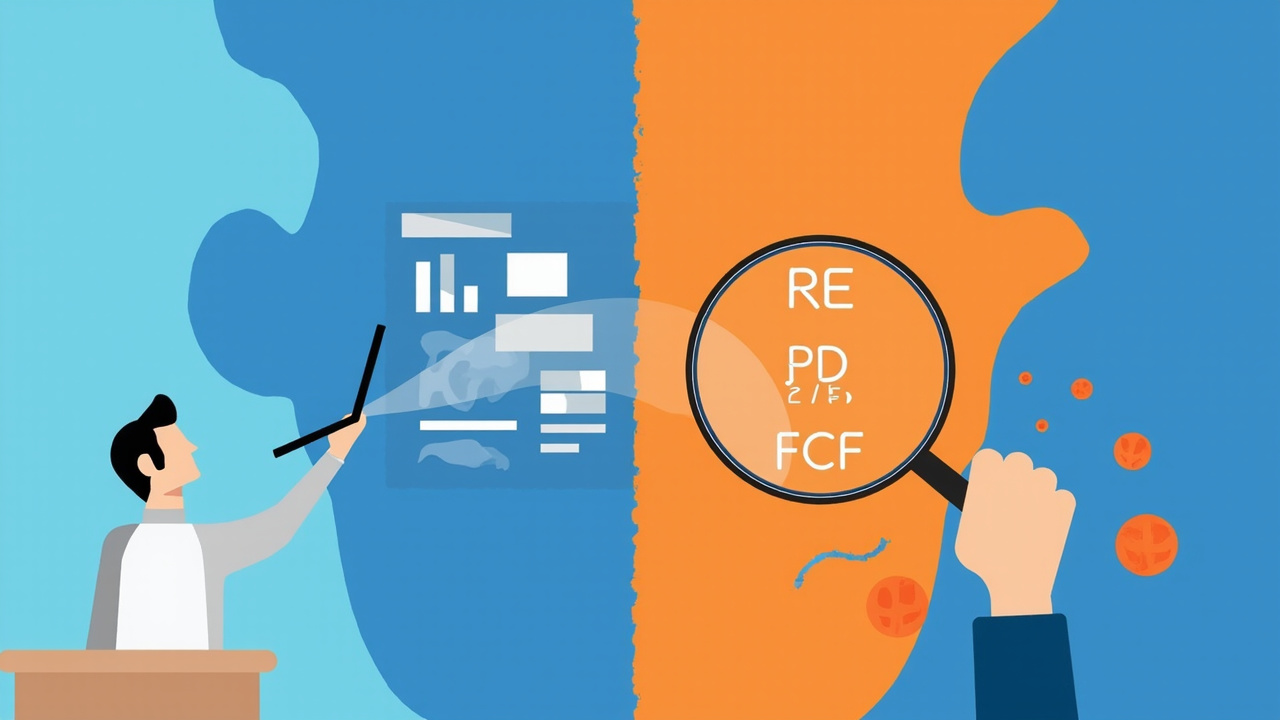
When buying a laptop, you check the CPU, RAM, cooling module, and are even willing to spend three hours on PTT digging through reviews. But the moment you pour hundreds of thousands, millions, or even an entire year’s salary into a stock, the shrewd, picky version of you suddenly vanishes.
You no longer look at specs, no longer look at quality, no longer look at price. What you look at is the casual remark from a coworker over lunch—“that one looks good”—or the small line of text under a news ticker, or worse—just watching the candlesticks climb, feeling a rush of “if I don’t get on now, I’ll miss out.” This isn’t investing—it’s crossing the road with your eyes closed, with your family in tow.
Today we won’t talk debits and credits, won’t talk chip analysis—we’ll only do one thing: bring back that picky, hard-to-please brain you had when buying your laptop.
1. Why Do Retail Investors Lose Money for a Lifetime?
Before we get to the three numbers, you have to carve this order into your brain: the first goal of investing isn’t to make money—it’s to first avoid losing big. Buffett’s over-quoted but ever-worth-reconsidering line: “Rule No. 1: never lose money. Rule No. 2: never forget rule No. 1.”
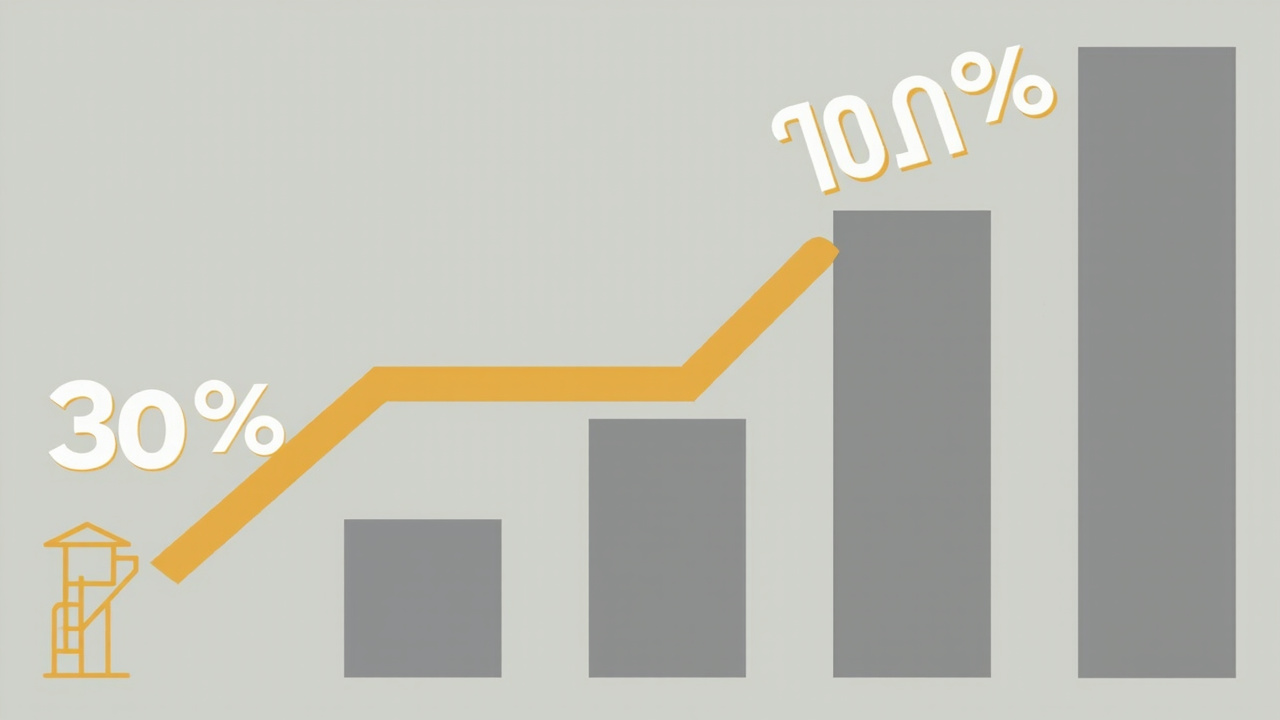
Many think it’s a cliché, but do you really know how heavy it is? Let’s punch the numbers: if your assets drop 50%, you need to gain a full 100% (double) to get back to even; what about a 90% drop? You need a 900% gain to recover. A loss is an elevator down, recovery is rock climbing.
A single big loss doesn’t just cost you a little return—it directly destroys the next 3 to 5 years of your investment rhythm. When the 2020 pandemic crash hit, how many people panic-sold, watching the index climb all the way back, only to summon the courage to re-enter when others were already preparing to take profits. That’s why the people who truly survive in the market aren’t just hunters chasing opportunities—they’re engineers who know how to avoid the mines.
Benjamin Graham, the father of value investing, said it clearly: investing is, through thorough analysis, to ensure the safety of principal and obtain a reasonable return. Note the order: safety first, return second.
2. The First Number: ROE—How Much Can This Company Earn With Your Money?
ROE (Return on Equity) is the most intuitive measure of how efficiently a company “earns money with your money.” The higher the ROE, the more profit the company creates for every NT$1 of shareholder capital.
How do you read it safely? Imagine ROE as you going to interview the boss of a company, looking at how much money he’s made for shareholders in the past. A company with a long-term ROE below 8% is like a restaurant that breaks even every day it opens—either you don’t invest, or you put a big question mark next to its “growth story.”
But a high ROE isn’t a万能 solution either—beware of high-leverage illusions. If a company uses debt to artificially boost ROE, the moment interest rates reverse, profits will vanish like a receding tide. The truly excellent students are those who generate a steady high ROE with reasonable leverage.
3. The Second Number: P/E Ratio—How Many Years of Earnings Are You Paying For This Company?
The plain-language translation of the P/E ratio: how many years you’re willing to wait to break even. Stock price NT10, P/E ratio is 10x—it theoretically takes 10 years of profits to earn back your principal.
There’s no absolute standard for P/E, but there are two red lines to remember: first, compare with the industry average; second, compare with the company’s own historical range. For a Taiwan-listed financial stock, a P/E of 15x may be expensive; for a high-growth tech stock, a P/E of 25x may still be reasonable.
The deadly issue isn’t buying a “pricey” stock—it’s buying a stock that “shouldn’t be pricey.” When a company’s earnings are declining and its stock price is still sitting high, the P/E is being calculated from “past glory.” The moment expectations get revised down, the stock price drop is where your trap begins.

4. The Third Number: Free Cash Flow—Does This Company Actually Have Money in Its Pocket?
Accounting profits can be dressed up through “accounts receivable,” but free cash flow doesn’t lie—it represents how much money the company actually pulls out of its pocket, after subtracting what’s needed to keep operations running.
Why is this number the most critical? Because earnings are opinion, cash is fact. A company might show beautiful EPS on paper, but if free cash flow stays negative year after year, it may be feeding a forever-young monster through over-expansion. Conversely, a company with steadily growing free cash flow is like a reliable ATM—it’s got the底气 to weather a headwind.
Put these three numbers together: ROE looks at earning efficiency, P/E looks at pricing reasonableness, free cash flow looks at the depth of the pocket. Do these three checks in three minutes, and you’ve already eliminated 80% of the landmines in the market.

Conclusion: Give the Stock-Buying You the Brain You Used to Buy a Laptop
Retail investors lose money not because they don’t work hard—it’s because at the most critical decision point, they skip the most basic due diligence. When you’re willing to spend three hours researching a NT500,000 stock, that imbalance in proportion is the root of the loss.
These three numbers won’t turn you into the next Buffett, but they will help you do one thing: avoid one catastrophic loss, keep your principal in the market long enough to survive. As long as you survive long enough, compounding and time will do the rest for you.
Starting today, before opening any stock you want to buy, first ask yourself: what’s its ROE? Where does the P/E sit? Is free cash flow healthy? Three minutes, three numbers, turn a retail investor into a winner.
This article shares general investment concepts and does not constitute any buy/sell recommendation. Investing involves risk; please make independent judgments based on your own risk tolerance and consult a qualified professional financial advisor when necessary.
Disclaimer: This article shares investment concepts and compiled reference material. It does not constitute any specific investment, tax, or legal advice. Markets carry risk and investing requires caution; please make independent judgments based on your own risk tolerance and consult a professional advisor.
Tags
散戶投資, ROE, P/E Ratio, 風險控管, 巴菲特投資法則, Value Investing, 個股分析, Investing Beginners, 本金保護, 股票篩選, 護城河, 財務指標
Comments