
Have you ever done the math? You drag yourself out of bed at 7 a.m., spend an hour commuting, spin like a top at the office for eight hours, and then drag your tired body for another hour to get home. Ten hours, just like that, sold to your job — but the money in your bank account? It’s just lying there, earning less than 1% a year, basically sleeping. School teaches you to work overtime like crazy, but your money is slacking off — is that fair?
Today we won’t be talking about that scary chase-the-highs-and-dump-the-lows trading trick. Instead, we’ll share an asset allocation strategy that’s actually been tested with NT$500,000. The core idea is simple: let money start working itself to death for you, instead of you forever chasing the money. If the word “investing” makes your head spin, and your mind flashes to jumping stock charts, or you’re afraid your savings will vanish overnight — this article will completely change your view.
A proper asset allocation should be like setting the washing machine cycle — once you press the button, you can go do something else, and when the time’s up, the laundry’s washed and dried.
Why NT$500,000 Is the “Psychological Take-Off Point” for Passive Income
Why do I single out NT500,000 and starts producing cash flow, you’ll for the first time genuinely feel what “money working for you” actually means.
Assume a 6% annualized return — that’s NT2,500 extra per month. NT$2,500 may not sound like a lot, but the point is that it falls into your lap automatically while you sleep, binge, or vacation. That feeling will completely transform how you see money — you’ll shift from “trading time for money” to “trading money for time.”
Before we dive into specifics, we need to break three deep-rooted myths:
Myth 1: Investing is dangerous; saving is safest. Sounds reasonable, right? But when prices rise 2% a year and your time-deposit rate is only 0.8%, your money actually shrinks by 1.2% a year. Twenty years from now, that NT440,000 worth of purchasing power left — do you still feel safe?
Myth 2: You need a lot of money to start investing. Many people feel they don’t even qualify to talk about investing without a few million, but NT$500,000 is a fantastic starting point. The point isn’t the size of the principal — it’s whether you’ve started building a system. Like going to the gym, you don’t skip training just because you only have 5 kg dumbbells — the point is forming good habits with proper form.
Myth 3: Investing means staring at screens and studying charts all day. If you’re a full-time professional investor, that’s another story. But for most office workers, your time cost is too high. Rather than spending three hours researching a company, use that time to upskill, spend with family, or catch up on sleep. The core spirit of passive investing is to admit the market is smarter than you — don’t try to beat it, just join it.
The “60-40 Core Allocation” for NT$500,000: A System That Grows Itself
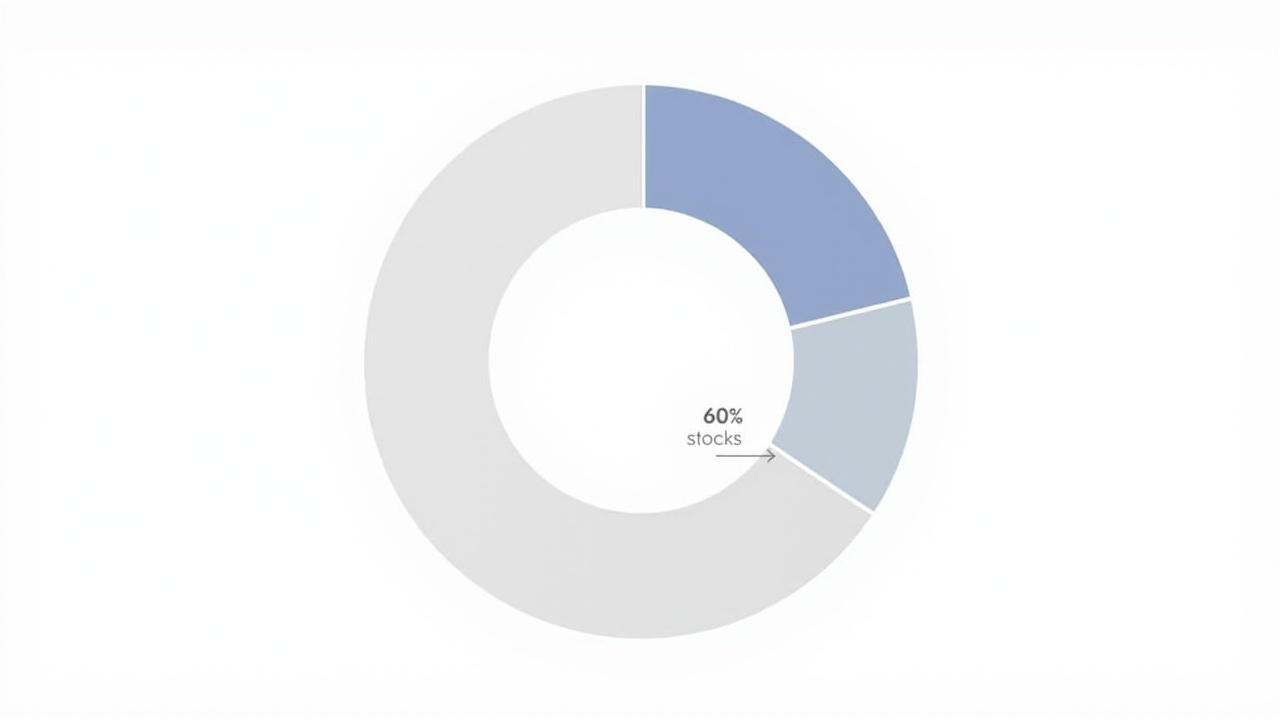
If you really had NT$500,000 in hand, what would you do with it? Put it all in time deposits, buy savings insurance, or just let it sit in your checking account? Most people, after saving hard for years, end up having their money slowly eaten by inflation — like hauling water up the mountain with all your might, only to find a hole at the bottom of the bucket, the water leaking out the whole way down while you don’t even notice.
This “60-40 allocation” is designed for office workers with zero time to watch the markets — you only need to rebalance once or twice a year:
Core 60%: Global Equity ETFs (passively tracking an index) This portion is responsible for long-term growth. Pick an ETF that tracks the MSCI World Index or the S&P 500, invest a fixed amount regularly, no market-timing, no chart-watching. What it earns is the simplest, most certain dividend of all — “the human economy keeps growing.” It will wobble in the short term, but if you stretch the horizon to 10 or 20 years, it works like a stable cash-printing engine.
Satellite 30%: Bond ETFs or Monthly-Distribution Funds This portion is responsible for generating cash flow. When stocks drop, bonds usually move inversely and stay steady. When you urgently need cash, monthly distributions can be withdrawn immediately, so you don’t have to sell stocks at a low. This 30% is the “shock-absorbing rubber” of your allocation.
Satellite 10%: Cash or Short-Term Money Market Funds This is your psychological safety pad. Seeing 10% just sitting there in your account, you’ll sleep better — you won’t panic and dump your 60% core at the bottom. Many people get crushed in crashes not because they picked the wrong ticker, but because they had no cash buffer and were forced to surrender.
The brilliance of this allocation is: when stocks surge and the ETF portion exceeds 60%, you sell a bit at year-end to top up the cash; when stocks crash and the ETF shrinks to below 50%, you buy more using cash. Mechanical execution — it completely eliminates your human weaknesses.
How to Start? Four Steps to Power Up Your Automatic Cash Printer
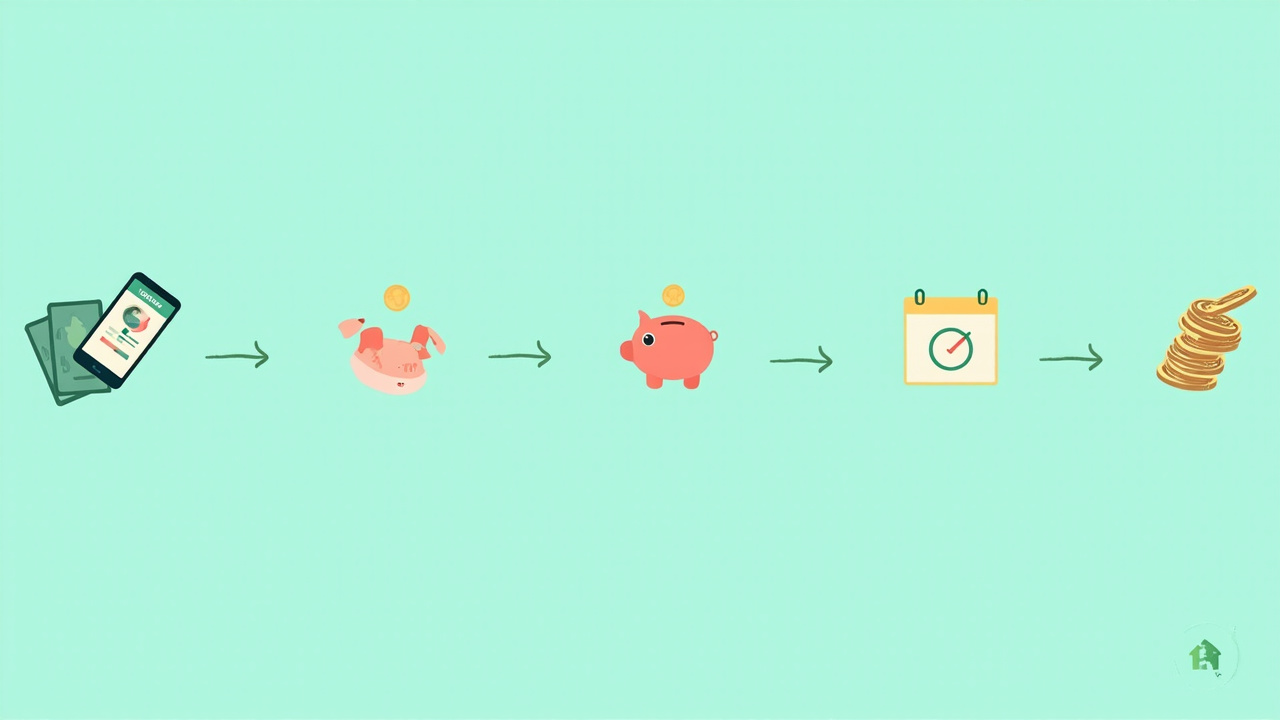
After understanding the principle, the most important thing is “how to do it.” I’ve laid out the simplest four steps — follow them, and within six months, you’ll see your first distribution hit the account.
Step 1: Pick the right broker, set up dollar-cost averaging. In Taiwan, choose a broker with low fees and a mature DCA mechanism — for example, a domestic broker offering overseas ETF DCA. Set a fixed day each month; the deduction can start from NT20,000. The point is “automation.” Once set, don’t touch it — that’s the essence of “press the button and go.”
Step 2: Carve out your first “salary” right away. Don’t wait until you’ve saved up NT500,000 — you only need one auto-executed deduction slip.
Step 3: Establish a “rebalancing” discipline day. Every December, or when markets swing violently, check your allocation ratios. If equity ETFs have risen to 70%, sell a portion to top up cash or bonds; if they’ve shrunk to 50%, buy more. No more than twice a year — never stare at the screen.
Step 4: Reinvest the distributions, kick off the compounding flywheel. The distribution amounts are small at the start, and many people will be tempted to withdraw and spend. That’s the biggest mistake. Set the distributions to “automatic reinvestment,” and let the snowball keep rolling. Ten years from now, you’ll find that modest NT8,000, NT$10,000 a month — that’s the magic of compounding.
Conclusion: Your Time Shouldn’t Be Sold to Your Boss Just Once

Passive income is not the privilege of the wealthy. The real question isn’t how much money you have right now — it’s whether you have a system that runs on its own without you operating it every day. NT$500,000 is a perfect starting point. It’s not the finish line — it’s the window that lets you, for the first time, see “money moving on its own.”
The first time you see a distribution land in your account automatically, the feeling is strange but wonderful. The amount isn’t large, but it’s the first time you truly understand those four words — passive income. It’s like planting a tree with your own hands; you can’t see the fruit right away, but you know that one day in the future it will start to bear fruit — and more and more of it.
Starting today, don’t let your savings sleep itself to death in the bank. Set up your first DCA slip, and start your own automatic cash printer. Three years from now, you’ll thank yourself for the decision you made today.
Disclaimer: The investment allocations and returns discussed in this article are general descriptions and historical scenarios, and do not guarantee future performance. Investing always carries risk. Fund and ETF prices fluctuate, and past performance does not represent future results. Readers should make independent judgments based on their own risk tolerance and financial situation, and consult a qualified financial advisor when necessary. This article does not constitute any buy/sell recommendation.
Tags
Passive Income, Asset Allocation, 上班族理財, Compounding Effect, ETF Investing, 定存陷阱, 通膨對策, 月配息, 自動投資, 50萬起步, 財富自由, Long-Term Investing
Comments