NVIDIA Shareholder Meeting: Jensen Huang Declares the AI Factory Era
On June 25, 2025, NVIDIA held its Annual Meeting of Stockholders. No PowerPoint. No flashy videos. Jensen Huang showed up with a set of numbers and a completely new framework — and the stock surged 4.33% the same day, closing at an all-time high of 3.77 trillion**, officially surpassing Microsoft to become the world’s most valuable company.
He said something that silenced the room:
“Useful AI is here, and it’s profitable. Compute is revenue.”
That’s not a slogan. Huang pulled out a calculator and redefined the entire industry with a single new unit: the Token.
Token Is Profit: From Selling GPUs to Building AI Factories
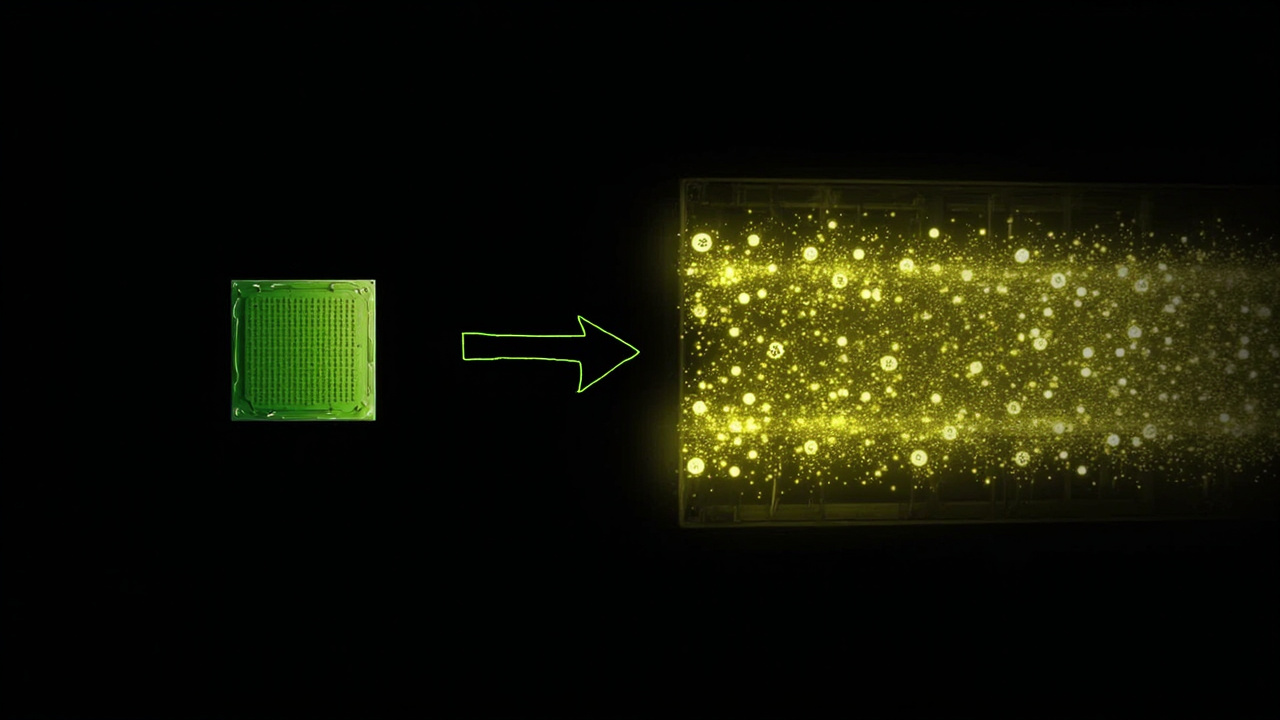
At the shareholder meeting, Huang laid out a brand-new economic logic:
Old logic: Buy a GPU = buy hardware. A one-time transaction.
New logic: Buy a GPU = build an AI factory. What runs on the assembly line are tokens.
Every token generated by AI — becoming code, answers, designs, services — is printing money. Tokens are no longer a technical term; they are the new unit of profit.
He backed it up with data on the spot:
| Year | Global Developer Code Requests | Change |
|---|---|---|
| 2023 | 300 million | — |
| 2024 | 400 million | +33% |
| 2025 | 500 million | +25% |
| 2026 (first months) | ~3x over same period | Explosive |
The same 30 million developers. Once generating 3 trillion tokens annually. Now, with AI agents, approaching 9 trillion — an incremental market of 6 trillion tokens appearing from thin air.
Financially, the numbers are equally staggering: FY2025 revenue reached 115.2 billion (+142%), with gross margins at 75%. Operating profit rose 147%. Management expects profits to expand further as AI demand continues to accelerate.
Then came the capital return commitment that stunned shareholders: return more than half of free cash flow to shareholders every year. Dividend increased 25x. An additional $80 billion buyback. In a moment when few CEOs dare say this, Huang said: “This isn’t painting a picture. The printing press is already running.”
Vera Rubin: The First CPU Built for AI Agents
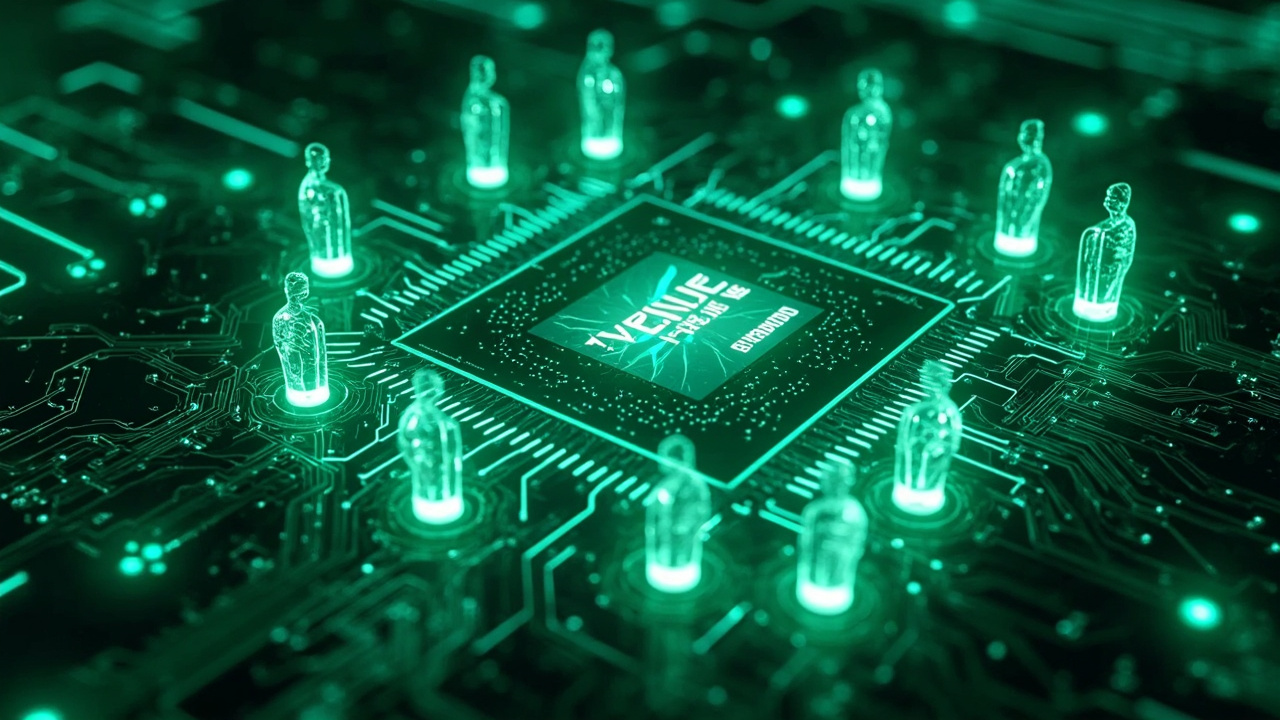
If “Token is profit” is the economics-level redefinition, Vera Rubin is the technology-level shock and awe.
This is a CPU designed from scratch — but not for humans. Its customers are billions of AI agents.
| Spec | Figure |
|---|---|
| Transistors | 336 billion |
| Process | TSMC 3nm |
| Memory | 288 GB HBM4 |
| Bandwidth | 22 TB/s |
| Inference performance | 5x Blackwell |
| Cost per token | Reduced to 1/10 |
| NVLink | 6th Gen, 72 GPUs as one giant computer |
Huang’s explanation upends seven decades of CPU design philosophy: “Up until now, every CPU has been built for humans. We live in a world measured in seconds. Agents live in a world measured in nanoseconds.”
An agent runs a task that’s off by 100 steps. Every step requires communication with the GPU. If the CPU can’t keep up, the GPU sits idle. If the GPU idles, the factory loses money. So Vera Rubin isn’t a “faster CPU” — it’s a heart rebuilt entirely for the AI inference era.
Meanwhile, the Blackwell architecture became NVIDIA’s fastest-ever commercial deployment, with Q4 single-quarter revenue of $11 billion. The upcoming Blackwell Ultra boosts AI inference efficiency by another 50%, targeting trillion-parameter model inference like GPT-4 and Grok-3.
Robotics + Physical AI: The Next Trillion-Dollar Wave
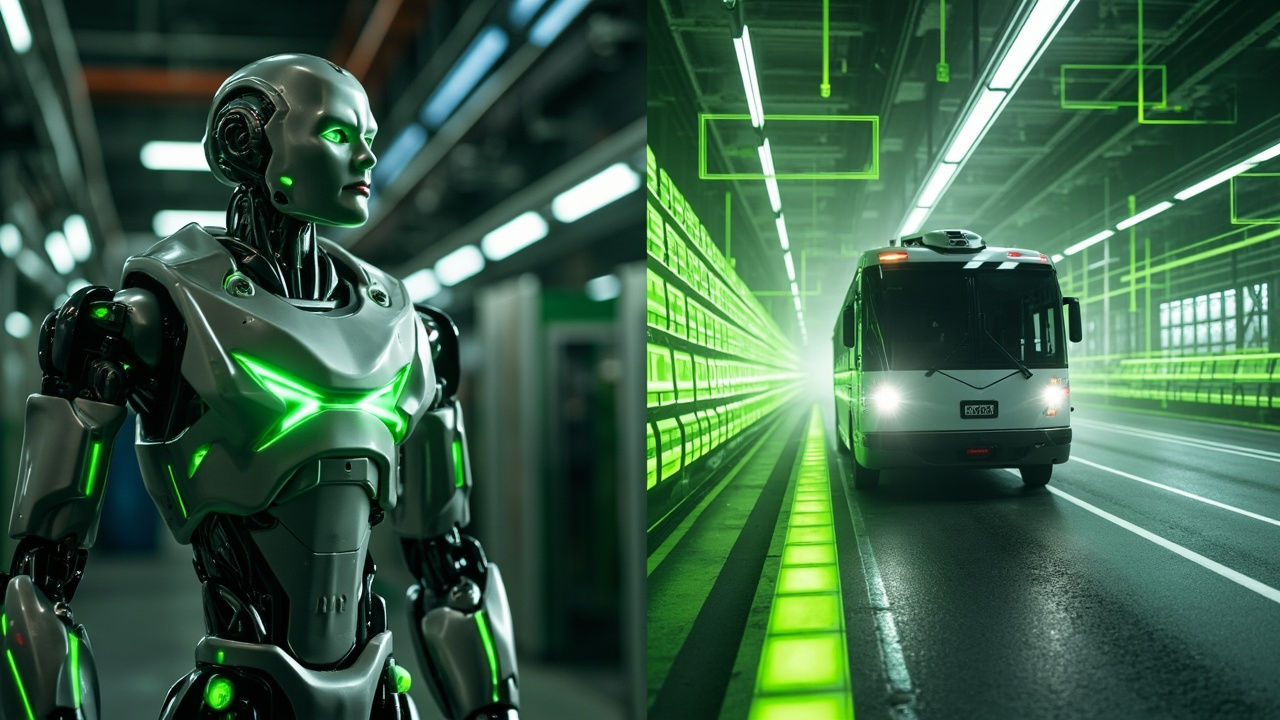
At the shareholder meeting, Huang explicitly named the company’s second growth curve for the first time: Physical AI.
Physical AI isn’t chatbot intelligence trapped behind a screen. It’s intelligence in the real world — robots, autonomous vehicles, factory floors. Huang’s goal: “Let billions of robots and hundreds of millions of autonomous vehicles run on the NVIDIA platform.”
To that end, NVIDIA has built a complete closed loop:
- AI Factories for training
- Omniverse for digital twin simulation
- Jetson for edge device deployment
- Cosmos for physical world model driving
On the hardware side, the next-gen robotics chip Thor SoC is compatible with both industrial robotic arms and autonomous vehicles. On the software side, the Isaac GR00T N1 humanoid robot platform, coupled with the Cosmos world physics model, enables multimodal perception and physical simulation.
Currently, robotics and automotive account for only about 1% of NVIDIA’s total revenue. But Huang defined it as a “trillion-dollar incremental market,” predicting that robotics and physical AI infrastructure will be the next hundred-billion-dollar industry opportunity.
At the close of the shareholder meeting, Huang dropped a line that may have been underestimated:
“AI infrastructure will be measured on a scale of decades. Like the power grid. Like transportation systems. Like the internet. This is the largest infrastructure build-out in human history.”
He wasn’t presenting. He was delivering answers. Token is profit. Vera is for agents. Robotics is the next wave. Half the money goes back to shareholders.
The answers aren’t in the slides — they’re etched into GitHub’s commit logs, printed onto fab wafer lines, and written into $103 billion in annual cash flow.
This content is for informational purposes only and does not constitute investment advice.
Comments