Claude Tag Launches: Karpathy Declares the Third LLM Interaction Revolution
On June 23, 2026, Anthropic dropped a bombshell: Claude Tag. It’s not a new model, nor a new version of a chat interface — it’s a fundamentally new form of AI existence: Claude joins your Slack channel as a team member.
The news drew an exceptional endorsement from AI luminary Andrej Karpathy, who recently joined Anthropic. He defined it as the third major redesign of LLM user interfaces. The first was the website (ChatGPT-style dialogue). The second was the desktop application (Claude Code, Cursor, and other IDE integrations). The third — AI becomes an independent, persistent, asynchronous entity with organization-wide tools and context, working alongside human teams.
This is not an upgrade. It’s a paradigm shift.
What Is Claude Tag: From Tool to Team Member
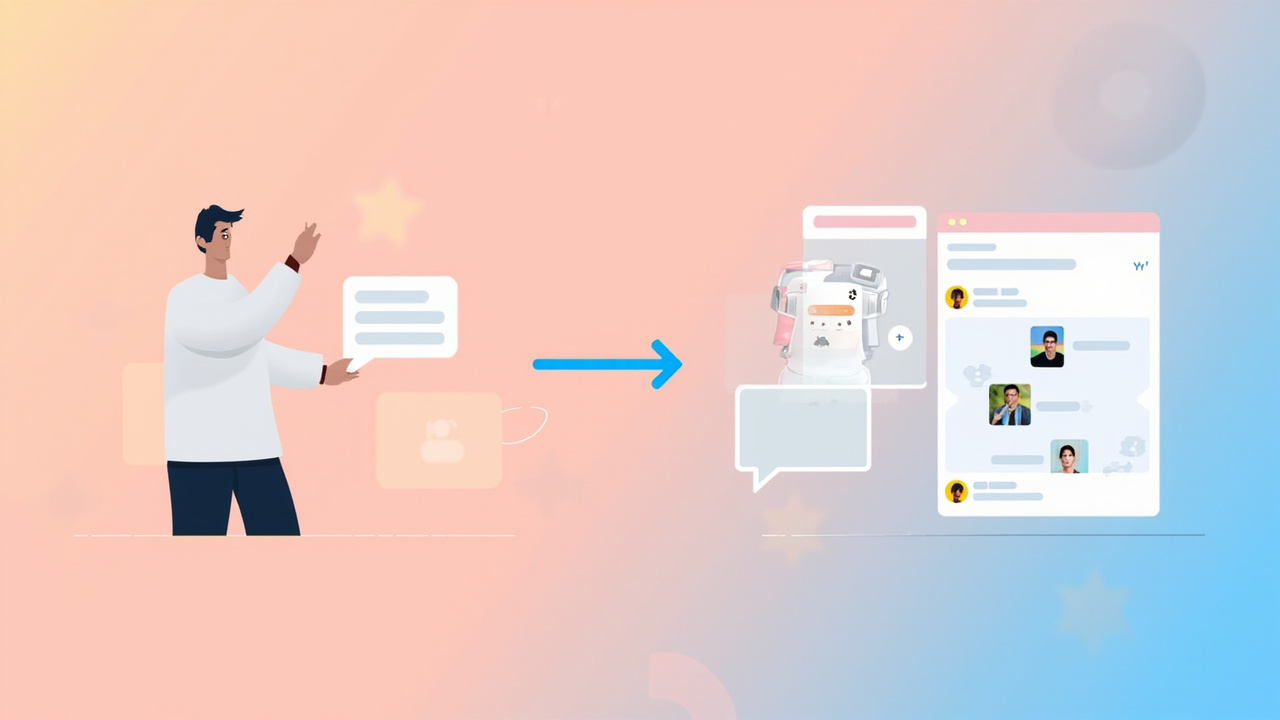
If you’ve used Claude Code or GitHub Copilot, Claude Tag’s interaction pattern will feel familiar. But its nature is fundamentally different.
| Dimension | Traditional AI Chat | Claude Tag |
|---|---|---|
| Interaction | Q&A, ends after reply | Persistent presence, cross-session memory |
| Scope | Single user | Shared by all channel members |
| Work style | Passive, waits for prompts | Proactive intervention + passive response |
| Task type | Instant Q&A | Multi-stage async tasks, runs for hours or days |
| Context | Single conversation window | Channel history memory, cross-channel learning |
How does it work in practice? Tag @Claude in a Slack channel, delegate a task in natural language, and it automatically breaks it down into steps, executes them one by one, and reports back in a thread.
Zhang assigns Claude a task. Li enters the channel, sees the progress, and picks up where Zhang left off. Wang joins later and understands the full context. Everyone collaborates around the same Claude, rather than maintaining separate contexts.
Anthropic’s internal data is striking: 65% of the product team’s code is now generated with the help of an internal version of Claude Tag. Beyond engineering, employees use it to track product metrics, process support tickets, and trace the root causes of complex bugs.
The Four Core Capabilities
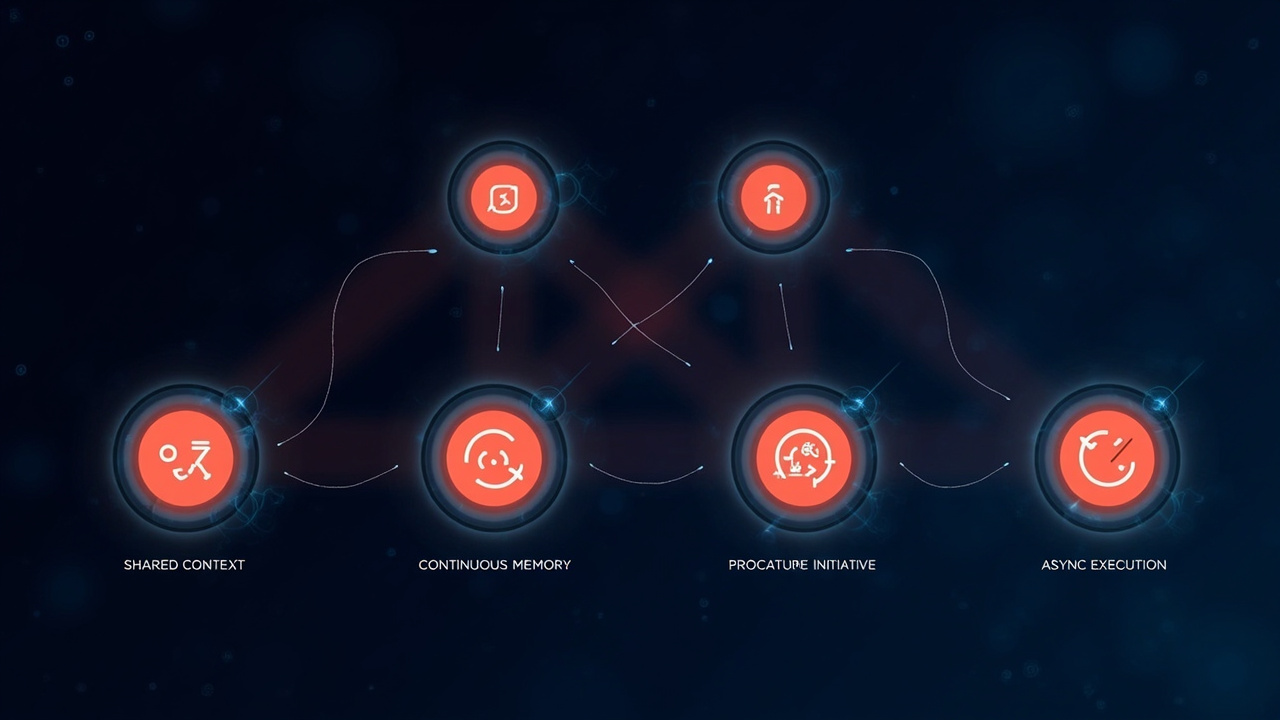
Claude Tag’s architecture revolves around four critical capabilities, each pushing the boundaries of what AI tools can be.
Shared Context (Multiplayer): Within a given Slack channel, there is only one Claude interacting with everyone. Everyone can see what it’s doing and continue conversations where the previous person left off. Full operational transparency, which is critical in enterprise environments.
Continuous Memory (Learns Over Time): As Claude participates in channel discussions over time, it gradually accumulates organizational knowledge — understanding project context, team conventions, tech stack preferences, and collaboration workflows. Users no longer need to explain context from scratch every time. This is the qualitative leap from “stateless API call” to “memory-equipped team member.”
Proactive Intervention (Ambient Mode): This is the product’s most radical design choice. With Ambient Mode enabled, Claude no longer just waits for prompts — it surfaces on its own. It flags overlooked important discussions, follows up on long-unresolved issues, marks decisions that need to be made, and proactively notifies the team when it discovers relevant information. In a sense, Claude begins to possess the capability of “proactive work.”
Asynchronous Execution: Once a task is assigned, the user can leave Slack entirely. Claude plans its own execution, continuously advances the project, and reports back hours or even days later when the work is complete. This is the essence of an Agent — not a tool that helps you type, but one that helps you complete work.
Technically, Claude Tag runs on the Opus 4.8 model, with dual organization-level and channel-level token quota controls. It is currently available only on Slack in beta for Claude Enterprise and Team customers, with plans to expand to more work contexts.
Karpathy’s Three-Stage Framework: Why This Is the Third Revolution
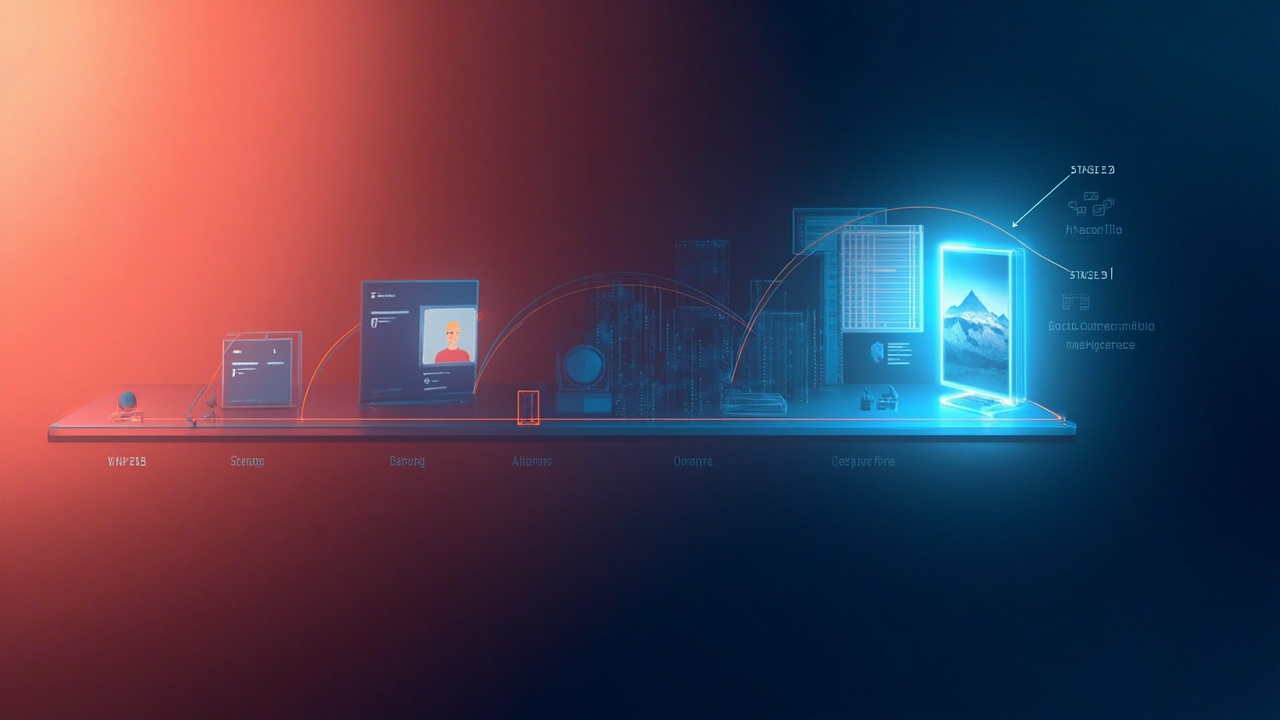
Andrej Karpathy distills the evolution of LLM human-computer interaction into three stages:
Stage 1: Website. The LLM is a website you actively open your browser to visit. ChatGPT’s dialogue box is the icon of this era. The interaction pattern: user initiates, model responds, conversation ends.
Stage 2: Application. The LLM becomes software you download to your computer, deeply integrated into your development environment and workflow. Claude Code, Cursor, and GitHub Copilot are exemplars. The interaction pattern: real-time assistance embedded in the IDE.
Stage 3: Teammate. The LLM becomes an independent, persistent, asynchronous entity with organization-wide tools and context, truly working alongside humans. Claude Tag is the beginning.
Karpathy’s logic deserves careful attention: the first two revolutions changed where you use AI. The third revolution changes what identity AI holds within an organization — from a tool to a team role with persistent memory, proactive behavior, and shared state.
On a deeper level, Claude Tag’s “channel as prompt” mechanism is highly instructive. Users need neither switch windows nor provide additional background explanations. The model directly enters the group chat context and naturally understands the task intent. This drastically reduces the friction cost of AI collaboration.
Concerns and the Road Ahead
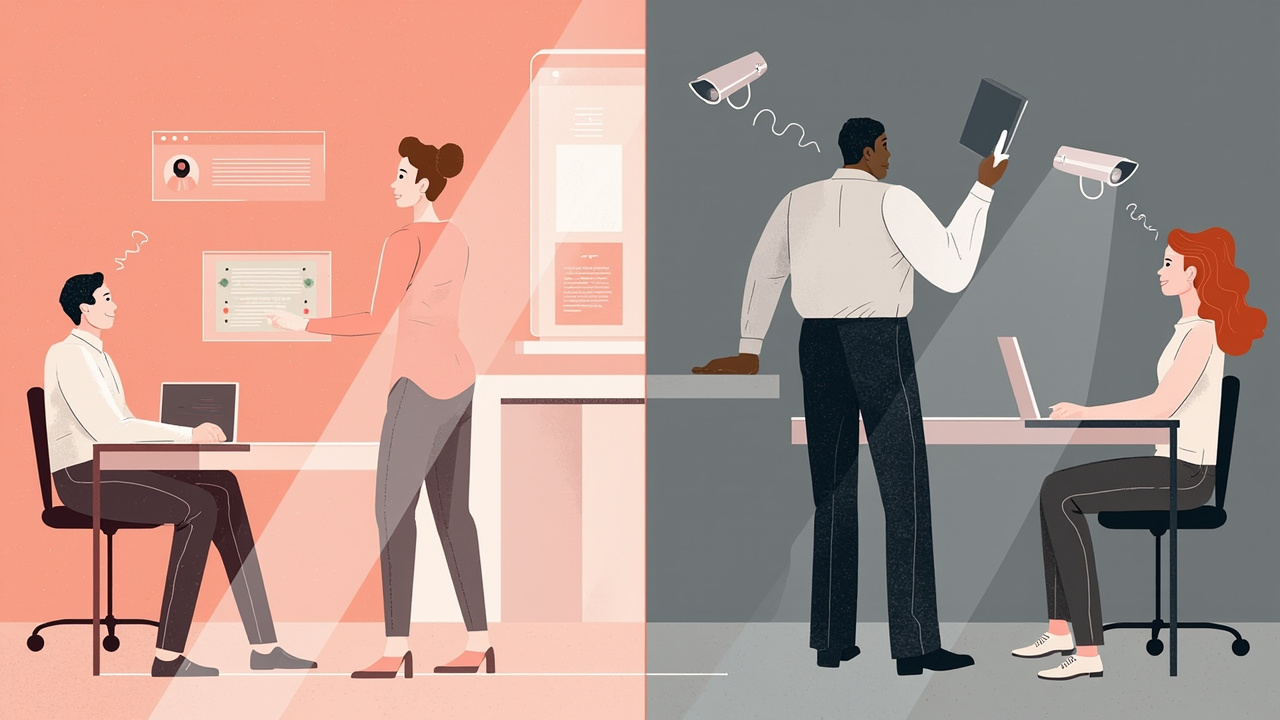
Every paradigm shift comes with unease.
The sharpest critique centers on the “digital overseer” concern: when Claude resides permanently in group chats and proactively follows up on progress, is it an “assistant” or a “manager’s surveillance tool”? The moment you pull Claude Tag into a five-person team, every message from every person becomes a message an AI is reading. If your output is good, it may be interpreted as “she’s outsourcing her thinking.” If it’s mediocre, it may be interpreted as “see, this is what we were worried about.” There is virtually no third outcome that silences the skeptics.
The construction of privacy and trust layers will be the critical variable determining whether Claude Tag survives. Even though Anthropic has technically implemented safeguards like permission isolation and auditable operations, trust has never been a technical problem — it’s a human one.
From another angle, launching on Slack first is deeply strategic. Slack covers nearly 80% of Fortune 100 companies, has over 200,000 paying customers, and is the most active source of unstructured enterprise information. This is not AI finding a scenario — it’s natively embedding AI directly into the scenario you already inhabit. Anthropic’s bet: the best AI product is not another App. It’s one that moves directly into the tools you already use.
Claude Tag is still in beta, with a 30-day forced migration replacing the old Claude in Slack integration. This is just the beginning.
If Karpathy is right, what we’re witnessing isn’t merely the launch of a new feature — it’s a historical pivot where AI transforms from a “summoned tool” into a “present teammate.”
And an AI teammate that proactively reminds you, remembers context, and continues pushing tasks forward late into the night — the impact this will have on how we work may be far deeper than anyone imagines.
This article is based on Anthropic’s official announcement and publicly available information.
Comments