I have to confess something: a few years ago I was one of those numbers you see in the news under “retail trader loss statistics.” Every morning at 9 a.m. I’d sit in front of the computer, staring at the flickering one-minute candles, thinking about how to win back what I’d lost the day before. The result? In three months, I lost the down payment on a house.
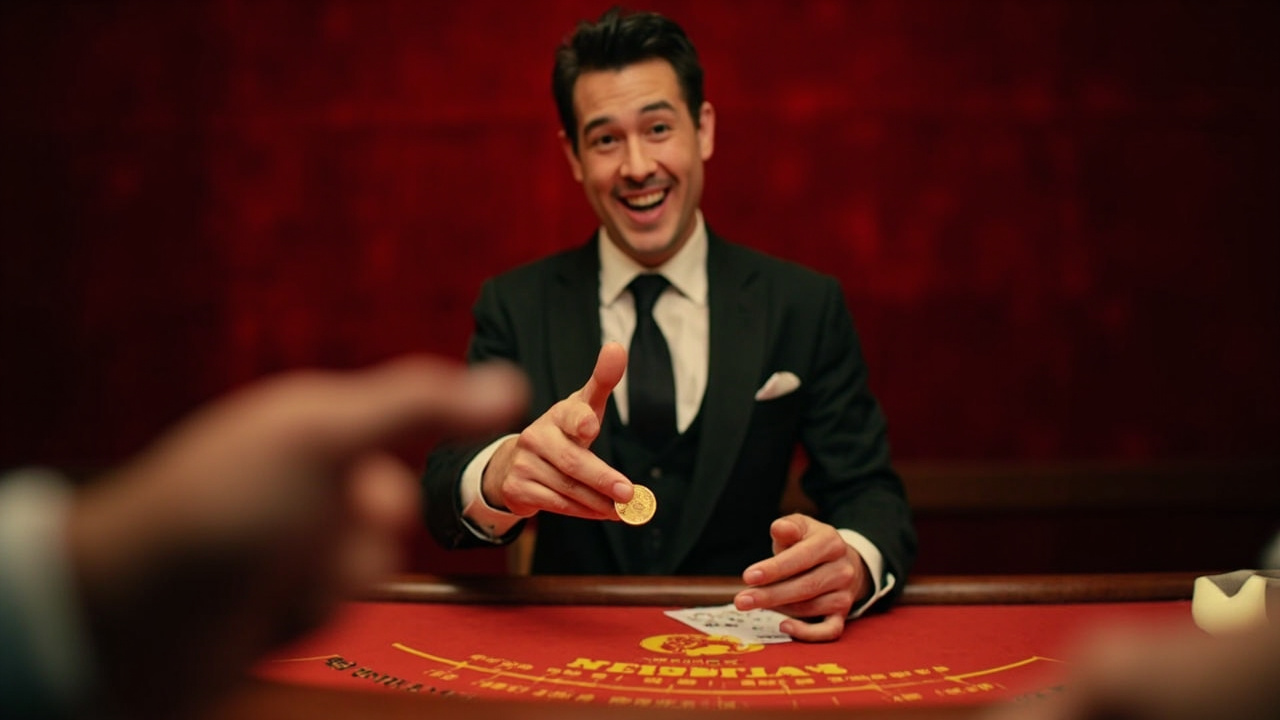
It was only later that I understood: the first taste of sugar in the stock market is always the most poisonous. Picture this: you walk into a casino, the dealer smiles at you and says, “On your first hand, I’ll let you win.” You toss a red chip somewhere, and you double up. Your heart pounds, you feel like this place is a money-printing machine. So you shove your entire net worth on the table—and the second hand takes it all.
Your first piece of unexpected stock-market gain is that dealer’s smile.
Trap 1: The Dealer’s Smile—The First Taste of Sugar Is the Bait
When do most people start trading stocks? Not when the market is at its gloomiest and gold is everywhere on the ground—but when Old Wang next door is bragging at dinner about “earning a BMW this year,” the water-cooler coworker whispers “stock X doubled in a month,” or the headline reads “the bull market is here.”
The moment you enter, the tide is rising. Toss any random bottle into the sea and it’ll wash ashore—that’s not your swimming skill, that’s the whole ocean cheating on your behalf. But the terrifying part is this: the market has just trained you in the worst possible trading habits.
In the real world, dumb actions are punished immediately: skip studying and you flunk, practice nothing and you get crushed on the court. The stock market is different—it rewards your bad behavior. You chase rumors with zero discipline, you pile in and out at random, and somehow you make money. Your brain has now been trained into a dangerous operating system—no research needed, no discipline needed, gut feel is enough to win.
Then stage two arrives: regret and greed. When you made NT100,000 stake, a normal person’s reaction isn’t “10% return, not bad”—it’s “If only I’d brought NT100,000 in one day, more than my half-year salary.” That’s exactly what the market was waiting to hear. It doesn’t care about your small principal; that NT$10,000 gain is the bait, a free sample, meant to reel in all of you.
Trap 2: The Trader Without Scars Is the Most Dangerous

People who’ve survived ten years in the market are covered in scars. They’ve been brutally taught by the market, so no matter how confident they feel, they still set stop-loss lines and control position sizing.
But you’re different. You have no scars—you don’t have that healthy kind of fear. When the stock plummets like a waterfall that day, you probably won’t be able to press the stop-loss button. You’ll tell yourself: “Yesterday it dropped just like this, then V-shaped reversed—I’ll hold for another ten minutes…”
The bad habits you picked up while making money by luck now take over your account. So you morph from a short-term trader who just wanted lunch money into a long-term investor in a losing position—and a very reluctant one at that.
There’s a saying: money that comes by luck eventually goes back by skill. Every cent you make before you have a scar is debt that the market will come to collect one day, with interest. The real risk was never the loss itself; the real risk is that you haven’t been marked by any loss yet.
Traps 3 to 5: The Three Knives of Behavioral Finance

Beyond the two key traps above, three more knives hide inside your brain, quietly cutting you every day:
Trap 3: Loss aversion—eager to run when you’re up NT3,000. The trading world has an iron rule: “cut your losses, let your profits run.” Even the auntie who just opened her brokerage account has heard it. But in practice, 99% of traders do the exact opposite. Why? Because your brain is wired to hate losses—when you’re up NT3,000, admitting the loss is too painful, you can’t bring yourself to sell, and the loss drags on. This is called the disposition effect. Nobel-caliber research has long shown that the pain from a loss is roughly twice the pleasure from an equivalent gain.
Trap 4: Decision fatigue—the more you trade, the worse your judgment gets. You’ve probably had this experience: you made a few winning trades in the morning, by the afternoon you’re groggy and foggy, and you churn out bad trades that give back every bit of the morning’s gain. This isn’t bad luck—your prefrontal cortex is begging for help. Decision-making burns enormous energy in the brain; after a dozen consecutive judgments, decision quality collapses. The terrifying thing about day-trading is that it forces you to make dozens of decisions a day, squeezing your judgment down to zero.
Trap 5: The all-in temptation—treating “adding to the position” as “putting in effort.” After a win, an irresistible urge kicks in: double the size. NT200,000, NT500,000, NT1,000,000—you call it “effort,” the market calls it “the standard chive script.” Adding to a position is,本质上, gambling the same unverified thesis with a bigger chip. If your strategy works at NT$100,000, scaling it up tenfold doesn’t necessarily work better—it might just blow up the account.
Conclusion: Only Those Who Understand Should Dare to Enter

The 1% who win in the day-trading market don’t win because their skill is better than yours—they win because they’ve sidestepped the five traps above. They aren’t free of greed or fear—they’ve caged greed and fear inside a system.
If you still want to enter, please ask yourself three questions first:
First: do I have at least three years of trading records proving my strategy has a stable positive expectancy? If not, validate with at least 100 trades on a paper account or with a tiny position.
Second: do I have written rules for entry, stop-loss, and take-profit? If your entries and exits are based on “gut feel,” then 100% you’ll end up among the 99% of losers.
Third: can I endure ten consecutive losing trades and still execute my system normally? If not, drop your position size to whatever lets you sleep at night.
Day-trading isn’t impossible, but it’s a game 99% of retail traders should never touch. Real wealth was never built by one all-in gamble—it was built, year after year, by a validated system compounding steadily. Only those who understand the five traps should dare to truly enter. Anyone who hasn’t grasped them is, every second they’re in the market, handing their money away.
Disclaimer: The trading psychology and behavioral-finance concepts discussed in this article are general educational explanations; past performance does not guarantee future results. Day-trading, futures, and options are highly leveraged transactions that may result in the loss of the entire principal. Readers should make independent judgments based on their own risk tolerance and financial situation, and consult a qualified investment advisor when necessary. This article does not constitute any buy or sell recommendation.
Tags
Day Trading Trap, Retail Money Loss, 賭場效應, 損失厭惡, Behavioral Finance, 交易心理, Stop-Loss Discipline, 梭哈陷阱, 沒傷疤的交易者, 散戶生存
Comments