Within three months, I lost the down payment on a house. That year I sat at my screen at 9 AM every morning, eyes fixed on the one-minute candles, with one thought: today I will make back what I lost yesterday.
I was not a number in the news. I was that number.
The fact that only 1 percent of day traders win is not urban legend. It is a mathematical certainty. This article exposes the five traps that wipe out retail accounts—and the only method that keeps you at the table long enough to win.
1. The Newbie Luck Trap: The Market Hooks You with a Free Sample
Imagine walking into a casino, and the dealer smiles: “Your first hand is on me.” You throw a red chip somewhere, double up. Heart racing, you think this place is a printing press. Then you put your entire bankroll on the table—second hand, wiped out.
The first windfall in the stock market is exactly that dealer smile.
When do most people start trading stocks? Not when the market is depressed and gold is everywhere. They start when their neighbor brags about making enough for a BMW this year, when a co-worker whispers that some ticker doubled in a month, when the headline reads “the bull market is here.”
The moment you enter, the tide is rising. Throw any bottle into the sea and it will wash ashore. That is not your swimming skills—that is the entire ocean cheating for you.
But the worst part is what you learned: the worst possible trading habits.
In the real world, doing something stupid gets you punished immediately—no preparation, you fail the exam; no practice, you get crushed on the field. But the stock market is different. It rewards your mistakes.
You heard some rumor, chased a breakout, and made money. Your brain is now trained into a dangerous operating system: no research, no discipline, gut feel is enough to win.
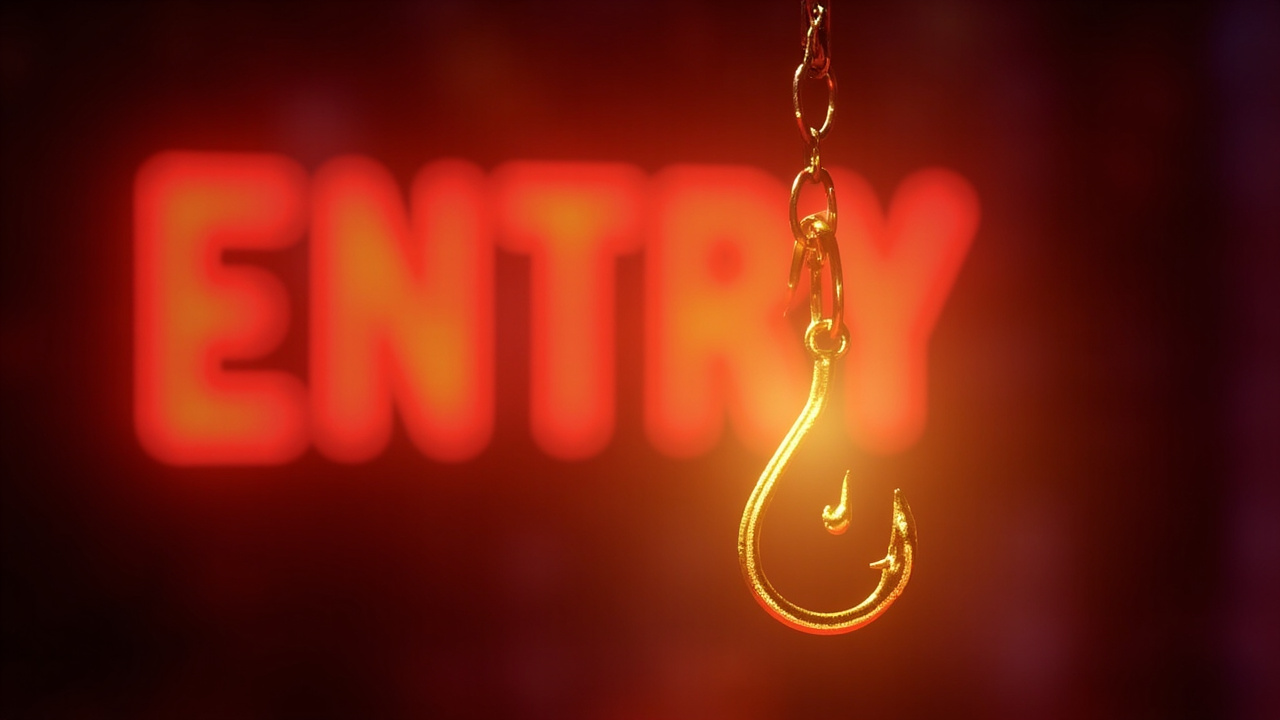
2. The Regret and Greed Trap: That One Thousand Tempts the Whole You
When you turn NT$100,000 into NT$10,000 of profit, the normal reaction is not “10 percent return, not bad.” It is: “If only I had brought NT$1,000,000, I would have made NT$100,000 in one day, more than my salary for half a year.”
The market is waiting for you to say exactly that. It does not care about your small account. That NT$10,000 profit is the bait—a free sample, with the goal of hooking the entire you.
Stage two: you size up, add leverage, throw out your original discipline. The market has the next trap ready for you.
3. The Scarless Trap: People Without Burn Marks Are the Most Dangerous
Survivors of ten years in the market wear scars all over. They have been taught by the market the hard way, so no matter how confident they feel, they always set a stop loss and manage their position size.
But you are different. You have no scars. You do not have that healthy fear.
When the price crashes like a waterfall that day, you almost certainly will not press the stop button. You will tell yourself: yesterday it fell the same way and V-reversed, just hold ten more minutes.
The bad habits you picked up when you made money by luck officially take over your account at this moment. You go from being “a short-term trader just trying to make lunch money” to becoming “a long-term investor of losses”—and a very reluctant one at that.
4. The Decision Fatigue Trap: Your Brain Was Not Built for High-Frequency Trading
Someone says: I just need to be a robot and execute with discipline, then I can make money.
From a neuroscience perspective, let me tell you: for the vast majority of people, this is almost impossible.
There is a trading maxim: “cut your losses, let your profits run.” Even the auntie who just opened her account has heard it. But in real combat, 99 percent of people do the exact opposite—why?
Because your brain is hard-wired to hate losses:
- When you make NT$3,000, your brain screams “run, the profit will fly away,” so you rush to sell, and the gain is short.
- When you lose NT$3,000, admitting the loss is so painful that you cannot bring yourself to sell, and the loss drags on.
This is called loss aversion—Nobel Prize-level research has long proven that the pain from a loss is roughly twice the joy from an equal-sized gain.
But what is even more deadly is decision fatigue. The region in your brain responsible for rational judgment is the prefrontal cortex. Operating it consumes large amounts of glucose and energy, like the most power-hungry app on your phone.
Picture your day: at 9 AM the market opens, the one-minute candles jump nonstop, and your brain is making decisions every second—sell? Cut half? Hold? By 1 PM, the prefrontal battery is basically dead.
After rational thought powers down, the amygdala—the seat of instinct, fear, and greed—takes the wheel. The beautiful rule you set in the morning: “stop loss at 3 percent, no exceptions,” is worth less than a piece of tissue in front of the amygdala.
At 2:30 PM, the stock you are holding suddenly drops 5 percent—and your brain has almost no rationality left, so it switches into survival mode and frantically presses the revenge-trade button. Even if you slowly made some money in the morning, that one impulsive trade at the close can erase the entire day’s profit.
Human hardware was never designed for high-frequency trading. This is a game you are destined to struggle to win, given how you are built.

5. The Three Layers of Hidden Cost Trap: Your Capital Is Being Silently Devoured
Many people think the stock market is a zero-sum game—someone wins, someone loses, the sum is zero. This view has a fatal flaw.
Once you add up taxes, commissions, and slippage, for retail traders short-term trading is much closer to a negative-sum game.
Layer 1: Transaction Tax
Under current Taiwan policy, the transaction tax for same-day round-trip trading is 0.15 percent (preferential rate until end of 2027). The regular sell-side tax is 0.3 percent. Whether you win or lose, the moment you sell, the tax is deducted first.
Layer 2: Broker Commissions
Charged twice, on the buy and the sell, with a cap of 0.1425 percent. Even with the 40 percent online discount, it is not zero.
Add those two together and a single round trip costs about 0.32 percent in explicit fees. Sounds tiny, right? Just 0.3 percent.
Layer 3: Slippage (The Real Monster)
Open your broker app, and look at the small gap between the price you can buy and the price you can sell. The moment you anxiously hit the market order to buy, the fill price is usually one or two ticks worse than you expected; symmetrically, a market sell fills one or two ticks lower. This invisible micro-gap is slippage.
Now focus—this is the most skin-crawling part of the entire article:
Suppose you have NT$1,000,000 in capital, and you do a single round-trip day trade with almost full position every day:
- Daily explicit cost: NT$3,200 (about the price of a decent dinner)
- 20 trading days a month → NT$64,000 gone (6.4 percent of capital)
- 240 trading days a year → NT$768,000 gone (nearly 77 percent of your NT$1,000,000)
What does this mean? Even if your stock-picking skill is god-tier, and your price gain over the entire year is exactly zero, your capital will still be eaten by taxes and commissions by nearly 80 percent in one year.
If you trade not once a day but three to five times, the capital vanishes even faster, and you can be severely wounded within a few months.
Every time you toss a coin, the house first takes a fixed 0.32 percent. Winning money long-term at this table is almost impossible by math. And we have not even added slippage—the extra tick you pay every time you panic-buy at market.

6. Your Real Opponent Is Not Your Co-worker—It Is an Invisible Algorithm
When you place orders on an app, your real opponent is not your colleague or the guru in the chat group—it is the institutional players using ultra-low-latency systems, automated algorithms, and unlimited resources to compete on speed.
In some mature markets, high-frequency trading accounts for about 40 percent of volume. You see the news, confirm the candle, and hit the buy button—the fastest you can do is several seconds. In those seconds, the algorithm may have already placed a flood of orders, cancellations, and fills.
When you see the red number tick up on your app and excitedly hit buy, the smart money that reacted milliseconds earlier has already finished positioning at a better price, waiting to dump shares on those who chase in behind them.
To use a metaphor: you are an amateur player on a community football team, but you have just stepped onto the Premier League pitch. Across the field stand Manchester City. And the stock market is scarier than the football pitch in one way—you cannot see your opponent at all. You cannot see their field. That is the real nightmare of short-term trading.
And the problem is not only money—the deeper you sink into short-term trading, the more your daily life falls apart:
- You sneak off to check charts during work hours
- You cannot take your eyes off your phone when eating with friends
- You toss and turn at night unable to sleep
- Stocks up: happy. Stocks down: explosive temper
- You grow increasingly sensitive at home
- When losses pile up, you start hiding and lying to your family
Sleep deprivation plus extreme stress further degrades brain function, leading to more impulsive trades, which cause bigger losses, and a vicious cycle.
“Yesterday I lost, today I must make it back”—this gambler’s fallacy will balloon your trade size, and there is also opportunity cost: 6 hours of staring at the screen per day, 120 hours a month, 1,440 hours a year. If you spent that time upgrading your professional skills, getting certifications, or building a side business, your career competitiveness and income growth would be entirely different.
7. The Marathon Is the Only Race Retail Investors Can Win
Algorithms crush humans in microsecond speed contests, but the vast majority of high-frequency strategies absolutely refuse to do one thing—wait. HFT holding periods are typically only seconds or minutes.
Many fund managers must deliver quarterly reports, so they are forced to react to every short-term fluctuation. But individual investors are different: you have no quarterly report pressure, no client return pressure, no boss breathing down your neck.
Only individuals can truly wield the weapon of time freely. And this weapon costs no money, requires no insider information, no algorithm, and is absolutely fair to everyone.
Run the math:
- NT$1,000,000 compounded at 8 percent annual return over 20 years → about NT$4.66 million
- Add NT$200,000 invested each year → about NT$13.8 million after 20 years
You do not need genius-level analytical skill. Time is working for you. The compounding snowball will roll bigger and bigger on its own.
Day trading is racing Usain Bolt in the 100-meter dash—you cannot win. Long-term investing is more like a marathon—just finish the race, and do not stop.
The only event individual investors might have an edge in is the marathon. The rule is simple: do not sprint, but do not stop.
You have two choices right now:
- Charge bare-handed onto the Super Bowl field and collide head-on with the professionals
- Quietly stand outside the stadium and choose to become a shareholder of that team—the back-stage owner who collects ticket revenue and broadcast rights every year regardless of wins or losses
Short-term trading is fighting the market. Long-term is making the market work for you. Which do you pick?
Disclaimer: This article is a personal account and market observation, not investment advice. Day trading carries extreme risk and may result in total loss of principal. Any decisions should be based on your own financial situation, risk tolerance, and independent judgment. The author bears no responsibility for any investment gains or losses.
Comments