
Have you ever had this moment? You’re sitting in the office when the manager publicly praises a coworker who joined three years after you and announces their promotion next quarter. You clap along with a smile on your face—but inside it feels like a needle piercing through.
That isn’t jealousy—it’s a deeper fear: you’re terrified that if you don’t change, you’ll be quietly weeded out by this era.
That fear grew into a raging fire inside Ah-Ming, a 32-year-old working at a Taipei marketing company. Coworkers were getting Hsinchu Science Park bonuses, classmates were using family help to buy pre-sale homes, friends were making their first million in crypto and planning a month-long slow trip through Europe—while he squeezed onto the Bannan Line every morning, commuting from Xinzhuang to Taipei City Hall, his salary inching down like winter temperatures.
That night, sleepless, one thought kept circling: I have to do something to change this.
And that thought became the very first dangerous turn in his life’s downhill slide.
The First Rope: One More Option Is the Most Expensive Trap of All
Ah-Ming’s college classmate “Old Wu” pulled him into a chat group called “Build Wealth Through Passive Income,” which was selling a hot overseas health supplement. The pitch claimed that tinkering with it after work could earn an extra NT$50,000–60,000 a month.
The line—“What’s wrong with one more stream of income?”—precisely opened the floodgate of anxiety inside Ah-Ming. He barely hesitated—seeing it not as a side hustle but as the life raft he’d been waiting for, one that would carry him out of the stagnant waters of mediocrity.
His plan sounded perfect: dedicated office worker by day, e-commerce entrepreneur by night—his life now had twin engines, surely he was about to accelerate forward.
But he didn’t notice that this very idea of “one more option” was pushing him toward the cliff edge.
Ah-Ming’s day became this: wake at 6:30 a.m., reply to last night’s customer messages on the MRT; at the office by nine, he had to focus 100% just to keep up with his boss’s projects; at lunch, while others ate and rested, he was inside the Facebook Ads backend; at 7 p.m. he dragged his hollowed-out body home, and the second job was just starting—processing orders, writing copy, shooting product photos, packing, racing to ship before the convenience store closed; by 1 a.m. he was so exhausted he didn’t even want to shower, his brain still calculating whether today’s ad spend had been a waste.
Three months in, he ran the numbers: the side hustle didn’t just fail to make money—it had actually bled nearly NT$1 million in inventory and ad spend. And more fatally, the professional reputation he’d carefully built at the office was starting to crack—reports had errors, key clients complained about slow responses, and three years of accumulated trust collapsed within half a year.
We were all raised on “don’t put all your eggs in one basket,” but many of us misread it as “I should do many things at once.” For an ordinary person with limited resources, that’s the most energy-draining form of self-sabotage.
Imagine: your life is one shovel and ten years. Are you going to focus on digging a 100-meter-deep well at the same spot until you hit groundwater—or scatter across ten sites, each 10 meters deep, ending up with ten holes that never reach water? Ah-Ming chose the latter. He thought he’d strapped on twin engines to accelerate forward, but in reality he was just burning every ounce of energy to spin in place.

The Second Rope: The Curse of Haste Turns the Life Raft Into a Coffin
But the story doesn’t end there. A trapped person, trying to break free, often makes even more irrational choices.
When Ah-Ming blamed the e-commerce failure on “the product wasn’t selling” and “Old Wu scammed me,” instead of “I was too impatient,” he got pulled into Old Wu’s next, even simpler and faster opportunity—a “Financial Freedom Express” stock group where a “teacher” analyzed the market daily, generously shared insider tips, and group members gleefully posted winning statements.
Staring at the unsold supplements piled up in his living room, then looking at the bright red profit numbers on someone else’s phone, a sharp sense of injustice welled up: turns out I’m the idiot—the real smart ones are playing the capital game.
So one night he made the decision: dump his NT950,000 credit loan, and roll the whole NT$1 million into “the biotech stock the teacher said was about to moon.”
The instant he pressed the buy button, he even felt a flicker of relief—as if every previous failure and hardship would be repaid by this one decisive strike.
He didn’t realize in that moment that this was the second, more lethal human-nature trap: the curse of haste. The harder you chase shortcuts, the more likely you fall into the deepest traps.
The next day it popped 3%, the group erupted in celebration. The third day it hit the daily limit down—the teacher said, “The big players are washing the chain, everyone report this to the platform.” The fourth day another limit down, sell pressure locked the price at the lower limit. The teacher vanished, Old Wu stopped replying, and the people who used to post daily winning statements all evaporated into thin air.
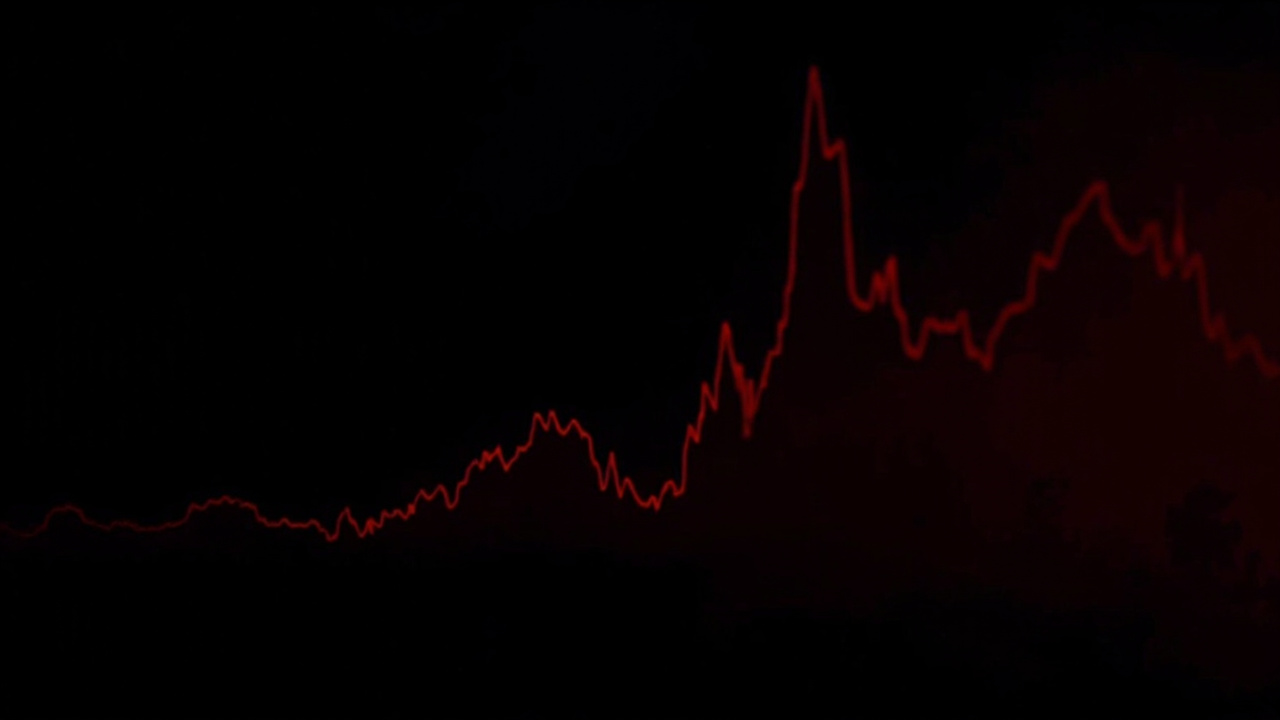
A month later, the bad news was confirmed: that stock was a fictional narrative all along, and the price collapsed to a quarter of its peak. Ah-Ming’s million-dollar asset had shrunk to under NT$250,000, and the credit-loan repayment notice from the bank arrived punctually in his mailbox.
Same Office, Same Six Months—Why Do Fates Diverge So Wildly?
Just as Ah-Ming was drowning in money troubles, the company triggered a business reorganization because of the downturn, and his supervisor called him in:
“Your KPI last quarter was only 60%. Three key clients filed negative feedback about your response time, and your late arrivals in the past half year add up to more than the previous three years combined. Ah-Ming, we feel like your heart just isn’t in it anymore.”
Unemployed, in debt, side hustle wrecked. In six months, Ah-Ming had gone from a “seemingly stable, just slightly anxious” ordinary office worker to the bottom of an abyss.
But in that same six months, a woman named Xiao Jing in the same department—quiet on the surface—was actually buried in preparation for an international certification “held by fewer than 100 people in all of Taiwan.” She poured every evening and every weekend into studying—which to Ah-Ming looked like “the slowest, dumbest way.”
But in the same week the company announced the layoff, a larger foreign firm reached out to Xiao Jing through a headhunter—the very certification was what they wanted. After the interview, the salary they offered her was a full 40% higher than her original pay at the company.
Do you see it now? This is what “fast” really means. Ah-Ming chased the shortcut and shattered on the curve; Xiao Jing gave up every shortcut, plodded step by step, but every step was rock-solid. Those seemingly slow, dull accumulations, at the most critical moment, became a leap of growth that no one else could match.
What mistake did Ah-Ming make? Was he not working hard enough? Honestly, he may have worked harder than anyone in the company—his failure was, in essence, a failure of temperament. He was kidnapped by the two most primitive and powerful ropes of all: greed and haste.
The Real Winner Is Only One Person—He Didn’t Win by Luck, He Won by Restraint
At the end of the story, let’s calmly size things up: who is the real winner?
- Old Wu, who introduced Ah-Ming to e-commerce and stocks? He earned a referral fee, but lost a friend’s trust forever.
- The company that laid Ah-Ming off? Saved a salary, but lost a once-promising employee.
- The stock-market teacher harvesting the chives? Made a killing, but doesn’t know how long this money will last.
The real winner is only one person—Xiao Jing. But she didn’t win by luck, and she didn’t win by being clever. She won through a far scarcer ability—restraint. She restrained the temptation to make money fast, restrained the anxiety of comparing herself to others, steadied her mind, and then very deliberately did one right thing to the extreme.
This is the most plain and most top-tier wisdom: as the Buddhist saying goes, of three thousand waters, take only one ladle. This road of life never requires you to do ten things at once—you only need to take one thing deep enough that no one can replace you.
If Ah-Ming’s story could be re-run, where do you think he should have made a different choice? Was it that afternoon, when he could have read his coworker’s promotion as a “signal that he needed to level up” rather than a threat? When Old Wu approached him for the side hustle, he could have spent that time sharpening his core skills? Or, when the side hustle wasn’t working, he could have paused to reflect rather than rushing headlong into the next fire pit?
I want to end with the most gut-punch question: if today it were you, facing the same salary stagnation, peer pressure, and anxiety about the future, how confident are you that you wouldn’t make the same choices Ah-Ming made?
Feel free to drop your thoughts in the comments below—because your reflection might help another Ah-Ming standing at a crossroads, about to make a choice.
Disclaimer: This article shares viewpoints and general financial literacy education only. It does not constitute any investment advice. Investing involves risk; past performance does not guarantee future returns. Borrowing to invest requires extra caution. Please carefully assess your own risk tolerance before making any decision.
Tags
斜槓陷阱, 雙引擎謊言, 散戶血淚, 股票違約交割, 證照加薪, 職場焦慮, 兼職創業, 信用貸款, KPI 下滑, 35 歲危機, 焦慮行銷, 慢就是快
Comments