
Have you ever ruined something by insisting too strongly on your position? Have you lost something more important by refusing to compromise? We’re taught from childhood to be “strong,” “upright,” and “unyielding.” But the Tao Te Ching teaches us a counterintuitive truth: sometimes, bending is true strength.
Chapter 22 says: “Bend and you remain whole; yield and you become straight; empty and you become full; wear out and you become renewed; have little and you gain; have much and you become confused.” This is the essence of Eastern wisdom. Using nature’s laws, Lao Tzu shows us: What bends can be preserved; what yields can straighten.
This doesn’t teach weakness or being a doormat—it teaches a higher-dimensional survival strategy. Today we unpack the philosophy behind these words.
Softness Over Hardness: Why Flexibility Always Wins

Have you observed trees after a typhoon? The hardest trees are often uprooted, while flexible bamboo sways with the wind and stands tall afterward. This is “bend and remain whole” in action.
Human society works the same way.
We admire toughness, iron will, uncompromising heroes. But history shows that ultimate victory belongs not to the strongest but to the most resilient.
Xiang Yu was rigid; Liu Bang was flexible. In the end, Liu Bang founded the Han Dynasty.
Guan Yu was proud; Sima Yi was patient. In the end, Sima Yi united the Three Kingdoms.
Why does softness overcome hardness? Because rigidity contains fragility. The harder you are, the easier you break. The more absolute your position, the less room you have to maneuver. The more forceful you appear, the more resistance you provoke.
Flexibility contains resilience. Bending isn’t falling—it’s to stand stronger later; yielding isn’t surrender—it’s to gain more space.
This is the truth many never understand: To preserve something, first learn to bend. To straighten something, first learn to yield. This isn’t cowardice—it’s how the universe works.
The Art of Communication: Win Arguments, Lose Relationships

The most practical application of “bend and remain whole” is in human communication.
Think about your last argument. The more you tried to prove you were right, the more they tried to prove you wrong. The more logical you became, the more emotional they got. Even if you won the argument, you lost the relationship.
That’s the price of rigidity.
Lao Tzu’s wisdom: To persuade someone, never start with “you’re wrong.” Start with “you’re right.”
First acknowledge what’s valid in their position. First receive their emotions. First soften your stance. Only then will their defenses lower, and only then will they hear what you have to say.
This works in the workplace too. Many employees give feedback starting with “this policy is wrong” or “this won’t work”—and bosses never listen. But if you start with “I understand your perspective, this direction is excellent,” then add “adjusting this detail might improve results,” acceptance dramatically increases.
The point isn’t who’s right or wrong. The point is: what’s your goal? If your goal is proving intelligence, keep arguing. If your goal is getting things done, learn to bend.
Remember: Truly powerful people never need to prove themselves verbally. Achieving goals through softness is true mastery.
Emptiness Receives: Humility is the Highest Posture

Lao Tzu continues: “Empty and you become full.” Water flows into low places; wisdom flows into humble people.
Why is the ocean king of all rivers? Because it willingly sits lower than every river. It doesn’t compete for height. It quietly occupies the lowest position, accepting all waters. Yet it becomes the vastest, most powerful presence.
People work the same way.
Have you noticed? The more accomplished people are, the humbler their posture. They’re always listening, always saying “I don’t understand” or “teach me.” Those with half-knowledge always boast, always interrupt, always prove how great they are.
Why? Because empty souls need grand postures to mask insecurity. Full souls need prove nothing.
“Empty and you become full” has deeper meaning: To receive something, first empty yourself.
To learn something new, first admit you don’t know. To receive help, first admit you need it. To gain recognition, first give recognition.
When you empty yourself, when you lower your posture, the world’s resources flow toward you. That’s why humble people always seem luckier—it’s not luck, they’ve opened their receiving channels.
Yielding is Not Weakness, It’s Strategic Retreat
The biggest misunderstanding about “bend and remain whole” is thinking it means abandoning principles and endlessly tolerating. Nothing could be further from the truth.
Lao Tzu says “yield and you become straight.” The emphasis isn’t on yielding—it’s on becoming straight.
Yielding is the means; straightening is the end. Retreat is the process; preservation is the result.
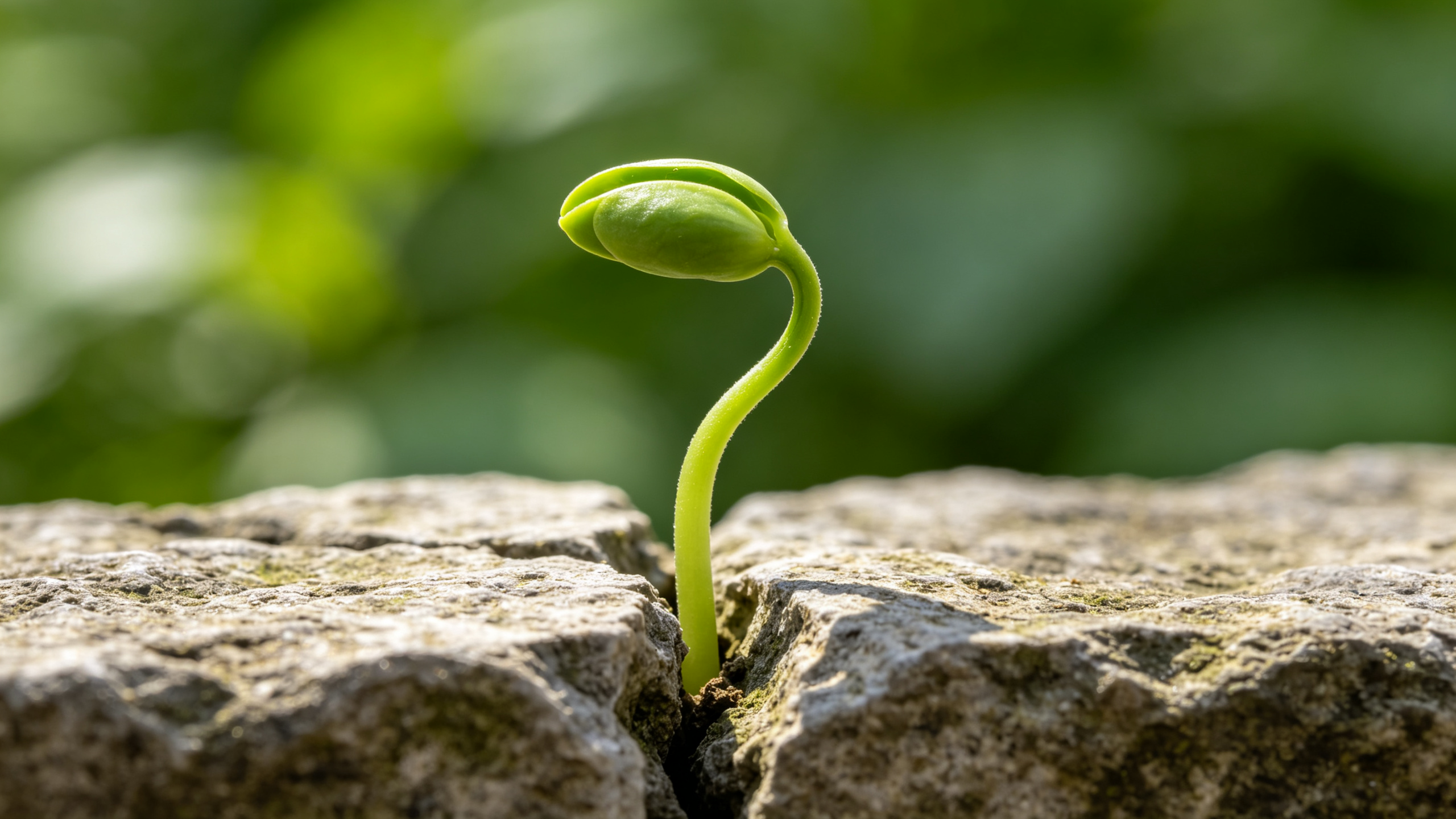
Like a seed growing through stone cracks. It doesn’t charge straight up—that would kill it. It bends first, detours, finds the weakest point to break through. It seems to take a longer path, but actually finds the only path to growth.
History’s greatest practitioner was Han Xin. He endured the crawl of shame—not because he was weak, but because he knew his life was worth more than temporary pride. If he’d killed that bully then, he’d have been executed, and never became the legendary general.
That’s the true meaning: Not all yielding is weakness, not all persistence is courage.
True maturity means knowing when to stand firm, when to bend; what’s worth everything, what’s just temporary emotion.
Lao Tzu concludes: “Because you do not compete, no one under heaven can compete with you.”
Because you don’t compete with others, no one can compete with you.
This sounds mysterious but is simple. When you let go of proving yourself, when you let go of winning at all costs, you have no opponents. Others want to fight you but find nothing to push against.
“Bend and remain whole” isn’t manipulation or calculation—it’s serenity after seeing how things work. You know what truly matters, so you don’t waste energy on trivialities. You know nature’s law that softness overcomes hardness, so you don’t use brute force against the world.
May we all learn this wisdom. Be soft like water, resilient like bamboo, humble like the ocean. In this world full of sharp edges, live powerfully in the gentlest way.
This article is a popular interpretation of Eastern philosophical thought and does not constitute professional advice.
Comments