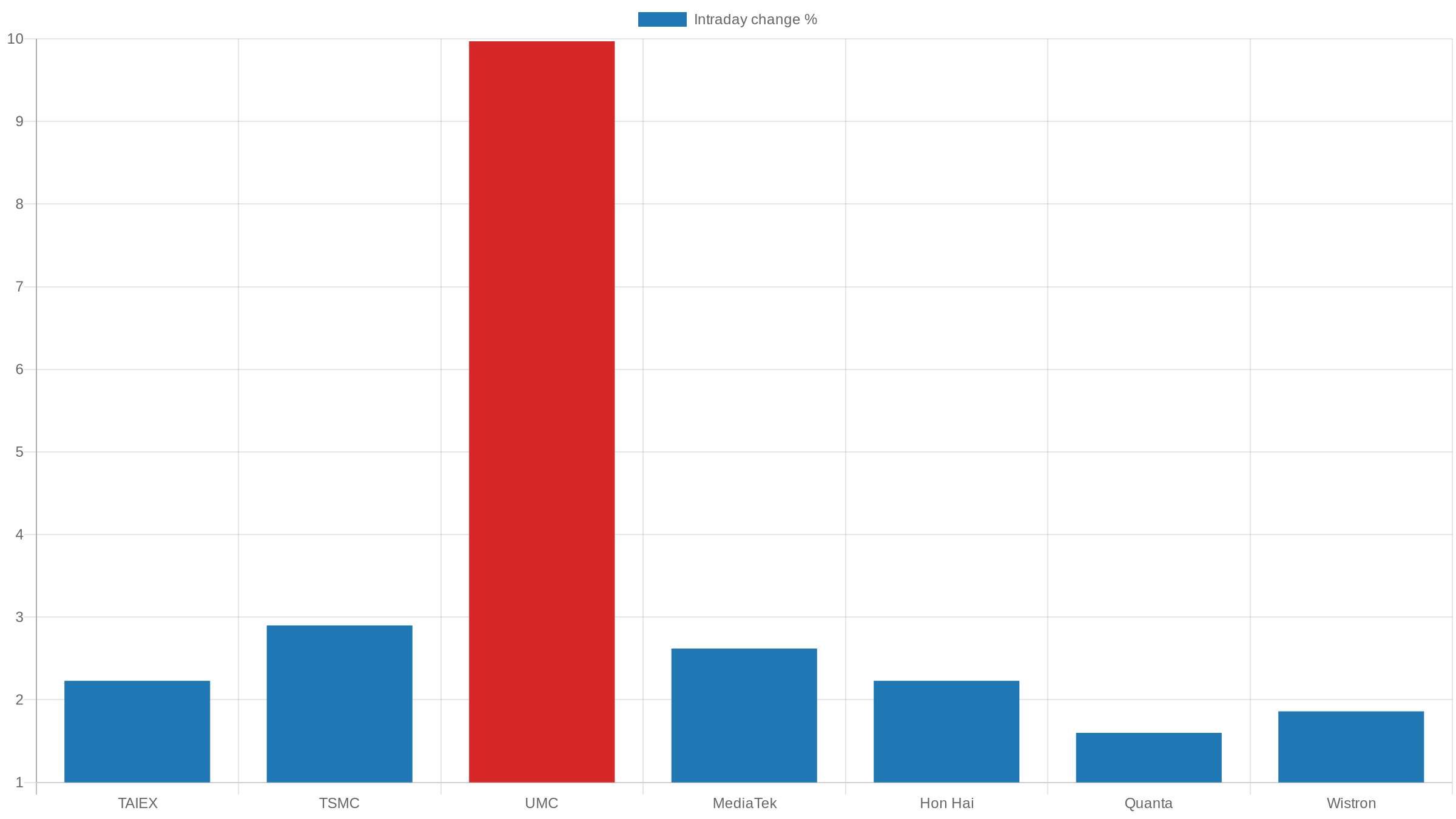
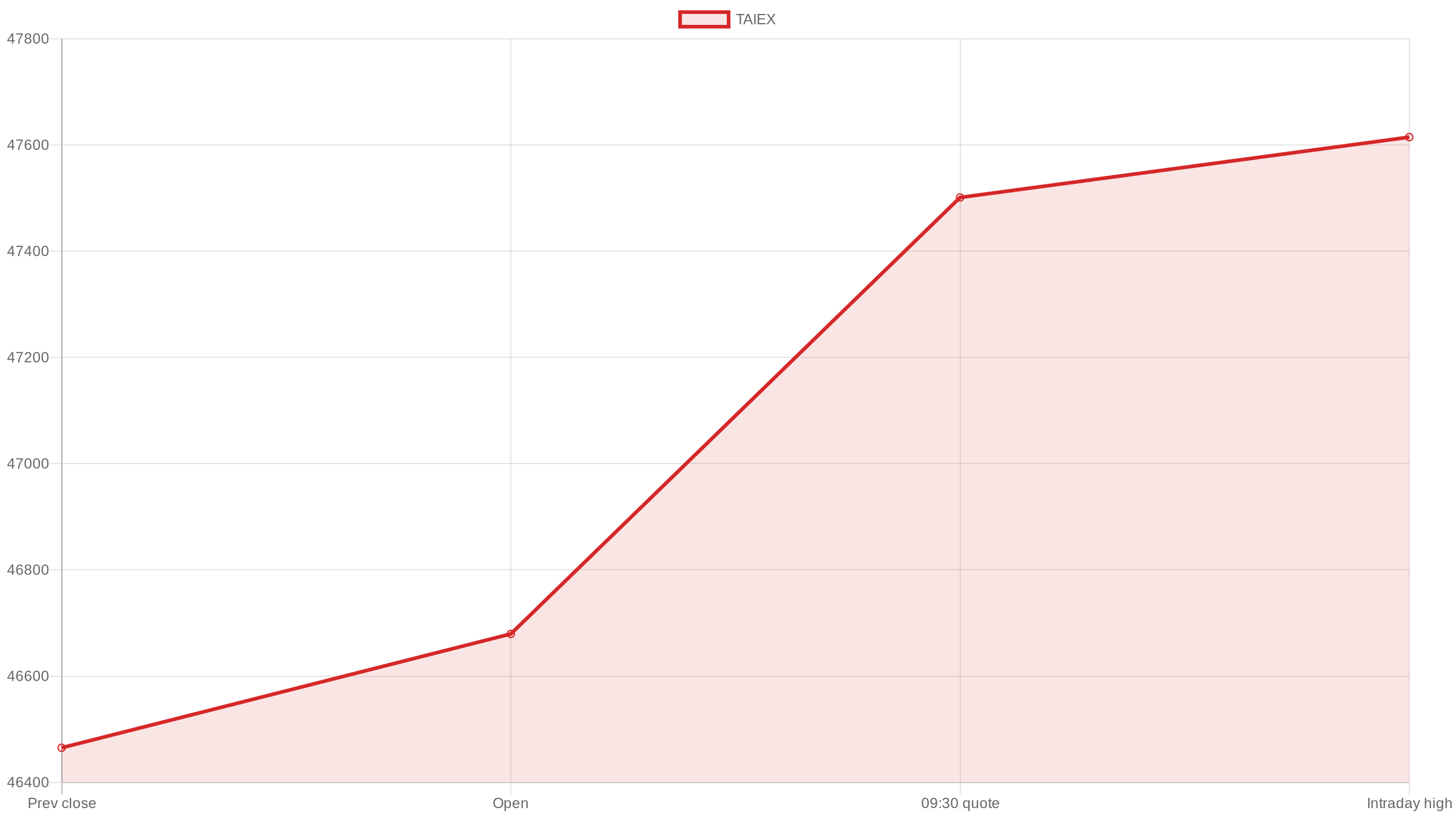
Taiwan stocks did not follow the old warning that the market often changes direction after the Dragon Boat Festival. Instead, the market opened the week with a stronger bullish statement. On June 22, 2026, the TAIEX opened at 46,679.57, reached an intraday high of 47,614.89, and traded near 47,501.30 around 09:30 CST, up 1,036.10 points, or 2.23%.
This was not a one-stock rally. TSMC, UMC, AI supply-chain names, and semiconductor sentiment all moved in the same direction. The pre-market message was clear: global technology and semiconductor stocks had regained momentum, TSMC ADR and UMC ADR were strong, and Taiwan index futures had already moved higher before the cash market opened. That gave the market a credible path toward the 47,000 level, while investors still had to watch geopolitical risk, oil prices, and Federal Reserve policy expectations.
The key question today was not whether the market rose. The better question was: who led the move, why did they lead, and where can capital still be deployed without chasing emotion?
Pre-market signal: semiconductors led first
The clearest bullish signal came from overseas semiconductor stocks. The Philadelphia Semiconductor Index, TSMC ADR, and UMC ADR became the main drivers behind Taiwan’s strong opening. Taiwan index futures also moved sharply higher, suggesting that the 47,000-point level would be tested before the local market even opened.
But a strong pre-market setup does not mean the market must rise in a straight line. Strong openings usually create two possible paths. First, momentum buyers can keep chasing, lifting both heavyweight stocks and theme stocks. Second, profit-taking can appear after a gap-up, especially when the index is already making new highs. Today’s early trading leaned toward the first path, but the second risk cannot be ignored.
The main bullish directions were AI and advanced manufacturing, mature-node foundry catch-up, memory and passive components, plus PCB, substrate, power, and thermal-management supply chains. These are not purely sentiment-driven trades. They are connected to AI infrastructure spending, semiconductor demand, and the server upgrade cycle.
Intraday structure: UMC led, TSMC anchored
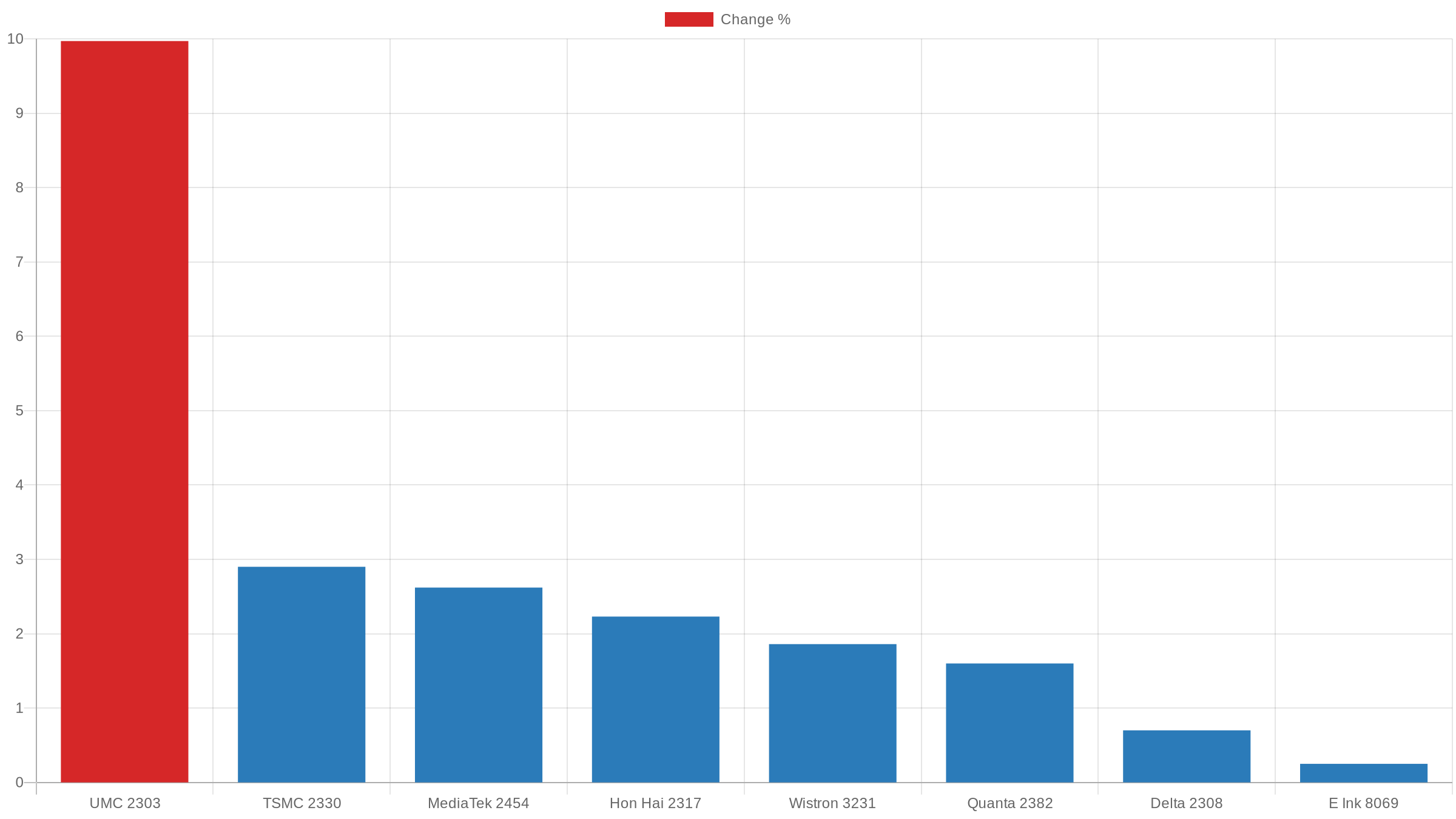
The strongest intraday signal came from UMC. UMC traded near NT14.5, or 9.97%. That was nearly a limit-up move and showed that the market was not only buying TSMC. Investors were also repricing mature-node foundry exposure and potential collaboration or transfer-order themes.
TSMC remained the backbone of the index. TSMC traded near NT70, or 2.90%. When TSMC rises, the broader index has a natural support pillar. More importantly, TSMC was not alone. MediaTek, Hon Hai, Quanta, and Wistron were also positive, showing that the AI supply-chain bid remained broad.
There was still differentiation. Delta Electronics was positive but less aggressive than UMC, TSMC, and MediaTek. That suggests the market has moved from a broad rally into a more selective phase. If volume remains strong, leading groups can rotate. If volume fades, high-level volatility may increase quickly.
What rose: semiconductors first, AI spread next
The move from pre-market to intraday trading can be summarized as semiconductors leading, AI supply chains spreading, and components catching up. Foundries were the clearest group. UMC reflected mature-node and potential transfer-order expectations, while TSMC reflected advanced-node leadership, AI chips, and advanced packaging pricing power.
AI server names also participated. Hon Hai, Quanta, and Wistron were all positive, suggesting that capital has not left the AI theme. Instead, investors are searching for the next layer of upside inside the same supply chain. Memory, passive components, and power semiconductors remain areas where AI demand, pricing improvement, and supply-demand recovery can quickly attract short-term capital.
PCB, substrates, thermal management, and power infrastructure may not always be the most visible heavyweight trades, but they are important extensions of AI infrastructure spending. These groups are better approached through pullbacks and consolidation rather than emotional chasing after large intraday candles.
Key risks: new highs make risk more expensive
When the market makes a new high, investors often feel fear of missing out. That is exactly when risk discipline matters most. The first risk is geopolitics and oil prices. Any change in the Middle East or U.S.-Iran negotiations can affect oil, inflation expectations, and global risk appetite. If headlines reverse during Asian trading or before the U.S. market opens, Taiwan stocks could see fast volatility.
The second risk is U.S. inflation data and the Federal Reserve path. The market is watching U.S. core PCE and technology earnings this week. If inflation comes in hotter than expected, rate-cut expectations may be repriced, which would pressure high-valuation technology stocks.
The third risk is positioning. When the index rises too quickly, foreign investors, domestic institutions, retail traders, and margin financing can all amplify the same move. But when everyone turns bullish at the same time, the market becomes vulnerable to good-news exhaustion or gap-up reversals. For a stock like UMC, the next key test is whether turnover remains healthy after a limit-up style move.
Where to position: follow the trend, do not chase blindly
The best areas to watch can be divided into three layers. The first is the long-term core: TSMC, advanced packaging, AI chips, AI servers, and high-speed transmission. The question for these stocks is not whether the trend exists. The question is valuation and entry point. Existing holders can manage risk with trend support. New capital should wait for pullbacks and lower-volume consolidation.
The second layer is catch-up and transfer-order exposure: UMC, mature-node foundries, power semiconductors, and memory. UMC already made a strong statement today, but after a limit-up move, the right approach is not fear-driven chasing. Watch whether the stock can hold gains, digest volume, and spread strength to the broader group.
The third layer is AI infrastructure extensions: PCB, substrates, power supplies, thermal management, passive components, and mechanical parts. These groups may not lead every day, but as long as AI capital spending remains intact, capital will keep rotating back into names whose fundamentals are improving.
Conclusion: bullish confirmation, not a blind chase
Today’s market matters because bulls were still willing to attack after the holiday break, and the move was not supported by only one heavyweight stock. The TAIEX moved above 47,000 in early trading, while TSMC, UMC, MediaTek, Hon Hai, and AI supply-chain names all moved higher. That confirms Taiwan remains one of the core equity markets for the AI and semiconductor cycle.
But the stronger the market becomes, the more important entry discipline becomes. Existing positions can be managed with trend support. New positions should be built through pullbacks, consolidation, and healthier turnover.
The practical approach is simple: keep core positions if the trend holds, wait for turnover in catch-up stocks, and look for pullbacks in AI infrastructure suppliers. Taiwan stocks remain broadly bullish, but the investors who keep profits are not always the fastest chasers. They are the ones who can control rhythm inside a strong market.
This article is for educational and informational purposes only and does not constitute investment advice. Investing involves risk. Please make decisions based on your own risk tolerance.
Comments