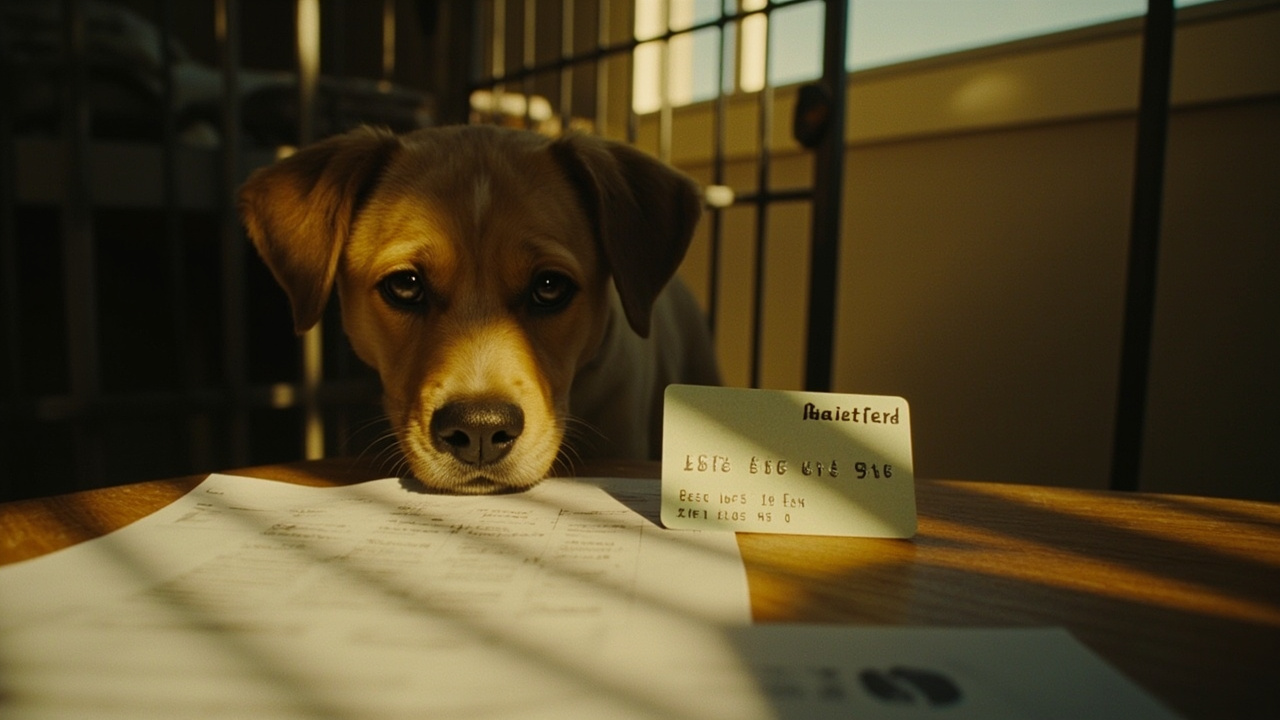
You earn a flat NT$50,000 salary, skip lunch and live on reheated convenience store rice just to save money, but after work you walk straight into the pet store and drop a fortune on premium kibble without blinking. You think raising a cat or dog is just “one extra mouth to feed,” but that adorable fur baby is quietly devouring the massive principal you need to retire early.

Adoption Is Not Free: Exposing the Sweet “Zero-Cost” Trap
Many people assume that if they skip the purebred markup and adopt for free, they’ve dodged the upfront cost. That morning-after delusion is exactly the “zero-barrier entry” trap that marketers engineered. The moment you walk into a shelter and lock eyes with those pitiful little faces, your sympathy floods in. You tell yourself: “I’ll just give this one a home.”
But naivety always comes due. The second you sign the adoption contract, you’ve unknowingly signed a 15-year promissory note. On day one, you need vaccinations and a basic health checkup. The first time you step into the vet clinic, your credit card takes a hit of several thousand NT dollars on the spot. Then come litter boxes, leashes, carriers, and other hardware — another hefty bill. And that’s just the cover charge.

The Pet Food Class War: How Capitalists Hijack Your Wallet With “Love”
A decade ago in Taiwan, people fed their dogs table scraps, or grabbed the cheapest bulk liver-kibble at the supermarket. But today’s pet influencers keep drilling one message into your head: “feeding cheap kibble is animal abuse.” They tell you cats are obligate carnivores, that dry food causes kidney disease, that you must feed grain-free wet food. The moment you grit your teeth and upgrade, another voice pops up saying canned food has preservatives, so you need premium freeze-dried. And that still isn’t elite enough — the top tier of the pet world now swears by precisely portioned raw meat diets.
This endless arms race of consumption is fundamentally a weaponization of your love, a ruthless dimensional strike. A medium-sized dog eating freeze-dried food will easily cost you more per month than your own groceries. To give your “kid” the best life, you start swiping installment plans for cat food and slip deep into the terrifying cycle of “broke-but-stylish” living. Don’t even get us started on the fancy fish oil, probiotics, and joint-care powders — corporations have perfectly cloned human health anxiety onto pets and made you willing to pay up.
Beyond the bottomless food bill, renting an apartment with a pet is a financial nightmare for most young professionals. In a brutal rental market, landlords who accept pets are as rare as unicorns. To live with your fur baby, you’re forced to accept rent that’s 20% above market rate, plus a pet deposit. When you move out, every scratch the cat leaves on the leather sofa and every wooden door frame the dog chews becomes ironclad evidence in the landlord’s damage claim.

The Medical Black Hole: When Your Fur Baby Gets Sick, Are You Ready to Go Bankrupt?
But that’s just the appetizer. What can wipe you out overnight is the bottomless pet medical sinkhole. We grew up under the protective umbrella of national health insurance, where medicine is cheap and accessible. But the pet medical world is a pure, jungle-law commercial market. Vet bills are never measured in the hundreds — the basic unit is the thousand.
Walk into a clinic with a sick cat, set it on the cold stainless-steel exam table, and within thirty minutes the vet can order bloodwork plus an ultrasound, instantly wiping out half a month’s hard-earned wages. If your pet develops a serious chronic illness or needs emergency surgery, the eye-watering bill can flat-out bankrupt you. Take the most common example: as cats age, they have an extremely high chance of developing irreversible chronic kidney disease. Once diagnosed, you’re stuck with weekly vet visits, daily subcutaneous fluid injections at home, plus a stack of expensive medications — easily NT$10,000+ per month. And this isn’t a bill that ends in a few months; it bleeds your wallet for whatever years your cat has left.
It’s worse with dogs: heart disease means daily cardiac medication and regular ECG follow-ups. And if they need surgery for a fractured bone or to remove a malignant tumor, the bill starts at NT$100,000. This is when corporations deploy their deadliest weapon — moral and emotional blackmail — right on cue in the exam room. The vet gives you a deeply regretful look, hinting that if you don’t fork over the money, you don’t really love your fur baby. The assistant piles on, sliding out installment plans to encourage you to mortgage your future. Under that guilt-soaked high-pressure environment, the overwhelming majority of owners sign loan agreements through tears. You think you’re spending money to save a life, but in reality you’re trading your lifetime financial freedom for a fleeting moment of peace.
As for pet insurance — full of exclusion clauses and payout caps — when you finally try to claim a large reimbursement, you discover the insurers already thought of every escape route.

The NT$2 Million Truth: What “Not Having a Pet” Actually Saves You
Now let’s get to the nuclear financial analysis section. Let the data demolish your consumer filters once and for all. Let’s run the most conservative numbers: suppose you raised a dog for the full 15 years, paying monthly food costs, regular vaccines and dewormers, plus shampoo and pee pads — the bare minimum essentials. Drop the standard as low as it goes: NT900,000 straight out the door. Add in occasional vet visits and senior medical care, and you need to set aside at least NT1.5 million of pure cash drain.
But once you factor in compound interest and opportunity cost, the picture flips dramatically. If instead of following the crowd into pet ownership, you put that NT1.6 million. If you also redirect the hundreds of thousands you would have spent on vet bills into the same investment pool, the absolute wealth gap blows past NT$2 million. This is the make-or-break line between building your first million and not.
In a future ravaged by runaway inflation, that NT$2 million gap could literally be the difference between retiring early and working until you drop. Zoom out even further: what happens to young people gutted by “broke-but-stylish” living when they hit middle age? When you’re 35 and face a career crisis — unpaid leave or outright layoffs — you desperately need an emergency fund. But your bank account is bone dry because everything you saved for the past decade has been funneled into pet food and vet bills. Meanwhile, your fur baby is entering its senior years, organs starting to fail, which is exactly when the bills get astronomical: special prescription diets, frequent medical procedures. You face the crushing survival pressure of job loss AND tens of thousands per month in pet medical costs. Sandwiched like that, the suffocating pressure will absolutely shatter your mental defenses.

Build a Pet Financial Firewall: Stop Being Held Hostage by Social Comparison
At this point, some of you might be angry. “Are you saying that to save money and invest, we poor people don’t deserve the warm companionship of a fur baby? Can pure emotional value really be reduced to cold cash and dismissed?”
Let’s be clear: I’m not telling anyone not to have pets. I’m calling on everyone to immediately stop blind “broke-but-stylish” consumption. Real, responsible, deep love was never built on draining your bank account for fancy canned food and luxury goods. Your cat doesn’t care if its bed cost thousands of dollars — give it a clean cardboard box and it will have the time of its life. Your dog doesn’t need some upscale pet spa; it just needs you to spend half an hour walking it in the park every day.
What pets truly need is a stable emotional environment with long-term presence — not material excess pushed by corporate marketing. They don’t know designer leashes, and they don’t care if their kibble has a Michelin star. They only care whether you actually care. And when you’re drowning in pet-related debt, stressed and scrambling to pay bills every day, that negative energy absolutely bleeds into your fur baby. A perpetually tense owner who might go bankrupt at any moment cannot give their pet any real sense of safety or happiness.

If you truly love your pet, the single most important thing you can do is build a solid financial firewall for them. Instead of blowing money every month on fancy freeze-dried food that adds nothing real, set up a dedicated pet medical fund. With sufficient reserves, when your fur baby really faces a life-or-death moment, you won’t have to beg for money from every corner, and you won’t have to make the heartbreaking choice to euthanize your beloved pet simply because you can’t afford the treatment.
Remember: the healthier your personal finances, the more secure your fur baby’s survival. This is the deepest logic of the pet economy. Don’t let a momentary impulse of cheap compassion become the final bill that crushes your life — and harms an innocent little life in the process. Reject the emotionless extortion of the pet economy, guard your wallet, and spend every dollar where it truly counts. That’s what a truly smart owner does: put investing in yourself and building your capital first. Once you have real economic power, you can give your pet a truly stable life.
This article involves personal financial planning advice. Please evaluate based on your own circumstances and consult a professional financial advisor.
Comments