Taiwan’s Economy Is Growing — Why Are You Getting Poorer?
We were taught from childhood: work hard, be honest, and you’ll earn money and live well. In today’s world, this is the most expensive trap.
Have you ever felt this strange sensation — everyone tells you the economy’s bad, money’s harder to make. Your colleagues, friends, even the noodle shop owner in your alley all complain business is tough. But you turn on the TV, open your phone, see news saying Taiwan’s economic growth forecast is being revised up again, the stock market is稳固 (steady) at 20,000 points. Seems everywhere is booming.
This isn’t a contradiction, is it?
When the overall macro data and our individual lived experiences产生 (produce) such a巨大的 (massive) gap, there’s usually only one explanation — a massive, silent wealth reshuffle has begun.
It’s not the kind of financial tsunami that makes headlines. It’s a silent undercurrent. It’s redistributing every cent and every opportunity in this society at a speed we can’t see or touch. And most people don’t realize they’re being碾压 (rolled over) by the wheel of history.
The land we’ve been familiar with for decades is slowly cracking. Old ways of making money, old paths to success, are rapidly failing. And we haven’t figured out the new rules, the new map. The result is: you find yourself working harder, working longer hours, pinching pennies — but feeling farther than ever from the stable life you want.
Today we won’t discuss those headache-inducing economic theories. We’ll just拆解 (dissect) a real story about money happening around each of us — once you see it, you’ll know where future money will disappear from, where it will flow to, and most importantly, whether we ordinary people still have a chance to find a new place for ourselves in this inevitable big reshuffle.
The Last 20 Years of Good Times: Two Wheels on a Bulldozer
To understand this massive wealth migration, we need to come back to the most fundamental question: how exactly did those last 20 years of good times — the ones we’re familiar with, even slightly nostalgic for — come about?
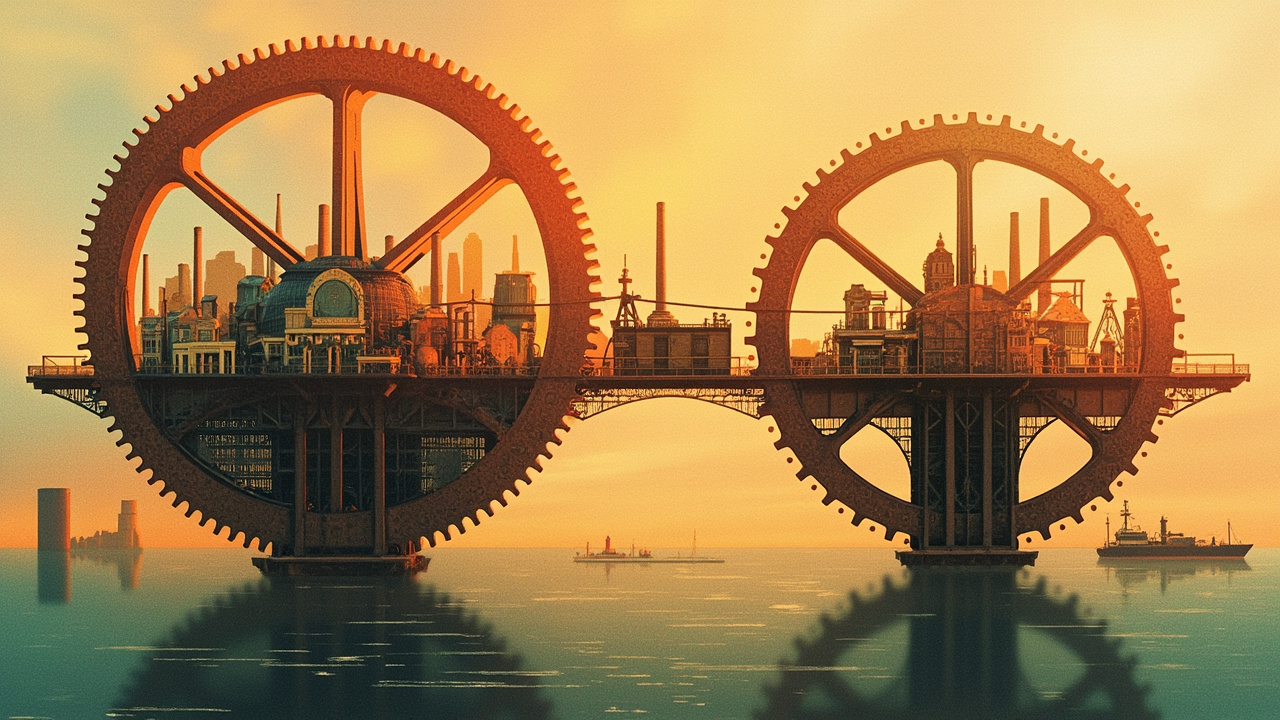
The logic is actually very simple. It ran on two things — like the two giant wheels of a bulldozer, pushing all of Taiwan forward.
- One wheel called real estate: responsible for distributing money inside the island
- One wheel called traditional manufacturing: responsible for earning money back from overseas
This is like an old engine we’ve been running for 20 years. It’s a bit noisy, a bit fuel-hungry, even emits some waste. But its biggest advantage is stable performance, and it did pull the entire society forward.
Especially real estate. I know you might think: “I’m not speculating on property. What does housing price涨跌 (rise and fall) have to do with me?”
Hey, please note — this might be the first认知 (cognitive) blind spot for most of us.
Real Estate’s Invisible Prosperity: Rain Falling on Everyone
Because real estate has a quality that many people have never truly realized — what it creates is a low门槛 (threshold), full-chain, rain-falls-on-everyone kind of prosperity.
Let me break this down.
Think about it. From the moment a project digs a big hole in the ground, doesn’t it need excavator drivers, steel-binders, cement workers? Then the建材行 (building material shops) selling rebar, cement, tiles — don’t they get business? When the house is built, don’t you need renovation workers for the partitions, plumbing, paint? Don’t you need people to install the lights, the bathroom fixtures? When the house is ready to sell, don’t real estate agencies start hiring in bulk? Don’t bank mortgage departments see their业务 (business) volumes come in?
Even if you have nothing to do with this industry — if you just open a small便当 (bento) shop next to the construction site, several hundred workers’ lunches every day would make your business booming.
It’s like a heavy rain falling from the sky — whether you’re a big boss or a路边摊 (street-stall) vendor, as long as you stand in it, you’ll get more or less wet. That’s what “low threshold” and “full chain” mean.
But more关键 (crucial) than that? Even if you don’t participate in this chain at all, you can still be dragged upward.
How? Over 80% of Taiwanese families own their own homes — that’s the core definition of safety in our culture. In the era of rising prices, even if you never thought about selling the house you live in, just opening your phone and checking the实价登录 (actual price registration) to find your neighbor’s house sold for NT$500K-1M more, you couldn’t help feeling: “Hey, my net worth just went up again.”
This collective psychological expectation of “feeling richer” was the strongest fuel of the old engine era.
Because you felt richer, you dared to spend more — eating out at restaurants, traveling abroad, replacing your kid’s computer. Your spending带动 (drove) restaurant business, drove tourism, drove electronics sales, and the entire society’s cash flow started rotating.
So you see? This is the essence of the old engine — it doesn’t pick people. Whether your education is a PhD or middle school, whether your background is noble or ordinary, whether your abilities are strong or weak, as long as you’re in this system, money flows to you through every imaginable channel.
It provided an illusion of social safety net: just follow the steps, study hard, find a job, save up, buy a house, and my life will get better and better.
This is why when the real estate core machine began to slow down — even熄火 (turn off) — it’s not just the leveraged speculators losing money. Almost everyone in society strongly feels that life has become harder.
Because the silent force that was always there, pulling all of us upward, is disappearing.
This isn’t me being alarmist, and it’s not just a feeling. Look at the real data — whether housing starts or building permits in Taiwan, they’ve both started showing fatigue from their peaks. Government’s policy direction has shifted 180 degrees from past encouragement of construction and loan优惠 (preferences), to today’s “crack down on speculation,” “hoarding tax 2.0,” “luxury home tax.”
The signal behind these policies is extremely clear: the狂飙 (wild-rush) era of relying on大规模 (mass-scale) housing construction to drive overall economic high growth is officially over.
And the other wheel — traditional manufacturing, the engine responsible for bringing money back from overseas — faces the same困境 (predicament). We’re long past the era of earning massive foreign exchange just by making shoes, clothes, and assembling toys in factories. International political risks keep rising, orders shift随时 (at any moment), thin margins keep getting squeezed, and the entire supply chain can瞬间 (instantly) break because of a faraway conflict.
The New Engine’s Laser Beam: Precisely Illuminating a Select Few
So please realize — what we’re going through isn’t a small cold or a short-term industry slump. It’s that the old engine we collectively depended on for over 20 years is structurally, holistically退场 (exiting) before our eyes. The success equation we believed in is失效 (failing).
This brings a truly关键 (crucial) and very counter-intuitive question — since the engine熄火 (turned off), logically the economy should slow down like a car losing power, even go in reverse. But GDP is still growing, government budget sizes are larger than ever. Where did the money go?
The answer hides in those days when you feel the economy’s bad and life is hard. Let me show you a few phenomena you’ve probably seen in the news but never strung together.
In recent years, the CEOs of all the world’s tech giants — from Nvidia’s Jensen Huang to AMD’s Lisa Su — have been lining up to visit Taiwan. They’re rushing to抢 (snatch) one thing: AI chips. The brain and heart of these chips come from the Hsinchu Science Park.
You might think TSMC is the protective national mountain, the engineers’ thing, far from you. OK, let’s look at another — have you noticed more and more friends around you discussing green energy and ESG lately? Your community rooftop might have started installing solar panels. Electric cars on the road, from Tesla to various brands now, are becoming more and more common.
From the尖端 (cutting-edge) semiconductors, to the new energy transforming our lives, to the less接触 (encountered) biotech, military aerospace, low-orbit satellites — a whole batch of new industries are growing疯狂 (frenetically) in places we can’t see, at speeds we can’t imagine.
The way Taiwan earns money on the global economic stage has already彻底 (thoroughly) upgraded. We’re long past only profiting from cheap labor and consuming land resources. Now we earn money through technology patents and intellectual property rights.
This is where the money actually went — it didn’t disappear, it just flowed out of the old pool and into a brand new one. Behind this is a brand new engine starting to run.
If the old engine was real estate plus traditional OEM, its fuel was demographic dividend and land development, then the new engine is high-tech, digital economy, and green energy — its fuel is innovation, data, and talent.
The truth of the wealth migration, unpacked, is that simple — one is declining, one is rising. Money is just flowing at high speed in a completely different direction.

The Laser Beam’s Wall: You Must Stand Precisely in the Spot of Light
At this point you must have a biggest question: “I know all this high-tech stuff. News reports it daily. But what’s it got to do with me? Why do I still feel so hard? Why hasn’t my salary risen?”
You’ve hit the key point. This is the most piercing and crucial part of the whole story — because this new engine has a fundamental difference from the old one we knew: its门槛 (threshold) is higher. Around it there’s an invisible wall we ordinary people can’t see.
Earlier I比喻 (analogized) the old engine to a heavy rain where everyone gets wet. But the new engine is different — it’s more like a highly focused laser beam. Its energy is extremely strong and concentrated, but it only precisely illuminates a few specific points.
- High-end semiconductors need top engineers from NTU, NTHU, NCKU, NCTU
- AI industries in the digital economy need PhD-level talent who understand algorithms and can process big data
- Green energy industries need experts with international certifications and global carbon credit trading
The places this laser illuminates create惊人 (astounding) wealth — you’ll see Hsinchu engineers’ bonuses several times a normal office worker’s annual salary. But money no longer trickles down layer by layer along the real estate and traditional industry chains to every corner of society like before. It’s been blocked by that invisible wall.
It floods高度 (highly) concentrated toward specific industries, specific science parks, specific cities, and a specific small group of people.
You must be standing precisely in that light spot to catch it. If you’re not standing in that light, even if outside it’s a roaring flood, not a single drop will reach your feet.
This is the most real predicament and biggest source of anxiety in our era. What you’re facing isn’t a recession — you’re stuck, stuck in that巨大 (huge), awkward gap between old and new engines.
The红利 (dividend) of the old era you can’t eat anymore. The dividend of the new era you can’t quite reach yet. And this gap period, this青黄不接 (awkward transition) stage, may be longer than we imagine.
Many of us have actually experienced this personally — like you working in Taipei’s Xinyi District, taking a lunch break every day, looking out the window at Taipei 101, feeling this city is glossy and full of opportunities. But after work you squeeze onto the MRT back to your tiny room in New Taipei or Taoyuan, still worrying about NT$30K-40K monthly rent or the never-ending mortgage.
That prosperous大楼 (building) not far away — its prosperity seems to be a completely different parallel world from yours.
This is the most real体感 (lived sensation) after wealth becomes高度 (highly) concentrated — a relative sense of deprivation that you can see but can’t touch.
The Death Spiral: The Bottleneck on the Consumer Side
Hearing all this you might feel a bit绝望 (despair) or even angry: “So us ordinary people who aren’t standing in the light are just being left behind by the times? Is our future fate just to helplessly watch the wealth gap widen like a canyon?”
If you think that way, you probably haven’t seen the full picture of this game.恰恰 (Quite) the opposite — to understand this, you need to see clearly what the biggest weakness of this shiny new engine is right now.
Calm down and do a thought experiment with me: those high-tech companies use the most尖端 (cutting-edge) technology to produce a bunch of amazing chips, cool electric cars, energy-efficient appliances. And then?
Things get made — somebody has to buy them. Just selling overseas can’t digest such massive production capacity. Especially with international tensions so tight now,随时 (at any moment) there are trade barriers. So what’s truly decisive for whether this new engine can keep running sustainably? It’s — Taiwan’s 23-million-person domestic market.
But here’s the most fundamental question —
- When you’re still worrying about next month’s rent and your kid’s tuition, would you dare to upgrade to the latest iPhone?
- When you don’t know if your current company will lay off workers next year due to AI冲击 (impact), would you dare to buy a new electric car?
The answer is obvious — you wouldn’t dare.
You don’t dare spend, companies can’t sell their stuff. Companies can’t sell, inventory piles up, they can only discount to move it, profits decline. Profits decline, companies cut costs, reduce hiring, even lay off workers. You or the people around you earn less, more unstable, even more afraid to spend.
See? This is a self-shrinking, ever-tightening death spiral.
So now you see? The biggest瓶颈 (bottleneck) in the entire economy right now isn’t production, isn’t technology — it’s on the consumer side. The biggest bottleneck is in your and my pockets.
You might think this sounds very ironic: “Hey, when the new engine was making money, paying dividends, giving bonuses, it didn’t include me. Now that things aren’t selling and they need someone to spend, they think of us ordinary consumers.”
But please一定要 (definitely) think about this from a different angle — precisely because this gorgeous new engine can’t survive without your consumption, your spending power becomes your biggest and only negotiating chip in this wealth migration.
This isn’t anyone taking pity on anyone. This isn’t charity. This is a very real structural necessity. If the vast majority of people in society don’t have enough ability and confidence to consume, then who do those high-tech companies sell their products to? If domestic demand循环 (circulation) can’t turn, the entire economic转型 (transformation) will be stuck in the middle, unable to move.
This is why you’ve seen the government doing things in the past two years that previously seemed impossible — like raising the basic wage by more than 5% for several consecutive years, like推出 (launching) various rental subsidies, childcare allowances, expanding infertility subsidies.
If you look at these policies only on the surface, they seem to just be helping the vulnerable and giving out welfare. But if you understand the logic we’ve discussed, you’ll see their deeper strategic purpose: they’re building a new pipeline, one that lets the highly concentrated wealth earned by the new engine bypass that wall and flow back to ordinary people.
But to be honest, the direction is clear, but this pipeline is still very narrow and fragile. The water flowing out is slow and small. From legislation in the Legislative Yuan to it actually becoming usable money in your bank account takes a very, very long time. In the short term, our lives may still be hard.
But please remember this sentence: it’s precisely this过渡 (transition) period, this充满 (full of) uncertainty gap, that is the most ruthless time for拉开 (widening) the gap between people.
Because most people at this time choose to wait — for a clear signal, for the government to出台 (introduce) better policies, for someone to tell them what to do next.
But回顾 (looking back) at every economic gear-shift in history — from Taiwan’s era of钱淹脚目 (money flooding ankles) to the internet bubble to the financial crisis — the real红利 (dividend) was never waited for. By the time everyone sees the direction clearly and all media is reporting it, the biggest, fattest wave of opportunity has already passed. If you enter then, you’re just helping others carry the sedan chair and taking the last baton.
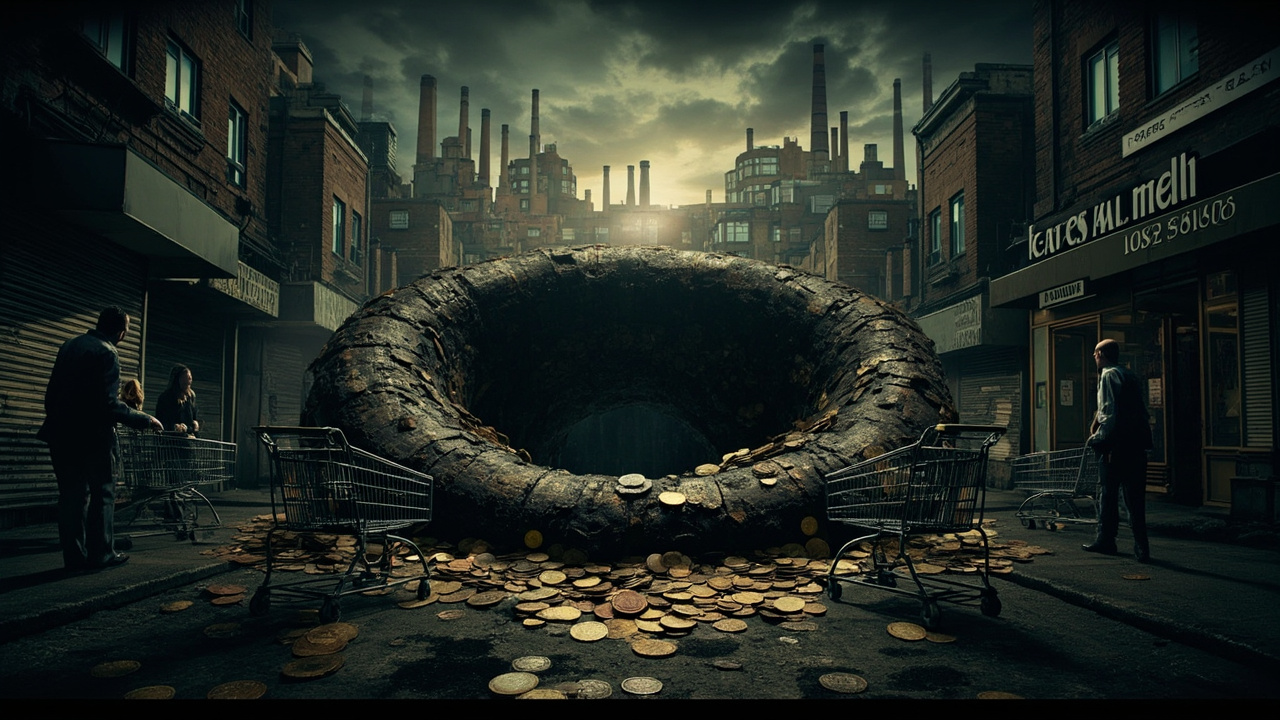
Three Things You Should Start Doing Right Now
So at this stage — in this moment when old strength is exhausted but new strength hasn’t risen — what can we actually do?
Next I’m not going to give you any investment advice, but I want to share three things I believe every one of us should start thinking about — even start doing right now — in this巨大 (huge) gap period. These three things correspond to three important coordinates of our lives — your money, your position, your abilities.
Coordinate #1: Re-Examine Where Your Money Is Right Now
This has the lowest门槛 (threshold). It doesn’t require you to change jobs immediately, doesn’t require you to learn any advanced skills. Just find an undisturbed afternoon, brew a cup of coffee, write down all your assets regardless of size on a piece of paper, and honestly face them.
Many people, once they write it down, will discover a surprising but universal problem — in Chinese-speaking societies, especially Taiwanese families, perhaps over 70% or even 80% of wealth is高度 (highly) concentrated in real estate.
In that era when the old engine was running at high speed, this was definitely the smartest, most stable choice, because houses were like self-appreciating money-printing machines. But now you have to force yourself to face a very残酷 (cruel) but unavoidable fact: your largest, most core asset — the one you used to think was the safest safe harbor — may no longer be an asset that steadily appreciates.
Taiwan’s population structure is rapidly aging. The problem of declining birthrates is getting worse. This means fewer and fewer people will need to buy houses in the future. When supply stays the same or even increases, but demand structurally decreases — where do you think prices will go in the long run?
Plus, your fixed deposit rate at the bank is so low it can’t even keep up with the annual rise in prices. What does this represent? It means even if you leave your money there doing nothing, the number on the surface doesn’t shrink, but the actual purchasing power is being eaten away bit by bit by an invisible force.
Many of my friends — their parents worked hard their whole lives just to buy them an apartment in Taipei, thinking with a house their life would have roots, would have a sense of security. This心意 (intention) is very伟大 (great), but have you冷静 (calmly) thought about a question? In 30 years, when that apartment ages past 50 years and starts having leaks, wall cancer, requiring you to spend big money on repairs — even facing difficult urban renewal — is it still your asset, or has it become your liability?
So where should the money go? Actually the new direction is already very clear — the core areas of the new engine: AI, semiconductors, new energy, biotech, digital content. Those places where government and global capital are疯狂 (madly) pouring in with trillion-unit capital.
I’ll say it again: I’m not telling you to immediately open your brokerage app and close your eyes to rush into the stock market to buy TSMC or MediaTek — that’s gambling, not investing. But you should at least start understanding what these new industries actually do, how their profit models fundamentally differ from building and selling houses. You need to start learning how to evaluate a company’s value, instead of just daily chasing stock price涨跌 (ups and downs) and going through emotional rollercoasters.
You can’t keep putting all your life’s eggs in one basket — especially when that basket has already started cracking and the weather forecast says there might be storms ahead.

Coordinate #2: Re-Examine Your Career’s Position in Life
Many people, hearing me say “opportunities are in emerging industries,” first reaction is to shake their heads: “That’s for Hsinchu engineers, for those with high学历 (education). I’m just an ordinary office worker. What’s it got to do with me?”
This might be the biggest misunderstanding of our era for us ordinary people. Remember a principle — every time a new industry rises, what first explodes are never those top positions in clean rooms and labs, but the massive new基础 (basic) and service jobs围绕 (around) it.
Let me give a real example: TSMC announced it’s going to Kaohsiung and Chiayi to build new fabs. The first thing everyone thinks about is how many NT$1-million-a-year engineer positions will be created. But think one layer deeper — tens of thousands of high-income engineers, plus even more construction workers, will need to go to those places to live. Don’t they need to eat? Need lodging? Need transportation? Need entertainment? Won’t the surrounding restaurants, hotels, logistics, renovation, design — even parenting education, pet grooming — explosively multiply with countless jobs you never imagined?
An electric car needs top software engineers for R&D. But it still needs someone to install charging stations for customers on the front line. It still needs someone to do后续 (subsequent) repair and maintenance. Go online right now and check the salary of a师傅 (master) who knows how to repair electric car batteries and systems. How high it is, and how供给 (supply) falls short of demand.
This is the entry to the new engine — it’s not in that unreachable top, but in its upstream and downstream, in its周围 (periphery), in those positions you might not have seen but where demand is explosively growing.
So how do you judge which directions are rapidly expanding? The simplest way is follow the money. Whether it’s major government investment plans or domestic and foreign enterprise expansion布局 (layouts), wherever money flows, the upstream and downstream industries there will sprout like bamboo after rain, and the new job openings most short of people will emerge first.
Besides industrial position, you should also look at geographical position. Capital, talent, and opportunities are accelerating their concentration toward a few major metropolitan areas in western Taiwan with an irreversible trend. If you have the choice, then想办法 (figure out a way) to get close to these core city clusters — that is to get close to opportunity itself.

Coordinate #3: Rethink Your Relationship with AI, Redefine Your Abilities
The first two coordinates are about getting your money to keep up with the times, getting your position close to the source of opportunity. But there’s another biggest variable of our era, breaking through all industries, all positions, all professions with a摧枯拉朽 (devastating) force — that’s AI.
I think this needs no further explanation. You feel its power every day you open your phone. Traditional white-collar jobs we used to think were very safe and could be done until retirement — like accountants, administrative secretaries, copywriters, translators — are being接管 (taken over) one by one by AI at faster speeds and lower costs.
Faced with this trend, I think anxiety and panic are utterly useless. You have to冷静 (calmly) force yourself to think about two things:
- First, in your current work flow, which repetitive and tedious parts can you immediately start using AI to help improve efficiency?
- Second, what is the core skill you depend on for a living? Is it the kind that AI can easily replace with just massive data training?
When I say learn AI, I don’t mean everyone needs to跑 (rush) off to learn programming and become an AI engineer. I mean using a very pragmatic attitude to审视 (examine) every task on your hands — whatever can be done with AI, start using it right now, make it your most capable assistant. Make AI your weapon, not your enemy. Let you alone produce the efficiency and output of three or five people from the past.
This is the lowest门槛 (threshold), highest-return self-upgrade of this era.
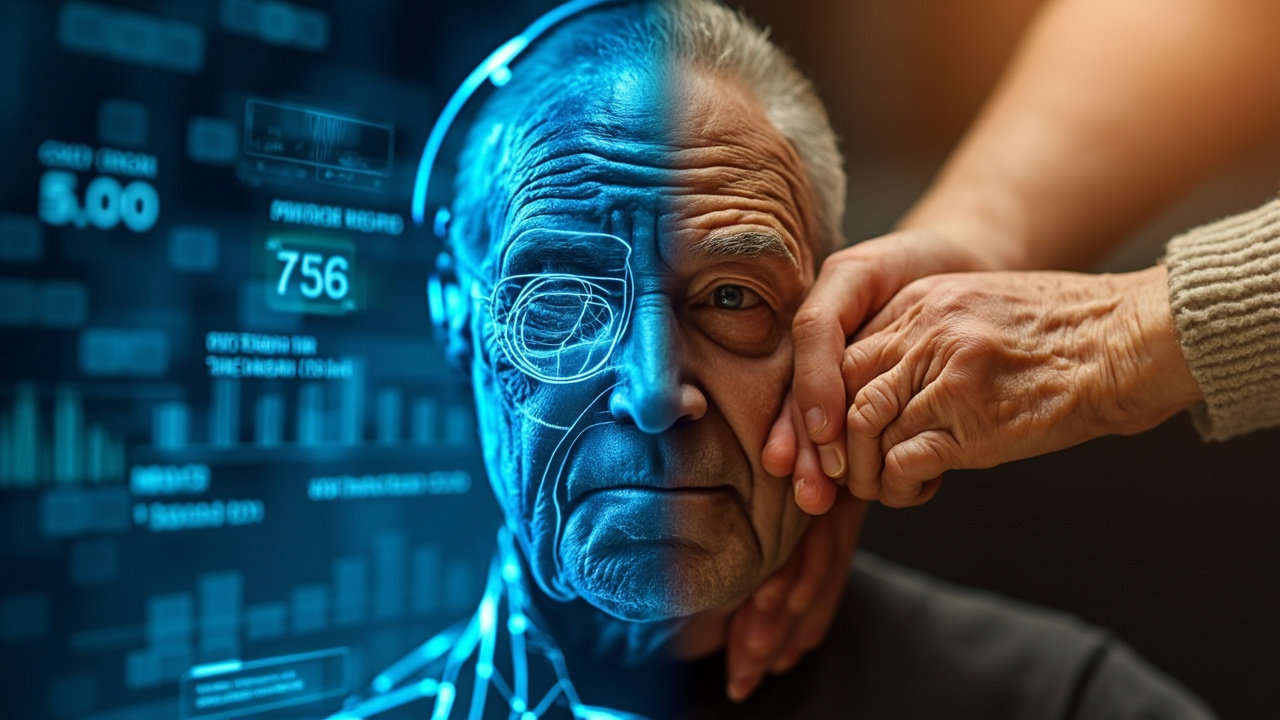
But conversely, I think a more important point is — the stronger AI becomes, the rarer and more precious the value of one type of person becomes — those who truly understand how to serve people.
Why? Because AI can solve all standardized problems for you, give you the most efficient answers. But what it can never give is warmth, face-to-face communication between people, the deep trust built up over long periods, the emotional安抚 (comfort) and support when you’re at your lowest.
Taiwan is about to enter a super-aged society. Almost every one of us may have elders who need care. But high-quality, empathetic long-term care and senior wellness services are now in serious shortage. Dual-income families are increasing, parents are burning the candle at both ends — personalized childcare and children’s education that can be provided patiently and methodically are in such short supply. Modern life pressure is so high — psychological counseling and career coaching that can truly listen, understand, and provide professional support is in explosive demand.
These are things AI can’t do in the foreseeable future.
While everyone is挤破头 (breaking their heads) worrying about learning how to deal with machines, people who can make “serving people” into quality, warmth, and trust that no one can replace aren’t just the most undervalued direction of this era — they’re the blue ocean where the few who can rely on just one unique skill can earn high profits in the future.
This isn’t settling for second best under the tech wave — this is the most valuable position the new engine era truly needs us humans to fill.
In Closing: Standing Outside the Door, or Pushing It Open
In the old engine era, the most important asset you possessed might have been a house in the city center.
But in the new engine era, the most important asset you possess is yourself — the cognition in your brain, the skills you keep updating, the wisdom of choosing where to place yourself, and the irreplaceable warmth you possess as a human being.
I know the days of transition between old and new are indeed hard. They’re充满 (full of) uncertainty, of anxiety about the future, and of nostalgia for the past.
But if you zoom the historical镜头 (lens) out, you’ll find every time穿越 (passing through) a巨大 (huge) transformation period, after it came out, it was stronger and more resilient than before it went in. All the pain and迷茫 (confusion) you’re experiencing now isn’t the end of a story — it’s just our入场费 (entrance fee) to the next era.
This story of new and old engine alternation isn’t happening in just one place. It’s not just an经济学 (economics) term — it plays out around each of us every day, in reality, ruthlessly.
Some are complaining that the old map in their hands can no longer take them anywhere. But some have already picked up their pens and begun绘制 (drawing) a brand new map of their own on blank paper.
The only question is — when a new door of the era has slowly opened in front of you, do you choose to continue standing outside reminiscing about the scenery inside the door? Or have you already prepared, taken a deep breath, pushed it open, and walked in to take a look?
This article is an observation of Taiwan’s economic structural transformation and a reflection on personal career concepts. It is for conceptual discussion only. It does not constitute any investment, career, or regional choice advice. Each person’s circumstances and resources differ; please make independent judgments based on your own conditions before acting.
Comments