NT$38,000 a Month in Taipei: Survival Mode. That “Unserious” Classmate Bought a House.
Many people think poverty comes from not working hard enough. In reality, that’s the most expensive and widespread trap of our generation — because the real price you pay isn’t earning less, but spending your golden years walking a path that was never going to get better.
This story has no billionaires, no business prodigies. It starts with the most ordinary, most real office worker around us — Ah-De.
Ah-De’s Every Day: A City Programmed for Survival
Ah-De, 35, works in admin at a mid-sized trading company in central Taipei. Monthly salary: NT$38,000. In Taipei, you know, I know — this number isn’t called living. It has a more precise name: survival mode.
Every day is like a programmed city routine, precise enough to suffocate.
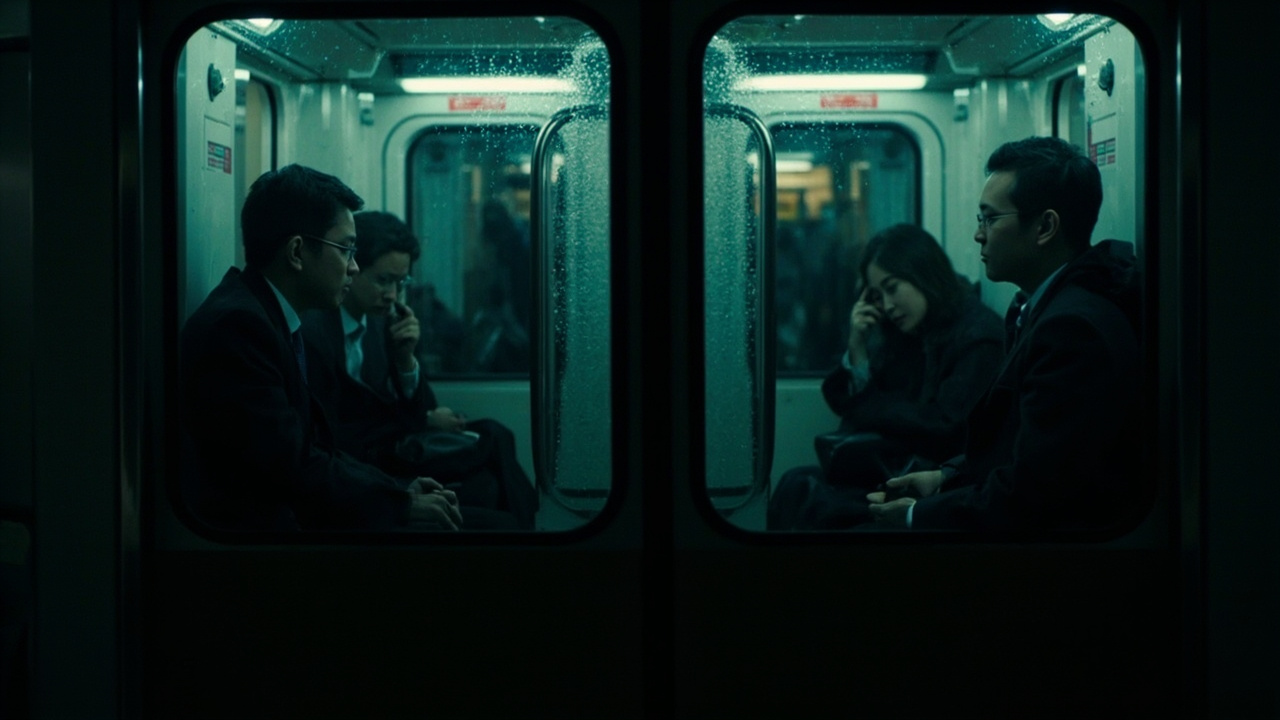
At 7:15 a.m., he appears on time at the Bannan Line platform, squeezing himself like a slice of toast into the overcrowded MRT car. The car mixes the oily smell of breakfast shops, last night’s exhaustion, and the same “no expectations for tomorrow” expression on everyone’s face.
At 8:50 a.m., he clocks in. Opening his laptop, 100+ unread emails pop up, plus yesterday afternoon’s URGENT-tagged items from other departments. His job: handle this endless stream of琐碎 (trivial) tasks — auditing the business department’s outlandish entertainment receipts, making pretty PPTs no one reads, answering rude customer complaint calls.
Is he hardworking? He’s the office’s公认 (recognized) nice guy — a chronic people-pleaser who can’t say no. While colleagues ask him to分担 (share) their work, his mouth says “no problem” while his mind calculates how late he’ll have to stay tonight. The boss throws him a project due tomorrow morning five minutes before quitting time. He can’t complain. He silently cancels dinner with friends.
He thought that as long as he was a good screw — docile, accepting, hardworking — eventually he’d be noticed and get his promotion. He waited five years. Result: salary went up NT600,000 to NT$800,000 per坪 (3.3 sqm).
He was stuck in a quicksand pit. The harder he struggled, the faster he sank.
I believe many of you watching understand this feeling. You’re not giving up — you’re grinding until you’re almost burned out, but you find yourself just spinning in place, struggling to not fall further. You thought you were building toward the future. In reality, you’re spending your most precious life energy just to buy a “survival permit.”
The Reunion That Shook Ah-De Awake
It wasn’t a work setback or housing pressure that jolted Ah-De. It was a middle school reunion he shouldn’t have attended.
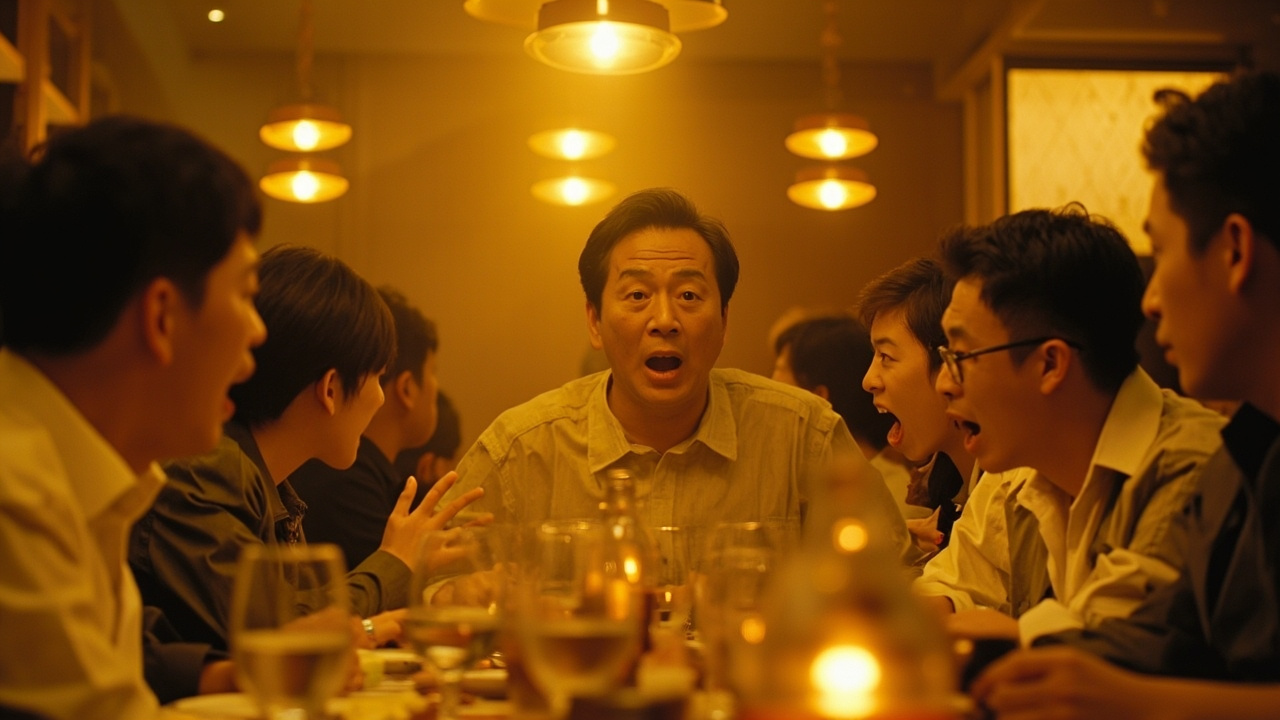
The reunion was held at a bustling NT$100 stir-fry restaurant. The air was thick with beer, fried螺肉 (conch meat), and life’s noise. Ah-De sat in a corner feeling out of place — his former classmates now had new identities: A-Jie, working at TSMC, was loudly complaining about how bonuses had shrunk, but that “shrunk” number was still several times Ah-De’s annual salary. Mei-Lin, married to a doctor, chatted about which European country to visit next month, which private bilingual kindergarten for the kids. These people’s worlds were too far from Ah-De. He could only smile awkwardly and silently scrape his fried rice.
Then a figure sat next to him — Xiao Yu.
Xiao Yu had been mediocre in middle school — average grades, plain-looking, the kind of guy you wouldn’t look twice at in a crowd. After graduation, no one heard of him joining any famous company. Rumor had it he didn’t go to work, just messed around at home. In elders’ eyes, he was basically a synonym for “unserious.”
But that evening, Ah-De noticed Xiao Yu was very different. He wasn’t the kind of flashy nouveau riche with a luxury car and a brand-name watch, eager to prove something. He had a rare quality — 松弛感 (relaxed composure).
While everyone around him spoke with near-anxious tones about stock losses, company layoffs, and how terrible year-end bonuses were, Xiao Yu just listened quietly, occasionally smiled, said little.
Until the topic that all 30-something men can’t avoid came up — housing.
A-Jie sighed: “Housing prices are insane now. I’m so young but my family can’t help. Even the down payment in New Taipei City makes my heart race.” Another classmate agreed: “Yeah, last time I looked at presales in Wugu, the prices felt like Da’an District.” The entire private room turned into a collective therapy session on housing anxiety.
Then Xiao Yu, who’d been quiet, casually spoke: “Linkou is actually still okay to look at. I recently signed a contract there for a small two-bedroom. The environment’s not bad.”
In that instant, the whole room was muted. All the noise disappeared. Only the hum of the air conditioner and the来不及掩饰 (impossible-to-hide) shock, jealousy, and disbelief on every face.
Ah-De felt like a stone had been hurled hard into his stagnant pond. He felt dizzy. Why? He couldn’t figure it out.
His education: national university. Xiao Yu: private university of technology. His effort: working overtime at the office until 7-8 p.m., year-round without a break. His discipline: never dared to step out of line, always循规蹈矩 (followed rules).
Why did the one who looked like he wasn’t doing anything serious — Xiao Yu, the one who stepped off the normal track — quietly get ahead?
The First Cognitive Gap: The Track You Choose Matters 1000x More Than Your Running Form
This is actually the first and most fundamental cognitive gap: we’re taught from childhood to measure someone’s future by their effort and grades. We think life is a linear track — as long as you run hard enough and long enough, you’ll reach the finish line.
But reality is: which track you choose to run on is 1000 times more important than how you run.
Ah-De’s effort was passive effort — someone else drew a box for him, and he strove to hit 100% inside that box. But how big that box is, how high its ceiling — that’s not for him to decide. It’s determined by his boss, his company, his industry’s rise or fall. His fate was actually handed over to others from the start.
Xiao Yu, from the very beginning, had no intention of stepping into any box others had drawn for him. He chose another path — less walked, more cognitively demanding.
After the reunion, that massive失落感 (sense of loss) and confusion wrapped around Ah-De like vines. He mustered the courage of his lifetime to private-message Xiao Yu — not to borrow money, not to network. He just very humbly wanted to know one answer: “How exactly did you do it?”
The Coffee Shop Truth: It Started With Helping Grandma With Her Phone
A few days later they met at a coffee shop. Xiao Yu’s first business made Ah-De feel it was absurd beyond belief.
Ah-De carefully asked his biggest guess: “Did you make a fortune in stocks or crypto?” — the only explanation his limited imagination could offer for such a class jump.
Xiao Yu laughed and shook his head: “The things I do, if I told you, you might think they’re not worth mentioning. My first thing started with helping my grandma with her phone.”
Ah-De froze. Helping grandma with her phone? That’s a business?
Xiao Yu said: “Think carefully about how unfriendly this society is to elderly people. To see a doctor at National Taiwan University Hospital, you need to use an app for online appointments. We think it’s convenient, but for an 80-year-old with failing eyes and stiff fingers, that tiny phone screen is a wall they can’t跨 (cross). Pay a utility bill, and the counter clerk says ‘Uncle, download our app to pay online, there’s a discount!’ But uncle doesn’t even know how to download. Even the new便当 (bento) shop downstairs only takes LINE orders. Their kids, our generation, are all at work during the day. Who has the time and patience to teach them again and again? They forget next week. Two sentences in, we get impatient ourselves. It might even turn into an argument. Do you see it? Inside this is a massive, completely overlooked pain point.”
What Xiao Yu did first was very simple — he printed some flyers on his computer and posted them near community bulletin boards and the senior activity center. The flyer said: “Smartphone issues? Door-to-door help. APP appointments. Online bill payment. Government document applications. All complicated paperwork solved. NT$300 per session.”
Of course no one called at first. They thought he might be a scam ring.
The breakthrough came from a neighbor auntie. Her mother needed to see a cardiologist at NTU Hospital but couldn’t get an appointment. She’d been sleepless for days. The auntie had to work and take care of her kids, no time to spare. In desperation, she called the number on the flyer.
Xiao Yu went to her home. In half an hour, he not only got grandma the appointment but also deleted all the unused apps on her phone, enlarged the font, pulled the most commonly used apps (LINE, photo album) to the most visible positions. Finally, he drew a step-by-step illustration of how to video-call her daughter, wrote it down, and stuck it on the fridge.
That auntie had prepared NT1,000 bill and stuffed it into Xiao Yu’s hand, insisting he not give change. She said: “Young man, this isn’t about NT$300. What you solved was my entire afternoon of headache, and my mother’s week of anxiety. Thank you so much.”
Xiao Yu looked at Ah-De calmly: “In that moment I suddenly realized one thing — what I sell has never been half an hour of technical service. What’s human nature here? That auntie was willing to pay more than ten times the price. What she bought wasn’t the act of making an appointment — she bought the feeling of being解放 (liberated) from hassle and anxiety, and the guilt of not being able to accompany her mother. That’s emotional value.”
What grandma needed wasn’t someone to press buttons for her. She needed to safely reconnect with society, and the dignity of not being a burden on her children.
Who benefited? Xiao Yu got far more income than expected; the auntie got precious time and emotional relief; grandma solved a real medical problem. A three-win situation.

The Second Story: Translating Value into a Visible Language
Xiao Yu later couldn’t handle everything alone. He found several college classmates who also wanted to use their spare time to earn money. He took orders and dispatched jobs, taking a cut. What he did wasn’t some high-tech blue ocean industry — he just turned a pain point we all see every day but find too troublesome to think profitable into a warm, in-demand, sustainable business.
But what really woke Ah-De up was Xiao Yu pointing at a beautifully decorated but “clearance sale” clothing store across the coffee shop and asking:
“You see that store’s fabric texture — through the glass it looks decent. Why would it be going out of business?”
Ah-De thought, using his default office-worker thinking: “Maybe bad location — this alley has less foot traffic. Or maybe prices too high — everyone’s being conservative about spending now.”
Xiao Yu shook his head: “Neither. Open Instagram right now and search that store’s name.”
Ah-De did. He saw the store’s IG account had a pitifully small follower count. Looking at the product photos was even more惨不忍睹 (hard to look at) — clothes were either wrinkled, hanging on a rack, or随便 (casually) photographed under dim lighting with a phone. Colors were off. The model looked like the owner herself, expression awkward, posture stiff. What was obviously a NT300 night market stall product.
Xiao Yu said: “Here’s the problem. This is a good product that met an owner who can’t express it.”
Then he told a second story — about a girl named Xiao Ya. She used to work as a counter salesgirl at a department store, base salary plus commission about NT$32,000 a month. Eight hours a day facing all kinds of customers, smiling, repeating the same script. Her only hobby was studying how to make things look质感 (premium) with her phone after work.
She discovered that small shop owners like this were everywhere in Taiwan. Many small bosses spent their whole lives learning how to make delicious cakes, design beautiful clothes, or craft exquisite leather goods. But they never learned how to communicate how good their products were. They had value, but their value wasn’t seen.
So Xiao Ya started using weekends to do one thing for them — value visualization.
She didn’t compete with professional photography studios charging tens of thousands. She targeted those with only a few thousand in monthly marketing budgets but desperately wanting to upgrade quality. Her service was simple: for one outfit or product, she’d use her phone with some simple props to shoot 20 quality photos in different settings and lighting, plus clean up the product copy. This whole package cost NT$2,000.
You might think NT2,000 you could triple the visual appeal of your products, and possibly boost online inquiries by 50%, would you pay?
Absolutely yes. Because for you, that NT$2,000 isn’t a cost — it’s a leveraged investment.
Xiao Ya started with one client. That client introduced her to the neighboring dessert shop owner. The dessert shop owner introduced her to a friend selling handmade accessories online. Six months later, she quit the department store. Now she steadily serves over a dozen small shops, and runs small-class smartphone product photography workshops, teaching amateurs like herself how to turn hobbies into income.
Her monthly income is four times what it was at her department store peak.

Worker Brain vs. Business Brain: The Question That Stunned Ah-De
Xiao Yu put down his phone and looked at the now-completely-dazed Ah-De, speaking slowly and deliberately:
"Ah-De, you just said you can’t do anything. Every day at the company you handle reports from so many departments, organize so much messy information. Your Excel skills, your归纳整理 (organizational) ability must be 100 times better than these small bosses who are busy running their stores. I bet over 70% of these small businesses still track basic inventory by hand. End-of-month accounting is a nightmare. Could you help them design the simplest, most foolproof spreadsheet management system at the lowest cost? NT$3,000 per session. You think anyone would want that?
“Every day at work you have to communicate and coordinate with sales, finance, the boss, clients — so many different people. Your patience, your logic, your translation ability must be much better than many product-focused craftsmen. The plumber downstairs — you said his craft is good but he’s too honest, often has no work for a week, just watching TV at home. Could you become the bridge between him and the community residents? You take care of communicating with neighbors who need service, figuring out what they need, helping with quotes, scheduling time — let the master focus on what he’s good at. You take 10% commission per job. You think the master would agree? Would those neighbors driven crazy by leaks agree?”
Ah-De was stunned. His mouth hung open, no words came out. These words hit a part of his brain that had never been touched — he had never, ever considered that those office skills he’d taken for granted as worthless were actually solutions others desperately sought.
This is the most critical, most brutal cognitive gap in the entire story.
Ah-De’s thinking was classic worker brain. The hallmark of worker brain: he defines his skills as job responsibilities. These skills only convert to a fixed salary within the company’s system, under the boss’s command, before he considers them valuable. The moment he leaves the office, he immediately feels worthless. His way of seeing the world: “Where are companies hiring?”
But Xiao Yu’s thinking was business brain. The hallmark of business brain: he sees any skill he has — even ones he doesn’t have but can integrate — as a tool for solving problems. His way of seeing the world: “Where are problems that haven’t been well solved?”
What you find troublesome, chaotic, inefficient, time-consuming — to worker brain, that’s someone else’s problem unrelated to them. But to business brain, behind every such thing stands an unmet demand — and demand is money in disguise.
Xiao Yu finally said an even more piercing concept: there are levels to making money.
- Level 1: Sell physical labor — like delivery drivers. Lowest income, highest replaceability.
- Level 2: Sell skills — like Ah-De or the plumber. Income slightly higher, but still exchanging your own time one-on-one.
- Level 3: Sell solutions — like the photographer Xiao Ya. She doesn’t just sell photos. She sells the possibility of making your business better.
- Level 4: Sell integration and trust — like Xiao Yu outsourcing community services, or Ah-De becoming the plumber’s broker. You don’t have to be the best at the work yourself, but you can become the person best at putting people and things together into a deal. You aggregate others’ time and skills — this is the real key to breaking out of the time-for-money cycle.

The Moment Ah-De’s Eyes Were Polished
Ah-De doesn’t remember exactly how he walked home that afternoon. His mind was a mix of blankness and chaos. Every word Xiao Yu said was like a bullet that shattered the solid reality he’d built over 35 years.
He didn’t impulsively rush back to quit — he knew he didn’t have that底气 (backbone) yet. But from that day, his eyes seemed to have been repolished.
The next morning, he squeezed onto the same crowded Bannan Line. Before, he only felt annoyed and numb. This time, he started observing — seeing what shopping sites people lingered on, why a certain game ad caught his attention for an extra two seconds, watching that mother frantically searching “what to do when a child has a fever.”
Walking into the office, hearing colleagues complain about how user-unfriendly the company’s reimbursement process was, before he would’ve joined in the cursing. This time, the first thought popping into his head: “If an external SaaS system could solve this problem at lower cost, could that be a business?”
He began viewing the administrative skills he’d taken for granted as a professional service that can be independently priced and sold.
He began to understand: what he lacked was never ability. What he lacked was the cognition and courage to connect his abilities with the broader demand of the world outside the office.
This story ends here. Whether Ah-De actually started his small business or how much money he made isn’t the most important part. What’s most important is that his brain has begun to transform from a worker brain that only receives commands to a business brain that actively seeks problems.
His life, from that moment, truly gained a second possibility.
We spent twelve or twenty years in school learning professional knowledge, then entered a company where mainstream social values told us to work hard, obey, and stay stable. But very, very few people ever tell us the most real, most brutal truth:
A salary is essentially a fixed discount price your boss pays you after buying out all your future possibilities of creating higher value. You think effort buys stability. But the real price you pay might be sacrificing all the elasticity, growth, and choice in your future life.
This story plays out around us every day in different versions. Many people lose not because of effort, not because of ability, but because of the cognition that fails to see value behind problems, because of the inertia of clinging to the illusion of stability, because of the fear of taking the first step to turn hassle into business.
Finally, I want to ask you to be very honest with yourself: if you were Ah-De, after hearing all this, tomorrow morning when you again刷 (swipe) your company badge, walk into that familiar office, sit in that familiar seat — would your life begin to be just a little bit different?
This article reflects on personal career concepts and micro-entrepreneurship. It does not constitute any entrepreneurial or investment guarantee. Each person’s circumstances and resources differ. Please carefully evaluate your own conditions before acting.
Comments