Taiwan’s Young Financial Tragedy: It’s Not Laziness — It’s the Wrong Choice at 25
Have you ever thought about this: an ordinary person’s financial tragedy doesn’t come from a single accident or sudden unemployment. It comes from a moment when he was 25, earning just over NT$100K a month, a moment he didn’t even realize he was making a choice.
Today we’re talking about an ordinary person called Xiao Chen. His story might be the real reflection of you, me, or some friend beside us.
He grew up in Taiwan like most of us. Finished college, found a reasonably stable job. His life plan was simple: work hard, slowly get raises, save money, buy a house, get married, have kids. He figured if he just followed the path most people take, step by step, he’d eventually get the life he wanted.
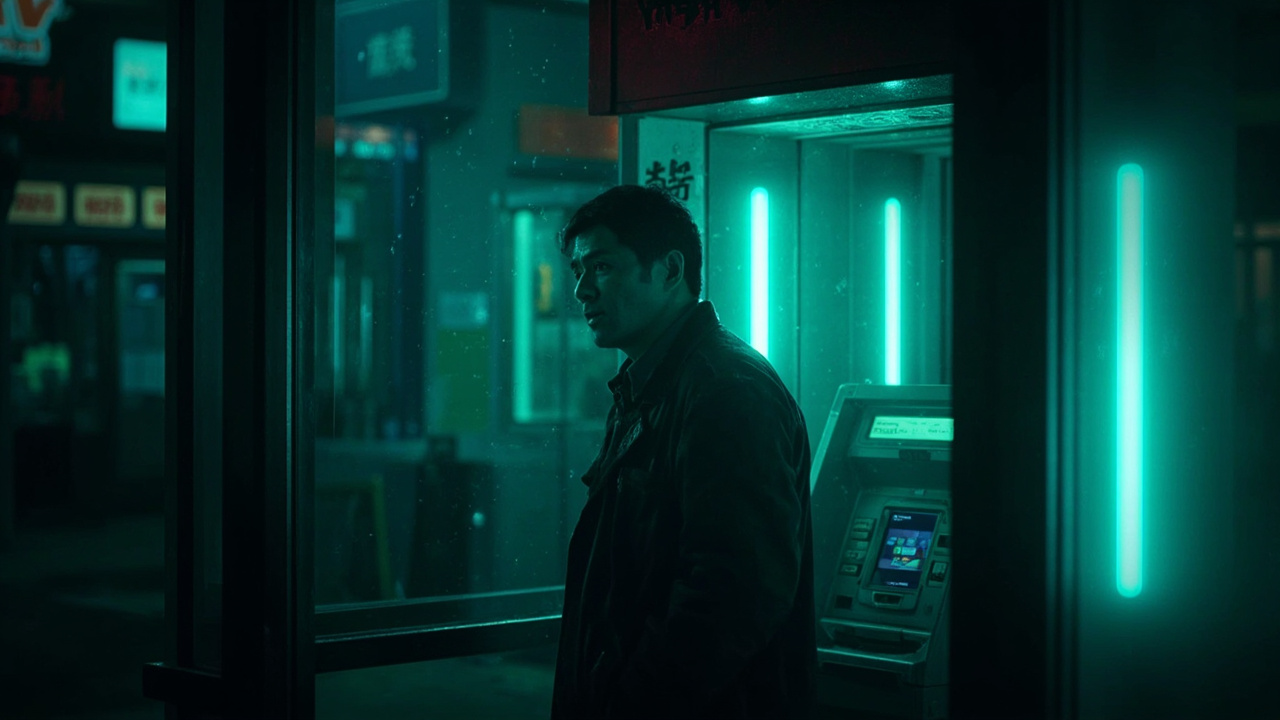
But 15 years later, the same Xiao Chen was standing in front of a convenience store ATM on a drizzling深夜 (late night), staring at the account balance — a number with fewer than five digits — unable to come back to himself for a long time.
He couldn’t figure it out. He’d worked so hard, more serious than anyone, never late or leaving early. Why had his life come to this?
The answer is extremely cruel.
The First Trap 15 Years Ago: An NT$8 Million Presale
The story starts with his first, most far-reaching decision — made 15 years ago.
That year, Xiao Chen was 25, doing marketing planning at a small-to-medium enterprise. His monthly salary was NT$125K. At that time, Taiwanese society was filled with a collective anxiety whose center was just two words — buying a house.
You turn on the TV, financial experts talking about housing prices. You swipe your phone, network news headlines all said “buy now or never,” “prices hit new highs again.” Colleagues, friends, lunch breaks, after-work gatherings — the topic always circled back to “which project are you looking at?” “How much have you saved for the down payment?” “That person who bought there three years ago made NT$10 million.”
These messages were like slowly heating water for a frog — every day adding more heat to Xiao Chen’s anxiety. He looked at his small rented apartment in New Taipei City, the NT$10K monthly rent feeling like throwing hard-earned money sheet by sheet into the water without a sound. His landlord’s polite,梳理 (combing) look when collecting rent each month reminded him: “You’re just a passerby. This isn’t your home.”
Just then, a youth first-time-buyer优惠 (preferential) loan方案 (plan) — a救命稻草 (lifeline) — appeared before him. The bank’s mortgage specialist told him in a very assured tone that his qualifications were great. Though his down payment was short, no problem — he could supplement the gap with a personal credit loan.
The specialist calculated for him: buy an NT25K. His salary was NT10K left.
He reasoned: “I’m already paying NT15K, I can become an owner instead of a tenant. That math has to work, right? It’s a little hard now, but salaries always rise. It’ll get easier. And this isn’t just buying a house — it’s hedging against inflation. It’s investing in my future.”
His parents strongly supported him too. Their generation’s deeply-rooted belief was “with land comes wealth” — only having a shell of your own counts as truly having扎根 (taken root) in this society. He told himself and everyone around him: “If I don’t buy now, I’ll never be able to afford it later.” That sentence, in that atmosphere, sounded like undeniable truth.
So on a sunny afternoon, he signed his name on that thick contract. In that moment he felt solid — like a real man finally shouldering responsibility.
But he didn’t realize this was a trap精心 (meticulously) wrapped in dreams and stability.

Two Invisible Hands
Let’s pause. What psychology drove Xiao Chen’s decision?
First, strong social proof — when everyone around you, from experts to friends, is doing the same thing and saying the same words, you本能 (instinctively) believe this is the right path. This is a mental shortcut that saves thinking effort, but easily traps you in collective delusion.
Second, deeper loss aversion — for Xiao Chen, paying rent was a visible loss. Missing out on rising housing prices was an invisible but more painful potential loss. To avoid these two losses, he was willing to take a巨大 (huge) risk he actually couldn’t afford.
These two forces, like two invisible hands, pushed him to make this decision. They made him completely ignore the most关键 (crucial) question: can your cash flow handle the worst case?
In this NT$8 million transaction, who were the biggest winners?
- The developer, who locked in future profits
- The bank, who got a 30-year stable吸 (sucking) client
- The real estate agent, who earned commission
They all won. Who bore the risk? Xiao Chen. He used his next 30 years of life, every hard-earned monthly salary, as fuel for this system to run. He thought he was buying an asset, but on the financial statement it was a massive liability. He thought he was buying a sense of security, but actually he was buying a 30-year毫无 (utterly) inflexible shackle.
The Chain Reaction: 15 Years of Collapse After Buying a House
But the真正 (real) story of someone being crushed doesn’t start with that largest debt — it’s the chain of smaller but more致命 (fatal) reactions it triggers.
After buying the house, Xiao Chen’s quality of life plummeted. He used to eat out with friends two or three times a month, catch a movie, buy a few new outfits. Now he almost拒绝 (declined) all social invitations. When friends asked him out, his excuse was永远 (always) “been too busy with overtime lately.” Eventually, no one asked him anymore.
He watched friends’ Instagram posts — traveling abroad, big dinners, group trips — and could only quietly tap a like, then keep eating his NT15. His phone screen cracked and he taped it up and kept using it — he knew a screen replacement would cost a week’s food.
He consoled himself: this is the price of settling down, totally normal, everyone gets through it this way.
But soon, a second test — one he never expected — arrived.
He was preparing to marry, needing money for婚纱 (wedding photos) and wedding. At the same time, his mother needed hospitalization for胆结石 (gallstones) — though insurance covered it, some self-paid materials and consumables cost tens of thousands. These two things happened simultaneously, and he惊恐 (horrified) discovered that the NT$10K left after mortgage each month was as fragile as toilet paper against these突发 (unexpected) situations.
What could he do? He had to brace himself and use credit card installments, apply for small personal loans. He discovered his life was like walking a tightrope over an abyss. He had no safety net. He couldn’t get sick, couldn’t lose his job, couldn’t even have unplanned expenses. The moment a slightly stronger wind blew — say, the company did a业务 (business) restructure — he’d fall immediately.
And the internal wind, one afternoon three years after he bought the house, truly came. Without warning.
That day he was called into the department supervisor’s office. The supervisor’s expression was heavy. Then HR came in too, handed him a document — a mutual separation agreement. The company, due to the poor macro environment, had decided to shut down his entire department.
The day HR called him into the meeting room, his mind went blank. He couldn’t hear clearly what HR was saying — severance pay, involuntary separation certificate — there was only a buzzing sound in his ears.
He didn’t have much time to grieve or be angry, because a more real question pressed against his throat like a knife: next month’s NT$25K mortgage plus thousands in credit loan interest wouldn’t pause for a single day because he was unemployed.

The Essence of Cash Reserves: Not for Earning, but for Choice
Many Taiwanese office workers have rehearsed this nightmare in dreams.
We often equate cash with savings, thinking money sitting in a bank’s demand deposit account is闲置 (idle), wasted, watching helplessly as inflation eats it. So as soon as people have money, they rush to invest — stocks, funds, ETFs, trying to make money make money. That’s not wrong.
But we ignore another, more important function of cash — the essence of cash reserves is not to make you money, but to give you the right to choose when crisis hits.
Let me give an example. An unemployed person with NT180K left in their account — their mindset, strategy, and ultimate outcome in finding the next job are worlds apart.
The former can calmly tell themselves: “It’s fine. This money is enough for half a year to a year. I can look slowly, search slowly. I can even use this opportunity to take a class to upgrade myself, until I find a job I truly like with a satisfying salary.”
The latter might, by the second month of unemployment, out of panic, hastily accept a 30%-discount-paying job they don’t like and has no future. Why? Because they can’t afford to wait.
The real cost Xiao Chen paid during that unemployment period wasn’t the几万 (tens of thousands) in interest, wasn’t the anxiety of not finding work. What he truly lost was the ability to stay rational and make correct decisions under巨大 (massive) pressure.
Behavioral economics has a very important concept: scarcity mindset. When a person is长期 (chronically) under tight pressure for money, time, or any resource, their cognitive bandwidth gets severely occupied. In plain terms, 90% of your brain’s CPU is processing that single task of “staying alive.” You don’t have spare心力 (mental energy) to think about long-term plans, learn new things, or make more complex judgments.
Simply put: when you’re极度 (extremely) short on money, you get stupid. This isn’t a metaphor — it’s scientifically proven.
And Xiao Chen had completely fallen into this tunnel vision at the time. His only thought was to find the next job as fast as possible — any job would do.
In this panic and despair, he made a third decision — one he would later regret beyond measure.
The Return-of-Premium Savings Insurance Trap: What Can NT$300K in Coverage Do?
Just when Xiao Chen was unemployed, throwing résumés everywhere, even considering becoming a delivery driver, he suddenly remembered buying an insurance policy a few years ago. His aunt had recommended it. At the time, that auntie who worked at the insurance company was enthusiastically analyzing: young people entering society need protection most and need to save money. She recommended a “two全其美 (two-birds-one-stone)” policy — both major illness coverage and forced savings. After the 20-year term, all the money paid in could be returned, even with a little interest — the so-called “return of premium” savings insurance.
Xiao Chen thought the concept was great at the time. It matched his human desire to want everything — protection, savings, no money lost. So he signed. Each year he set aside NT$180K from his year-end bonus for the premiums.
He hurriedly翻箱倒櫃 (rummaged through boxes) to find that policy, called the insurance company, and in a near-pleading tone asked if he could withdraw the money paid in to handle the emergency.
The customer service representative on the other end, in a very robotic and emotionless tone, told him: “Mr. Chen, hello. Let me explain. Your policy is still in the premium-paying period. If you now apply for reduction, full settlement, or surrender, it counts as early termination. According to the terms, only a portion of the policy’s cash value (准备金) can be returned. I checked for you — you can probably only get back less than half of your paid-in principal.”
What? Less than half?
Xiao Chen froze on the spot. He shouted at the phone: “That’s money I worked hard to earn!” But the other end just repeated: “Mr. Chen, this clause is written in the contract.”
He hung up and collapsed helplessly into the chair. He翻开 (opened) that dense, book-like policy contract, only to discover that the product he’d always thought was protection — if he actually got seriously ill — the benefit payout was only NT$300K.
NT$300K in today’s medical system — what can that do? It might not even cover the deposit for an ICU stay.
Speaking of insurance, I believe this is a pain point for many Taiwanese viewers. Each of us has received phone calls from relatives, friends, seniors — “Hey, I’ve been doing service at XX Life lately. Can I schedule a time to chat about your financial planning?”
Sometimes what we buy isn’t a rational protection — it’s a人情 (relationship) policy you can’t turn down.
The most common sales pitch is exactly this kind of savings insurance or return-of-premium accident insurance. Why do people like buying this stuff so much? Because it perfectly exploits our human weaknesses of loss aversion and贪小便宜 (love of small bargains).
The salesperson tells you: “Anyway, this money will be returned to you in the end. The protection during that time is just given to you for free. You can’t lose!” Sounds great, right? Completely no抵抗力 (resistance).
But have you冷静 (calmly) thought about what insurance really is? The essence of insurance should be using a small, certain expense to transfer a huge, uncertain risk we can’t bear — it’s a leverage tool, not a piggy bank.
Let’s do the simplest math and you’ll immediately understand. Xiao Chen paid NT300K in major illness coverage. The protection leverage ratio was only 5x.
Now let’s look at a slightly more cognitively aware choice. If he’d understood proper insurance configuration, what would he have done? He’d use a budget of maybe NT10-15 million. Then take the remaining NT$144K and do the most foolproof, conservative ETF定期定額 (dollar-cost averaging) investment, like 0050 or 006208.
Suppose 15 years later they both faced an unemployment crisis.
- The first choice left him locked into a contract with low coverage, high premiums, and terrible liquidity — his cash flow was strangled.
- The second choice would give him millions in high coverage AND a liquid asset that could be accessed anytime and might have already doubled.
The same money, just because of认知 (cognitive) differences at the start, one微小 (tiny) different choice — under the compound effect of time, what a鸿沟 (chasm) it creates.
But Xiao Chen at the time didn’t understand any of this. He just felt that life had tricked him again — or rather, his past stupid decision had tricked him.

The Final Straw: School District Housing
And the last straw that broke the camel’s back came from what he cared about most, what he most wanted to protect — his child.
Years passed. Xiao Chen found a new job, salary slightly higher at NT$60K. Life seemed to slowly return to normal track, but the wound from the house and debt kept隐隐 (faintly) aching. His wife quit her full-time job to take care of the child and could only do some part-time work, income unstable. A family of three still lived hand-to-mouth, arguing about money every month.
Soon, the child was about to enter elementary school — a century难题 (dilemma) no Taiwanese parents can escape: school district.
Their current residence was in an ordinary school district — the most common old community elementary. His wife was very anxious about it. She joined various mom groups and scrolled through them daily, getting more and more panicked. The moms in the groups discussed which schools were明星 (star) schools, which had particularly high升学率 (advancement rates), which had higher家长社经地位 (parental socioeconomic status).
She asked around everywhere. She heard about a明星 (star) district 20 minutes away by car, where kids’ English was particularly good and they had many talents — but that area was NT$60K/坪 more expensive than where they currently lived.
To move there, they’d have to sell the current apartment (still with a mortgage) and take on an extra NT25K to NT$40K.
Xiao Chen just thinking about that number felt his heart squeezed by a hand, almost unable to breathe.
That night he and his wife had the biggest fight of their marriage. His wife cried: “Other dads would do anything for their kids. Why can’t you go for it for our child? Do you want our kid to lose from the start?”
Xiao Chen sat on the sofa looking at the万家灯火 (myriad lights) outside the window, each one like a happy family. His own family was in storms. He felt powerless and defeated for the first time. It wasn’t that he didn’t want to go for it — he knew better than anyone that he no longer had the资格 (qualification) to do so.
His financial structure was as fragile as a house of cards, unable to withstand any disturbance. Adding NT$15K to the mortgage was like directly pulling out the bottom card.
If it were you, what would you choose? Take on a financial burden that would almost crush the entire family, for a seemingly better future for the child?
I believe very, very many Taiwanese parents would choose to after struggling — because in our culture, sacrificing for children is a近乎 (nearly)本能 (instinctual) and unquestionable political correctness.
But we rarely get the chance to冷静 (calmly) break down one question: how much real help can a所谓的 (so-called) school district house actually give a child?
Many long-term domestic and international educational tracking studies show that the key factors affecting a child’s learning achievement and future development are never the school’s reputation, but family environment, parents’陪伴 (companionship) time, the number of books at home, parents’ modeling, worldview, and cognitive level.
That extra NT$9 million for a school district apartment — if used elsewhere? Could this money take the child on several self-guided trips abroad to broaden their international horizons? Could it let them take classes in urban design or music they truly have interest in, instead of刷题 (drilling test questions) at cram schools? Could it greatly reduce parents’ financial pressure, giving them better moods and more time for high-quality陪伴 (companionship) of the child?
Speaking of the first and most important principle of financial planning: never use rigid debt to pursue an uncertain return.
NT$40K monthly mortgage is rigid — miss a day and the bank calls催 (demanding payment). But will the child who attended a明星 (star) junior high definitely get into Jianguo or Bei-Yi? Will they necessarily have a happier life? That’s highly uncertain.
When Xiao Chen最终 (ultimately) chose not to switch houses, from a rational perspective he protected the financial safety底线 (bottom line) of the entire family. But the cost of this decision was巨大 (enormous) —
- His wife’s long-term lack of understanding and cold war
- At family gatherings, facing questions like “why don’t you get a better environment for your child?” he could only smile awkwardly
- More沉重的 (heavy) was the deep self-blame and powerlessness in his heart — he felt it was his lack of ability that made his child lose at the starting line
He completely didn’t realize at the time that this self-consuming sense of powerlessness was the most expensive, highest-interest debt in his life. It would follow him like a shadow all the way until age 40, when he faced the final reckoning.

The Finale at 40: NT$60K Monthly Pension
Time fast-forwards to Xiao Chen at 40. The world has changed rapidly these few years. AI has emerged. Many jobs are being replaced. The colleagues around him are all younger. He began to feel a strong sense of midlife crisis.
One day he saw a news article online. The expert inside used models to analyze that Taiwan’s labor pension could potentially go bankrupt within a few years. His heart sank. For the first time, he began to seriously think about retirement.
He went to the Bureau of Labor Insurance website with a mixture of fear and curiosity, entered his information, and试算 (estimated) his future pension. Once he did the math, his entire body went cold.
The website showed: based on his current salary level and years of service, if he worked until the法定 (statutory) retirement age of 65, his monthly labor pension would only be about NT$60K-70K, with a replacement rate below 50%.
What’s the concept? It meant if his pre-retirement monthly salary was NT$60K, his post-retirement income would直接 (directly) be cut in half or even lower. And at that time he might still have several years of mortgage unpaid. He’d have to face his own bodily aging, medical expenses from frequent hospital visits, possibly even long-term care costs. Relying solely on labor pension, it would be impossible to maintain a life with dignity.
He picked up a pen and randomly calculated on paper. To maintain his current quality of life (not rich, but at least able to eat and live with security), his pension gap after deducting labor pension would still be at least NT$30 million.
NT$30 million. He stared at that天文 (astronomical) number on paper, suddenly feeling dizzy, his whole body cold. It was like being slapped awake — he realized that after 15 years of working hard, sweating, and obeying in this society since graduating at 25, his life balance sheet除了 (aside from) this still-mortgaged house, was almost a blank — no sufficient emergency fund, no properly configured insurance to transfer risk, and not a single bit of preparation for his own old age.

Hyperbolic Discounting: Why Do We Always Wait Until the Last Moment?
Why do most of us always wait until the last moment to真正 (truly) start worrying about retirement?
Because human nature is天生 (innately) short-sighted in design. Economics has a very famous concept: hyperbolic discounting. The term sounds complex but the meaning is simple.
Let me ask you a question. Two options: A. Get NT33,000 a week from now. Most people choose A.
But if I change the question: A. Get NT33,000 one year and one week from now. Now most people choose B.
Do you see? Same extra wait of one week for NT$3,000 — when it happens now we become极度 (extremely) impatient, but when it happens in the distant future, we反而 (instead) make more rational judgments.
Retirement is that “NT$30,000 a year from now” — it feels too far away. So we keep making excuses: retirement is still far off, enjoying the present is more important; once I get a raise or promotion, I’ll start saving properly.
But the power of time is that it never waits. And it uses compound interest to punish those who arrive late.
Let’s look at the cruelest calculation to feel time’s power. Suppose retirement requires NT$30 million. Annual return rate, let’s use a conservative 6%.
- If Xiao Chen had this认知 (cognition) at 25 and forced himself to save NT30 million.
- But if he only awoke at 40 like now, starting to prepare, to hit the same NT69K a month**.
He only started 15 years later. The effort per month becomes nearly 5 times — and for a middle-aged person still supporting a family and paying a mortgage, that’s almost an impossible task.
This is the cost of intertemporal choice: the ease you choose today, your future self must repay double, even 5 or 10 times over.
All Wrong Choices Went With Human Nature; All Solutions Went Against It
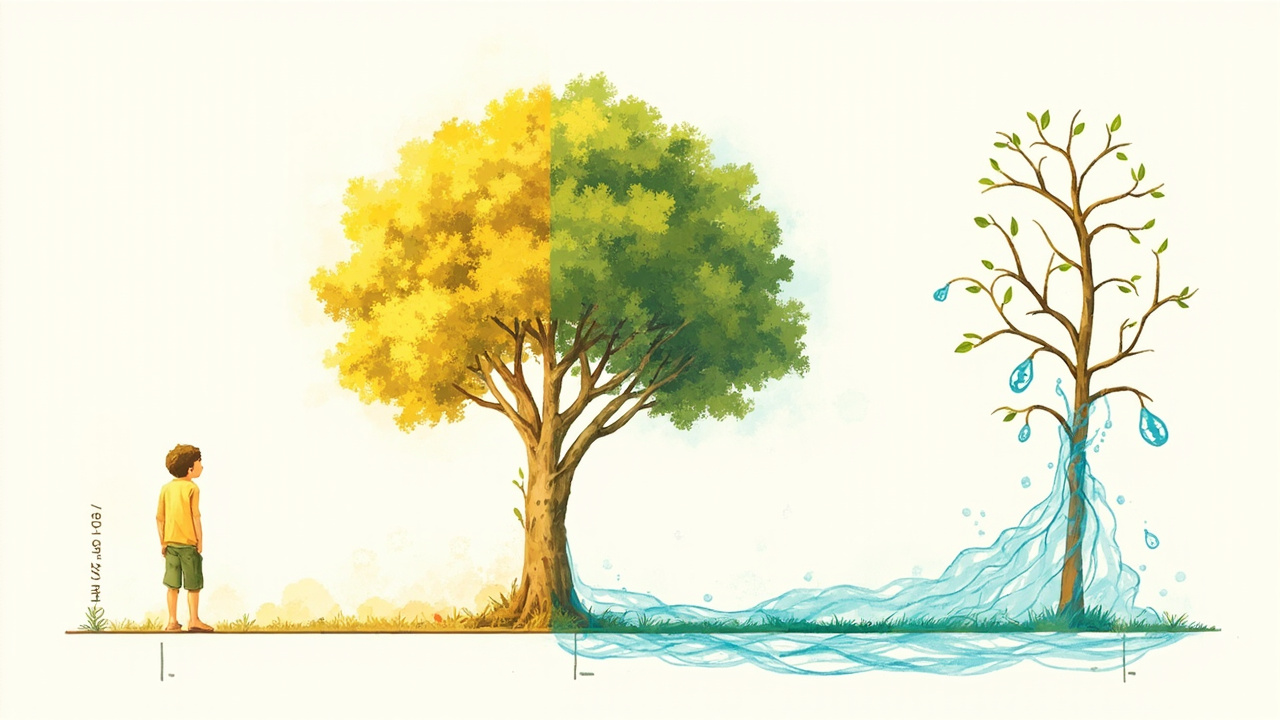
Looking at this, you’ll find a规律 (pattern)贯穿 (running through) Xiao Chen’s life:
Every financial decision that trapped him step by step was fundamentally going along with human nature.
- Wanting his own home, so borrowing money to buy a house — going along with the human渴望 (longing) for belonging
- Thinking cash sitting around is waste, so not keeping an emergency fund — going along with the human aversion to loss
- Wanting money back from insurance too, so buying savings insurance — going along with贪小便宜 (love of small bargains)
- Wanting the best for the child, so considering taking on heavier school-district mortgage — going along with the伟大 (great) parental instinct
- Thinking retirement is still far off, spending the money first — going along with the原始 (primitive) impulse of instant gratification
These choices all felt right and most comfortable at the moment they were made.
While every financial decision that could actually help him turnaround was almost反人性 (against human nature) —
- Forced savings goes against instant gratification
- Holding sufficient cash goes against “money-idle” anxiety
- Buying pure protection消费型 (consumption-type) insurance goes against loss aversion
- Preparing for a retirement so distant it’s看不见 (invisible) goes against present-intuition
The scariest thing about financial decisions isn’t that you’ll hurt after making a choice. It’s that by the time you feel the pain, you look back and realize your life has long since lost its other options.
Xiao Chen’s story ends here. But this story hasn’t really ended — because it’s like a documentary, happening around us every day, even on our own bodies, quietly unfolding in different versions.
We all think we’re working hard for a better future. But many times, in those moments of decision we don’t notice, we’re just prepaying tomorrow’s most expensive bill with today’s freedom.
Now I want to ask you, watching this: if time could rewind, you were that 25-year-old Xiao Chen just getting his first paycheck, facing society’s craze for buying a house, facing your inner longing and unease about the future — would you make the same choice as him? Or do you believe that given the circumstances back then, a better, smarter path existed?
Leave your thoughts in the comments below.
This article involves insurance configuration and retirement planning concepts. It is for personal financial education and conceptual discussion only. It does not constitute any investment or insurance advice. Each person’s insurance needs, income structure, and risk tolerance differ; please consult a qualified insurance advisor and financial planner before acting.
Comments