
You’ve worked hard to save your hard-earned money, and it sits quietly in the bank, minding its own business — yet it seems to be quietly evaporating. Why is the money in your hand worth less and less? The topic might sting a little, but you have to read to the end, because it affects every one of our retirement savings, our kids’ education money, and our sense of security in the future.
Today, like peeling an onion, I’ll take you layer by layer to see this huge secret hiding right beside us.
1. Where Did the Money From Our Memories Go?
Let’s start with a memory game. Friends born in the 70s and 80s — you must remember the happiest thing about childhood summer: spending fifty cents on an ice pop, with enough left for a pack of spicy strips. Those fifty cents bought real, solid happiness.
Now think back over thirty years: if any household had NT10,000 could buy a small house in a county town, marry a wife in style, or feed a family well for several years.
What about now? What can NT$10,000 in your pocket still do? Probably just a decent phone, or one month’s rent in a big city. Use it to buy a house? You probably can’t even afford a bathroom.
Do you see the problem? From the “ten-thousand-yuan household” to the “month-end broke household,” the money is still the same money, the numbers printed on it haven’t changed, but what it can buy back has dropped far, far too much.
We often say prices have risen, but flip the perspective — could it be that our money has gotten thinner, more empty? It’s like a thick, rich bone broth — absolutely delicious — until someone keeps adding water to the pot. The soup is still the same pot of soup, still looks like a full pot, but one sip and the flavor is more diluted, with less and less nutrition.
The money in our hands right now is going through exactly this process of being diluted.
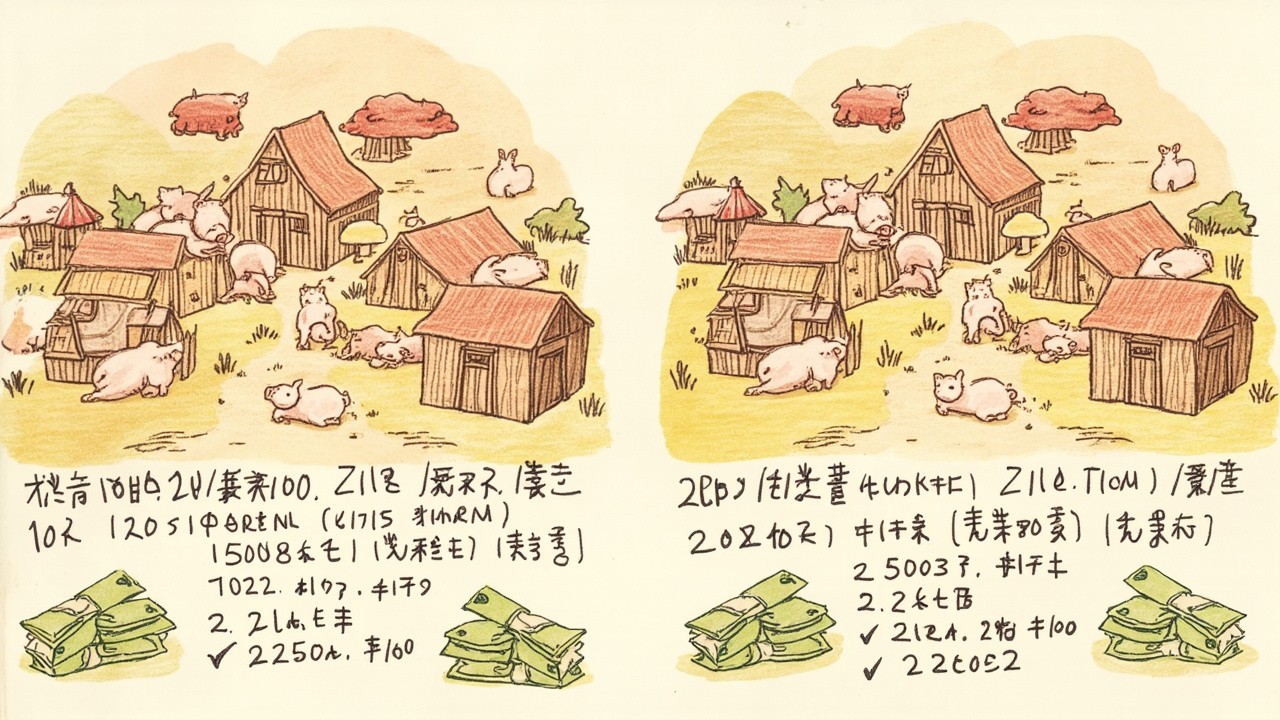
2. The True Face of Inflation: The 100 Pigs in the Village
This “adding water” move has a name in economics: “inflation.” Put simply, it’s that too much money has been printed — more than all the goods our society produces — like houses, cars, rice, flour.
Imagine: the village produces only 100 pigs a year. In the past, only NT100. Then somehow the village chief issued another NT20,000 in the village, but still only 100 pigs.
So will pork prices rise? Definitely! Everyone is now chasing a limited number of pigs with more money, so prices naturally climb — a pig might sell for NT$200. See, the pig is still the same pig, no fatter and no stronger, but you have to spend more money to buy it. It’s not that pigs got more precious; your money’s purchasing power dropped.
Every one of us is forced to drink this bowl of continuously diluted broth. You put your money in the bank and count on that bit of interest, like hoping the chef will add a spoon of salt to bring the flavor back. But the faucet adding water has never stopped — your salting speed is far slower than the rate of dilution.
This is the first, cruelest reality we have to face: you think putting money in the bank is the safest thing, but in reality you’re just watching its purchasing power drain away, bit by bit, over time.
3. Who Keeps Adding Water? The Printing Press Is Just the Tip of the Iceberg
Hearing this you’re probably furious: so who’s secretly adding water to our soup behind our backs? Are the printing presses at the mint working overtime?
True, the printing press is indeed printing money, but that’s only a small part of the water. The real deluge comes from three places:
First: central bank bond buying. The central bank doesn’t print money and hand it directly to you; it goes into the open market to buy government bonds. The central bank uses freshly printed banknotes to buy government debt, which is essentially lending money to the government for it to spend. This action increases the money supply across the market, because government spending ultimately flows into the pockets of businesses and people.
Second: the “credit creation” of commercial banks. This is the most easily overlooked. When you deposit NT1 million in the vault; it lends NT900,000 and deposits it in another bank, which then lends out NT1 million can ultimately create NT$9 million or more of “credit money.”** This process is like cell division — every division doubles the money in the market.
Third: government fiscal deficits. When the government spends more than it collects in taxes, that gap is called a deficit. To fill the gap, the government issues bonds, and the central bank prints money to buy them. Once this loop starts, currency slowly inflates like a balloon.
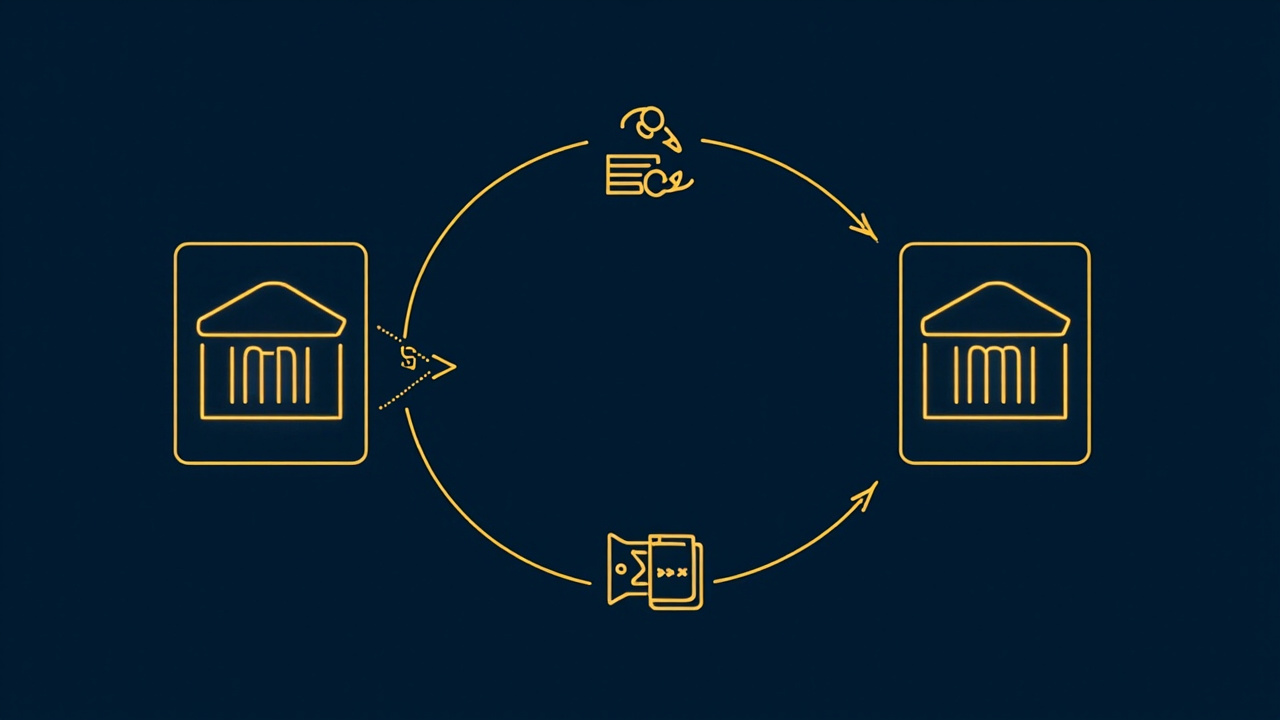
So inflation is no accident, it’s a built-in feature of the modern monetary system. Central banks around the world have an “inflation target” of typically around 2%. In other words, they’re not trying to eliminate inflation — they’re trying to keep it at “a level you can endure but that will slowly erode you.”
4. M2 Money Supply: The Real Indicator You Should Watch
To judge whether inflation will worsen, you can’t just look at CPI (Consumer Price Index) on the news. CPI is a lagging indicator — it’s past prices; what you want is a leading indicator — the year-over-year growth rate of M2 money supply.
What is M2? It’s “broad money supply,” including cash, demand deposits, time deposits, and money market funds — everything “that can almost be used as money.” When M2’s annual growth rate exceeds the economic growth rate over the long term, inflation is accumulating energy. When it starts to decline, it’s a signal that inflation may be easing.
Over the past 20 years, M2 in major global economies has exploded. US M2 went from US22 trillion in 2022, nearly tripling in 14 years. Taiwan is the same: M2 was about NT60 trillion.
What does this mean? It means the same banknote in your hand can only buy half of what it could 15 years ago. That’s why you feel your money getting thinner.
5. How Can Ordinary People Save 10 Years of Detours? Three Underlying Anti-Inflation Strategies
After learning the truth you might panic, but panic doesn’t help, what you need is concrete action. Here are three underlying anti-inflation strategies:
Strategy 1: Embrace Assets That “Grow.” The essence of inflation is more money, fewer goods. So the way to fight inflation isn’t to hold more money; it’s to hold more “things that grow with inflation.” Real estate is one; quality stocks are two; commodities (such as gold) are three. The common feature of these three asset classes is that their value won’t be diluted by the printing press, and will instead grow along with the productivity of society as a whole.
Strategy 2: Convert Part of Your Savings into “Real Assets.” Your money sits in bank time deposits earning 1.5% a year, but inflation is 2–3%, you’re actually losing 0.5–1.5% of purchasing power each year. Rather than that, convert part of your savings into gold, inflation-protected bonds (TIPS), or high-dividend ETFs. The point isn’t the highest return; it’s that real purchasing power doesn’t shrink.
Strategy 3: Invest in Yourself. This is the most underrated anti-inflation strategy. Your professional skills, your international perspective, your cross-disciplinary ability — none of these will be diluted by the central bank, and they’ll actually become more valuable in inflationary times. When prices rise and salaries shrink, bosses have to give raises to retain people, and the most capable people always get the most.

6. Conclusion: It’s Not That Money Got More Expensive — Your Money Got Thinner
Money is worth less and less — this isn’t future tense; it’s present continuous. It’s not the fault of some president, or some central bank governor; it’s the built-in result of the modern credit-money system.
You can’t change this system, but you can choose which side of the system you stand on: are you in the 90% being diluted, or in the 10% that owns assets?
The way to save yourself 10 years of detours isn’t to save harder, but to start today converting part of your “sleeping savings” into “assets that grow.” Let your money grow alongside social productivity instead of being slowly diluted by the central bank’s freshly printed notes.
The road is long, but this is the most practical path available to ordinary people. From the moment you move your first dollar from a time deposit into an ETF, into a piece of gold, or into a skill that can appreciate, you’re already ahead of 90% of people in understanding this era’s money logic.
Don’t wait until 10 years from now to discover that the money you worked so hard to save has been thoroughly watered down.
This content shares the author’s personal economic observations and personal-finance concepts, and is not investment advice. Inflation and monetary policy involve complex macroeconomic factors; past performance does not represent future returns. Please carefully assess your own risk tolerance before investing and consult a qualified financial advisor.
Disclaimer: This article shares personal-finance concepts and compiled information. It does not constitute any specific investment, tax, or legal advice. Markets carry risk; invest carefully and use your own judgment based on your risk tolerance, and consult a qualified professional advisor.
Tags
Inflation, 貨幣貶值, 央行政策, M2 貨幣供給, 實質購買力, Inflation Hedge, 房產保值, Gold, 股票通膨, 物價上漲, 存款縮水, Retirement Planning
Comments