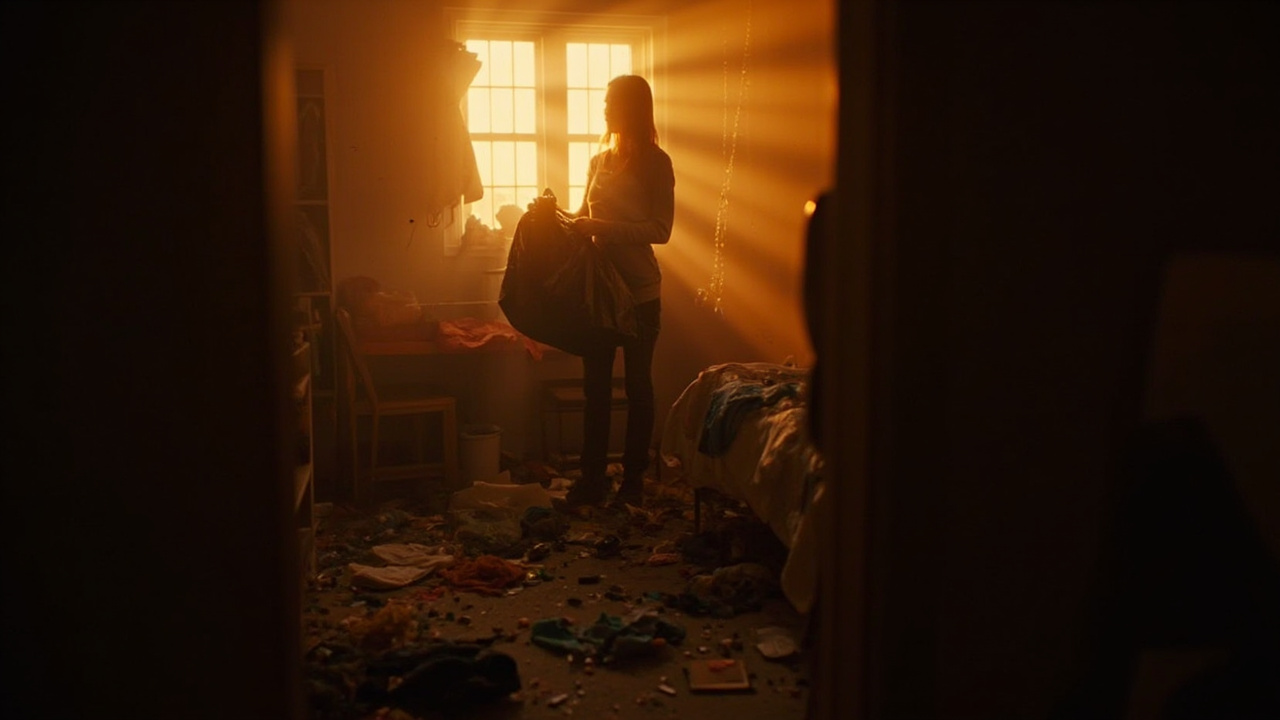
You scroll social media and see an influencer cradling black coffee in front of a stark-white window. Does that air of pristine order make your heart skip a beat? You glance back at your closet stuffed with cheap clothes and your rental piled with clutter, and a sudden urge to dump everything into a trash bag lights up your brain like wildfire.
The brutal truth is this: it is the most insidious psychological trap capitalists ever engineered for you. In an era of stagnant wages and stubborn inflation, when you realise that hard work still cannot buy you a downtown apartment, your attention automatically pivots to the things you can still control. Suddenly, throwing stuff out becomes cheap dopamine, and minimalism quietly turns into the perfect stage for harvesting the broke.
This article will crack open that sugar-coated poison. From the brain compensation mechanism, to the high-markup playbook of brands, to the bottomless pit of repurchasing and the total withering of your network, you will finally see the bloody truth those so-called life coaches will never tell you.
The Brain Compensation Mechanism: Throwing Things Away Is Not Practice
The human brain runs a built-in compensation system designed to handle the feeling of losing control. When you feel utterly hopeless about a frozen salary and a home price forever out of reach, you desperately need an instantly effective action to take back the wheel of your life. At that moment, the simple physical act of stuffing old clothes into a garbage bag delivers a powerful dopamine hit to your brain.
You stare at your suddenly empty room and feel an illusion that you have been reborn. But this is not some spiritual discipline that severs desire — it is a psychological trap that merchants have carefully calculated behind the curtain. In broke circles, minimalism often morphs into a psychological addiction. You are not in love with owning less; you are hooked on the rush of letting go.

Even worse, this compulsive urge to discard turns into a hard-to-break addictive loop. Every dopamine spike from throwing something away fades within days, forcing you to hunt for the next sacrificial object. The moment you start feeling irritated by the few things you still own, and you crave that empty-it-all-out high again, you have fallen completely into the addiction trap that capitalists designed for you.
The Premium Price of Minimalist Style: A NT300
To stop you from truly stopping consumption and freezing the economy, the capital markets immediately invented a category of high-markup goods called minimalist style to nudge your wallet open. If you look closely at the famous lifestyle brands that wave the minimalist flag, you will notice their products have not become cheaper just because the design looks simple.
On the contrary, they weaponise white space and a cold, restrained aesthetic to manufacture a staggering brand premium. Let us do the simplest math. You toss out all your colourful storage boxes at home, then march into a high-end minimalist shop and buy a stack of uniform, semi-transparent ones. A normal plastic box at the hardware store runs about NT300 in broad daylight.

This business model — plain goods wrapped in minimalist packaging, marked up five to ten times — is backed by a full stack of consumer-psychology manipulation. They drench the store in woody notes, the aroma of expensive coffee, and brutally restrained decor, so you feel the illusion that you are upgrading your taste. The instant you swipe your card at the door, what you have not bought is storage. You have bought a fake ticket into an upper-tier lifestyle.
The Repurchase Black Hole: Buying Back What You Tossed, at a Higher Price
The surface space you save through minimalism actually comes back to haunt you in a far more vicious form: the bottomless, potentially catastrophic black hole of repurchasing. A normal modern life is full of tools you only need occasionally — a power drill you touch two or three times a year, a heavy winter blanket that only comes out when the cold hits.
If you throw all those low-frequency items away in pursuit of flawless visual calm, the day you need to fix a pipe or a freak cold snap rolls in, you are staring at a life disaster. To salvage even a shred of basic living dignity in those emergencies, you have no real choice but to march back to the mall and buy back the very things you once discarded.

Even crueller is the seasonal buy-high-sell-low trap. A regular winter coat, because of seasonal demand, swings wildly in price. You sell it off dirt-cheap to the second-hand market in summer, just so your closet can breathe — then in winter you have to repurchase the same coat at full price or even higher. This is the textbook financial-suicide move that brainwashed broke people keep repeating.
Digital Minimalism: Another Slow Form of Torture
Beyond the scarcity of physical things, the minimalist digital environment is just as much a slow-burn torture. The trendy idea of digital minimalism demands that you delete every bulky local file and every video on your hard drive. What you will discover is that this approach turns you into nothing more than a long-term digital serf of the tech giants.
Tech companies cheer you on to empty your computer drive and upload every memory and file to their cloud servers. They wave the flag of saving your local space, but the real play is to charge you a monthly cloud storage fee forever. The moment you hand your data over, that perpetual subscription deduction works like a blood-sucking leech. And the worst part? The instant you stop paying, they will not hesitate to wipe every precious file you own.

Compare that with what rich people actually do. They willingly pay top dollar for their own private servers and massive local storage, which is at its core a capital-for-digital-sovereignty arbitrage — using hardware to monopolise their own data. Meanwhile, the broke, trying to save a sliver of hard-drive space today, cheaply sell their entire digital fate to giant corporations.
Minimalist Socialising: The Invisible Class Slide of Severing Your Network
Minimalism among the broke has one more fatal, foundational blind spot — the total withering of social capital. To judge whether someone has the explosive potential to climb back up in tomorrows economy, you do not only look at the bank account today. You look at whether they can rapidly mobilise their network the moment they need help.
When you are thirty, chasing minimalist relationships, and you wipe every friend from your contact list, then ten years of life wear you down — by the time you are forty and your career hits a wall and you are hunting for the next opportunity, that social network that could have carried you through the storm has turned into a useless super-vacuum.

As modern division of labour deepens, the business fights of the future will absolutely be team battles built on collaboration. Isolated individuals, stripped of exchange value and emotional ties, are destined to be pushed to the margins by brutal workplace competition. You think minimalist socialising has bought you a quiet harbour that shields you from messy human obligations. In reality, you have severed every future possibility you ever had and turned yourself into a desolate island.
The Way Out: Spend Your Decluttering Time Accumulating Real Chips
The way to break this consumerist trap is simple: stop treating throwing things away as the only cure for your life. If you are running on thin savings in a cramped rental, the smartest move is absolutely not blind decluttering — it is to carefully audit every single thing you already own, and treat each one as a weapon in your war on this world.
Hoarding useful tools might look like it makes your room crowded, but in reality you are using an absurdly low cost to buy yourself the ability to handle any sudden life crisis, while protecting the most precious and non-renewable resource you hold: your cash flow. You can take the money you were about to dump into the high-end minimalist brand black hole, and instead park it as seed capital — into broad-market index funds with stable long-term annualised returns, or into premium courses that level up your professional skills.

Let the magic of compounding work for you around the clock, turning that small capital into labour that earns while you sleep. And because you are no longer dragged down by a pathological decluttering compulsion, you can keep your fighting spirit high and invest your time in meeting valuable business partners, building side incomes, and cultivating advanced capital cognition. Real wealth has never been about how empty your room is. It is about whether you can see through the brainwashing of capital, and at every critical turning point, actively hoard the real chips that make money.
This article has fully cracked open the four-layer harvesting logic behind minimalism. If you have ever been influenced by those perfectly empty influencer shots, please share this article with friends around you who are still caught up in the decluttering frenzy. And feel free to drop a comment telling me: what is the one thing you tossed out and then had to rebuy at a higher price? Let us expose these carefully packaged consumer traps together.
This article touches on financial and investment advice. Please evaluate based on your own circumstances and consult a professional financial advisor.
Comments