Japan’s Lost 30 Years — Yet These 3 Industries Made Fortunes
Have you ever felt this way? No matter how hard you run, the treadmill beneath you seems to accelerate backward. You gasp for air but find it growing thinner.
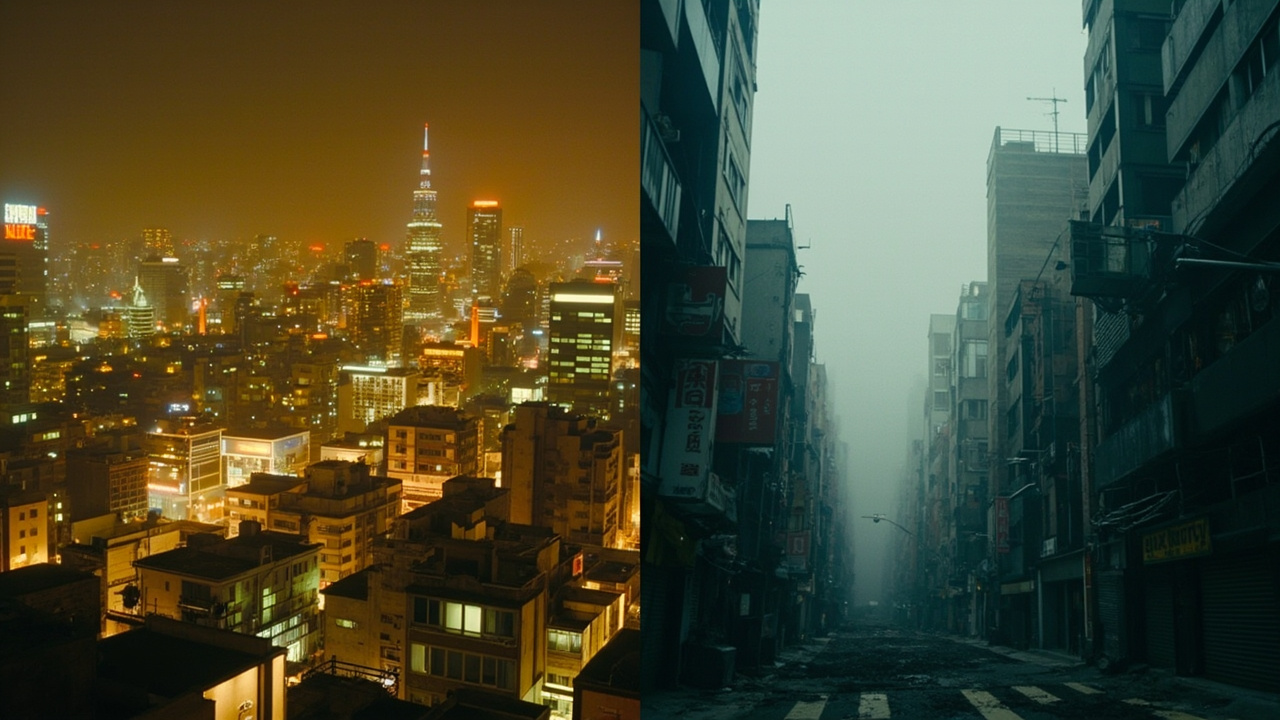
In 1991 Tokyo, countless people were experiencing this suffocation. Before that year, the word “failure” didn’t exist in the Japanese dictionary — Ginza’s land value could buy all of America, ordinary office workers flagged down taxis with NT$25,000 bills on weekends, and taxi drivers were picky about customers.
That was Japan’s狂热 (frenzy) era. Everyone believed tomorrow would be richer than today.
But on some深夜 (late night) that year, the elevator carrying everyone’s wealth dreams emitted a piercing screech of friction, then the doors slowly closed in front of you.
The bubble burst.
At first people thought it was just a technical correction — like catching a cold, just ride it out. But nobody expected this fever to last 30 years.
From Frenzy to Involution: Stability Became the Only Idol
Before, you just needed to be bold, leverage up, and ride the wind to take off — that was the game for the brave. But the rules changed overnight. When the world’s number one illusion shattered into pieces, Japanese society’s attitude flipped 180 degrees.
People stopped talking about dreams and began frantically pursuing one thing: stability. The word became that generation’s youth’s idol. Civil service exams, entering megabanks — became the only correct answer at the family dinner table.
Why? Because in a存量 (zero-sum) environment where everyone is involuting but the wealth pie isn’t growing, people’s deepest fear is no longer not making big money, but the disappearance of certainty.
You’re not afraid of earning a few thousand less per month. You’re afraid of waking up tomorrow to find the address paying your salary has become a wasteland.
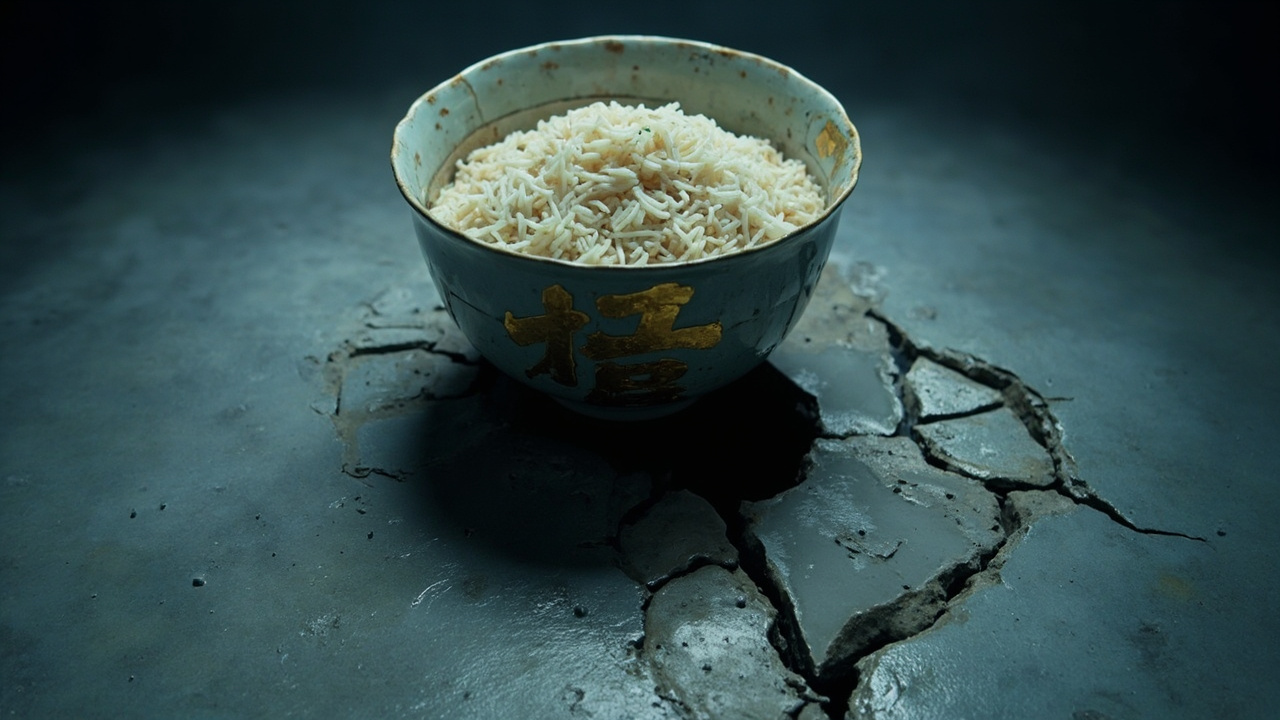
But history’s cruelest irony: when everyone flocks to the same safe harbor, the harbor itself becomes the biggest risk. The seemingly safest iron rice bowl path soon started to wobble — government finances couldn’t keep up with spending, civil service positions became ultra-competitive; the banking system struggled in bad debt, mergers, layoffs, and restructuring became commonplace.
Only then did the Japanese suddenly realize: there’s no such thing as a permanent ticket in this world. When the tide of an era recedes, even the sturdiest giant ships may run aground first because they draft too deep.
In this全民 (nationwide)迷茫 (lost) even somewhat desperate backdrop, a brand new survival logic began sprouting in the ruins. Why did these seemingly ordinary industries ultimately穿越 (weather) the cycle?
Form #1: Instant Gratification Consumption — Suntory’s Canned Coffee
When a person finds that after ten years of struggle they still can’t afford a house, or after a lifetime of effort can’t跨阶层 (cross class boundaries), what do they do? They become extremely attached to the present.
This is the first form: instant gratification consumption.
In finance we often talk about “long-termism,” but in a downturn, long-termism is a luxury for ordinary people. When future reward cycles become unclear, people’s patience for the future gets worn away bit by bit.
You tell me I’ll be financially free in 30 years? I don’t believe it. But if I spend a few hundred yen now on a cold canned coffee, the refreshment and dopamine are 100% real — something I can completely control in this very moment.
Japan’s beverage giant Suntory was the top operator of this logic.
During the so-called “lost 30 years,” Suntory’s sales remained rock-solid. They didn’t go after those tens of thousands of yen luxury items. They didn’t even tell any touching brand stories. They did only one thing — keep price and quality firmly within the range an ordinary person could随手 (reach out and) touch.
We need to understand one logic: the essence of consumption sometimes isn’t acquiring a product, but acquiring a sense of certainty.
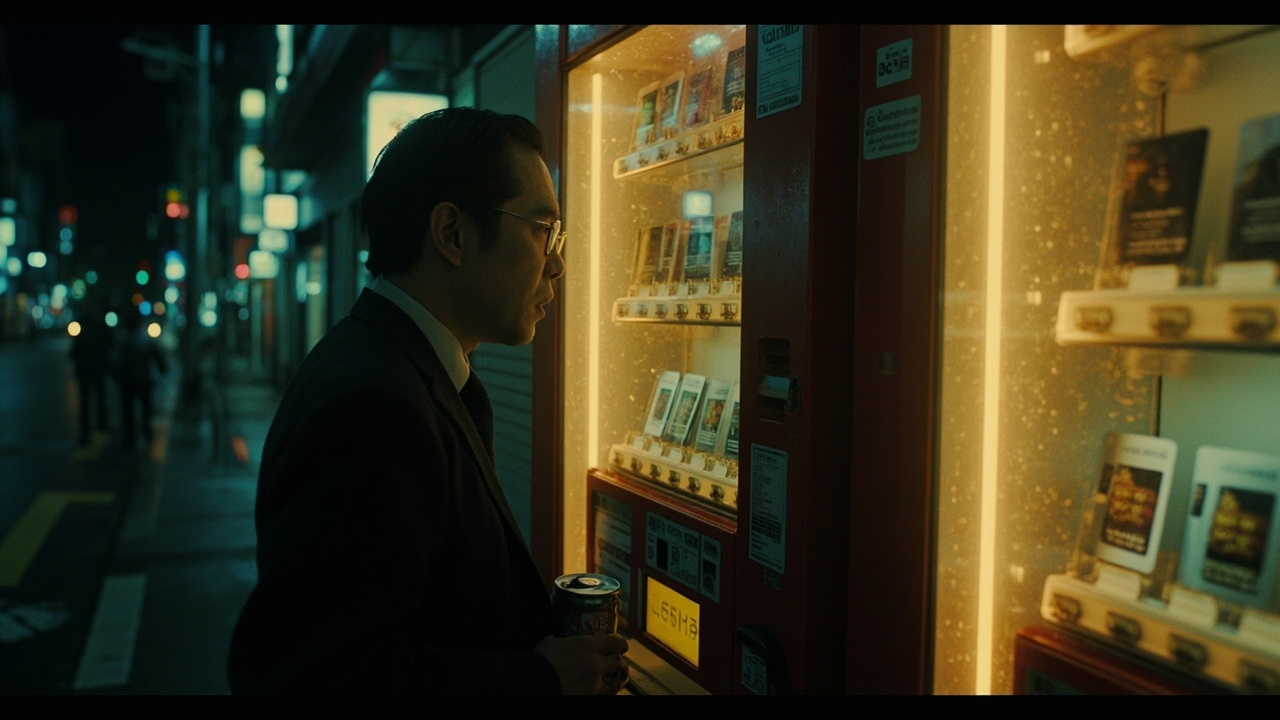
On a rainy Tokyo evening commute, an office worker just scolded by his boss and hassled by clients stands in front of a vending machine. He inserts a coin, hears the crisp metallic clink, a warm can of coffee drops. In that moment his world is certain — he paid money, got the expected return. The taste won’t change. The temperature won’t change.
This 100% return rate is incredibly rare in real life. Suntory, Coca-Cola — these giants don’t rely on manufacturing scarcity. They rely on high frequency and low decision cost.
In deflation, every cent must be spent wisely. Buy an expensive outfit, wear it twice and dislike it — that’s a huge psychological burden. But buy a beverage, even if it’s not great, the cost is minimal. This small, certain happiness became the era’s pressure止痛药 (painkiller). It doesn’t need grand narratives — it just needs to offer that tiny, cheap, instantly-cashable pleasure at every corner.
Why does this kind of industry survive cycles? Because it precisely captures human weakness — the more you can’t grasp the future, the more you want to clutch the present.
Form #2: Rational Dignity — UNIQLO and MUJI
If Suntory is the painkiller, then UNIQLO and MUJI are that era’s “life scaffolding.”
Many people first react with “cheap.” But if you think they succeeded just because they’re cheap, you’ll never understand the essence of business.
Before the bubble burst, Japanese people were the world’s most luxury-obsessed — queues outside Louis Vuitton, Chanel. That was a symbol of status. But when pockets emptied, everyone faced a very awkward question: how to lower living costs while maintaining dignity?
This is UNIQLO’s real切入点 (point of entry). It’s not selling cheap goods. It’s defining a new rational dignity.
UNIQLO’s founder Tadashi Yanai saw through one thing: in a downturn, consumer mindset shifts dramatically from showing off to pragmatism. What people fear most isn’t spending more — it’s buying wrong.
What’s “buying wrong”? Buying a trendy floral shirt that’s outdated next year — that’s buying wrong. Buying a poor-quality suit that deforms after two washes — that’s buying wrong.
So UNIQLO made the first cut — de-trending. They don’t chase trends. They grind out basics: white T-shirts, fleece jackets, basic jeans. These things could be worn ten years ago, still wearable ten years from now. What does this mean? It means you’re not buying a consumable — you’re buying a durable asset.
UNIQLO’s psychological hint to consumers: “You’re spending money with me, and I absolutely, positively will not let you regret it.” This “no-mistake safety” carries terrifying杀伤力 (killing power) in an era of widespread anxiety.
MUJI went even further — it stripped out the brand altogether. From a financial perspective, MUJI’s success is really a psychological cost reduction movement.
Have you noticed the商场 (malls) today have too many choices? So many it’s anxiety-inducing. In good times, that variety is enjoyment. In a downturn, that choice pressure becomes a burden.
MUJI tells consumers: “Stop choosing. I don’t have a brand. I don’t have complex designs. This is the most essential thing.” With an extremely unified, even restrained visual language, they reduced all your decision costs. What they sell isn’t bowls, slippers, stationery — they sell a sense of liberation from life subtraction.
This leads to a piercing conclusion: when a society starts pursuing minimalism, it’s not because their境界 (spiritual cultivation) has improved — it’s because their experience can no longer支撑 (support) those complex vanities.
UNIQLO and MUJI, by cutting the花架子 (showy facade) and keeping the quality, left a foothold of dignity for those forced to downgrade. This industry form survives cycles because it becomes social infrastructure — as long as people still need to dress and eat, this rational refuge has its place.

Form #3: Spiritual Entertainment — Nintendo, ACG, and Virtual Feedback
This next industry is the most easily misunderstood and eroded: Japan’s spiritual entertainment industry — ACG (Anime, Comics, Games).
To many taste-makers, this is a sign of废物 (useless people), of otaku escapism. But from an economics and psychology angle, you’ll see this is the most logically consistent, most刚性 (inelastic) industry Japan has produced over the past 30 years.
Core question: why do games and anime sell better when the real world gets worse?
The answer is only three characters: 因果律 (karma/cause-and-effect).
In Japan’s real workplace, a young person working hard for 20 years might see all their efforts instantly erased because of one department being eliminated. That disconnection between input and output is the most fundamental reason people become颓废 (apathetic). But in games, rules are sacred and inviolable: you kill a monster, experience points definitely pop up; you collect materials, divine gear definitely synthesizes. Here, every drop of your sweat gets one-to-one, immediate feedback.
This explains why Nintendo survived those 30 years.
After the 90s, Nintendo made a brilliant strategic pivot: they stopped competing with Sony and Microsoft on hardware performance. They stopped pursuing that极致 (extreme) photorealistic visual刺激 (stimulation). Because they understood: people don’t play games to watch movies — they play games to find that long-lost sense of control and pure joy.
Their games have ultra-low entry barriers, suitable for all ages. They fiercely protect ordinary people’s opportunity to achieve成就感 (sense of accomplishment). When a society loses upward mobility, entertainment becomes more than diversion — it becomes a psychological defense line.
Look at anime. Why do One Piece and Naruto run for over 20 years? Because in the ever-changing cold reality, people need an unchanging anchor. Luffy always shouts about becoming the Pirate King. Naruto always坚持 (persists in) his ninja way.
This decades-long companionship, in financial logic, is called ultra-high-stickiness long-term assets. It provides a continuous精神家园 (spiritual homeland) for a lonely, marginalized群体 (group).
Why does this industry survive cycles? Because what it sells isn’t content — it sells feedback and companionship. As long as the real world still has unfairness and断裂 (fracture), people will always need a rules-clear refuge.
This isn’t堕落 (depravity). It’s the lowest-cost self-rescue based on rationality, to keep the spirit from collapsing.

What Survives Cycles Was Never the Hottest风口
Looking back at Japan’s 30 years — whether Suntory’s small certainties, UNIQLO’s rational dignity, or Nintendo’s virtual feedback — they share a common base tone:
They no longer sell people that “the future will be better” pie-in-the-sky story.
In the bubble era, all business logic was built on growth expectations — companies told you “overtime today, promotion tomorrow,” banks told you “buy a house today, double tomorrow.” But when these宏大叙事 (grand narratives)彻底 (thoroughly) went bankrupt, what survived were those brave enough to face the mediocre era.
They don’t depend on societal violence or industry tailwinds. Through极致 (extreme) efficiency, deep understanding of human nature, and fanatical polishing of certainty, they dug out their own hot spring in the freezing snow.
This is the cognition we most need to learn today. We often want to catch the biggest风口, gamble on the fastest翻身 (comeback) chance. But Japan’s experience tells us: what truly穿越 (survives) cycles are often the most ordinary industries — those that help ordinary people resist uncertainty in every detail.
Over these 30 years, Japanese society completed a惨烈 (bitter) self-reshape — from everyone’s-must-win狂热 (frenzy) to how to gracefully lose or how to live peacefully. In this process, consumerism was剥去 (stripped of) its outer shell. People began to审视 (examine): what do I really need? Is it that logo-covered bag, or that安心 (peace of mind) I can闭眼 (close my eyes and) buy into? Is it that虚幻 (illusory) long-term promise, or that dopamine I can grasp in this moment?
The era has changed. The wind has stopped. If you still try to use the old big-swinging logic to fight the future, what waits for you may be that elevator door slowly closing.
Finally, I want to ask everyone a question: If in your life, that certainty of “effort equals reward” also starts to disappear, which lifesaver would you choose to grab?
Is it blindly chasing the next distant风口? Or calming down, like UNIQLO or Suntory, and polishing that极致 certainty in your own little plot — the one no one can take away from you?
In this充满变数 (full of variables) era, may you also find your own power to穿越 (survive) the cycle.
This article is an economic history and business observation reflection, not investment advice. Readers should make independent decisions based on their own judgment.
Comments