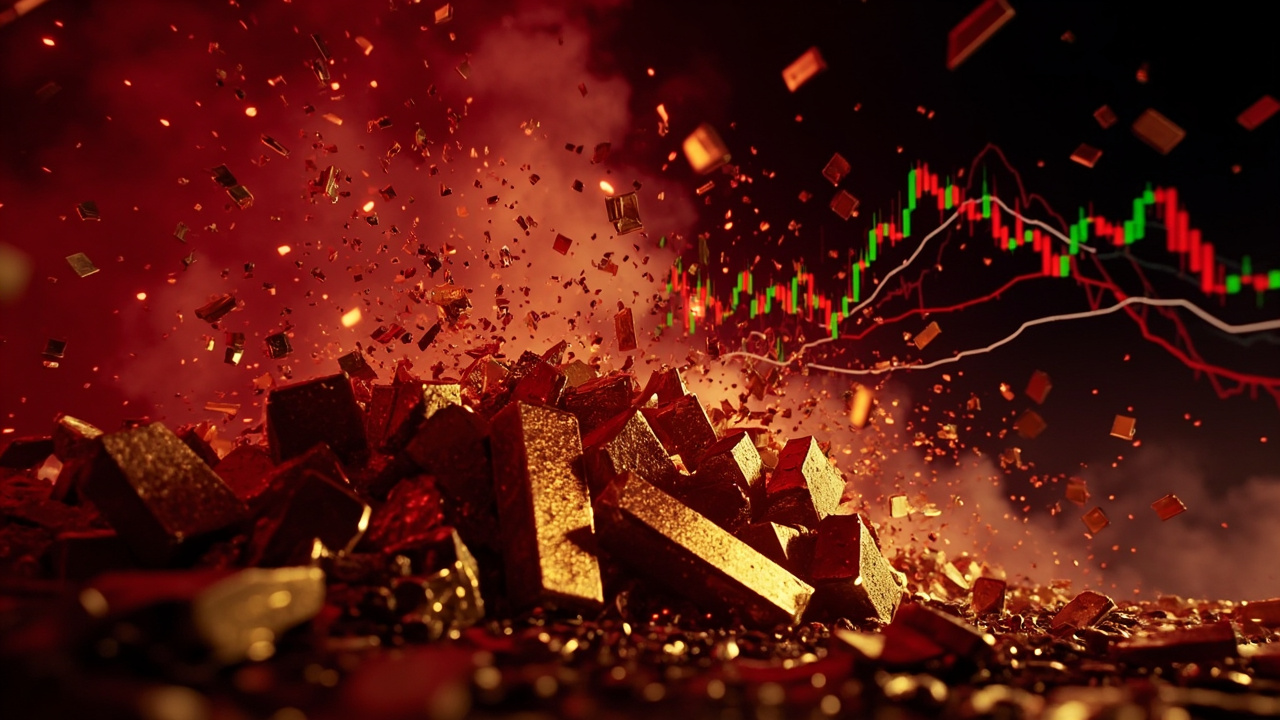
The Fed Released One Jobs Report — and Cost Everyone a Sleepless Night
In the early hours of June 6, many people woke up to find their money was gone.
Not a little less. Not profits returned. Genuinely, entirely, gone.
Mr. Zhang in Shanghai sat on the edge of his bed, phone screen lit, hand trembling. He refreshed his account number again and again, as if just a few more refreshes would bring back the evaporated money. But reality is often crueler than people —
Gold crashed. Silver crashed. U.S. stocks crashed. Bitcoin crashed. The entire world seemed to have hit a red button, with all assets diving simultaneously. No one could escape.
Those who’d been bragging about returns on social media yesterday were deleting their posts today. Those who’d been shouting “gold is going to $5,000” in livestream rooms today had closed their comment sections. Mr. Zhang was one of them.
Three months earlier, gold’s price had been climbing steadily. Every expert on every channel kept repeating the same thing: “Currency devalues. Gold保值 (preserves value). Gold never lies.” So Mr. Zhang took most of his family’s savings and bought a dozen gold bars. He thought he’d finally learned to invest, finally caught the opportunity of the times.
But he didn’t know that when everyone knows something, it’s usually already too late.
How Did One Jobs Report Become Doomsday?
That early morning, gold broke through key support, dropping over 3% in a single day. Many people thought 3% was nothing, but for gold, this was already相当于 (equivalent to) an earthquake. Worse, silver crashed over 8%, platinum dropped over 6% — the entire precious metals market崩 (collapsed) like an avalanche. The crowds queuing at gold shops disappeared, replaced by countless sleepless people who for the first time realized so-called safe-haven assets can also kill.
Meanwhile, the U.S. stock market was even worse — Nasdaq plunged over 4%, the chip sector崩盘 (collapsed), the entire semiconductor industry’s market cap evaporated over a trillion dollars in one day. Countless retail investors watched their accounts shrink helplessly, able to do nothing — because the market never explains itself, it just gives you results.
Many began asking: what happened? War break out? Financial crisis arrive? Some black swan appear?
The answer was simple enough to be hard to accept — the trigger was just one jobs report. Yes, just one.
The U.S. data came in far above market expectations. Employment numbers rose. Unemployment stayed low. Most people’s first reaction upon hearing this would be: good thing — economy’s good, everyone has jobs, companies make money, shouldn’t the market rise?
But the most counter-intuitive thing about capital markets is here. Often, good news is the biggest bad news — the better the economy, the more fearful the market, because too-good economy意味着 (means) inflation might rear its head again, and rising inflation意味着 the Fed might hike rates again.
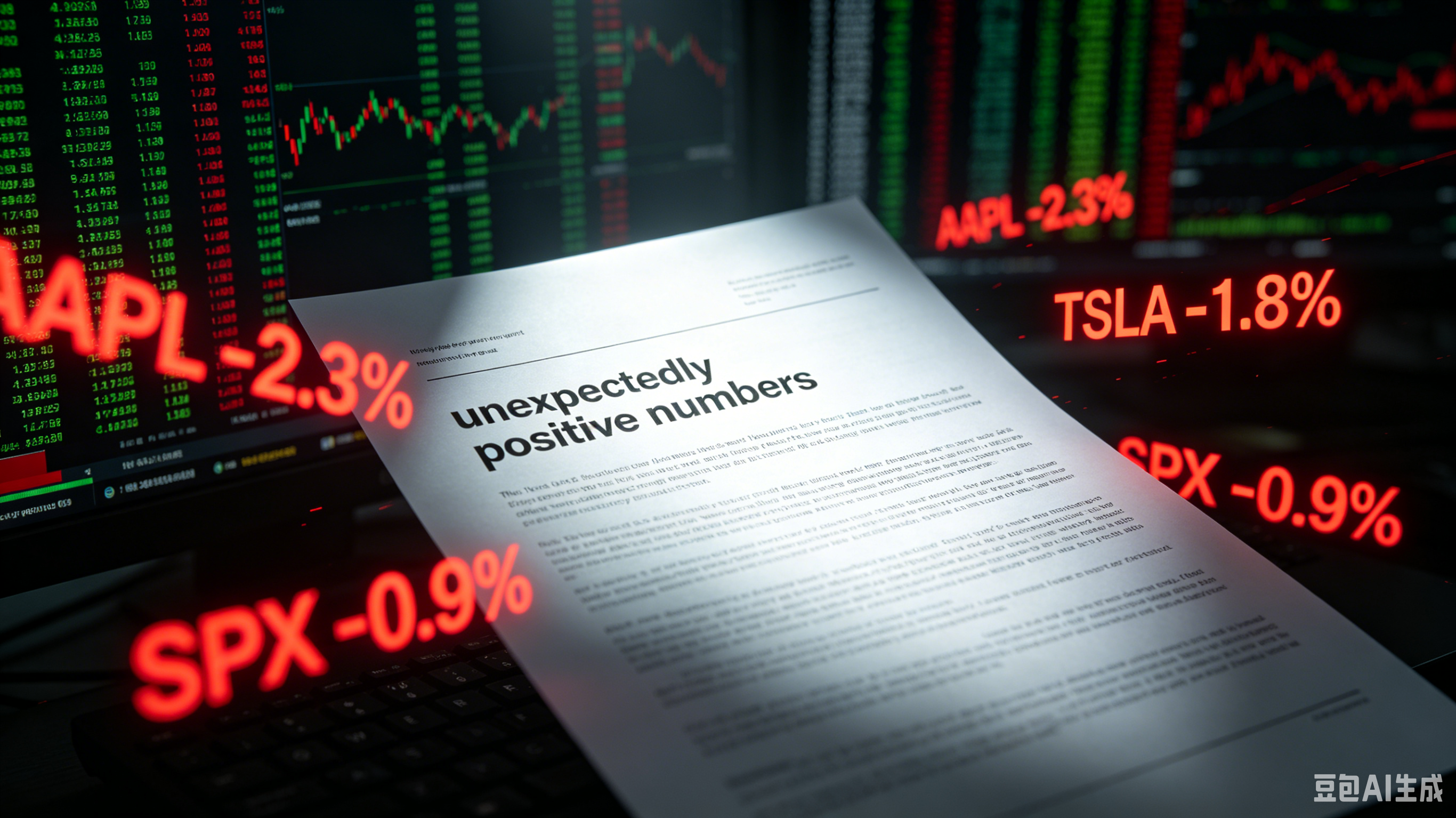
Why Is Rate Hiking So Terrifying? Because It’s a Sucking Pump on the Market
At this point many may still not understand why rate hiking is so terrifying.
Because the essence of capital markets is actually a game about capital cost. Imagine if bank deposit rates were only 1%, would you put money in the bank? No. You’d buy stocks, funds, gold, houses, even Bitcoin — because everyone wants to earn more. But if bank rates suddenly became 6%, everything would be different — now you could earn interest lying down without taking any risk. Who would willingly take risk then?
So capital starts retreating. Stocks get sold off. Gold gets sold off. Crypto gets sold off. Asset prices start falling.
This is the most terrifying thing about rate hikes — it doesn’t directly kill the market, it slowly drains the market’s blood.
What capital markets fear most is never bad news — it’s changing expectations. Just a week ago, global investors were still fantasizing about rate cuts, fantasizing about liquidity flooding back, fantasizing about assets continuing to rise. Then overnight, all those fantasies shattered. The market suddenly realized: what’s coming isn’t rate cuts — it’s rate hikes. So everyone rushed for the exit. But there’s only one exit. So they stampeded.
Experienced investors know that during market crashes, the scariest thing isn’t the fall — it’s liquidity vanishing. When everyone wants to sell, there’s no one to take the other side. Prices free-fall like kites with cut strings.
Bitcoin is the most典型 (typical) example. Many young people treat it as digital gold, believing it can resist inflation, counter currency devaluation. But reality keeps proving: Bitcoin is first a risk asset, and only secondarily a value storage tool. When the market panics, it often falls fastest — because leverage is too heavy, emotion too thick, conviction too fragile.
In the past few hours, countless leveraged accounts were force-liquidated. Many young people didn’t even have time to react — their accounts were already zeroed out.
Some say this is the market’s cruelty. More precisely, this is human nature’s cruelty — because every bubble ultimately comes from the same emotion: greed.

Buffett Said: Only When the Tide Goes Out Do You Discover Who’s Been Swimming Naked
When prices rise, everyone thinks they’re a genius. Making money proves ability; losing money is just bad luck. Until the market teaches everyone a lesson, they realize they were just standing on the tide, not creating it.
Buffett once said: only when the tide goes out do you discover who’s been swimming naked. And every crash is the moment the tide goes out.
Some might ask: what should we do next?
The answer is simple — survive first. The most important ability in the investment world isn’t how much you make, it’s not dying.
In all financial crises, all bull-bear transitions throughout history, those who ultimately survived were never the smartest, but those who best controlled their desires. Because the market’s biggest enemy is never the Fed, never war, never recession — it’s you yourself.
- When others疯狂 (frenetically) make money, can you stay calm?
- When others panic-sell, can you stay rational?
That determines the final outcome. Capital markets have run for hundreds of years. The规律 (pattern) never changes — bull markets make people believe they’re omnipotent. Bear markets make people重新 (re-)know themselves. The real secret of wealth hides precisely between these two.
For ordinary people, the most important thing right now isn’t predicting the market — it’s protecting yourself: keep cash, control positions, stay away from leverage, wait patiently. Because every crisis孕育 (gestates) the next opportunity; every panic births new wealth. The problem is most people always rush in during greed and escape during fear, ultimately becoming the market’s greatest contributor.
Remember this: capital markets always reward the rational and always punish the emotional. Be fearful when others are greedy, and greedy when others are fearful. This saying is经典 (classic) not because it sounds reasonable, but because most people never manage to do it in their entire lives.

Ordinary People See 172K New Jobs; Wall Street Sees Four Characters: Inflation Risk
Many have always wondered why a slightly better U.S. jobs number makes the market fall like this.
Because most people see the surface, while capital sees the future.
Ordinary people see 172,000 new jobs. Wall Street sees another four characters: inflation risk.
What does strong jobs data意味着? It意味着 companies are still hiring like crazy. Wages are still rising. Consumption is still growing. And consumption growth意味着 prices might rise again.
This is why after strong jobs data was released, the market quickly repriced the future rate path. Many institutions began discussing the possibility of maintaining high rates longer — or even hiking again.
What does the Fed fear most? Not unemployment. Not stock market crashes. Inflation失控 (running out of control). Because once inflation失控, dollar credibility gets冲击 (impacted), the entire financial system starts动摇 (shaking). So whenever the economy gets too hot, the Fed pulls out the same weapon: rate hikes. This weapon looks simple but actually carries极其 (extremely) terrifying power. It’s like a giant pumping machine, constantly sucking money from the market back into the banking system.
Many might say: isn’t it just a small rate increase? What’s the big deal?
But the issue is here — capital markets never look at now, they look at the future. Suppose a tech company will earn NT$3 billion over the next 10 years. In low-rate times, that future money is very valuable; investors give it extremely high valuations. But once rates rise, future money becomes less valuable. So valuations shrink. Stock prices fall.
Why do tech stocks always fall hardest in every rate hike cycle? Because they don’t sell today — they sell the future. The further the future, the more it’s affected by rates. So you’ll find a规律 (pattern): every time liquidity泛滥 (floods), growth stocks skyrocket; every time liquidity contracts, growth stocks crash to earth. History never changes; what changes are the people playing the game.
Remember the 2000 internet bubble? At the time, all of America was talking about the internet. As long as a company had “.com” after its name, the stock price could multiply dozens of times. Taxi drivers talked about stocks. College students talked about stocks. Housewives talked about stocks. The whole society陷入 (fell into) collective frenzy. People believed a new era had arrived, old stubborn systems had失效 (failed), making money didn’t need profit, just stories.
What happened next? The Nasdaq subsequently crashed nearly 80%, countless companies vanished, massive investors went bankrupt.
Look at the 2008 U.S. real estate “always rising” myth. At the time, nearly everyone believed housing prices couldn’t fall. Banks believed it. Wall Street believed it. Ordinary families believed it. So everyone拼命 (desperately) borrowed, wildly added leverage. Eventually a tiny default began spreading, evolving into a global financial crisis. Lehman Brothers fell. Wall Street collapsed. The world economy陷入 recession.
History is eerily similar because human nature never changes. Greed and fear are forever in rotation.
This time, the market’s biggest problem isn’t actually the jobs data — it’s that prices have risen too long. Many chip companies, many AI concept stocks have risen several-fold or even tenfold over the past two years. Massive capital keeps pouring in, valuations keep rising, bubbles keep growing. When everyone believes the future must be better, danger has quietly arrived. Like blowing up a balloon — the bigger it gets, the louder the pop.

Zhang vs. Li: Two Investors’ Distance Is a Whole Cycle
At this point you might realize that the people who make the most money in capital markets are often not those with the most accurate predictions, but those who best understand cycles. Because they know that in a bull market, the most important thing isn’t making money — it’s controlling desires. In a bear market, the most important thing isn’t catching the bottom — it’s preserving strength.
Many retail investors do恰恰相反 (the exact opposite). When prices rise, they go all-in, even borrow on margin, thinking missing out is a loss. When prices fall, they panic-sell and exit, thinking holding on is risk. The result? Buy high, sell low, again and again completing wealth transfer.
Where did the market’s money go? It didn’t disappear. It just changed owners. From the hands of the emotional to the hands of the rational. From the hands of the impatient to the hands of the patient. From the hands of those chasing up and killing down to the hands of those waiting for opportunities.
So truly skilled investors never predict涨跌 (ups and downs) daily. They care more about one thing: risk. Because in capital markets, making money depends on ability, surviving depends on risk control. When everyone is studying how to make more money, the real big money is often studying how to lose less. This is the biggest secret of the wealth world — and the lesson most people never learn.
Because making money excites people; controlling risk bores them. But恰恰是 (it’s precisely) this boredom that determines who穿越 (survives) the cycle and who gets swallowed by it.
Many think investing is a sprint. It’s actually more like a marathon — what determines victory is never who runs fastest, but who can坚持 (persist) to the end.
And this crash may just be the beginning of the next wealth reshuffle.
Mr. Zhang later realized that the money he lost wasn’t taken by the market — it was taken by his own emotions.
Three days after the crash, gold kept falling. Bitcoin kept falling. Tech stocks showed no signs of stopping. Every day he opened his eyes, his account was smaller. Every refresh felt like a knife to his heart. He started having insomnia, started refreshing news non-stop, started frantically searching for any analysis hoping to find an answer — hoping someone would tell him it would rebound soon, would recover.
But the market never stops because of your pain.
The real tragedy began here. When a person is losing money, their thinking changes. Psychology has a famous concept: loss aversion — simply put, the pain of losing NT100. Many studies have found that people’s痛苦 (pain) from losses is about twice the快乐 (pleasure) from gains.
What does this mean? It means once an investor loses money, their brain automatically enters an irrational state.
Mr. Zhang was like this. At first down 5%, he said wait. Later down 10%, he said sell when it rebounds. Later down 20%, he said already lost this much, might as well wait. By 30% down, he was afraid to open his account.
Then the market had a rebound — gold up 2%, tech stocks up 3%. Social media came alive again. Various experts重新 (re-)appeared, saying the bull market was still there, the adjustment was over, now was the time to get in. Mr. Zhang breathed a sigh of relief, thought he’d finally endured through it, so he added to his position again. The next day, the market kept crashing. His account broke through his psychological defense line. He崩溃 (collapsed) and sold at the bottom.
And interestingly, two months after he sold, the market actually bottomed, prices slowly recovered, and eventually made new highs.
This is the fate many retail investors experience — buy high, sell low, then watch the market recover and rise again. They don’t lose to the market — they lose to their own emotions.
There’s a残酷 (cruel) fact in capital markets: most retail investors will never buy at the absolute bottom, nor sell at the absolute top — because what decides buying and selling isn’t logic, but emotion. When prices rise, they’re afraid of missing out. When prices fall, they’re afraid of losing more. So they constantly chase up and kill down, ultimately becoming the market’s biggest contributors.
The U.S. Securities and Exchange Commission has long warned investors about an emotion called FOMO (Fear Of Missing Out). This is an极其 (extremely) powerful psychological force. In a bull market, you see others making money and you feel bad. You see a friend’s account double and you get anxious. You see social media晒 (showing off) returns daily and you start to wonder if you’re too conservative. So you start adding to your position, chasing highs, borrowing to invest, because you feel everyone’s making money except you.
But history tells us every time this emotion peaks, danger peaks too. The 2000 internet bubble was like this. The 2008 real estate bubble was like this. The 2021 crypto craze was like this.
One of humanity’s greatest illusions is mistaking luck for ability. When luck comes, even monkeys can make money. But many people think they’ve suddenly become investment masters, then start leveraging up, going all-in, betting everything. Until the bear arrives and the market tells them the truth — what risk is, what敬畏 (awe) is, what cycle is.

Old Li’s Three Sentences Are Worth 20 Years of Market Experience
At this point Mr. Zhang met someone — Old Li, a man who’d been in the market for over 20 years. Old Li had been through the internet bubble, the financial crisis, countless bull-bear transitions.
One day Mr. Zhang asked: “Why do other people always make money while I always lose?”
Old Li laughed: “Because you always think about making money. The people who really make money always think about how not to lose money.”
Mr. Zhang was stunned.
Old Li continued: “In the investment world, surviving is more important than making money. Because making money depends on opportunity; surviving depends on ability. Opportunity comes to everyone. Ability doesn’t.”
Old Li then showed Mr. Zhang a chart — a line that波动 (fluctuates) but trends upward. He said:
“You see an upward trend. I see a cycle. You see a price. I see emotion. You see today. I see ten years from now.”
It took Mr. Zhang a long time to truly understand these words. The most magical thing about the market is: in the short term it’s a voting machine — whoever shouts loudest, whoever has stronger emotions, that’s where the price goes. In the long term it’s a weighing machine — what ultimately gets measured is value.
So truly skilled investors never chase hot topics or news. They care more about one thing — emotion. Because they know that when everyone’s crazily乐观 (optimistic), risk is quietly accumulating. When everyone’s in绝望 (despair) and fear, opportunity is quietly being born.
This is why Buffett’s endlessly-quoted saying has lasted decades: “Be fearful when others are greedy, and greedy when others are fearful.” It’s simple to say, but very few people actually do it — because going against human nature is the hardest thing in the world.
It’s easy to go crazy with everyone when the market’s rising. Staying rational when the market crashes is the real difficulty. And wealth often hides in that difficulty.
Years later, Mr. Zhang finally understood: investing was never about beating the market — it was about beating yourself. The market won’t rise because of your hope, and won’t fall because of your fear. What真正 (truly) determines your fate is always the choices you make when facing greed and fear.

Why Can’t Most People Save Money Their Entire Lives? Not Income, but Cognition
In 2015, a young man asked Buffett: “Why does everyone in the world know your investment philosophy, but so few actually get rich?”
Buffett laughed and said a quote that’s been widely spread since: “Because nobody wants to get rich slowly.”
This sentence looks simple but reveals the cruelest truth of the wealth world. Most people lose money not because they don’t understand investing, but because they’re in too much of a hurry. They want to double their money in a year, get revenge in three months, catch the next Nvidia, find the next Bitcoin. So they constantly chase hot topics, constantly switch tracks, constantly search for so-called wealth codes. But in the end they find that what they’re chasing is always yesterday’s风口, taking over chips that others have thrown away.
Mr. Zhang was like this. When he first entered the market, he searched for opportunities daily — gold rose, buy gold. AI rose, chase AI. Bitcoin rose, buy Bitcoin. New energy took off, chase new energy. Where the noise was, that’s where he went. What rose fastest, that’s what he chased. Years of this, his account was still原地踏步 (running in place). Sometimes he made a little, sometimes lost a little. After countless days of折腾 (tossing and turning), he finally found that the most plentiful thing in the market is opportunity. What’s most scarce is cognition.
Once Old Li asked him: “Do you know why most people can’t save money their entire lives?”
Mr. Zhang said: “Because income is low.”
Old Li shook his head: “No. Because cognition is insufficient. Income determines how much you can make. Cognition determines how much you can keep.”
This sentence struck Mr. Zhang like lightning. He suddenly realized that many people around him aren’t actually poor — some earn hundreds of thousands a year, some run companies, some do business — but years later still haven’t accumulated wealth. The reason is simple: they take the money they earn and lose it back through实力 (their own abilities).
There’s a规律 (pattern) in the wealth world: most wealth transfer doesn’t happen from the poor to the rich. It happens from the emotional to the rational, from the impatient to the patient, from the speculator to the investor.
Buffett didn’t become Buffett because he was always right. He became Buffett because he stuck to the same logic for decades. Soros didn’t become Soros because he was always correct. He became Soros because he admitted mistakes when wrong and went heavy when right.
Truly great investors all understand one thing: the market can be predicted, but never accurately predicted. The only thing you can control is yourself.
Many people like to ask: will gold rise in the future, will stocks rise, will Bitcoin rise? These questions aren’t actually important. Because even if someone tells you the answer, you still probably won’t make money. Why? Because making money is never an information problem — it’s an execution problem.
Just like losing weight — everyone knows eat less, move more. How many actually do it? Investing is the same — everyone knows don’t chase up and kill down, don’t go all-in, don’t add leverage. How many actually do it?
The biggest scam in the market is never the market makers, never the institutions. It’s people who always think they can beat human nature. But the fact is恰恰相反 (exactly opposite). The path to financial freedom is essentially a process of constantly克服 (overcoming) human nature — overcoming greed, fear, impulsiveness, fantasy, the temptation of overnight revenge. And that’s exactly the hardest thing in the world.
A famous statistic in the American investment world: looking at the long term, the vast majority of active traders underperform market indices. The reason isn’t that they’re not smart. It’s that they trade too often, have too much emotion, make too impulsive decisions. Those who really make big money often do the most boring thing — wait, keep waiting, continue waiting.
As many long-term value investors repeatedly emphasize: investment success depends more on discipline, patience, and emotional control than on constantly predicting the market.
Mr. Zhang later slowly learned one thing — stop watching the screen daily, stop studying hot topics daily, stop letting one涨跌 (up or down) affect his emotions. He began to关注 (focus on) businesses, cash flow, valuations, cycles. He began to learn how to manage risk, manage positions, manage himself.
Years later, the market is still going up and down. News is still制造 (manufacturing) anxiety. Experts are still predicting the future. But Mr. Zhang has changed. He finally understands: wealth is never obtained by luck, but accumulated through cognition.
A person can never earn money outside their cognition. Even if they earn it by luck, they’ll eventually lose it back through their abilities. This is why some people ride one bull market and watch their account multiply tenfold, only to end up with nothing. Others ride countless bulls and bears, and their wealth keeps growing. Because the former chases prices; the latter accumulates cognition. The former believes in opportunity; the latter believes in规律 (laws). The former searches for wealth codes; the latter builds wealth systems.
And true wealth is never the numbers in your account — it’s the composure you have面对 (facing) volatility, the restraint you have面对 temptation, the calm you have面对 panic.

The Crash Isn’t the Beginning of Risk — It’s the Exposure of Risk
Going back to the June 6 crash: many see losses. Some see opportunity. Many see risk. Some see a cycle. Many see the end. Some see the beginning.
The market won’t rise because of anyone’s hope. It won’t fall because of anyone’s fear. It just cycles endlessly, rewarding those who respect规律 (laws) and punishing those who challenge them.
Finally, I’ll give everyone a sentence:
When you begin to study the market, you think wealth comes from prediction. After several bull-bear cycles, you’ll find wealth comes from cognition. And when you truly understand wealth, you’ll understand that the终点 (end point) of investing was never beating the market — it’s beating yourself.
Because capital markets’ biggest enemy is never on the screen. It lives deep inside each of us — where greed lives and fear lives. And wealth is born between the two.
Finally, what I want to tell everyone is: the most expensive tuition in this world was never the tuition at school — it’s the tuition in the market. Because if you get a school exam wrong, at most you lose a few points. If you get a market exam wrong, you lose real money.
Many think investing is studying stocks, studying gold, studying Bitcoin. But after several bull-bear cycles, you’ll find what investing really studies is human nature — when prices rise, can you克制 (restrain) greed? When prices fall, can you control fear? When making money, can you stay清醒 (clear-headed)? When losing money, can you stay rational?
These things matter far more than any technical indicator, because the market’s biggest enemy is never in the K-line chart. It’s in each person’s own heart. Those always chasing overnight revenge will ultimately pay for their desires. Those willing to slowly get rich反而 (instead) find it easier to reach the finish line.
As that widely-spread investing proverb says: nobody wants to get rich slowly, but wealth偏偏 (specifically) favors those with patience.
So if today you’re anxious because of the market crash, please remember one sentence: the crash isn’t the beginning of risk — it’s the exposure of risk. What really makes people lose money was never the market falling — it was losing awe when rising, losing rationality when crazy, forgetting risk when greedy.
History will keep repeating. Markets will keep cycling. New hot topics will appear. New bubbles will be born. New wealth stories will continue. But no matter how the market changes, one规律 (law) will never change —
Wealth will ultimately flow to those with higher cognition, to those with more patience, to those who can control their emotions.
I hope that one day years from now, when you look back at this crash, what you gained isn’t just a market lesson, but a complete set of personal wealth cognition.
Because you can never earn money outside your cognition. Even if luck lets you earn it, you’ll eventually lose it back through your abilities.
We don’t predict the market. We just understand规律 (laws). If this article helped, remember to bookmark it. Next time the market波动 (fluctuates) wildly, I hope what you see is no longer just up and down, but the human nature behind up and down.
The market never creates wealth. It just constantly transfers wealth from those without cognition to those with cognition.
This article involves financial market analysis and investing discipline concepts. It is intended for conceptual discussion and risk education only. It does not constitute any investment advice. Every investment vehicle carries risk; please make independent decisions based on your own risk tolerance. Past performance does not represent future returns.
Comments