Have you ever had this feeling? In recent years, your savings keep getting thinner, you work harder and harder, and the cash in your hands feels less and less substantial. You follow the script: save diligently, don’t dare to take wild bets, avoid high-risk stuff, don’t day-trade, don’t speculate in crypto, thinking steady-as-she-goes will preserve your wealth. And the result? Prices quietly rise, housing markets zigzag, deposit rates keep dropping, and the cash in your hands silently devalues.
What’s even more disorienting is that the headlines every day are about the dollar wobbling, the U.S. cutting rates, global inflation, exchange-rate volatility—you can read these words, but you have no idea how they connect to your own savings. You’ve surely felt that helplessness: the world is quietly changing the rules, and you’re still using the old era’s methods to guard your money.
Many people believe that wealth shrinkage comes from not earning enough—but today I’m going to tell you a hard truth: the poverty of most people was never about income—it was about cognition. Especially now, with dollar hegemony wobbling and inflation normalizing, the old wealth system is being replaced. This isn’t a moment where no one makes money—it’s a moment where the old playbook fails completely.
Many people think that in an inflationary, dollar-volatile era, the biggest losers are ordinary people. The truth is the exact opposite—the ones truly being harvested are those clinging to the old rules; the ones truly flipping their fortunes are those who understand the rule change. That’s the core of what I want to talk with you about today: why, facing the same inflation and the same currency swings, do some people see their wealth cut in half while others ride the wave to double their assets?
Cognitive Misconception #1: What’s Really Hollowing Out Your Wallet Isn’t the Market—It’s the Inertia of “Sitting on Cash”
First, let me overturn an error that almost everyone believes. Most people think their money isn’t safe because the market is unstable, the economy is bad, and the exchange rate keeps dropping. But in reality, what’s really hollowing out your wallet was never the market—it was the inertia of statically holding cash.
Think about it carefully. You park your money in the bank thinking it’s safe—but in fact, you are voluntarily handing the initiative over your wealth to inflation. You don’t dare to invest, don’t dare to position, afraid of losses—and the result is you get quietly harvested by invisible devaluation every single day.
Many people never grasp a single truth in their entire lives—risk was never investment risk; risk is staying still. Especially now, the credibility of the dollar is wobbling—and this isn’t a passing news cycle, it’s a defining trend of the next ten years.
Over the past few decades, the entire world has operated on a default assumption: the U.S. dollar is the most stable, U.S. Treasuries the safest, cash the most reliable. So everyone’s financial logic was simple—earn money, save money, put it in the bank, pursue stability. But now that playbook is completely obsolete.
Let me share a brutal prediction worth sitting with: in three years you’ll find that people who just sit on cash see their purchasing power directly cut to 70%; in five years you’ll find that the savings you thought were safe can’t beat any low-risk asset; in ten years you’ll see the most gut-punching gap—the same era, the same salary, the same effort—some people will double their assets by riding the rule change, others will be quietly flattened by the era’s turbulence.
And the scariest part is you won’t feel any sharp pain while all this is happening. It doesn’t sting like a market crash—it quietly, imperceptibly eats away at your savings, your optionality, and your future sense of security.
What’s the Dollar Actually Wobbling? Not That the Dollar Will Disappear—But That Its “Monopoly Credit” Is Breaking

Why is it that when the dollar wobbles and inflation hits, ordinary people get hit hardest while a few manage to flip their fortunes? Let me break down the underlying logic for you—no dry economic jargon, just wealth principles ordinary people can understand and use.
First, you need to understand what the dollar is actually wobbling. It’s not that the dollar will disappear, and it’s not that the U.S. economy will collapse overnight. The real core is that the dollar’s monopoly credit is being broken.
For the past few decades, global trade, global reserves, and global settlement have almost all hung from the dollar tree. Any country wanting to import or export, buy oil, buy chips, has to first convert into dollars. That’s the essence of “dollar hegemony”—it’s not that the dollar itself is intrinsically valuable, it’s that the entire world is forced to use it, so its demand is permanent and its value is permanently stable.
But that’s no longer the case. Many countries are starting to settle trade outside the dollar; central banks are stockpiling gold instead of dollars; digital currencies are rising; emerging-market nations are no longer willing to hold U.S. Treasuries unconditionally—all of this is quietly diluting the dollar’s monopoly status.
The dollar will still be a strong currency, but it will no longer be the only option. What does this shift mean for you? It means that 100% of your assets denominated in dollars (or New Taiwan dollars) are losing the “absolutely safe” protective umbrella of the past.
Survival Allocation for the Rule-Change Era: Rebalancing Across Four Asset Classes
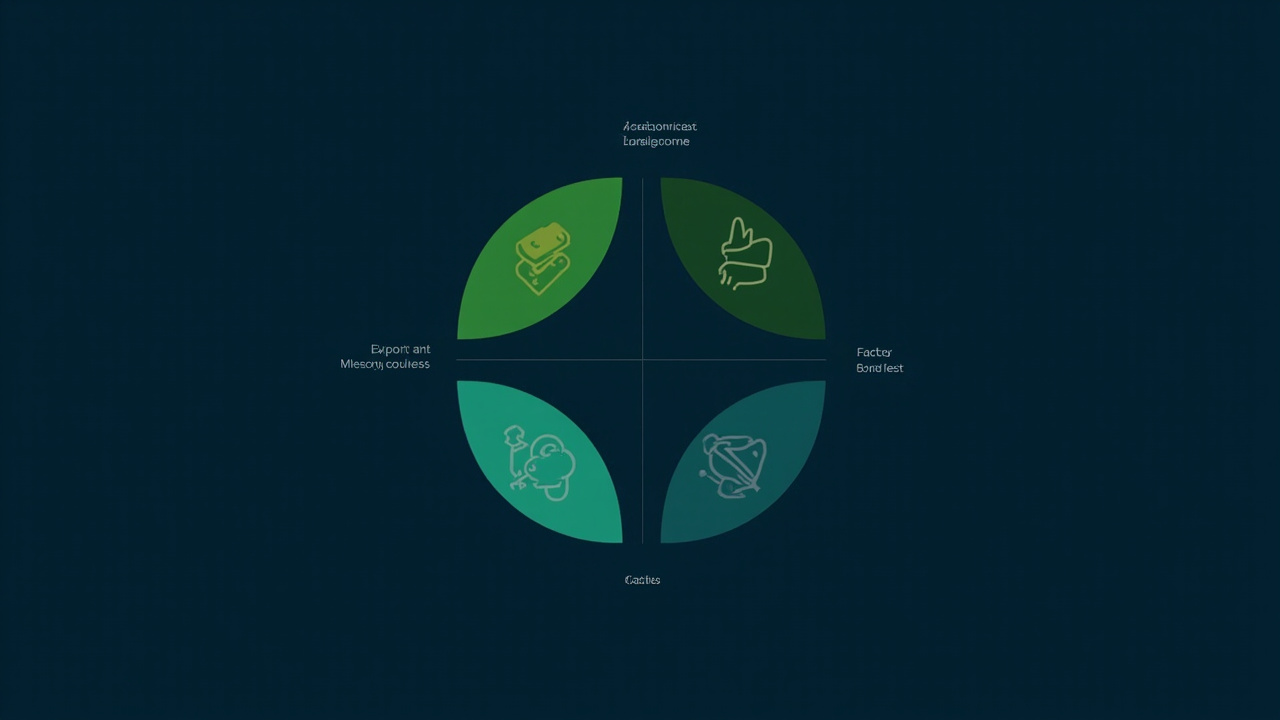
So what’s the move? Where exactly should the money go? The answer isn’t as simple as “moving it from one place to another”—it’s about building a configuration system that can survive the rule change. Below are the four asset classes you must rebalance toward:
Class 1: Inflation-hedging real assets. Gold, silver, commodity ETFs, REITs—these are the lifelines of an inflationary era. Over the past 50 years, in years when inflation ran above 4%, gold’s average annualized return has beaten cash assets by several multiples. The point of allocation isn’t to predict how much it’ll rise—it’s that it can hold value for you while the dollar’s purchasing power shrinks.
Class 2: Cross-currency assets. Stop parking 100% of your assets in a single currency. Modestly allocate across USD, EUR, JPY, RMB-denominated assets, and even emerging-market currencies, to effectively diversify single-currency devaluation risk. This isn’t asking you to FX-trade—it’s asking you not to put all your eggs in the same currency basket.
Class 3: “Self-priced” productive assets. Stocks, equity, debt, cash-flowing businesses—these assets’ value isn’t anchored to any one currency; they ride on the underlying earning power of the business itself. In inflation, the company’s products can raise prices and the intrinsic value of its stock rises with them; in deflation, the company’s cash flow still provides stability. This is the class that lets you survive the rule change.
Class 4: Reserve 20% cash as “optionality.” This is the most overlooked and yet the most critical. The point of keeping 20% in cash isn’t to make it appreciate—it’s to make sure that when panic-driven crashes hit and quality assets go on sale, you still have money to pick them up. The people who flipped their fortunes in the 2008 financial crisis or the 2020 pandemic crash didn’t win by predicting—they won because they had cash and dared to buy when everyone else was panicking.
Conclusion: In the Rule-Change Era, the Survivors Are the Ones Who Understand

The wobbling of dollar hegemony isn’t doomsday—it’s a re-shuffle of the era. What truly decides your wealth over the next ten years isn’t how much you earn today—it’s whether you can see through the fact that the rules are changing.
Shift your view from “where is the safest place to put my money” to “can my asset structure adapt to different eras”—this is the only way for ordinary people to flip their fortunes in the rule-change era.
You don’t need to become an economist, and you don’t need to predict when the dollar will collapse. You only need to build a cross-asset, cross-currency, cross-region allocation: inflation-hedging real assets, cross-currency denominations, productive assets, and a cash reserve for optionality. With all four in place, no matter whether the dollar rises or falls, whether inflation runs hot or cold, you have tools to protect yourself.
Over the next ten years, the most valuable thing won’t be the banknotes themselves—it will be your understanding of the rules. The ones who understand the rule change are the next ones to double their wealth.
Disclaimer: The asset-allocation concepts discussed in this article regarding the dollar, gold, foreign exchange, commodities, and REITs are general market analysis and financial education, and do not constitute specific investment advice. All investing involves risk; past performance does not guarantee future results; exchange-rate and commodity-price volatility may result in loss of principal. Readers should make independent judgments based on their own financial situation and risk tolerance, and consult a qualified financial advisor when necessary. This article does not constitute any buy or sell recommendation, nor does it represent any forecast of the trajectory of any currency or commodity.
Tags
美元霸權, Asset Allocation, 通膨對策, 多幣別配置, Gold, 美債風險, 現金貶值, 全球去美元化, 財富翻倍, 普通人理財
Comments