The Boiling-Frog Financial Trap: 3 Slow-Burn Pitfalls That Bankrupt You by Inches
Why does your salary keep going up, yet your days keep getting harder? You might say, “Oh, that’s old news.” But give me 15 minutes — I promise I won’t tell you the same old “housing is too expensive, prices are flying” lines you’ve heard until your ears calloused.
What I’m going to tell you is that you’re not actually poor — you’ve been “hooked.” Like the famous frog, you weren’t tossed into boiling water and jumped out. You sat comfortably in a pot of slowly heated warm water, and got cooked. The young people of today are that frog — the water isn’t boiling yet, but the temperature is quietly rising.
Trap 1: The Salary Fishing Game — You Think You’re Saving, but You’re Being Adjusted
Many people will throw data at you: “Look, the starting salary 10 years ago was 28K; now it’s 32K — it went up, right?” But have you noticed a very strange phenomenon? 10 years ago you could afford a NT70 bubble tea. But 10 years ago you could save NT5,000 a month.
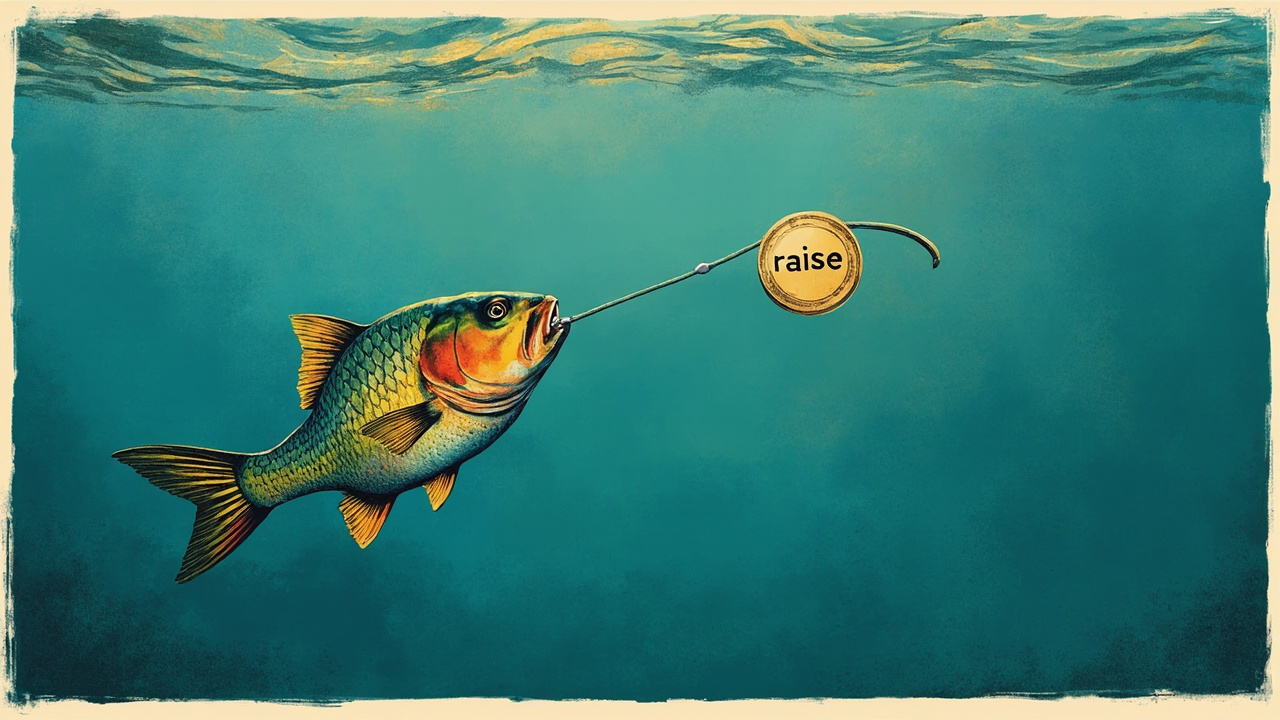
The answer is simple: your salary is being managed into going up. Have you noticed that every minimum-wage adjustment almost exactly matches the rise in consumer prices? This isn’t coincidence. It’s a precisely tuned steady-state system — it lets you grow just enough to survive, just enough to feel hopeful, but never enough to break through.
It’s like playing a mobile game where the system gives you a few coins every day, so you feel “I’m almost able to buy that skin.” But every time you’re about to save up, the skin’s price quietly rises too. You aren’t the “player.” You’re the fish being adjusted.
Trap 2: The Housing Script — Trading Your Life for a Block of Concrete
Not being able to afford a home is young people’s biggest pain, but let me ask you a more fundamental question: do you really need to buy a house? I know your first reaction is, “Of course, who doesn’t want a home of their own.” But have you ever considered that the very idea of “owning your own home” is itself a planted life script?
Who wrote that script? The previous generation. In their day, housing prices were 5 to 6 times salaries, so buying a home was reasonable, feasible, worth it. But now housing prices are 20 to 30 times salaries, and if you still cling to that script, you’re not “making a life plan” — you’re acting in a play you can’t afford to stage.
I have a friend, 28 years old, NT$45,000 a month. To save for a house he ate instant noodles every day, didn’t socialize, didn’t travel, didn’t date. He said, “Just 5 more years and I’ll have the down payment.” When I heard that, I almost spit out my water — 5 years from now you’ll be 33, the down payment scraped together, but housing prices have risen another 20%, and you have to endure 3 more years. By the time you finally move into that little apartment, you’re 40, your health is broken, your friends are gone, your love life is empty.
You ask me if it’s worth it? I’d say: you’re not buying a home — you’re trading your life for a block of concrete.
The real problem isn’t that housing is too expensive; it’s that we have wrongly tied the value of life to a block of concrete.

Trap 3: The Time Black Hole — Your Attention Is Someone Else’s Product
Where does a young person’s time go these days? Think back: what were you doing on weekends 10 years ago? Maybe playing ball with friends, watching movies, singing karaoke, browsing the market. Now? You lie in bed, open Netflix, open Disney+, scroll YouTube, and the whole evening is gone.
You think you’re “relaxing,” but in reality you’re being harvested by a carefully designed attention-economy system. Every scroll, every like, every “next episode” is recorded by algorithms and sold to advertisers. Your time isn’t your time — it’s cheap raw material you’ve sold to the platforms.
Even more frightening, this “free” entertainment is stealing the time you could have used to upgrade yourself. 10 years ago, you read a book on the weekend; 10 years later, you scroll your phone for 8 hours on the weekend — and that gap will come back at you in 5 years, in 10 years, as an “income gap.”

What to Do? Jump Out Before the Water Boils
These three traps share one thing in common: they are all gentle, none of them hurts you right away, and all are hard to notice. But accumulated over time, they will cook you in 10 or 20 years.
Want to jump out? Start with three things:
- Redefine “saving.” Not “salary minus expenses equals whatever’s left,” but “salary minus an amount invested in the future — only what’s left after that is what you can spend.”
- Redefine “buying a home.” Treat housing as a “tool for living” rather than a “life achievement.” You’ll find that renting isn’t shameful — being held hostage by a block of concrete for 30 years is shameful.
- Redefine “rest.” Trade phone-scrolling time for reading, exercise, learning a new skill — 5 years from now, you will thank yourself for this.
The water is still heating, but you can choose to jump out right now.
This article is a financial concept sharing, not investment advice. Housing market and macroeconomic observations involve uncertainty. Please evaluate actual decisions based on your personal risk tolerance and consult a properly licensed financial advisor.
Disclaimer: This article shares investment and financial concepts and compiled data. It does not constitute any specific investment, tax, or legal advice. Markets carry risk; invest with caution. Please judge independently based on your own risk tolerance and consult a professional advisor.
Tags
溫水煮青蛙, 薪資釣魚, 訂閱陷阱, Price-to-Income Ratio, 時間黑洞, Inflation, 慢性破產, 消費主義, Youth Money, Cognitive Upgrade
Comments